- Step 1: Structural Soundproofing & Insulation
- Step 2: Flooring Sub-Layers & Thermal Breaks
- Step 3: Strategic Electrical Rough-Ins
- Step 4: The Window Treatment Hardware Install
- Step 5: Wall Texture & Paint Application
- Step 6: Architectural Molding & Trim
- Step 7: Bed Frame Assembly & Stability
- Step 8: Mattress Foundation & Support
- Step 9: Lighting Fixture Installation
- Step 10: Rug Anchoring & Placement
- Step 11: Textile Layering & Bedding
- Step 12: Final Punch List & Styling
- Frequently Asked Questions
- Conclusion
Most people think a comfy bedroom is created by buying a few throw pillows and a soft blanket. As a master contractor who has overseen hundreds of bedroom renovations, I can tell you that true comfort is engineered, not just decorated. A truly cozy bedroom design starts behind the drywall and ends with the final stitch on the duvet. If the room is drafty, the acoustics are hollow, or the lighting is clinical, no amount of expensive decor will fix the underlying discomfort.
We are going to approach your bedroom project like a job site. We will move through phases—from the structural envelope to the finishing touches. This is your definitive, step-by-step execution guide to building a sanctuary that feels as good as it looks. Whether you are aiming for a warm bedroom aesthetic or a clean minimal bedroom, the physics of comfort remain the same.

Step 1: Structural Soundproofing & Insulation
Before we talk about aesthetics, we must address the sensory experience. You cannot relax in a room where you can hear the dishwasher running downstairs or traffic outside. A comfy bedroom begins with silence.
The Contractor’s Approach
If you are renovating, look at your insulation. Standard fiberglass batting is often insufficient for sound dampening. We recommend upgrading to mineral wool insulation in the interior walls sharing borders with hallways or living areas. If tearing down walls isn’t an option, consider adding a layer of 5/8-inch drywall with a damping compound (like Green Glue) sandwiched between the layers. This adds mass, which kills vibration.
Tools Needed: Stud finder, drill, acoustic sealant.

Step 2: Flooring Sub-Layers & Thermal Breaks
Your feet are your primary temperature sensors. If your floor feels cold or hard, your brain registers the room as uncomfortable. In high-end comfy bedroom ideas, the subfloor is just as important as the finish floor.
Choosing the Right Underlayment
If you are installing hardwood or laminate, do not skimp on the underlayment. A high-density cork or felt underlayment provides thermal insulation and a slight cushion that reduces foot fatigue. For those interested in a minimalist bedroom design with concrete or tile floors, radiant floor heating is a non-negotiable for true comfort. It heats objects, not just air, creating an enveloping warmth.

Step 3: Strategic Electrical Rough-Ins
Nothing kills the vibe of a cozy room inspiration board faster than harsh overhead lighting or a lack of outlets where you need them. We need to plan the electrical layout before the paint goes on.
The Circuit Plan
Ensure your bed wall has outlets positioned exactly behind your nightstands—preferably with USB-C ports built-in. Furthermore, install three-way switches: you should be able to turn off the overhead lights from the bed, not just the door. This is a staple in luxury hotel design that is easily replicable at home.

Step 4: The Window Treatment Hardware Install
Light control is critical for circadian rhythms. To achieve that dreamy bedroom feel, you need the ability to achieve total darkness. This step focuses on the hardscaping of your windows.
Blackout Engineering
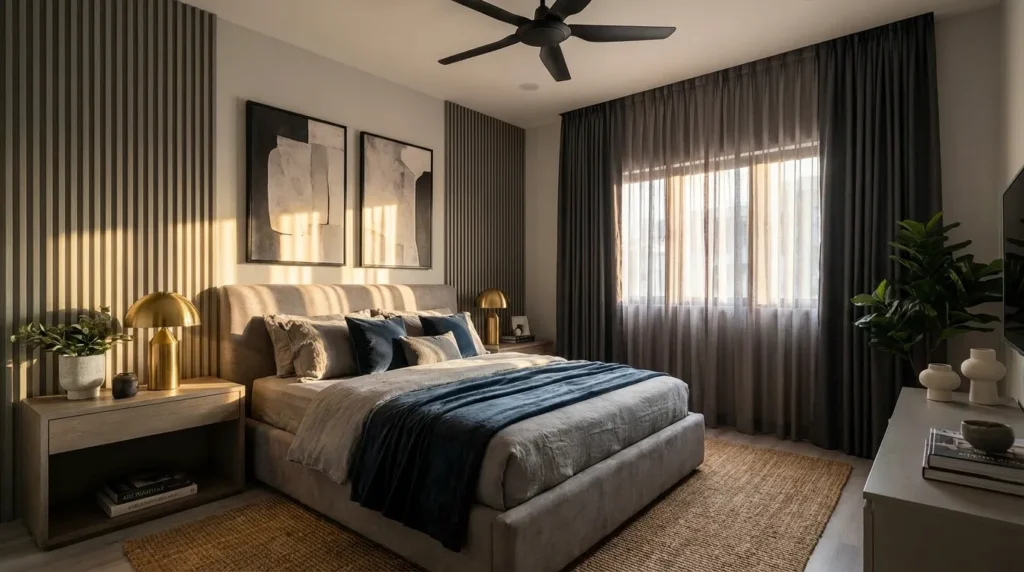
Install hardware high and wide. Mount your curtain rods 4-6 inches above the window frame and extend them 8-10 inches past the sides. This ensures that when the curtains are open, they don’t block the glass, maximizing natural light. When closed, they cover the gaps to prevent light bleed. For a guide on aesthetics, check out these dreamy bedroom ideas for a cozy minimalist escape.

Step 5: Wall Texture & Paint Application
Color is physics; it is the reflection of light. A warm bedroom aesthetic relies on colors with warm undertones (red, yellow, orange bases) even if the color itself is grey or white. Cold grey walls will make a room feel clinical.
The Finish Matters
Avoid high-gloss paints in the bedroom. They reflect too much light and highlight drywall imperfections. Stick to a flat or matte finish for the ceiling and a high-quality eggshell or washable matte for the walls. This creates a velvety texture that absorbs light, making the room feel softer and more enclosed.

Step 6: Architectural Molding & Trim
Standard builder-grade bedrooms often feel “boxy.” Adding architectural detail breaks up the flat planes and adds a sense of shelter and solidity, which is psychologically comforting.
DIY Wainscoting
Adding a simple board-and-batten grid or shiplap to the wall behind the bed creates a focal point without clutter. It adds depth and shadow lines. If your room feels sterile, read about why your modern bedroom feels cold to understand how lack of texture contributes to discomfort.

Step 7: Bed Frame Assembly & Stability
A cozy bed must be silent. As a contractor, I’ve seen beautiful beds that squeak every time you roll over. That is structural failure.
The Stability Check
When assembling your bed frame, use wood glue on the dowels and ensure all bolts are tightened with washers. If you have a metal frame, apply silicone lubricant to the joints during assembly. If you are looking for visual inspiration, browse our bedroom ideas collection.

Step 8: Mattress Foundation & Support
This is the engine of the bedroom. Your bed inspo pictures might show fluffy duvets, but the mattress does the heavy lifting.
Support Layers
Ensure your slat system is robust. Slats should be no more than 3 inches apart to prevent mattress sagging. If you are going for a cozy minimalist sanctuary, a low-profile platform bed is ideal, but ensure the center support beam is touching the floor firmly.
Step 9: Lighting Fixture Installation
Now that the electrical rough-ins are done, we install the fixtures. The goal is “layered lighting.”
The 2700K Rule
For a comfy bedroom aesthetic, all bulbs should be 2700K (Warm White). Anything higher (3000K-5000K) contains too much blue light, which suppresses melatonin. Install sconces with fabric shades to diffuse light, preventing glare. Avoid direct downlights over the pillows; they create harsh shadows on the face.

Step 10: Rug Anchoring & Placement
A rug is not just decor; it’s an acoustic dampener and a thermal barrier. One of the 7 fatal bedroom design mistakes is choosing a rug that is too small.
Sizing Guide
The rug should extend at least 18-24 inches beyond the sides of the bed. When you swing your legs out of bed in the morning, your feet should hit wool, not cold wood. Use a thick felt rug pad underneath—it doubles the plush factor and protects the floor.
Step 11: Textile Layering & Bedding
This is the “soft goods” phase. To achieve that high-end comfy bedroom aesthetic, you need volume.
The Duvet Trick
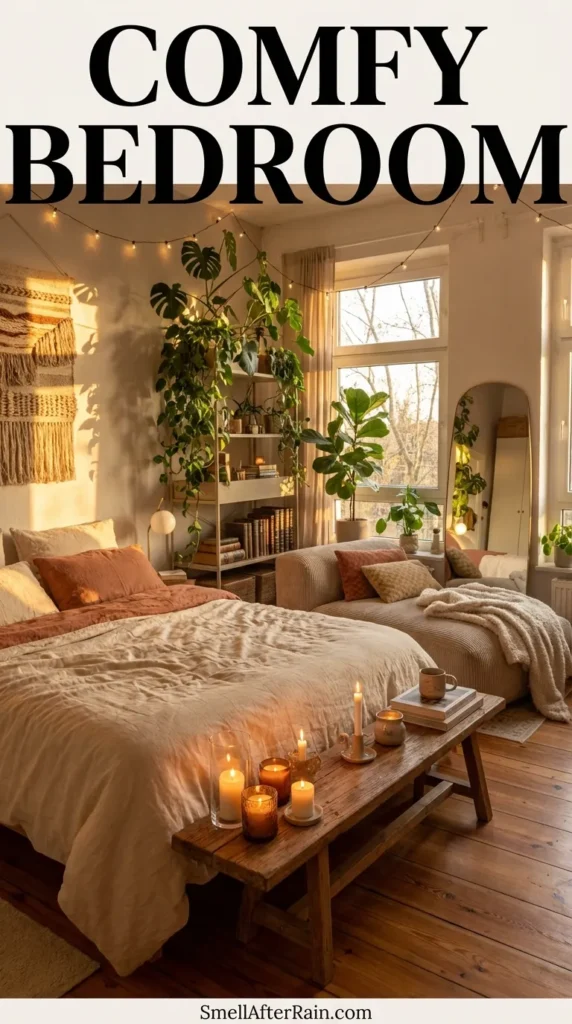
Here is a trade secret: Buy a duvet insert that is one size larger than your duvet cover. Put a King insert into a Queen cover. This creates that overstuffed, cloud-like look you see in magazines. Layer textures: a cotton sheet, a waffle-knit blanket, and a heavy linen duvet. This variety appeals to the touch and adds visual warmth. For more on high-end textures, see our guide on mastering the high-end minimal bedroom aesthetic.
Step 12: Final Punch List & Styling
The construction and major furnishing are done. Now we do the final walkthrough and styling. This is where cozy bedroom design comes together.
The Rule of Three
Style your nightstands using the rule of three: something vertical (lamp), something horizontal (books), and something organic (plant or ceramic). Keep surfaces 50% clear to maintain a relaxing atmosphere. Clutter induces stress, which is the enemy of comfort. Check out our ultimate room inspo guide for specific styling layouts.
Frequently Asked Questions
1. How can I make my bedroom cozy on a tight budget?
Focus on lighting and textiles first. Changing your bulbs to warm white (2700K) costs less than $20 and completely changes the room’s mood. Adding a thick, textured throw blanket and painting the walls a warmer tone are high-impact, low-cost upgrades.
2. What is the best flooring for a comfy bedroom?
Carpet with a high-density pad is the warmest and quietest option. However, if you prefer the look of hardwood, engineered white oak with a large, high-pile wool area rug offers the best balance of aesthetics, hygiene, and warmth.
3. How do I make a minimalist bedroom feel cozy?
Minimalism creates calm, but it can feel cold. Counteract this by using natural materials like wood, linen, and wool. Incorporate curves in your furniture to soften the straight lines, and ensure your lighting is warm and diffused.
4. Why does my bedroom never look like the pictures?
Usually, it comes down to layering and scale. Magazine photos often feature oversized rugs, overstuffed duvets, and multiple light sources. Regular bedrooms often have flat bedding and a single overhead light. Add volume to your bedding and varied lighting to bridge the gap.
5. What is the best wall color for sleep?
Psychologically, soft blues, muted greens, and warm earthy neutrals are best for sleep as they lower heart rates. Avoid bright reds or neon colors. Darker colors like charcoal or navy can also create a “cave-like” effect that promotes deep sleep.
6. How do I soundproof my bedroom without major construction?
Soft surfaces absorb sound. heavy velvet curtains, large area rugs, upholstered headboards, and canvas art on the walls all help reduce echo. Draft stoppers under the door can also block a surprising amount of noise from the rest of the house.
Conclusion
Building a comfy bedroom is a process of layering—starting with the structural elements of sound and temperature, moving through the functional systems of light and layout, and finishing with the tactile luxury of textiles. By following these 12 execution steps, you move beyond simple decoration and create a space that fundamentally supports rest. For more inspiration on transforming your home, visit Smell After Rain.