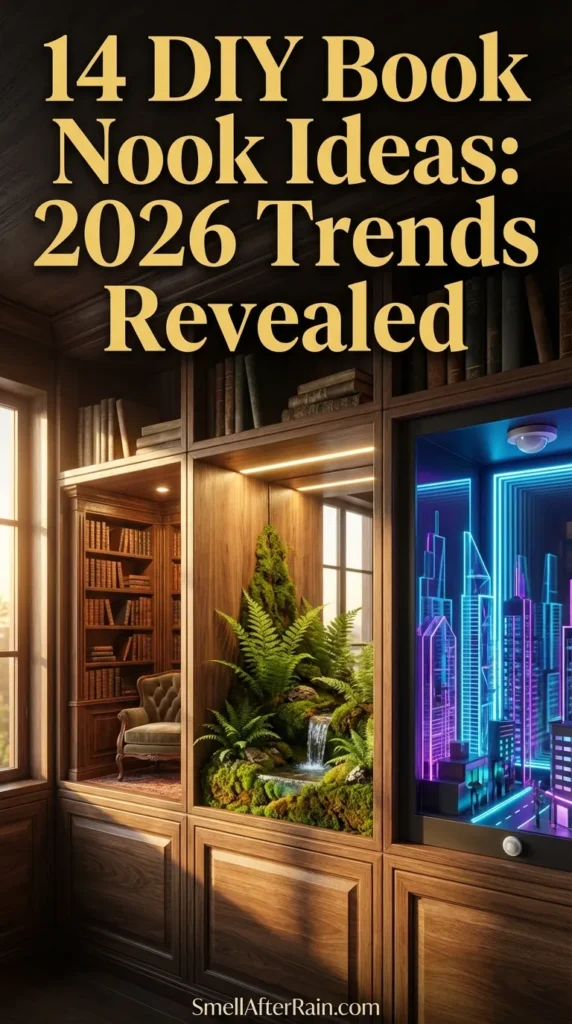
- 1. The Shift to Biophilic Realism: Living Forest Inserts
- 2. Old Money Aesthetics: The Miniature Walnut Library
- 3. Beyond Fairy Lights: The Rise of COB LED Integration
- 4. The Closet Conversion: Expanding the Nook
- 5. Infinity Mirrors 2.0: Creating Endless Depth
- 6. Texture Theory: Velvet, Leather, and Fabric Walls
- 7. Architectural Accuracy: Moving Past Kits
- 8. The Cyberpunk Cityscape: Neon and Acrylics
- 9. Interactive Elements: Motion Sensors and Sound
- 10. The Seasonal Switch: Modular Magnetic Backgrounds
- 11. Japandi Minimalism: Serenity in Miniature
- 12. Upcycled Hardcovers: The Hidden Diorama
- 13. Verticality: Multi-Shelf Connected Narratives
- 14. 3D Printed Custom Assets: The End of Generic Props
- Frequently Asked Questions
- Conclusion
The concept of the “book nook”—a miniature world tucked safely between your novels—has exploded from a niche hobby into a defining element of the modern Book Nook Aesthetic. But as we look toward 2026, the trends are shifting rapidly. The era of flat, pre-printed plywood kits is fading. In its place rises a movement of hyper-realism, bespoke craftsmanship, and immersive storytelling. If you are looking for Booknook Ideas that will stand the test of time, you must stop looking at what everyone did last year and start looking at where the art form is going.
As a trend forecaster in the DIY Interior space, I have analyzed thousands of pins and creator feeds. The verdict is clear: we are moving away from the “crafty” look toward the “architectural” look. Whether you are planning a Book Nook Bedroom installation or a standalone shelf insert, the focus is now on texture, lighting physics, and material authenticity. This guide will walk you through 14 cutting-edge DIY Booknooks concepts that define the future of shelf styling.
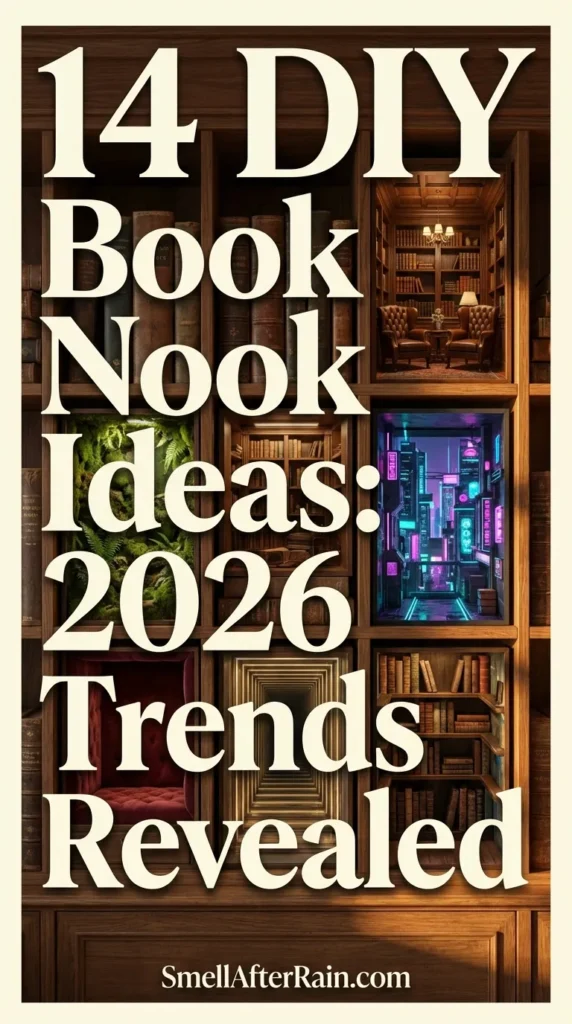
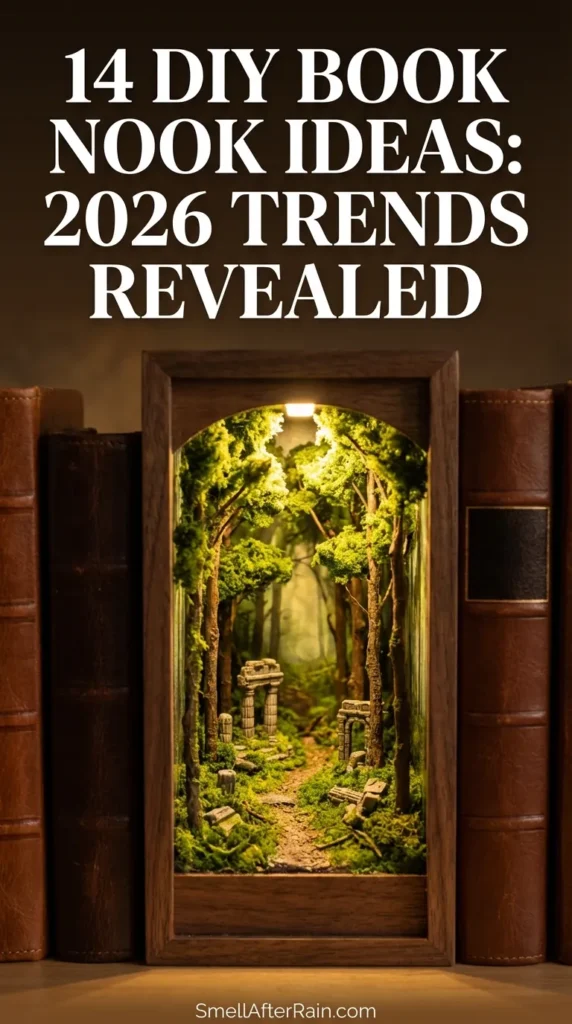
1. The Shift to Biophilic Realism: Living Forest Inserts
What is Out: Plastic-looking fake grass and neon green hues.
What is In: Preserved moss, dried roots, and realistic terrain modeling.
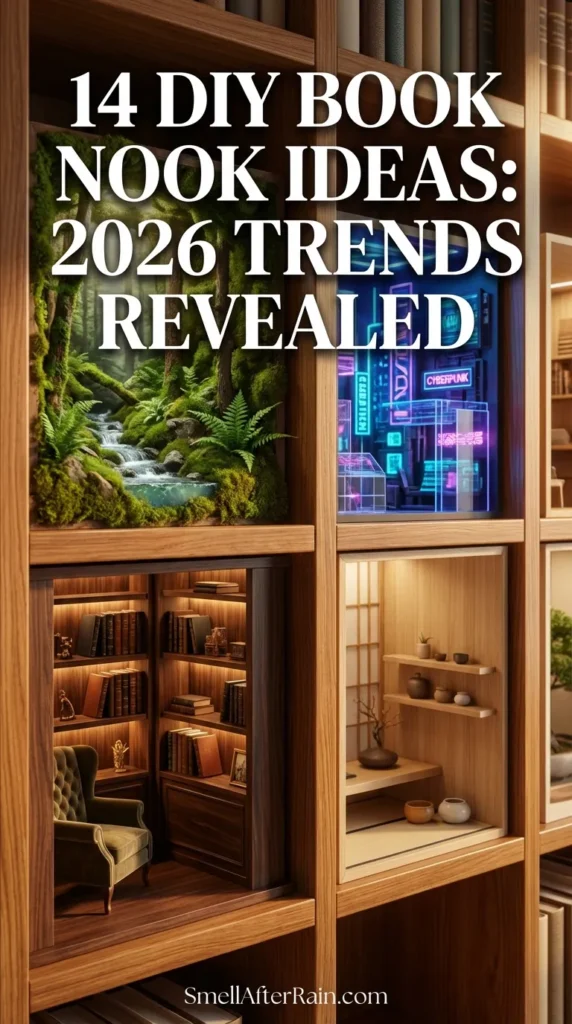
The Forest Book Nook is a classic staple, but the execution is evolving. In 2026, the trend is “Biophilic Realism.” Builders are borrowing techniques from model railway enthusiasts and terrarium designers. Instead of using generic craft store greenery, creators are using preserved reindeer moss and stabilized floral elements to create a Fairy Book Nook that feels alive.
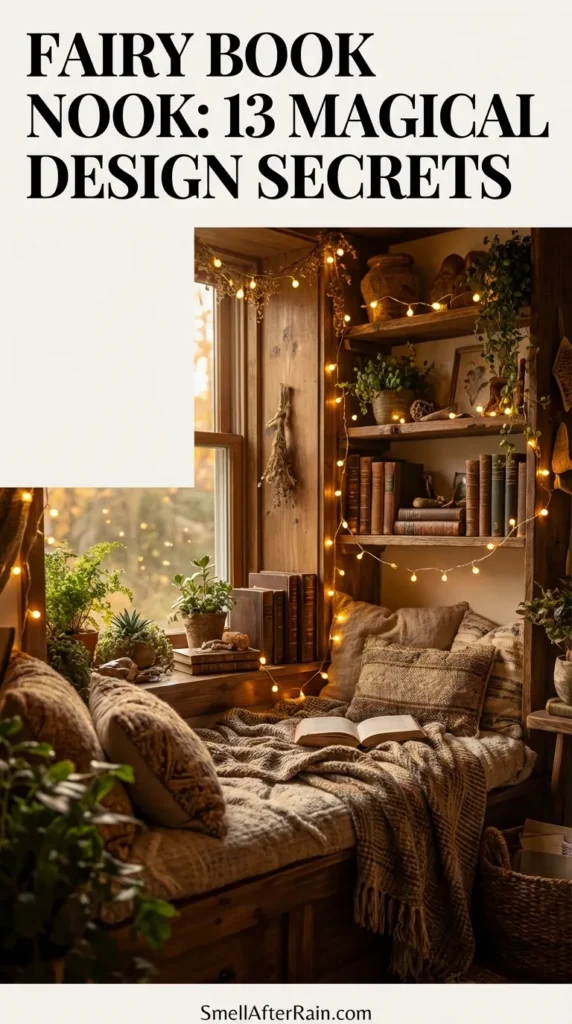
To achieve this Book Nook Aesthetic, focus on layering. Start with a base of sculpted foam to create uneven terrain—flat floors are the enemy of realism. Use washes of dark acrylic paint to shadow the crevices before applying your flocking. For those interested in the deeper philosophy of green design, check out our guide on magical design secrets for fairy nooks.
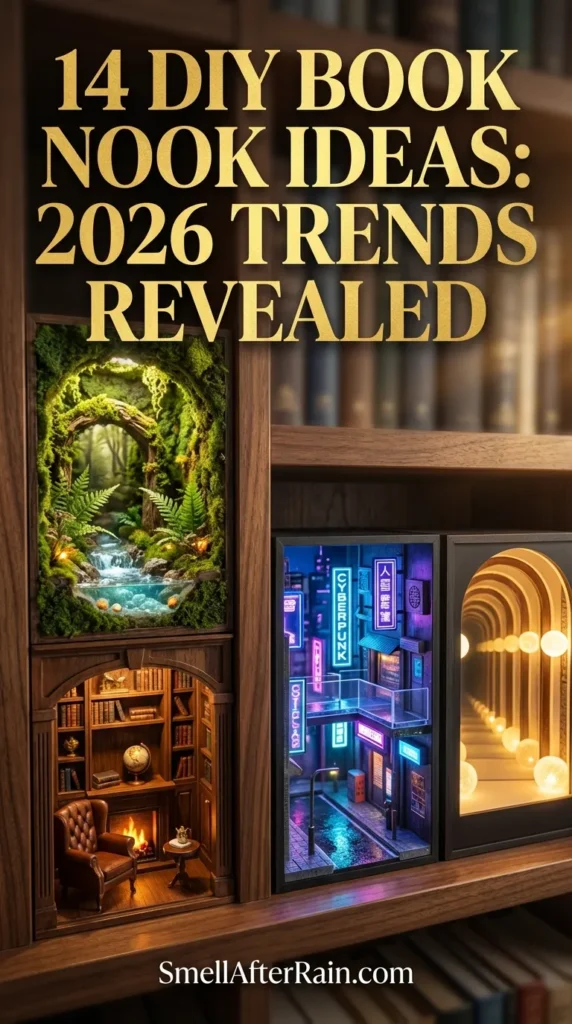
2. Old Money Aesthetics: The Miniature Walnut Library
What is Out: Brightly colored, cartoonish fantasy scenes.
What is In: Dark wood stains, brass details, and classical architecture.
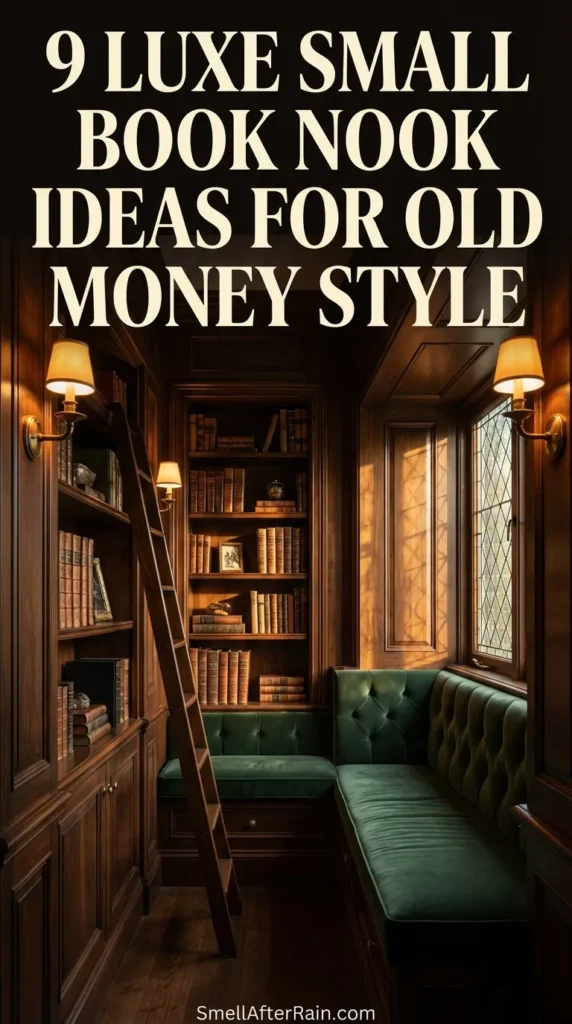
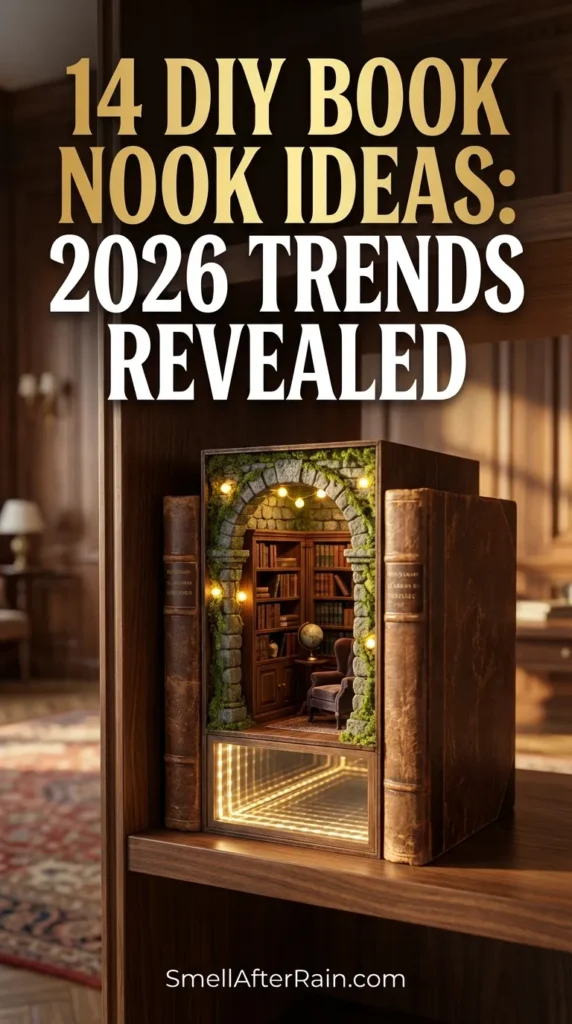
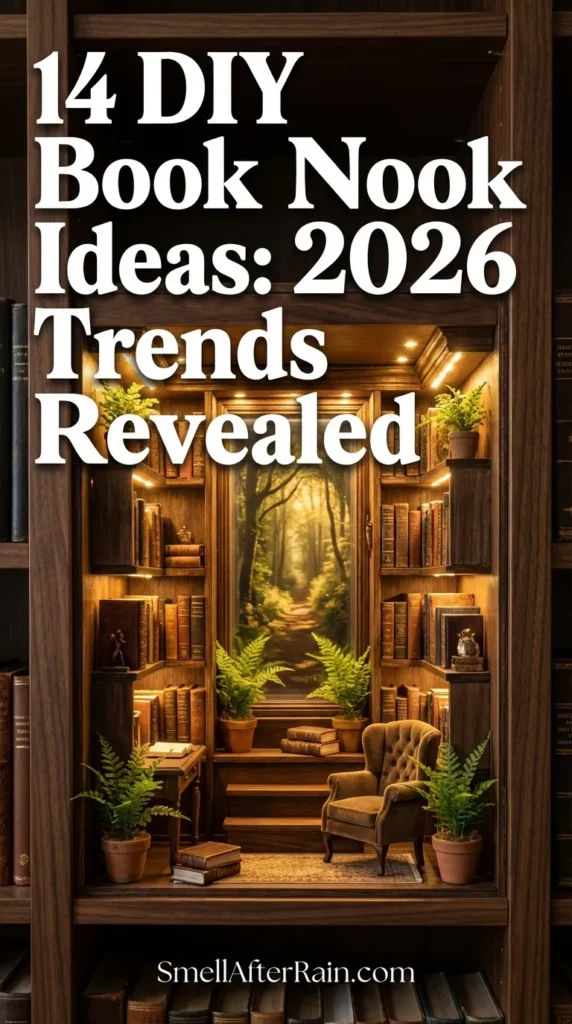
The “Dark Academia” trend has heavily influenced Booknook Ideas. We are seeing a surge in miniature libraries that mimic high-end Victorian studies. This involves using balsa wood stained in deep mahogany or walnut tones, tiny hand-bound books with leather textures, and brass hardware.
This style appeals to the sophisticated DIYer. It requires patience—creating 200 tiny books is no small feat—but the result is a piece of art that blends seamlessly with a serious book collection. If you are curating a sophisticated space, you might find inspiration in our article on 9 luxe small book nook ideas for old money style.
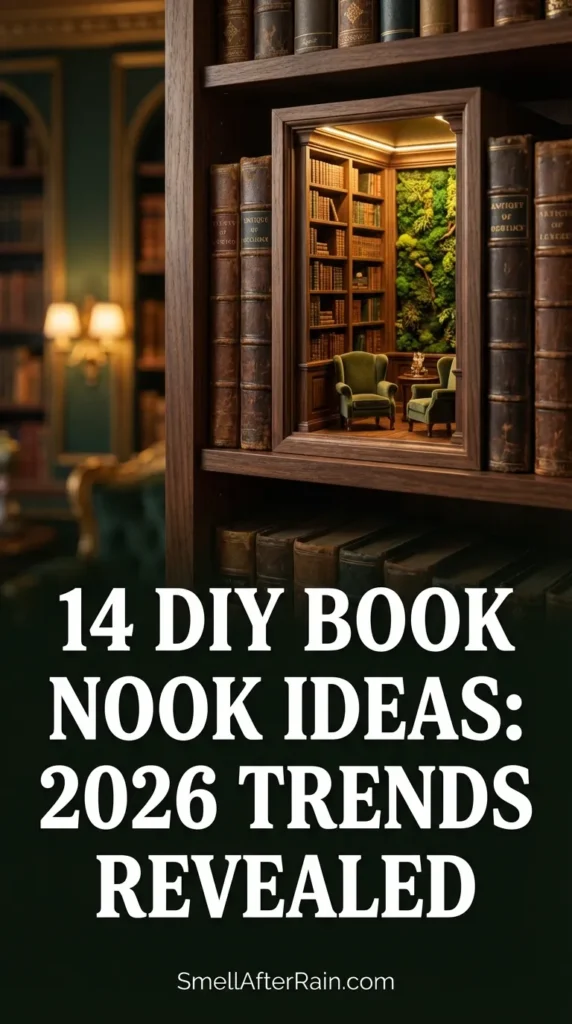
3. Beyond Fairy Lights: The Rise of COB LED Integration
What is Out: Visible copper wires and oversized battery packs.
What is In: Concealed COB LED strips and fiber optics.
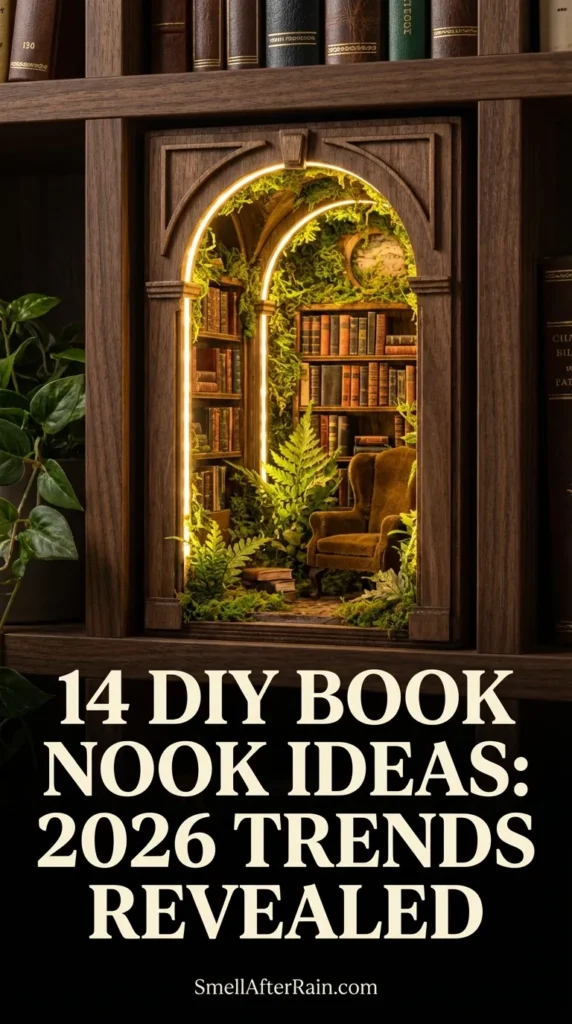
Lighting can make or break a diorama. The clumsy “string of lights” wrapped around a miniature tree is becoming a thing of the past. The future of How To Make A Book Nook lies in smart lighting. COB (Chip on Board) LEDs provide a seamless bar of light without the “dots” visible in older strips. They allow for soft, diffused ambient lighting that mimics moonlight or a warm fireplace glow.
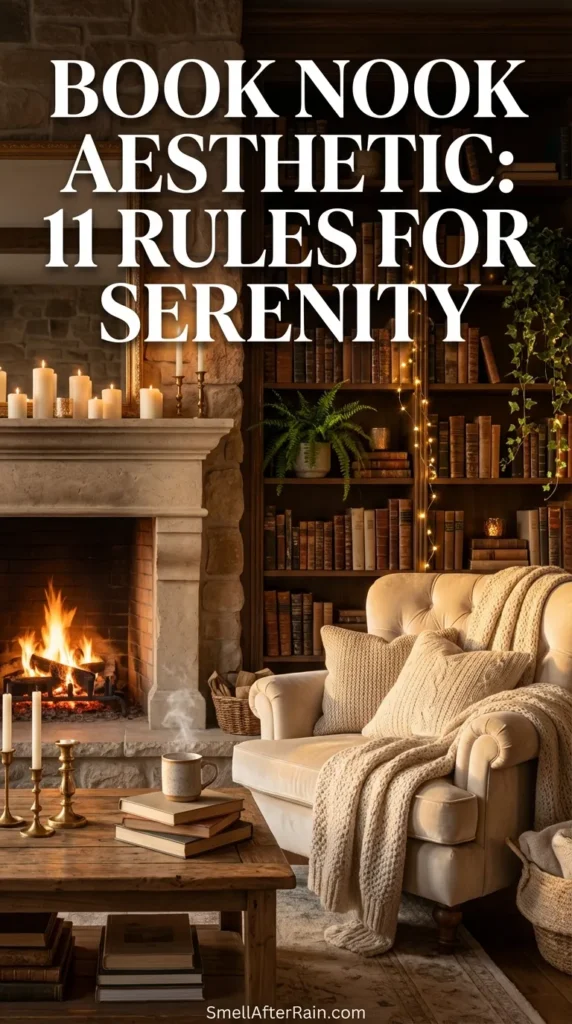
Advanced builders are drilling channels into the walls of their inserts to hide wiring completely. The goal is to create “pools” of light rather than just illuminating everything evenly. For more on creating serene lighting environments, read about the 11 rules for serenity in book nook aesthetics.
4. The Closet Conversion: Expanding the Nook
What is Out: Limiting creativity to a 4-inch wide shelf gap.
What is In: Converting small closets or unused corners into full-scale reading sanctuaries.
Sometimes, a Book Nook Closet is not a diorama, but a human-sized destination. The DIY trend here is transforming a spare wardrobe or under-stair space into a reading hideaway. While this guide focuses on miniatures, the principles of lighting and texture apply to larger scales too.
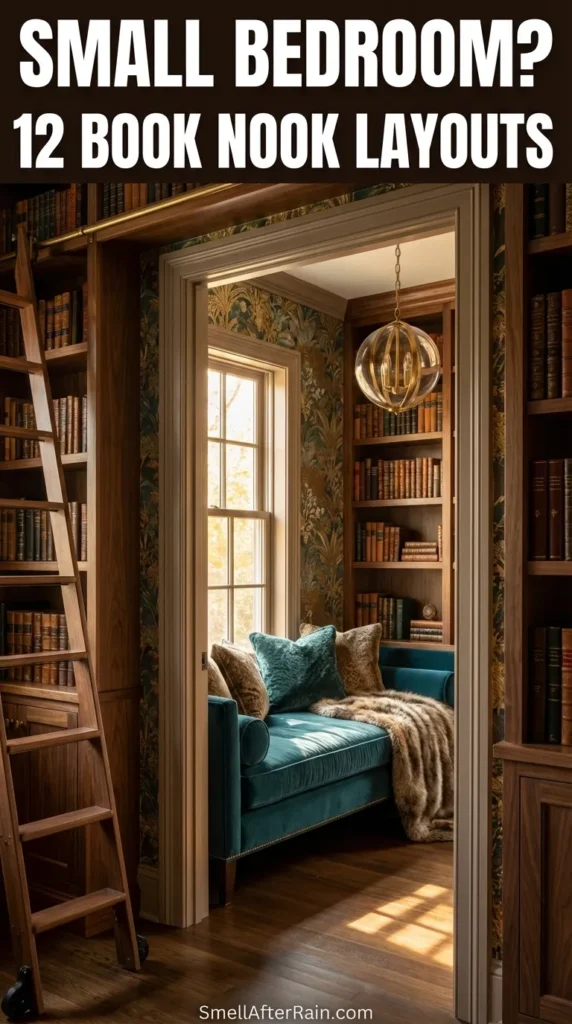
We are seeing “Nook Inception”—where a human-sized reading nook contains shelves featuring miniature book nooks. This meta-design creates layers of coziness. If you have a tight space, review these 12 layouts for small bedrooms.
5. Infinity Mirrors 2.0: Creating Endless Depth
What is Out: Standard mirrors placed at the back.
What is In: Angled mirrors and “curved” infinity paths.
The infinity mirror is a classic trick to make Small Book Nook Ideas feel vast. However, the new technique involves curving the path. By placing a mirror at an angle and hiding the edges with architectural columns or trees, you can create the illusion of a path that winds around a corner into the distance, rather than just an endless straight hallway which can break immersion.
This technique is vital for “Cyberpunk” or “Magical Alley” themes where depth is part of the allure. It requires precise cutting of acrylic mirrors, but the payoff is huge.
6. Texture Theory: Velvet, Leather, and Fabric Walls
What is Out: Printed paper textures glued to wood.
What is In: Real fabric applications.
A major differentiator in high-end Diy Booknooks is the use of real materials. Instead of printing a picture of a rug, weave a tiny rug. Instead of painting a chair to look like velvet, use flocking powder or actual velvet scraps. This tactile reality catches the light differently than paper.
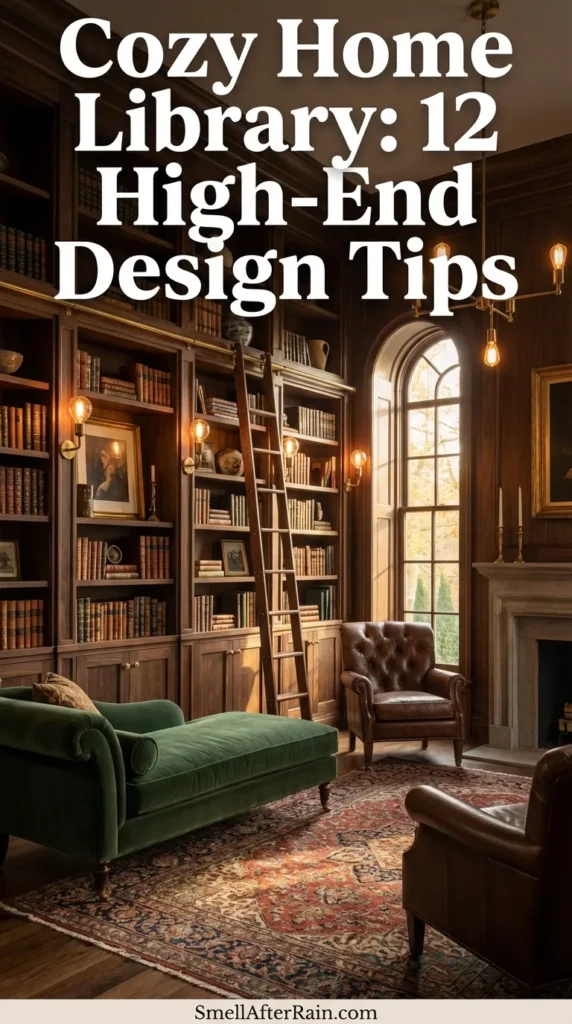
In 2026, look for “soft” walls—miniature tapestry hangings and upholstered furniture within the nook. This adds sound-dampening qualities and a feeling of luxury. Discover more about high-end textures in our piece on 12 high-end design tips for cozy libraries.
7. Architectural Accuracy: Moving Past Kits
What is Out: Generic “Fantasy House” kits with nonsensical structures.
What is In: Scale replicas of real-world architecture (e.g., Parisian Streets, Kyoto Alleys).
The Booknook Tutorial landscape is shifting toward architectural history. Makers are using blueprints of actual buildings to create historically accurate facades. Whether it is a brutalist concrete structure or a delicate Art Nouveau storefront, accuracy is key. This trend leans heavily on laser cutting and 3D printing to achieve precise window mullions and brick patterns.
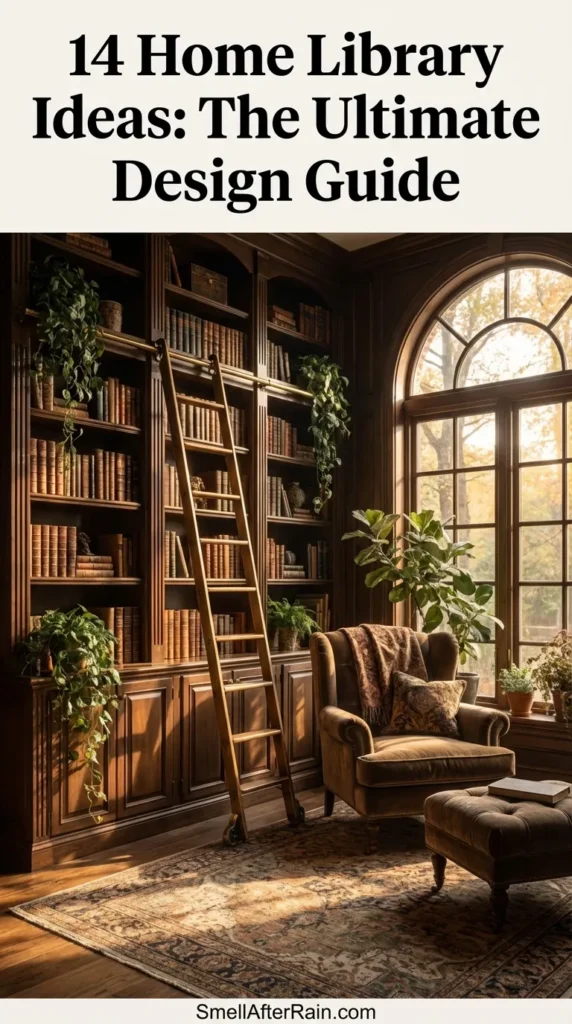
For those building a home library around these designs, see our guide on designing the ultimate cozy book nook home library.
8. The Cyberpunk Cityscape: Neon and Acrylics
What is Out: Steampunk gear-slapping.
What is In: Neon-noir, rain-slicked streets, and verticality.
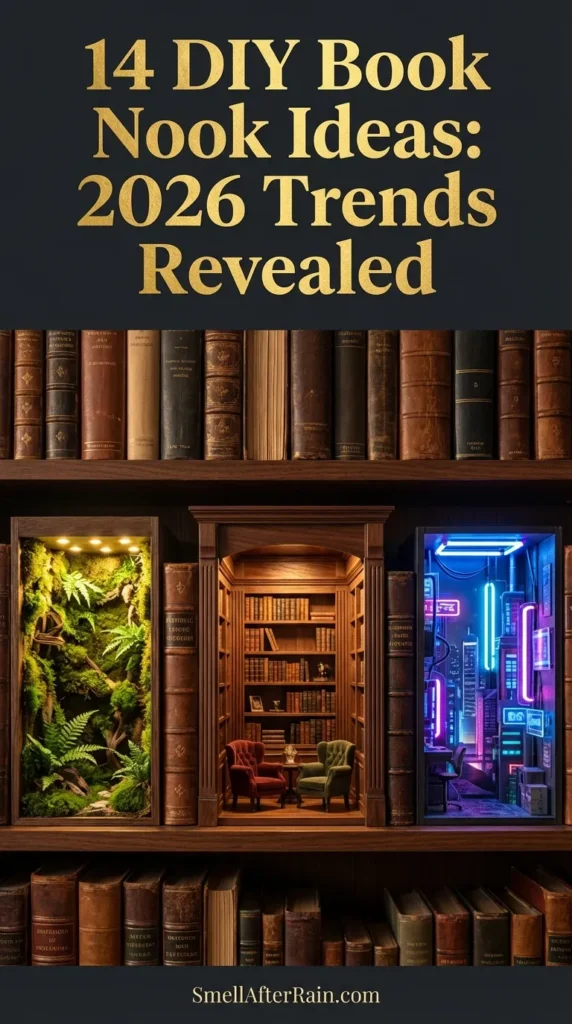
While fantasy forests are timeless, the Cyberpunk aesthetic is the fastest-growing category for 2026. This style utilizes fluorescent acrylic paints that react to UV blacklights hidden in the ceiling of the nook. The goal is to create a rainy, neon-lit city street.
To achieve the “wet street” look, use high-gloss resin on the floor of the diorama. It reflects the neon signs (printed on transparency film and backlit), doubling the visual interest. This fits perfectly with the Diy And Crafts interest group focused on resin art.
9. Interactive Elements: Motion Sensors and Sound
What is Out: Static displays.
What is In: Interactive experiences.
Imagine walking past a bookshelf and hearing the faint sound of crickets or a crackling fire as a light flickers on. Integrating Arduino microcontrollers or simple PIR motion sensors is the next frontier of Booknook Ideas. These components are now cheap and small enough to hide behind a false wall in the nook.
This turns a passive decoration into an active participant in the room’s ambiance. It creates a “surprise and delight” moment for guests.
10. The Seasonal Switch: Modular Magnetic Backgrounds
What is Out: Gluing everything down permanently.
What is In: Magnetic walls and swappable decor.
Why have one book nook when you can have four? The modular trend involves building a “shell” box with magnetic back and side walls. You can then swap out the scenery panels for different seasons—snowy trees for winter, blooming cherry blossoms for spring. This increases the longevity of the piece and keeps your bookshelf dynamic.
For varied design inspiration to fill your modular slots, check out dreamy book nook ideas from cozy corners to magical shelf dioramas.
11. Japandi Minimalism: Serenity in Miniature
What is Out: Cluttered, “I Spy” style nooks.
What is In: Clean lines, neutral tones, and negative space.
Japandi (Japan + Scandi) design has ruled interior design, and it is finally hitting the miniature world. These nooks focus on a single, beautiful element—a lone bonsai tree, a tatami mat room, or a stone lantern. The lighting is cool and diffuse. The challenge here is perfection; with fewer items, every flaw is visible. This style pairs beautifully with modern home library layouts.
12. Upcycled Hardcovers: The Hidden Diorama
What is Out: Plywood boxes visible on the shelf.
What is In: Hollowing out actual vintage books.
For the purist, the exterior of the nook should disappear. This trend involves taking a thick, discarded hardcover book (encyclopedias work best), gluing the pages shut, and hollowing out the center to build the diorama inside. When closed or placed on the shelf, it looks like a book. When you peer in (or open the cover), the world is revealed.
This is the ultimate stealth Diy Interior hack. It preserves the integrity of the “wall of text” aesthetic while hiding a secret world.
13. Verticality: Multi-Shelf Connected Narratives
What is Out: Isolated boxes.
What is In: Vertical storytelling.
If you have adjustable shelving, consider aligning two or three book nooks vertically. The trend here is to create a continuous story—like a beanstalk growing from the bottom shelf nook up into the top shelf nook. Or a mine shaft that goes “down” through several levels of your library.
This requires careful planning of shelf heights but creates a stunning visual anchor for the room. See how this connects to broader library themes at Smell After Rain.
14. 3D Printed Custom Assets: The End of Generic Props
What is Out: Using buttons as plates and thimbles as trash cans.
What is In: Resin 3D printed bespoke items.
With the price of resin 3D printers dropping, enthusiasts are no longer scavenging for “things that look like other things.” They are printing exactly what they need. Need a gargoyle for your gothic cathedral nook? Print it. This technology allows for the Booknook Tutorial community to share files rather than just instructions, standardizing high-quality props.
For a comprehensive overview of all things related to book nooks, visit our main category page: Book Nooks.
Frequently Asked Questions
What is the standard size for a DIY book nook?
While there is no official standard, most book nooks are designed to fit on standard bookshelves like the IKEA Billy. This usually means a height of about 8 to 9.5 inches, a depth of 6 to 8 inches, and a width varying from 3.5 to 5 inches. However, Small Book Nook Ideas can be adapted to any gap you have. Always measure your shelf height before cutting your materials.
What is the best glue for building book nooks?
For structural wood or MDF parts, a high-quality PVA wood glue (like Titebond) is best as it creates a bond stronger than the wood itself. For attaching miniature details, plants, or fabrics, a thick tacky glue (like Aleene’s) is superior because it grabs quickly and dries clear. Avoid hot glue for fine details as it leaves strings and adds bulk.
How do I power the lights in a book nook without wires showing?
The most common method is using a battery pack (usually holding AA or coin cells) hidden either in the “ceiling” of the nook (behind a false panel) or at the very back behind the rear wall. If you are building multiple nooks, you might consider drilling through the back of your bookshelf to run a USB cable to a main power source, eliminating the need for batteries entirely.
Can I make a book nook without a kit?
Absolutely. Scratch-building is the heart of true Diy Booknooks. You can start with foam board for the structure as it is easy to cut with an X-Acto knife. For the contents, you can use polymer clay to sculpt items, print textures from the internet for walls, and use natural materials like twigs and stones. It requires more planning than a kit but is far more rewarding.
What is the “Infinity Mirror” effect?
An infinity mirror effect is created by placing a regular mirror at the back of the nook and a one-way (two-way) mirror at the front, with lights in between. The light bounces back and forth between the mirrors, creating an illusion of infinite depth. This is popular for sci-fi or magical hallway themes.
Are book nooks a fire hazard?
If you use LED lights, they produce very little heat and are generally safe for enclosed spaces. However, you should never leave battery-operated devices on 24/7. Ensure your wiring is secure and not shorting out. Avoid using incandescent bulbs which get hot. Always use quality batteries and components.
Conclusion
The world of Book Nook Ideas Diy is rapidly maturing. We are moving away from simple crafts into the realm of miniature engineering and art. Whether you are attracted to the lush Fairy Book Nook style or the stark realism of a cyberpunk alley, the tools and materials available in 2026 make it easier than ever to achieve professional results. Remember, the goal is not just to fill a gap on a shelf, but to open a portal to another world.