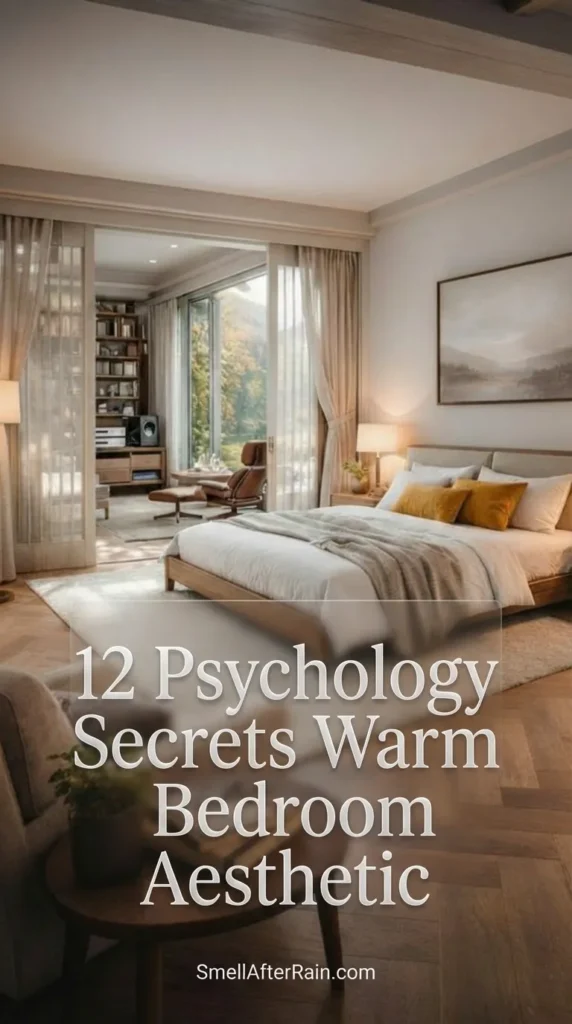
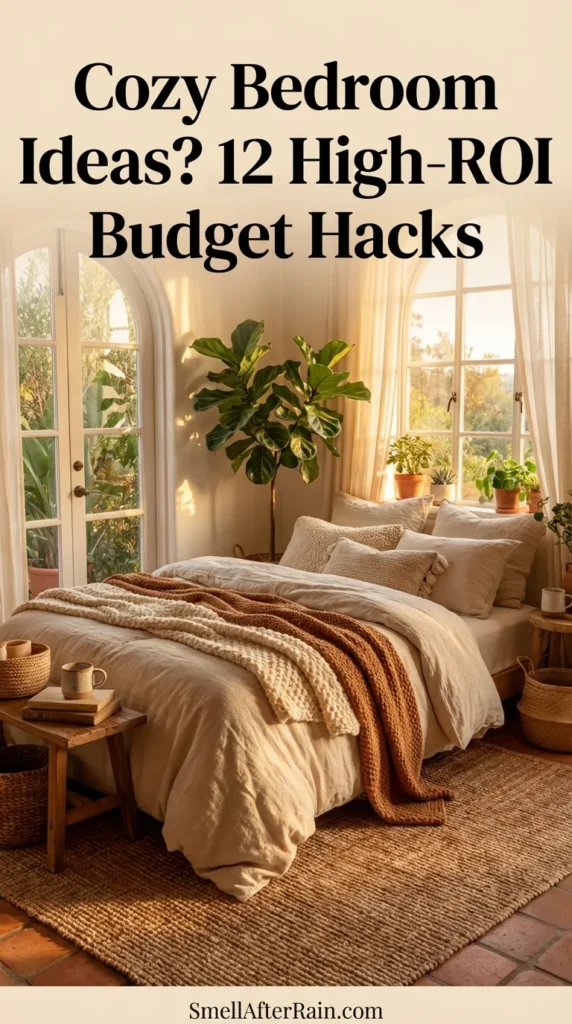
- 1. The 2700K Lighting Rule: High-End Warmth for Pennies
- 2. Strategic Textile Layering: The 'Hotel Weight' Principle
- 3. The Earthy Palette Paint Strategy (High ROI Facelift)
- 4. The Custom Upholstered Headboard Hack (IKEA Flip)
- 5. Double-Rug Layouts: Solving Cold Floor Fatigue
- 6. High-Impact Minimalist Bedding Systems
- 7. Biophilic ROI: Oxygenating Your Small Bedroom Layout
- 8. Floor-to-Ceiling Drapery: The Vertical Value Add
- 9. The Floating Nightstand Solution for Compact Spaces
- 10. Sensory Zoning: Aromatherapy and Soundscaping
- 11. Restoring Vintage Furniture: Sweat Equity Aesthetics
- 12. The 'Negative Space' Asset: Decluttering for Net Worth
- Frequently Asked Questions
- Conclusion
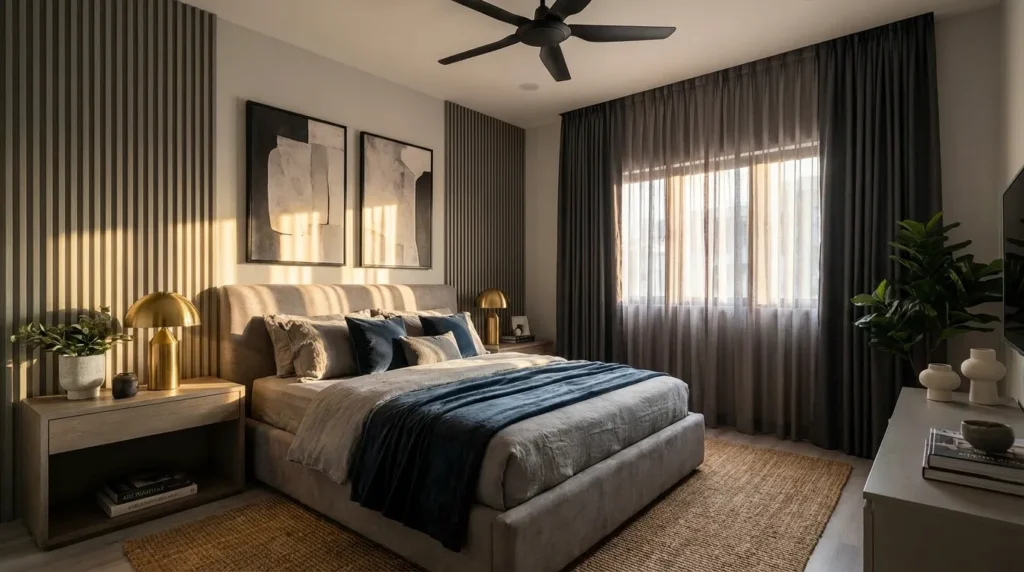
Creating a sanctuary that feels like a luxury retreat doesn’t require a celebrity budget; it requires financial literacy applied to interior design. We often look at Cozy Master Bedrooms Decor on Pinterest and assume the price tag is astronomical. However, true comfort is often a result of material science, lighting psychology, and spatial planning rather than sheer spending.
As a financial DIY expert, I analyze home decor through the lens of Return on Investment (ROI). In the bedroom, ROI isn’t just about resale value—it’s about the quality of your sleep and your mental recharge rate. A Warm Bedroom Aesthetic can lower cortisol levels, making your renovation a health investment. Whether you are dealing with a Small Bedroom Layout or trying to warm up a cavernous master suite, the principles of cost-effective coziness remain the same.
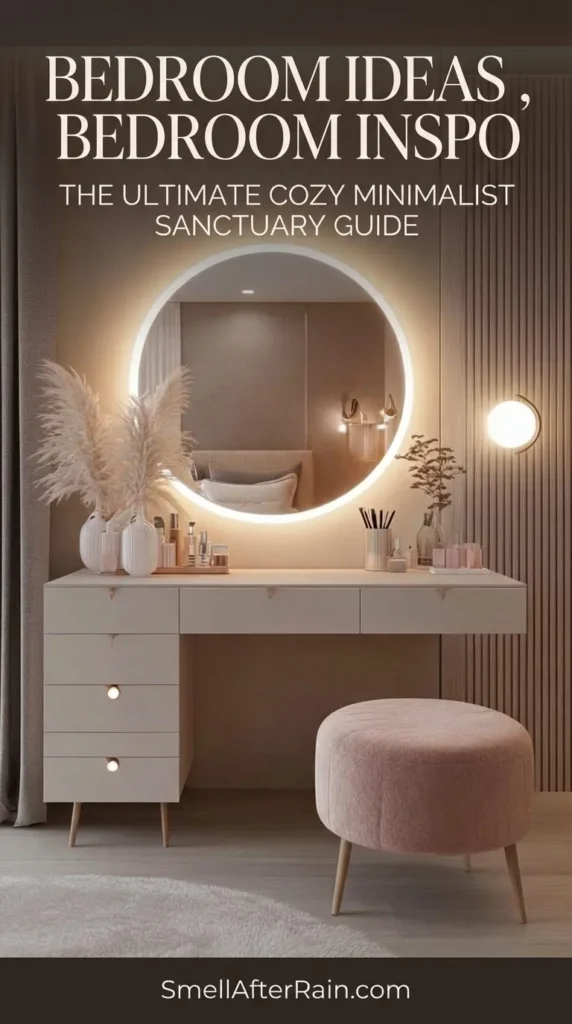
Below, I have broken down 12 specific, high-impact strategies to transform your sleeping quarters into an Earthy Bedroom retreat. These aren’t just decorative fluff; they are calculated upgrades designed to maximize comfort per dollar spent. From lighting hacks that cost less than a lunch to creating a cozy minimalist sanctuary, here is your blueprint for affordable luxury.
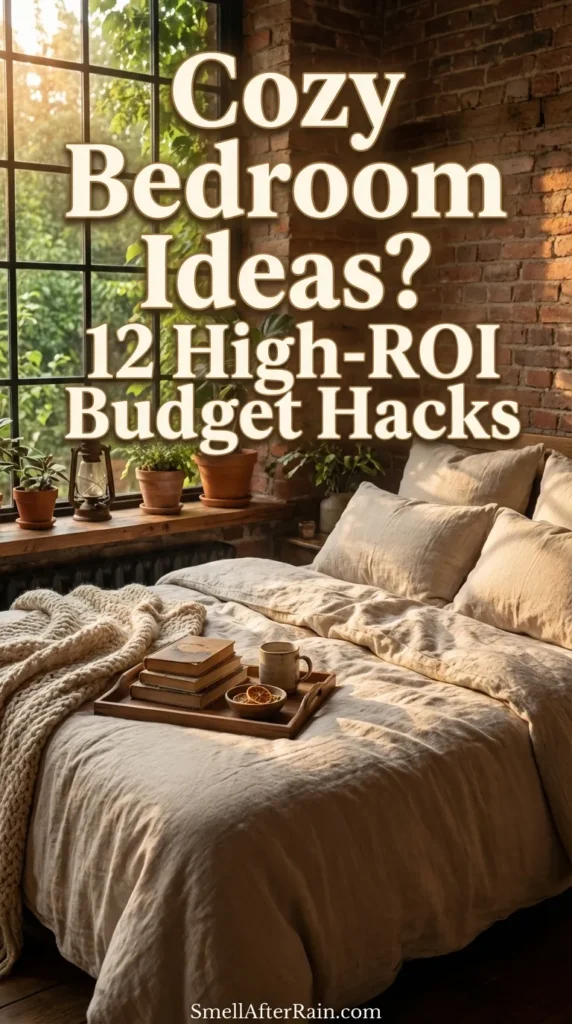
1. The 2700K Lighting Rule: High-End Warmth for Pennies
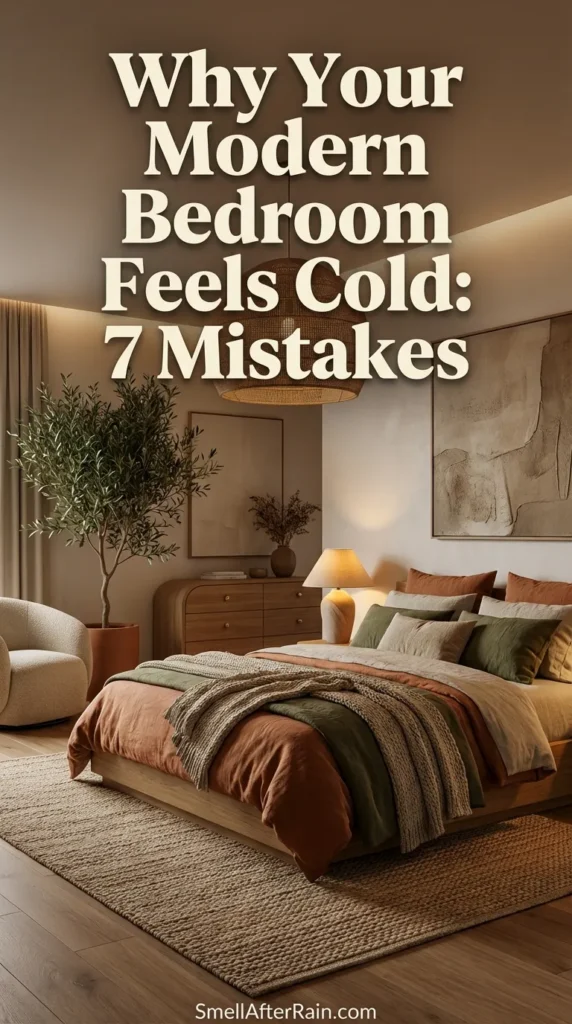
The single most destructive element in modern bedroom design is improper lighting temperature. Many homeowners unknowingly install 4000K or 5000K (Daylight) bulbs, which emit a blue-heavy spectrum that mimics the midday sun. While efficient for office work, this suppresses melatonin production and makes a room feel clinical rather than cozy. This is one of the primary reasons why your modern bedroom feels cold.
The Financial Breakdown
Replacing standard builder-grade bulbs with 2700K (Warm White) LEDs is the cheapest renovation you will ever do. For an investment of roughly $20-$30 for the whole room, you instantly alter the color rendering of your walls and furniture. This warmth softens edges and makes inexpensive furniture look higher quality by hiding finish imperfections that harsh blue light exposes.
Implementation Strategy
Do not rely on a single overhead fixture. Layer your lighting. Use smart bulbs in bedside lamps that can dim to 10% brightness. The goal is to create pools of light rather than a uniform wash. This creates depth and shadow, hallmarks of a Cozy Bedroom Aesthetic.
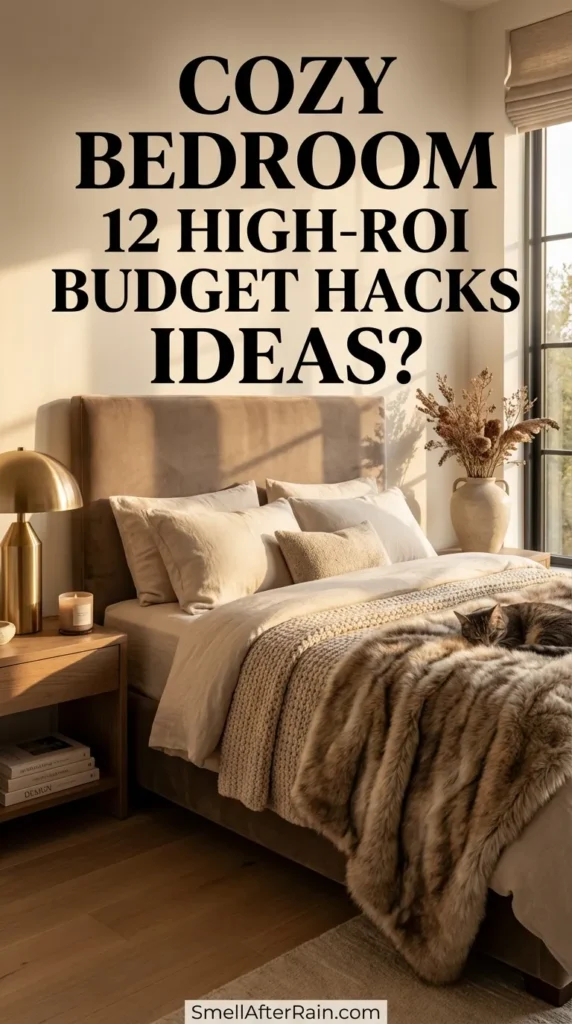
2. Strategic Textile Layering: The ‘Hotel Weight’ Principle
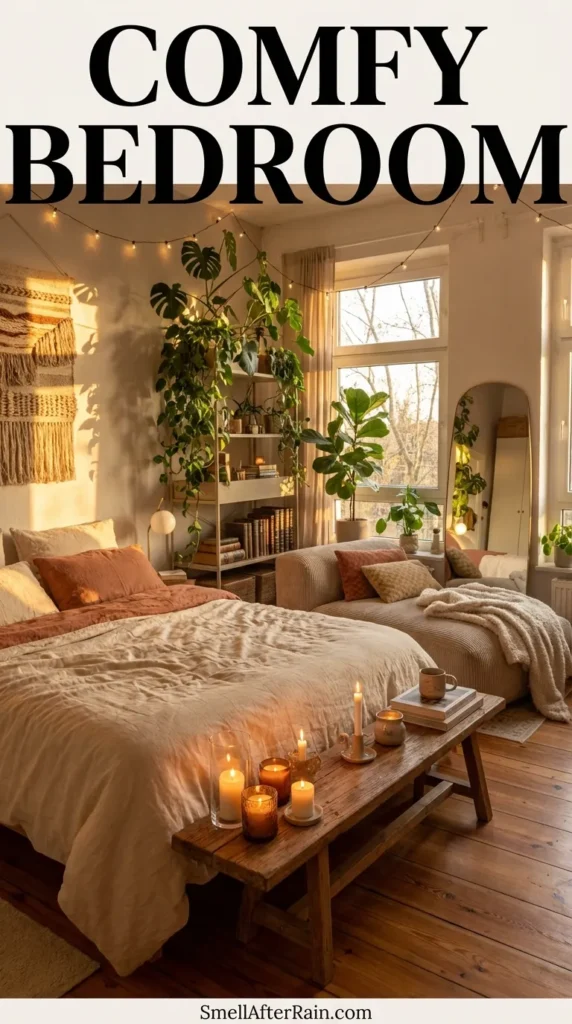
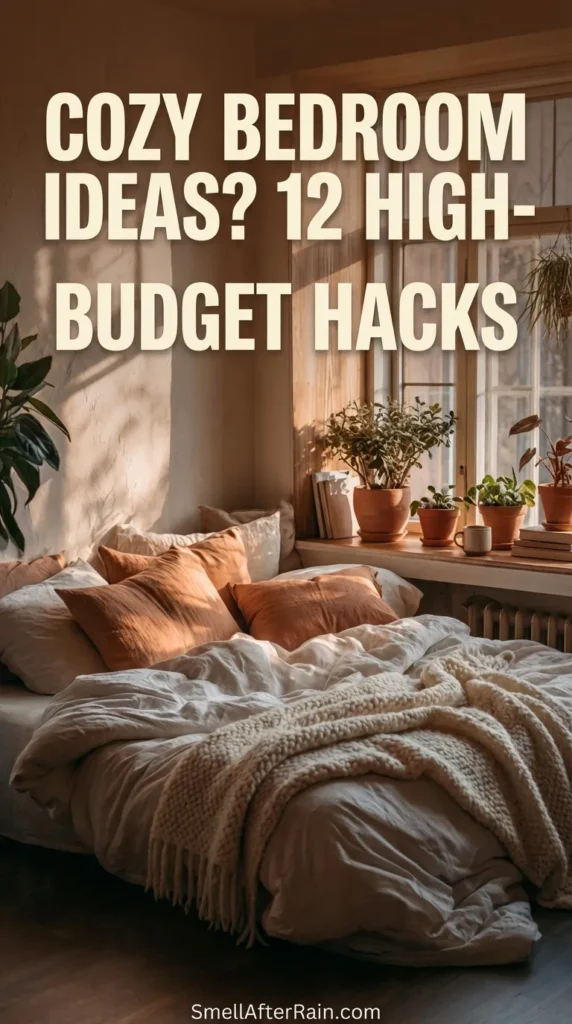
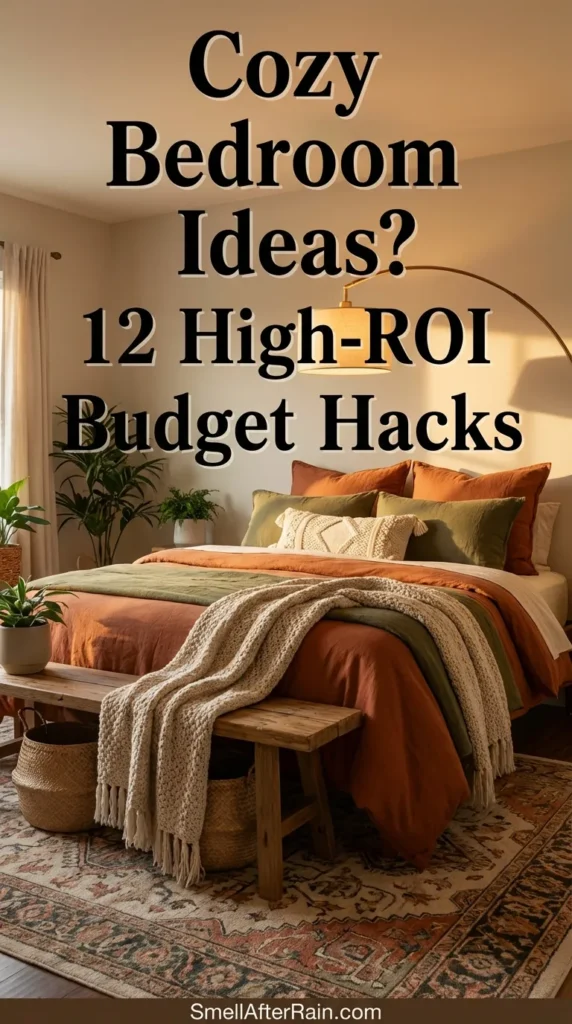
Have you ever noticed that hotel beds feel heavier and more substantial? This is the “Hotel Weight” principle, and it is key to Comfy Bedroom Ideas. A visually flat bed looks cheap and feels cold. To achieve a high-end look on a budget, you need to master the art of layering mixed materials.
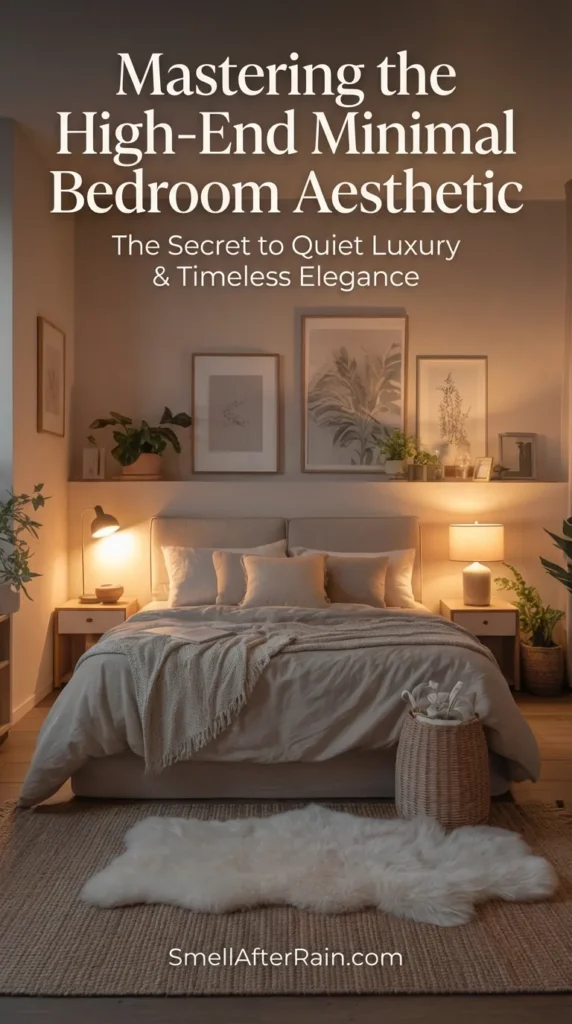
You don’t need to buy a $400 duvet. Instead, focus on volume. Layer a waffle-knit blanket over a smooth cotton duvet, and toss a chunky wool throw at the foot of the bed. The contrast between smooth, rough, and soft textures trick the eye into perceiving luxury. This is crucial for mastering the high-end minimal bedroom aesthetic.
Cost-Saving Hack
Instead of buying expensive heavy inserts, buy two mid-range medium-weight duvet inserts and stuff them both inside one duvet cover. This creates that fluffy, cloud-like European bedding look for half the price of a premium down comforter.
3. The Earthy Palette Paint Strategy (High ROI Facelift)
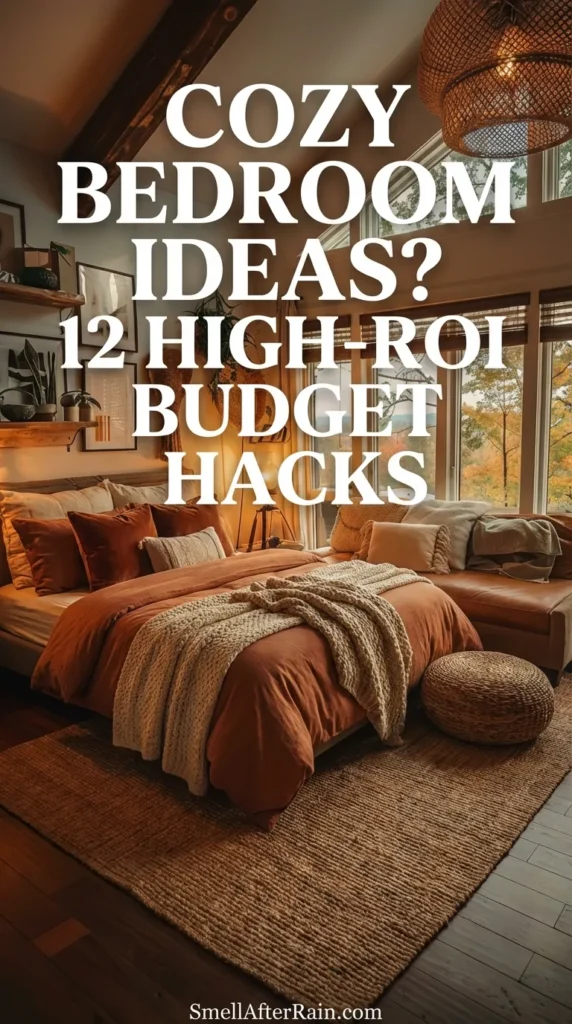
Paint offers the highest ROI of any DIY project. For an Earthy Bedroom, avoid sterile whites. Instead, lean into warm neutrals—terracotta, sage green, warm beige, or greige (gray-beige). These colors absorb light differently, making the room feel like a warm hug.
Psychologically, these tones connect us to nature, lowering heart rates. If you are exploring warm bedroom aesthetic psychological tricks, color theory is your starting point. Darker walls can actually make a small room feel larger by blurring the corners, contrary to popular belief.
The Monochrome Trick
Paint your trim, baseboards, and even the ceiling the same color as the walls. This “color drenching” technique is a massive trend in 2024 and makes standard architecture look custom and intentional. It simplifies the visual noise, contributing to a Minimalist Bedroom vibe while feeling incredibly cozy.
4. The Custom Upholstered Headboard Hack (IKEA Flip)
A bed without a headboard is just a mattress on the floor—it lacks a focal point. However, upholstered headboards can cost upwards of $600. The savvy DIYer knows that a basic IKEA pine frame (like the TARVA or NEIDEN) is just a skeleton waiting for a facelift.
By purchasing high-density upholstery foam, batting, and a few yards of textured fabric (velvet or boucle), you can wrap a basic wooden headboard to look like a $1,000 custom piece. This project usually costs under $150 in total materials.
Using a staple gun, pull the fabric tight over the foam. This soft surface adds acoustic dampening to the room, reducing echo and enhancing the quiet, Cozy Room Decor atmosphere.
5. Double-Rug Layouts: Solving Cold Floor Fatigue
If you have hardwood or laminate floors, stepping out of bed is a sensory shock. A single small rug often floats awkwardly in the room, making the space feel disjointed. The solution for dreamy bedroom ideas is the double-rug layout.
The Layering Technique
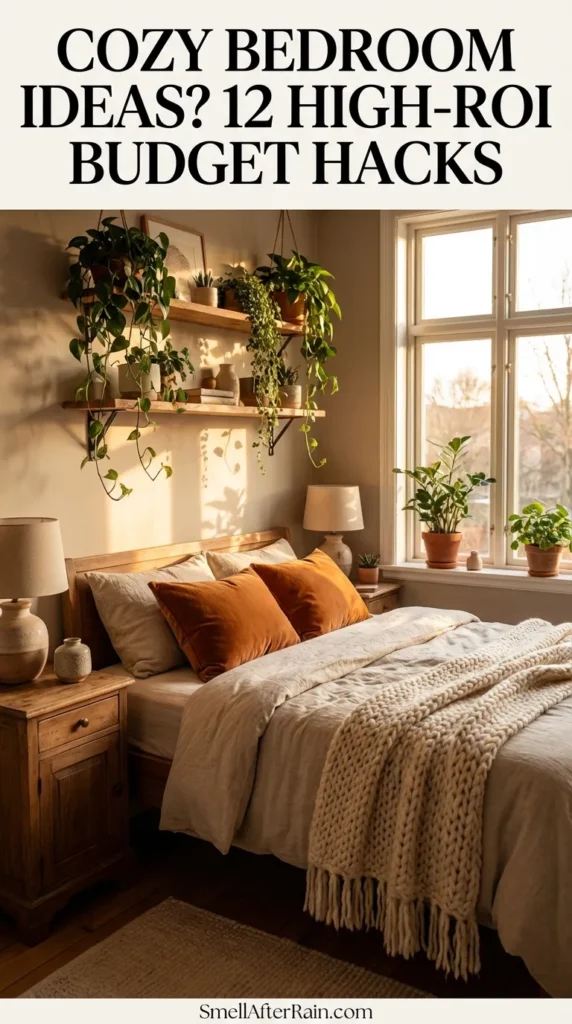
Start with a large, inexpensive natural fiber rug (like jute or sisal) as your base layer to cover the maximum floor area. This provides texture and durability. Then, layer a smaller, softer, vintage-style or faux fur rug on top, partially under the bed. This adds pattern and plushness where your feet actually land. This combination is cheaper than buying one massive vintage wool rug but achieves the same curated aesthetic.
6. High-Impact Minimalist Bedding Systems
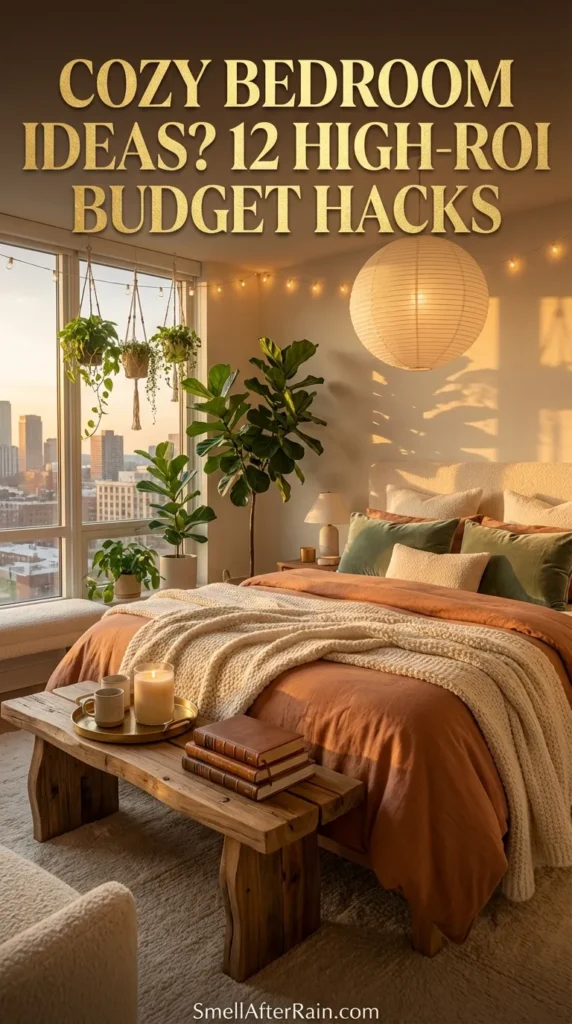
Bedroom Inspirations Cozy often feature messy, unmade beds that still look stylish. The secret is linen. Unlike crisp cotton percale which wrinkles chaotically, linen wrinkles artistically. It is breathable, thermoregulating, and durable.
While linen is an upfront investment, its ROI is high because it lasts for decades and softens with age. For a strict budget, look for “washed cotton” which mimics the look of linen at a fraction of the cost. Stick to solid colors to maintain a Minimalist Bedroom ethos. If you need a step-by-step guide on assembling this, check out our guide to build a comfy bedroom with 12 pro execution steps.
7. Biophilic ROI: Oxygenating Your Small Bedroom Layout
Plants are the only decor item that actively cleans your air. In a Small Bedroom Layout, floor space is premium. Utilize vertical space by installing a ceiling hook for a trailing Pothos or placing a Snake Plant on a high shelf.
From a design perspective, plants add organic shapes that break up the straight lines of furniture (beds, dressers, and windows are all rectangles). This softening of geometry is essential for a relaxing vibe. If you have low light, ZZ plants are virtually indestructible and provide that necessary pop of green for an Earthy Bedroom feel.
8. Floor-to-Ceiling Drapery: The Vertical Value Add
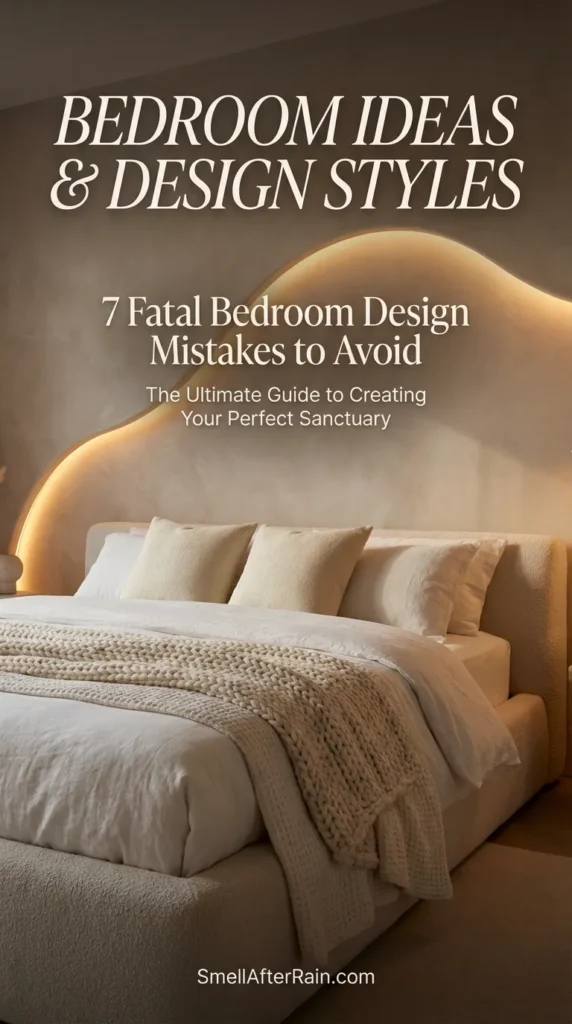
One of the 7 fatal bedroom design mistakes is hanging curtains directly above the window frame. This makes ceilings look lower and the room feel cramped.
The High-Rod Method
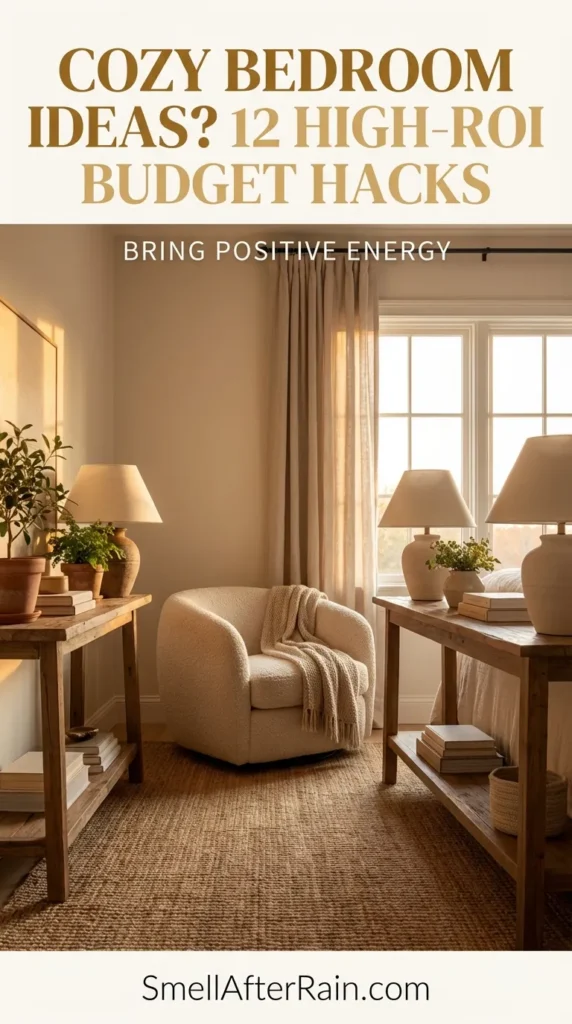
Install your curtain rod 2-3 inches below the ceiling cornice (crown molding), regardless of where the window top is. Ensure the curtains kiss the floor. This draws the eye upward, making the room feel grander and more spacious.
For the cozy factor, choose thermal blackout curtains with a linen texture face. Not only do they look expensive, but they also insulate the window, reducing heating costs in winter—a direct financial ROI.
9. The Floating Nightstand Solution for Compact Spaces
In tight quarters, bulky nightstands with legs consume visual floor space, making the room feel cluttered. A cluttered room is the antithesis of cozy. Floating nightstands (wall-mounted shelves or drawers) open up the floor area, creating a sense of airiness.
DIY Option: You can cut a piece of live-edge wood or a simple pine board, stain it to match your Warm Bedroom Aesthetic, and mount it with heavy-duty L-brackets. This costs under $40 and looks like a custom architectural feature. It also makes vacuuming underneath significantly easier.
10. Sensory Zoning: Aromatherapy and Soundscaping
Bedroom Ideas Inspiration usually focuses on the visual, but a truly cozy room appeals to all senses. Sound and smell are invisible decor layers.
- Scent: Avoid cheap synthetic air fresheners. Invest in a stone diffuser (which doubles as decor) and use essential oils like lavender or cedarwood. This ties into the Earthy Bedroom theme.
- Sound: A small white noise machine or a high-quality Bluetooth speaker for ambient rain sounds can mask street noise, isolating your sanctuary from the outside world.
11. Restoring Vintage Furniture: Sweat Equity Aesthetics
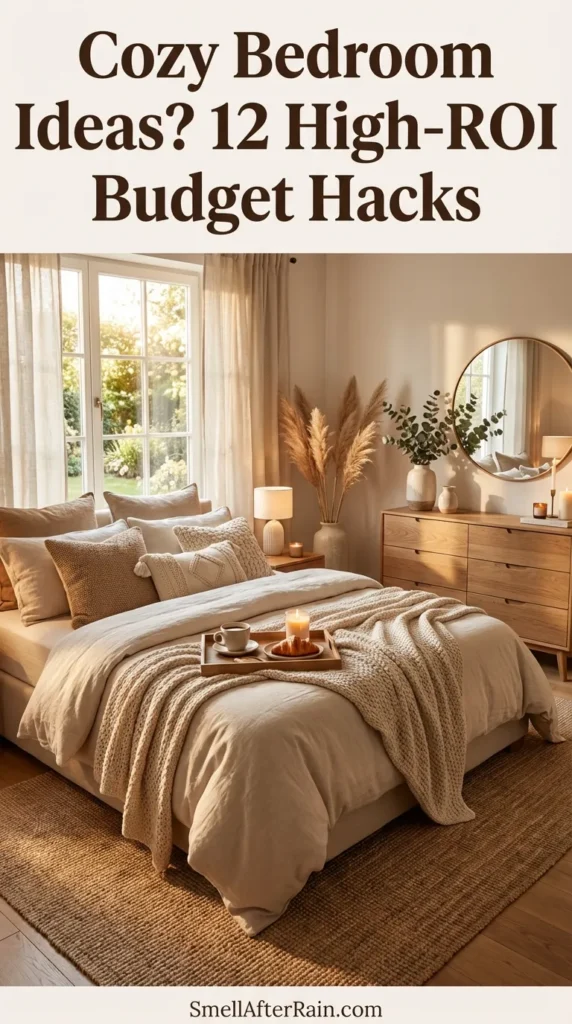
Buying new, particle-board furniture is a bad financial move; it depreciates instantly and lacks soul. For a Cozy Room Decor with character, hunt for solid wood dressers at thrift stores or estate sales.
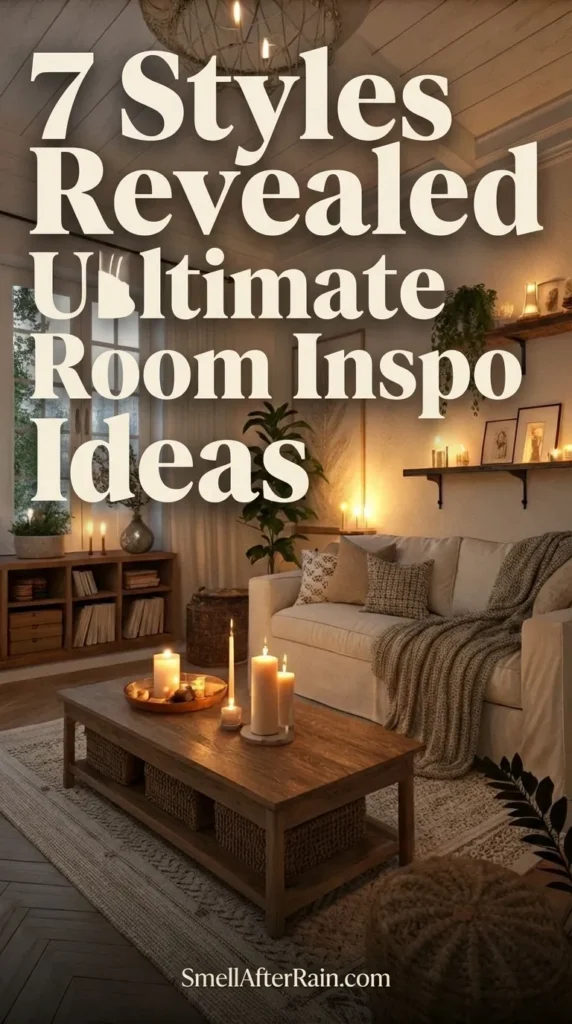
Even if the finish is damaged, solid wood can be sanded and refinished. A vintage mid-century modern dresser adds warmth and history that an IKEA Malm chest cannot replicate. The “sweat equity” you put into sanding and oiling the wood creates a piece of furniture that anchors the room with gravitas. This mix of old and new is central to the ultimate room inspo guide.
12. The ‘Negative Space’ Asset: Decluttering for Net Worth
Finally, the most effective Minimalist Bedroom tip costs $0. It is the removal of items. Negative space (empty space) is a luxury asset. It allows the eye to rest. A room packed with decor, laundry, and books induces low-level anxiety.
Remove everything from your nightstand except a lamp, a book, and a glass of water. Clear the floor. When you declutter, the remaining cozy elements (your textures, your lighting, your art) pop more effectively. You are essentially increasing the visual value of your key pieces by removing the competition.
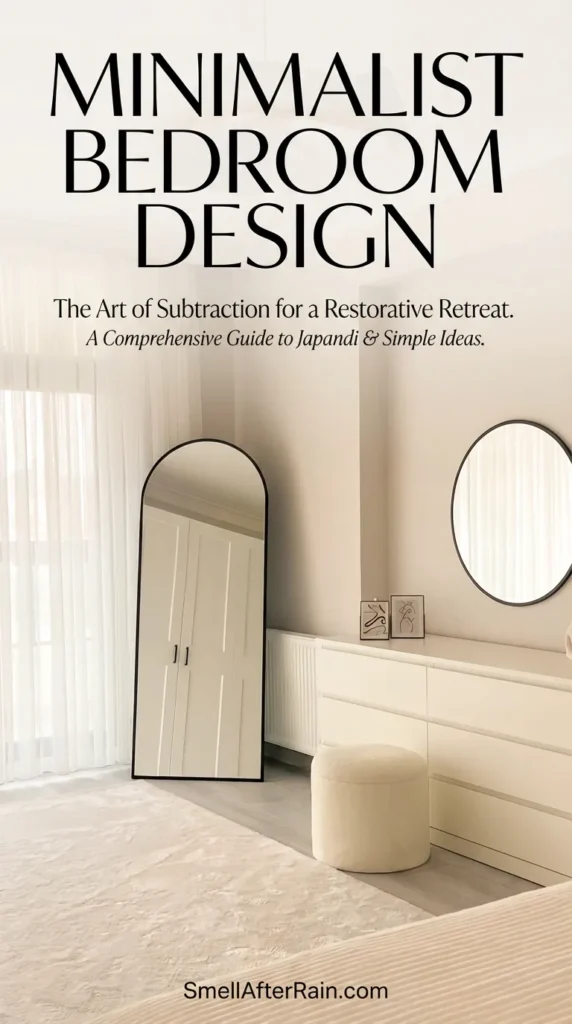
For more on achieving this balance, read about minimalist bedroom design principles that prioritize space over stuff.
Frequently Asked Questions
How can I make my bedroom cozy without buying new furniture?
Focus on lighting and rearrangement. Changing your bulbs to 2700K warm LEDs costs very little but dramatically changes the mood. Rearranging your furniture to create a better flow or a reading nook can also make the space feel new. Decluttering is the most impactful free step you can take.
What colors are best for a cozy small bedroom?
While white amplifies light, it can feel sterile. For coziness, opt for warm neutrals like oatmeal, taupe, or soft terracotta. If you are bold, a dark moody color like navy or forest green can blur the corners of a small room, creating a ‘jewel box’ effect that feels incredibly intimate and cozy.
Is a minimalist bedroom the same as a cozy bedroom?
Not necessarily, but they work well together. A minimalist bedroom can feel cold if it lacks texture. To make a minimalist room cozy, you must introduce warmth through natural materials (wood, wool, linen) and lighting. This is often called “Warm Minimalism” or “Soft Minimalism.”
What is the most important element of a cozy bedroom?
Lighting and textiles are tied for first place. You cannot have a cozy room with harsh overhead fluorescent lighting. Similarly, a room without soft textiles (rugs, throws, cushions) will feel hard and echoing. Address these two layers first for the best ROI.
How do I layer a bed to look expensive on a budget?
Use the “sleeping pillow + decorative pillow + throw” formula. Stand your sleeping pillows up against the headboard. Place two decorative textured pillows in front. Fold your duvet halfway down to show the sheets, and drape a knitted throw across the bottom corner. Mixing textures (smooth cotton vs. chunky knit) is the key to the expensive look.
Conclusion
Creating a Cozy Bedroom is an exercise in resource allocation. By prioritizing lighting, texture, and authentic materials over expensive brand-name furniture, you can craft a space that rivals high-end hotels. Remember that the goal is a high ROI on your sleep quality and mental health. Start with the lighting, clear the clutter, and layer in the warmth one texture at a time. For more inspiration, explore our full collection of bedroom ideas to transform your home.