
- 1. The Psychology of Color Temperature: Beyond Beige
- 2. Mastering Lighting Layers for Circadian Health
- 3. Tactile Psychology: The Science of Soft Textures
- 4. Biophilic Interventions: Bringing Life Indoors
- 5. The 'Cocoon Effect': Strategic Layout Planning
- 6. Material Authenticity: Wood, Stone, and Clay
- 7. Acoustic Softening: Dampening Visual and Audio Noise
- 8. The Olfactory Dimension: Scentscaping for Serenity
- 9. Bedding Architecture: The High-End Minimal Approach
- 10. Personalized Artifacts: Anchoring Identity
- 11. Window Treatments: Controlling the Light-Shadow Ratio
- 12. Cognitive Unloading: The Art of Warm Minimalism
- Frequently Asked Questions
- Conclusion
In the realm of interior design, the concept of a warm bedroom aesthetic is often reduced to a checklist of chunky knit blankets and candles. However, from the perspective of an interior psychologist, creating a truly warm and cozy bedroom goes far deeper than surface-level decor. It is about engineering an environment that signals safety to your limbic system, lowers cortisol levels, and fosters a profound sense of restoration.
A dreamy bedroom idea for a cozy minimalist escape is not just about looking good on Pinterest; it is about how the space makes you feel when the lights go down. We are moving away from the sterile, museum-like quality of stark modernism and embracing a warm minimalist bedroom approach—a style that retains the clarity of minimalism but infuses it with the organic soul of humanity.
Below, we explore 12 psychological and design-driven strategies to transform your sleeping quarters into a sanctuary of warmth, utilizing principles of color theory, sensory integration, and spatial psychology.

1. The Psychology of Color Temperature: Beyond Beige
To achieve a warm neutral bedroom idea that feels genuine, we must understand the psychology of color temperature. Many people mistakenly equate “warm” with “dark,” but a bright room can still feel incredibly warm if the undertones are correct. The goal is to envelope the occupant in colors that mimic the warmth of the sun or the earth.
While grey had its moment in the 2010s, it often registers as “cold” or “industrial” to the subconscious mind. Instead, shift towards “greige,” terracotta, oatmeal, and unbleached linen tones. These colors have higher reflectance values in the red and yellow spectrums, which biologically trigger a sense of comfort. If your room currently feels uninviting, check our guide on why your modern bedroom feels cold to identify if your palette is the culprit.

2. Mastering Lighting Layers for Circadian Health
Lighting is the single most critical factor in creating a cozy bedroom aesthetic. Harsh, overhead lighting casts long shadows and creates a high-contrast environment that keeps the brain alert—the exact opposite of what you want in a bedroom. To cultivate warmth, you must avoid fatal bedroom design mistakes like using cool-toned LEDs (above 3000K).
Psychologically, warm light (2700K and below) mimics the setting sun, signaling the body to produce melatonin. Implement a three-tier lighting strategy:
- Ambient: Dimmable recessed lights or a soft pendant.
- Task: Bedside lamps for reading, ideally with fabric shades to diffuse the glow.
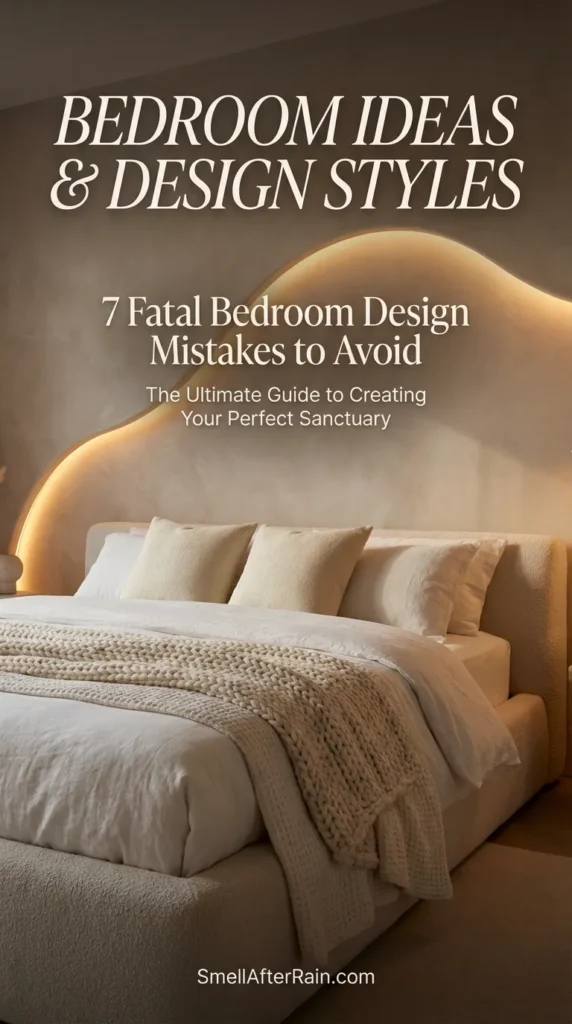
- Accent: Hidden LED strips behind a headboard or under furniture to create a floating, ethereal warmth.

3. Tactile Psychology: The Science of Soft Textures
A soft bedroom aesthetic is experienced through the skin as much as the eyes. This is known as tactile psychology. When our skin comes into contact with soft, yielding textures, our parasympathetic nervous system is activated. A room that looks soft tells the brain, “There are no hard edges here to hurt you.”
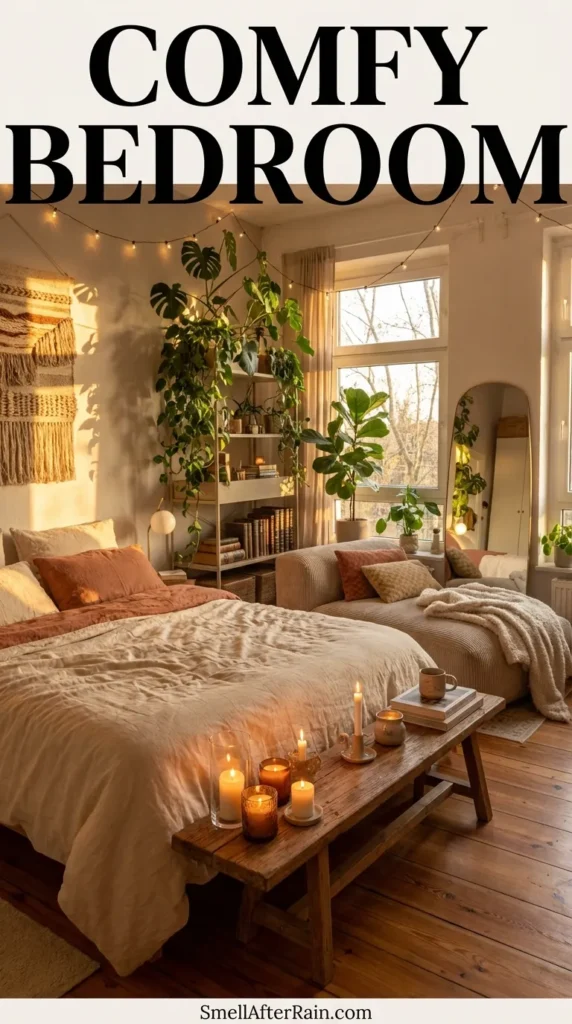
Layering is key. Do not just stop at cotton sheets. Introduce bouclé armchairs, sheepskin rugs, or a velvet ottoman. The contrast between smooth wood and nubby wool creates a rich sensory diet that prevents the room from feeling flat. This variety is essential for a comfy bedroom aesthetic that invites touch.

4. Biophilic Interventions: Bringing Life Indoors
Biophilia—our innate connection to nature—is a cornerstone of a warm earthy bedroom. Studies show that merely looking at organic greenery can lower blood pressure and reduce anxiety. However, the application in a bedroom must be intentional to maintain serenity.
Avoid cluttering the space with too many small pots, which can create visual chaos. Instead, opt for one or two structural plants, like a Ficus Audrey or a Rubber Tree, placed in woven baskets or terracotta pots. The organic shapes break up the rigid straight lines of architecture and furniture, softening the entire room’s energy.

5. The ‘Cocoon Effect’: Strategic Layout Planning
To truly build a sanctuary, you must consider how the layout affects your sense of security. In evolutionary psychology, humans prefer a vantage point where they can see the entrance without being directly in front of it—a concept often echoed in Feng Shui.
For a cozy minimalist sanctuary, position your bed so it acts as the anchor of the “cocoon.” Ensure there is ample walking space on either side to prevent a feeling of confinement. A cramped room induces subconscious stress, whereas a spacious flow allows for mental decompression.
6. Material Authenticity: Wood, Stone, and Clay
A warm apartment aesthetic often struggles with synthetic materials (laminates, plastics) that feel cold to the touch and the eye. To counter this, invest in authentic materials. Natural wood—be it walnut, oak, or teak—adds immediate visual warmth through its grain patterns and imperfections.
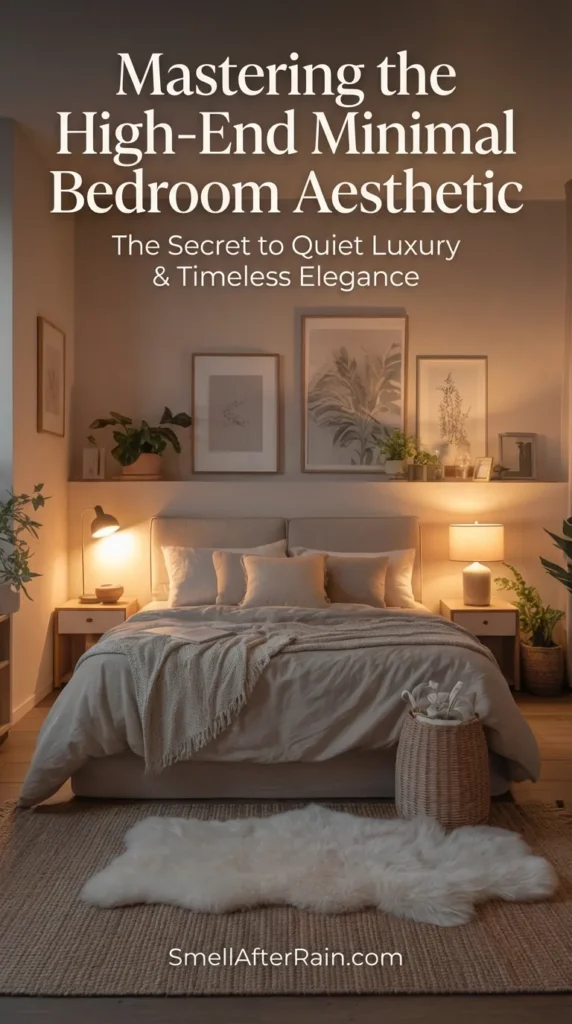
When mastering the high-end minimal bedroom aesthetic, the quality of materials speaks volumes. A solid wood nightstand or a ceramic lamp base grounds the room in reality. These elements age beautifully, acquiring a patina that synthetic materials simply cannot replicate, adding a layer of temporal warmth (the sense of history and endurance).

7. Acoustic Softening: Dampening Visual and Audio Noise
Warmth is not just visual; it is auditory. A room with an echo feels cold and empty. A calm bedroom aesthetic requires acoustic dampening. Hard surfaces bounce sound waves, creating a “live” room that can feel unsettling.
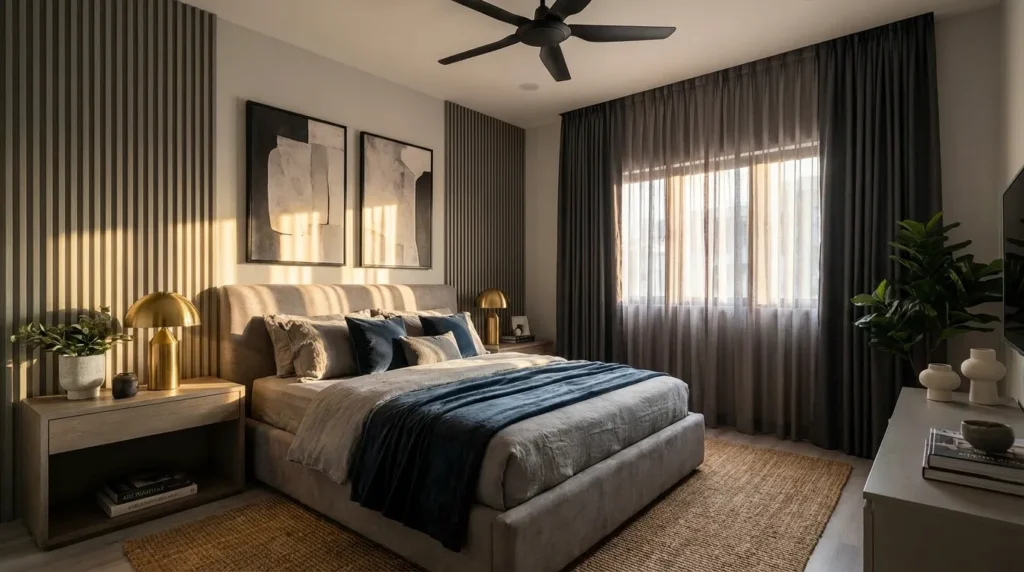
Utilize plush area rugs, heavy curtains, and upholstered headboards to absorb sound. This creates a hushed atmosphere where the world outside falls away. The psychological effect of a quiet room is an immediate drop in alertness, allowing the mind to drift towards sleep more easily.
8. The Olfactory Dimension: Scentscaping for Serenity
Scent is the only sense that bypasses the thalamus and goes directly to the brain’s emotional center. You can design the most beautiful warm and cozy bedroom visually, but if it smells sterile or musty, the illusion breaks.
Engage in “scentscaping” by using aromas associated with warmth and relaxation. Vanilla, amber, sandalwood, and cedarwood are excellent choices. Unlike citrus or mint, which are energizing, these earthy and sweet notes wrap the room in an invisible blanket of comfort.

9. Bedding Architecture: The High-End Minimal Approach
Your bed is the visual and functional centerpiece. For a warm cozy room aesthetic, the bed must look inviting, not just messy. This is where “bedding architecture” comes in—building the bed in layers.
Start with high-quality linen or bamboo sheets (which regulate temperature efficiently), add a down or down-alternative duvet for fluffiness, and finish with a heavy knit throw at the foot. The visual weight of the bedding suggests physical warmth. Avoid the “hotel tuck” which can feel too rigid; a slightly unmade, lived-in look feels more welcoming and psychologically accessible.
10. Personalized Artifacts: Anchoring Identity
A showroom looks perfect, but it feels cold because it lacks a soul. A warm bedroom aesthetic must reflect the occupant. However, this does not mean clutter. It means curating a few significant artifacts that spark joy or nostalgia.
Display a black-and-white photo of a loved one in a wooden frame, or place a piece of pottery picked up on a travel adventure on your dresser. These items serve as “identity anchors,” reminding you of who you are and where you belong, which is the essence of feeling “at home.”

11. Window Treatments: Controlling the Light-Shadow Ratio
Windows are the eyes of the room. Bare windows at night can look like black voids, which can trigger subtle anxiety (the fear of being watched). To build a comfy bedroom, you need robust window treatments.
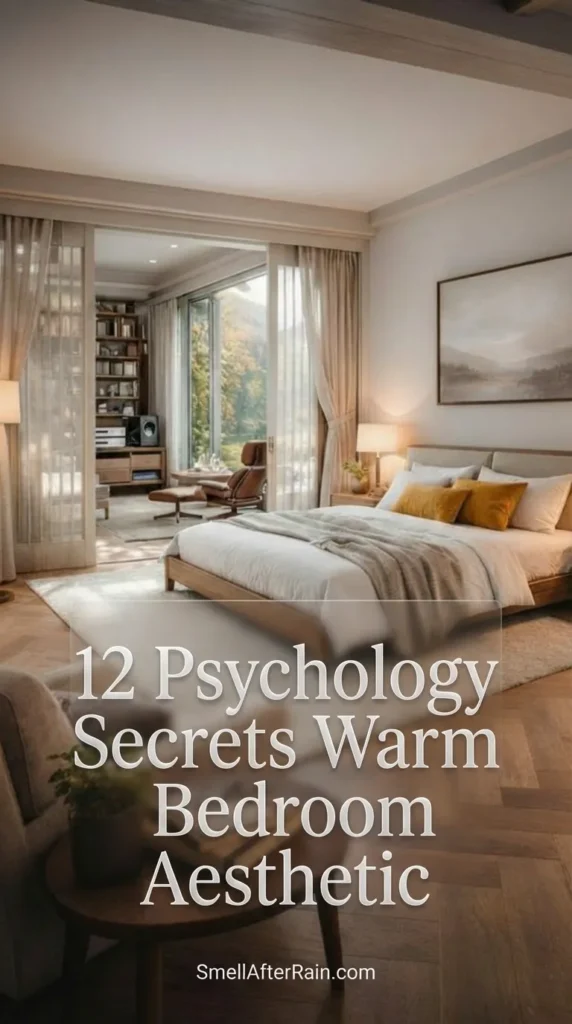
Combine sheer curtains for daytime privacy and light diffusion with heavy, blackout drapes for the night. The heavy fabric adds insulation (thermal warmth) and softness to the vertical surfaces of the room. The ability to completely control the light intake empowers you to create a cave-like environment for deep sleep.
12. Cognitive Unloading: The Art of Warm Minimalism
Finally, we must address the clutter. A chaotic room leads to a chaotic mind. Warm minimalism is the balance between coziness and clarity. Every object on display competes for your neural attention.
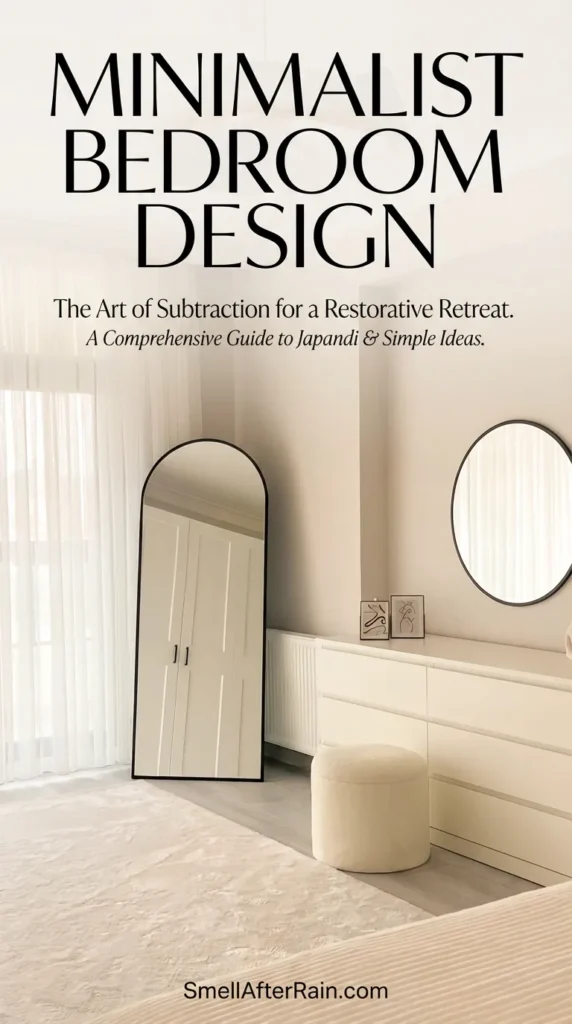
Adopt a strategy of “cognitive unloading” by removing anything that represents a task (laundry, paperwork, exercise gear). Keep the bedroom strictly for rest and intimacy. Utilize closed storage solutions to hide visual noise. Check out our guide on minimalist bedroom design to learn how to declutter without making the room feel barren. When the eyes can rest, the body follows.

Frequently Asked Questions
How do I make a white bedroom feel warm?
A white bedroom can feel warm if you choose the right shade of white. Avoid cool, blue-based whites and opt for creamy whites like alabaster or ivory. Furthermore, rely heavily on texture (knits, wood, linen) to add depth so the room doesn’t feel clinical.
What is the best color light for a warm bedroom?
The best light temperature for a bedroom is between 2400K and 2700K. This range produces a soft, yellow-orange glow similar to candlelight. Avoid bulbs labeled “Daylight” (5000K+) as they emit blue light that suppresses melatonin and makes the room feel cold.
Can a minimalist bedroom be cozy?
Absolutely. Warm minimalism is a thriving design trend that combines the clean lines of minimalism with organic materials and warm color palettes. The lack of clutter actually enhances the coziness by reducing stress, provided you use warm textures and lighting.
What are the essential elements of a warm bedroom aesthetic?
The essentials include warm ambient lighting, textured bedding (linen, wool), natural wood tones, a soft rug, and a warm neutral color palette. Personal touches and biophilic elements like plants also contribute significantly to the atmosphere.
How can I make my rental apartment bedroom feel warmer without painting?
Focus on lighting and textiles. Change the lightbulbs to warm LEDs, add a large area rug to cover cold floors, and use floor-to-ceiling curtains (mounted with tension rods if necessary) to cover plain walls. Large art pieces and bedding upgrades also make a massive difference without permanent changes.
For more inspiration on navigating different styles, explore our ultimate room inspo guide.
Conclusion
Creating a warm bedroom aesthetic is an exercise in psychology as much as decoration. By manipulating light, texture, and space, you can craft a room that not only looks beautiful but actively supports your mental and emotional well-being. Whether you are leaning towards a warm earthy bedroom or a soft bedroom aesthetic, the goal remains the same: a sanctuary for the soul.