- Understanding the DNA of a Luxe Living Room
- Tricks 1-4: Building Architectural Bones
- Tricks 5-8: Furniture Selection as Investment Strategy
- Tricks 9-12: The Detail Layer That Defines Luxury
- Material Selection Quick Reference
- Avoiding the Fatal Mistakes
- Your Questions Answered
- Your Next Step Toward Transformation
Your contemporary living room shouldn’t cost a fortune to look expensive. Most people assume that achieving a luxury living room design requires an unlimited budget. The truth is far more nuanced. High-end contemporary interior design is less about price tags and more about understanding visual weight, material psychology, and spatial choreography.
The gap between a $20,000 designer space and a $3,000 DIY project often comes down to twelve strategic decisions. These aren’t vague Pinterest tips. They are evidence-based principles used by professionals to create modern luxury living room environments that feel museum-quality.
Whether you’re working with a minimal living room footprint or a sprawling open concept, these techniques apply universally. Let’s decode what separates amateur contemporary living room decor from spaces that belong in Architectural Digest.
Understanding the DNA of a Luxe Living Room
Contemporary Is Not Cold Minimalism
There’s a dangerous myth circulating in design circles. People conflate “contemporary” with stark, sterile minimalism. A true contemporary living room balances clean lines with sensory richness.
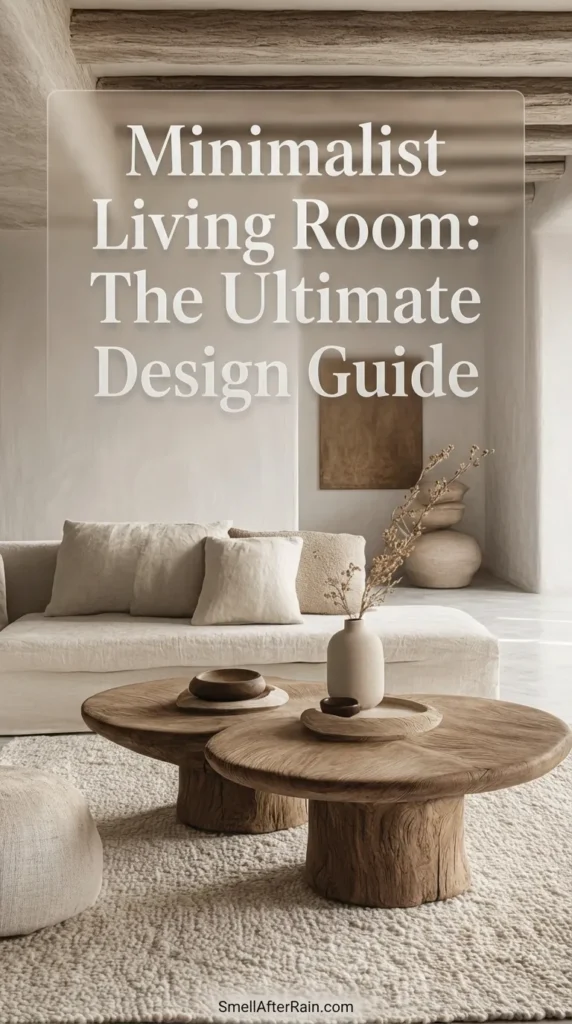
Unlike a minimalist living room that prioritizes visual emptiness, contemporary spaces layer textures while maintaining order. Think of it as controlled abundance. The distinction matters because it determines whether your space feels like a sanctuary or an Apple Store.
Contemporary design borrows curves, metallic accents, and bold art from current trends. Modern design adheres to mid-century principles with organic materials and geometric restraint. If you’re drawn to clean aesthetics but crave warmth, understanding this difference is your starting point.
The Three Pillars of Perceived Luxury
Expensive-looking spaces share three non-negotiable qualities. First, they possess architectural integrity—even if that integrity is fabricated through trim work. Second, they showcase material diversity that engages multiple senses.
Third, they demonstrate visual hierarchy. Your eye should travel through the room in a deliberate sequence. When these three elements align, you create what designers call a “rich living room” aesthetic without touching your inheritance.
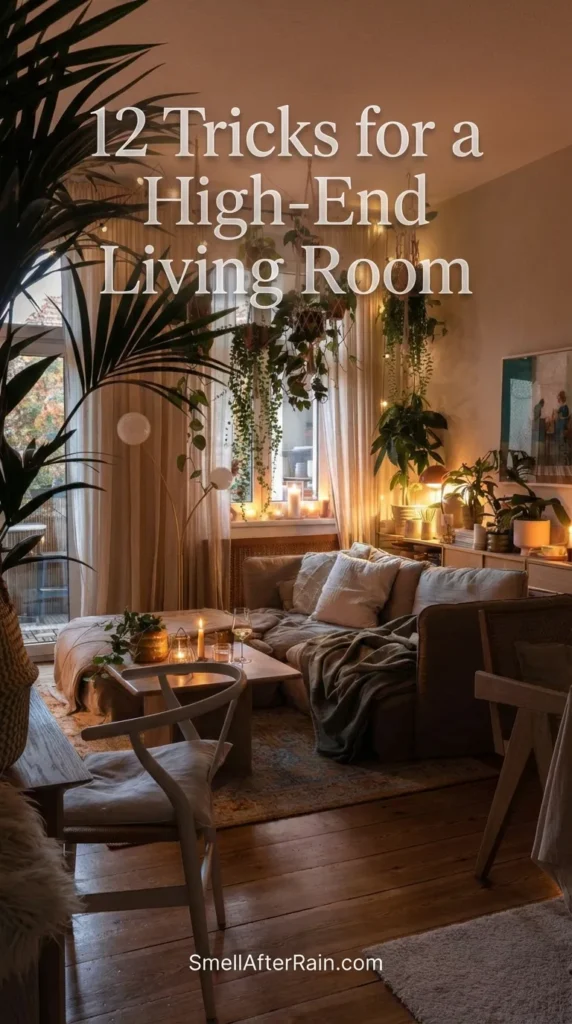
Tricks 1-4: Building Architectural Bones
#1 The Ceiling Is Your Secret Weapon
Most amateur designers ignore the fifth wall. Adding picture frame molding or tray ceiling details costs under $500 in materials. The labor is straightforward for any competent DIYer with a miter saw.
Crown molding instantly elevates a space by creating visual boundaries. It signals craftsmanship. Even in a modern elegant living room, traditional details can coexist with contemporary furniture when executed in simplified profiles.
Consider painting the ceiling a shade darker than your walls. This trick grounds the space and makes it feel curated rather than contractor-grade.
#2 Wall Treatment Separates Amateurs from Pros
Flat painted drywall reads as cheap, regardless of paint quality. Introduce dimension through board-and-batten panels, textured wallpaper, or even strategic shiplap. These installations take a weekend and under $600.
The principle behind this strategy aligns with our philosophy on creating spaces that whisper luxury through thoughtful material choices rather than shouting through logos. Texture creates shadow play that photographs beautifully and feels substantial in person.
For contemporary living room decor, consider vertical slat walls in walnut or oak. They add rhythm without overwhelming the space. Avoid dated horizontal wood treatments that scream 2015 farmhouse.
#3 Ground Your Space with Material Weight
Flooring establishes the room’s baseline quality perception. If you’re stuck with builder-grade carpet, invest in the largest area rug your budget allows. Go for 9×12 minimum in most living rooms.
Natural fiber rugs like jute or sisal add textural contrast under a plush wool layer. This double-rug technique is a designer secret for adding depth. It also lets you incorporate pattern without commitment.
Hardwood or luxury vinyl plank in wide planks (8+ inches) reads more expensive than narrow strips. The fewer seams visible, the higher the perceived quality.
#4 Window Treatments Demand Drama
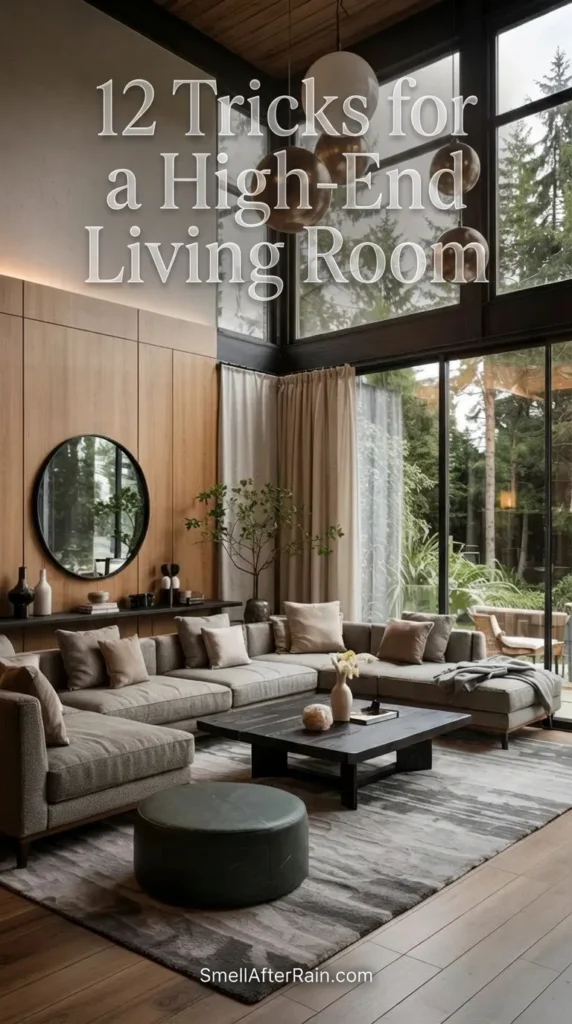
Hanging curtains at ceiling height—not at the window frame—is Design 101. This elongates walls and creates architectural drama. Use hardware that extends 8-12 inches beyond the window frame on each side.
Linen curtains in neutral tones work universally for contemporary interior design. Avoid synthetics that catch light with an unnatural sheen. The fabric should puddle slightly on the floor for maximum luxury effect.
Blackout linings add substance and functionality. Layering sheer panels behind heavier drapes gives you lighting flexibility throughout the day.
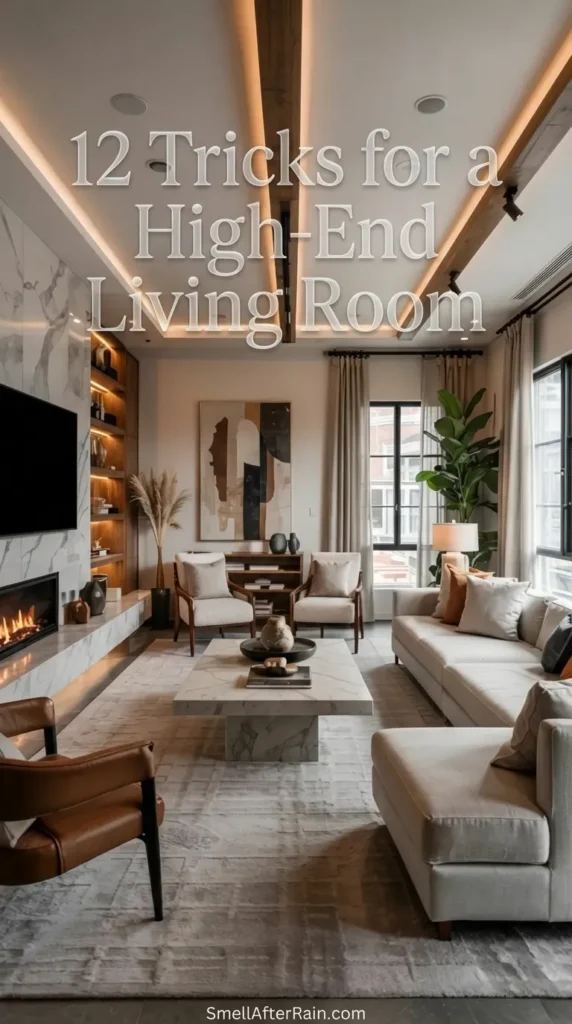
Tricks 5-8: Furniture Selection as Investment Strategy
#5 The “Go Big Somewhere” Rule
Budget allocation is where most people fail. Instead of buying ten mediocre items, invest 60% of your furniture budget in two statement pieces. An oversized sectional or a museum-quality coffee table anchors the entire room.
Large-scale art (minimum 40×60 inches for a standard living room) commands attention. It doesn’t need to be expensive—consider photography prints, textile art, or even a gallery wall arranged as one large composition. Scale trumps price.
Oversized floor lamps or sculptural pendant lighting also fall into this category. One $800 light fixture makes more impact than four $200 lamps scattered around.
#6 Low Silhouettes Create Architectural Elegance
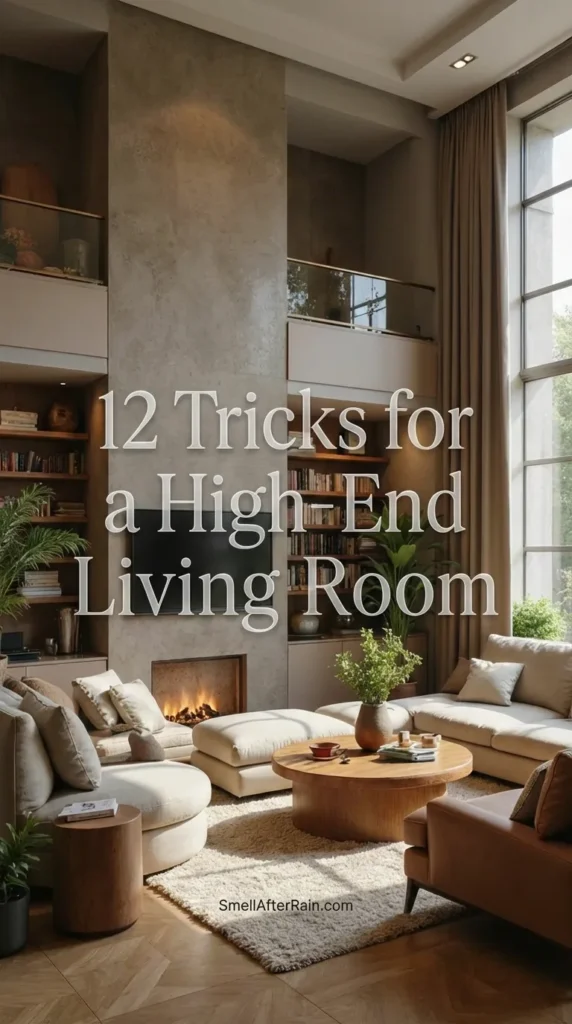
The 2026 design trend toward low-profile furniture isn’t arbitrary. Lower sightlines make ceilings appear taller and rooms feel more expansive. A sofa with a seat height of 16-18 inches looks more custom than standard 20-inch options.
This principle applies to coffee tables, media consoles, and even credenzas. Platform beds revolutionized bedroom design with this exact logic. Discover how these material layering principles work across different rooms in our comprehensive bedroom design guide to maintain consistency throughout your home.
Pair low furniture with vertically-oriented art or tall plants. This contrast prevents the room from feeling squat.
#7 Material Mixing Prevents Monotony
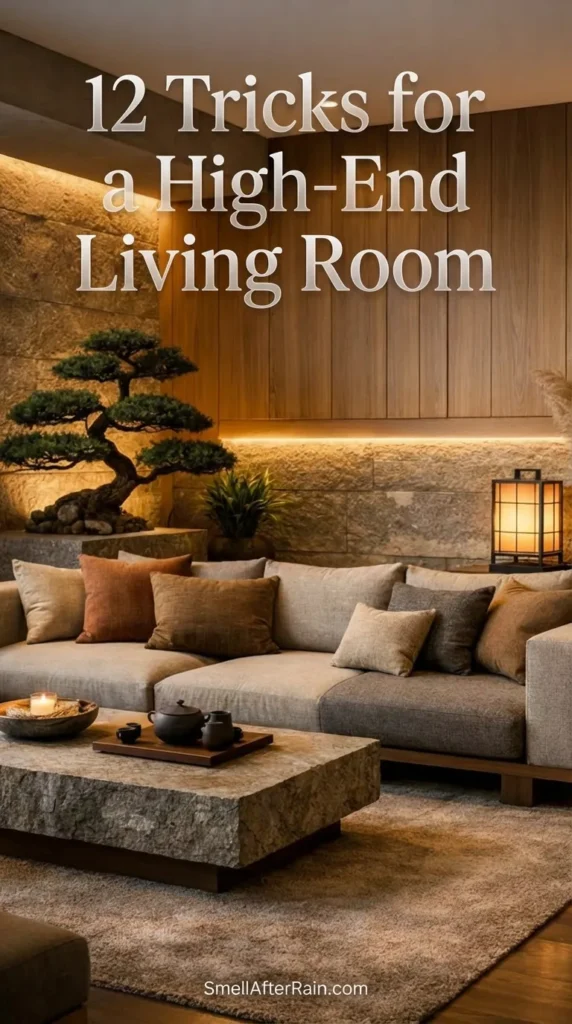
A modern luxury living room should engage at least four material families. Combine matte black metal, warm walnut wood, linen upholstery, and marble accents within the same sightline.
The key is intentional contrast, not chaos. Use a consistent color palette (typically neutrals with one accent hue) to unify disparate materials. Repetition also helps—if you introduce brass in your lighting, echo it in hardware or decor.
Avoid matchy-matchy wood tones. Mixing oak with walnut or teak adds sophistication. Uniform wood finishes feel showroom generic.
#8 Never Buy Furniture Sets
This might be the most important rule for contemporary living room authenticity. Matching three-piece sofa sets scream “I went to one store and bought everything.” High-end spaces look curated over time.
Choose your sofa from one source, accent chairs from another, and tables from vintage or artisan makers. Mixing eras and styles within a cohesive color story creates visual intrigue. It signals taste rather than convenience.
The exception is dining sets, where matching chairs make sense. But even then, consider mixing in two different head chairs.
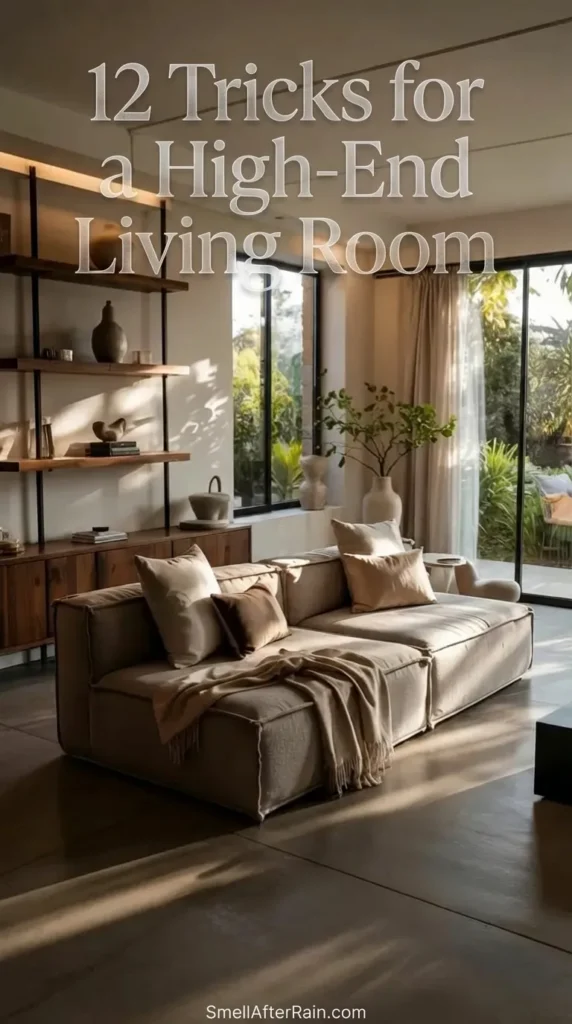
Tricks 9-12: The Detail Layer That Defines Luxury
#9 Lighting Architecture Changes Everything
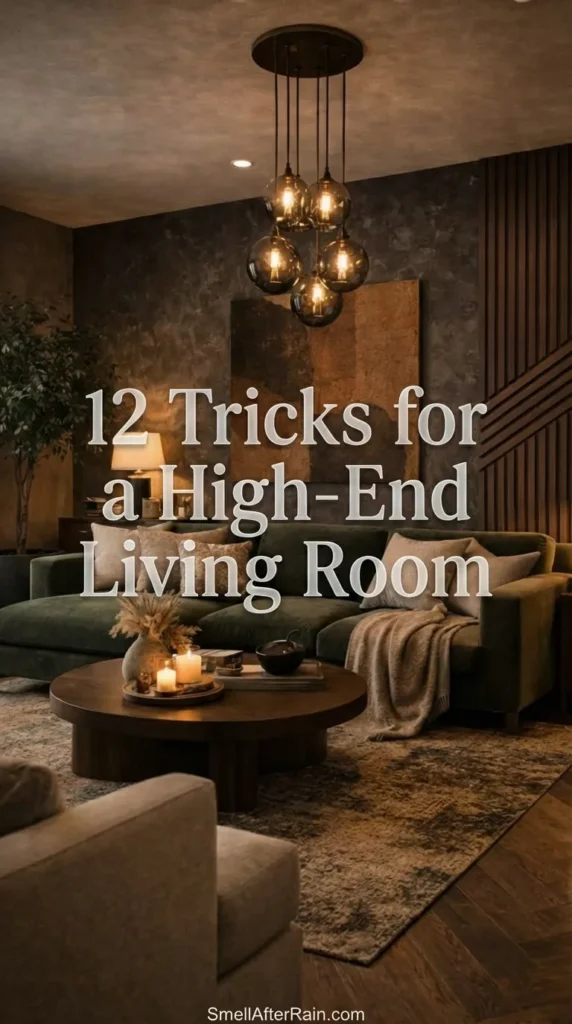
Overhead lighting alone is the mark of a rental. Layer three types: ambient (recessed or central fixtures), task (reading lamps), and accent (picture lights or LED strips). Each serves a purpose and creates depth.
Dimmers are non-negotiable. Being able to adjust lighting temperature throughout the day makes a space feel responsive. Warm light (2700K-3000K) flatters skin tones and materials better than cool blue-toned bulbs.
Consider the color rendering index (CRI) of your bulbs. Anything above 90 CRI reveals true colors and textures. This is why expensive hotels always look better than our homes—they invest in quality light.
#10 Texture-Maxxing Is Not Optional
The 2026 trend toward texture saturation acknowledges what humans crave biologically. We want to touch things. A luxe living room should offer tactile variety within arm’s reach.
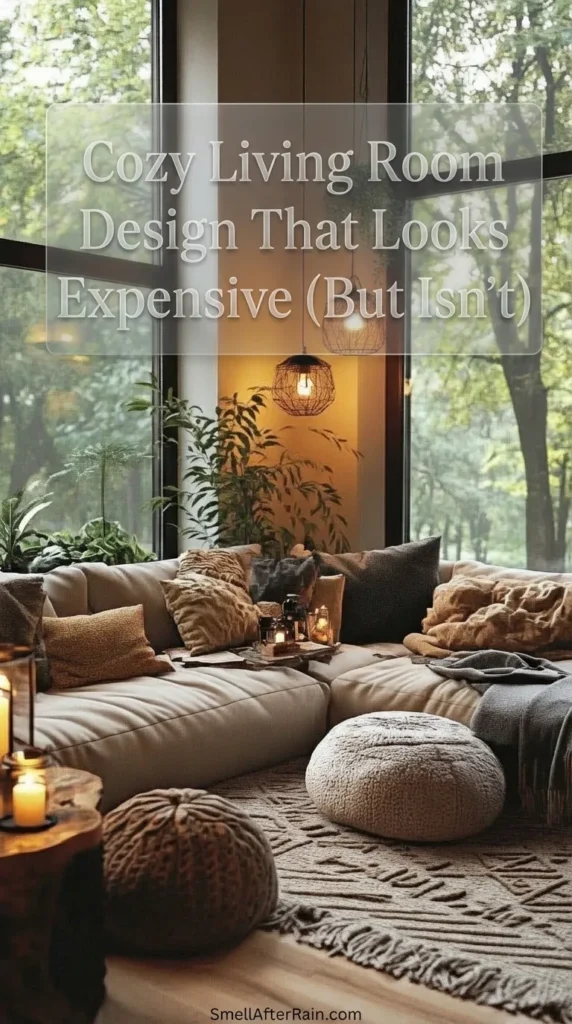
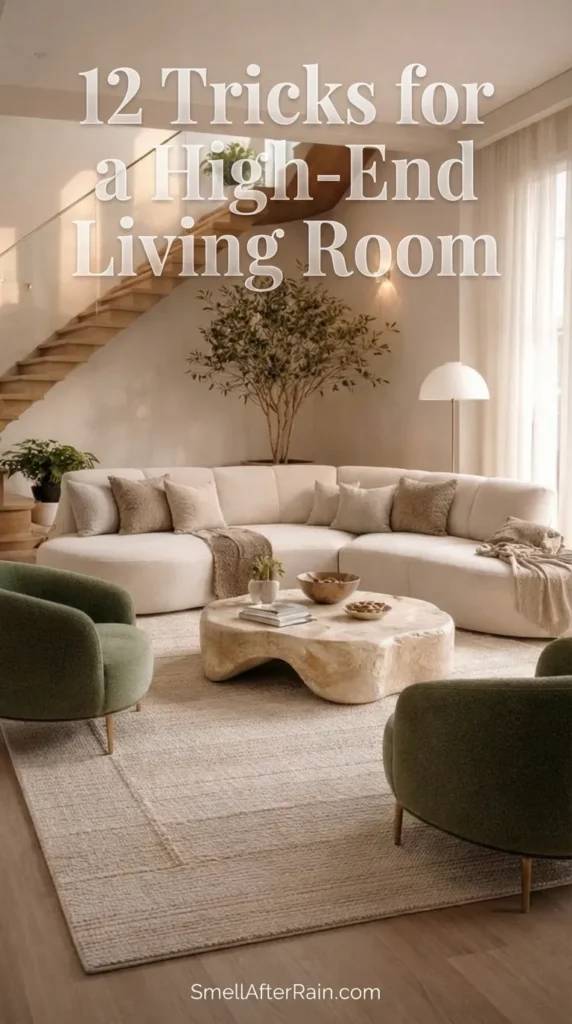
Layer a bouclé sofa with velvet pillows and a chunky knit throw. Place it on a hand-woven rug over hardwood floors. Add a ceramic vase on a stone coffee table.
Each material has a different acoustic quality too. Hard surfaces amplify sound; soft textures absorb it. Balancing this creates a room that feels acoustically pleasant even before you understand why.
#11 Color Strategy: Restraint with Intention
The modern elegant living room formula typically uses 70% neutral base, 20% secondary color, and 10% accent punch. This isn’t a rule; it’s a framework to prevent chaos.
Neutrals for contemporary spaces lean warm—think greige, taupe, camel, and cream rather than stark white and gray. These tones photograph beautifully and feel inviting. Reserve black for strategic accents that define edges.
Your accent color should appear in at least three locations around the room. This creates intentional repetition. One pop of color reads as random; three or more reads as deliberate.
#12 The Art of Strategic Incompletion
Paradoxically, over-decorated rooms feel cheap. Luxury has breathing room. Aim to leave 30% of surfaces empty—coffee tables, shelves, walls.
This doesn’t mean sparse. It means every object present earns its place. When you edit ruthlessly, what remains gains importance. This principle separates a rich living room from a cluttered one.
Resist the urge to fill every corner. Negative space is a luxury only confident designers deploy. It allows your eyes to rest and your best pieces to shine.
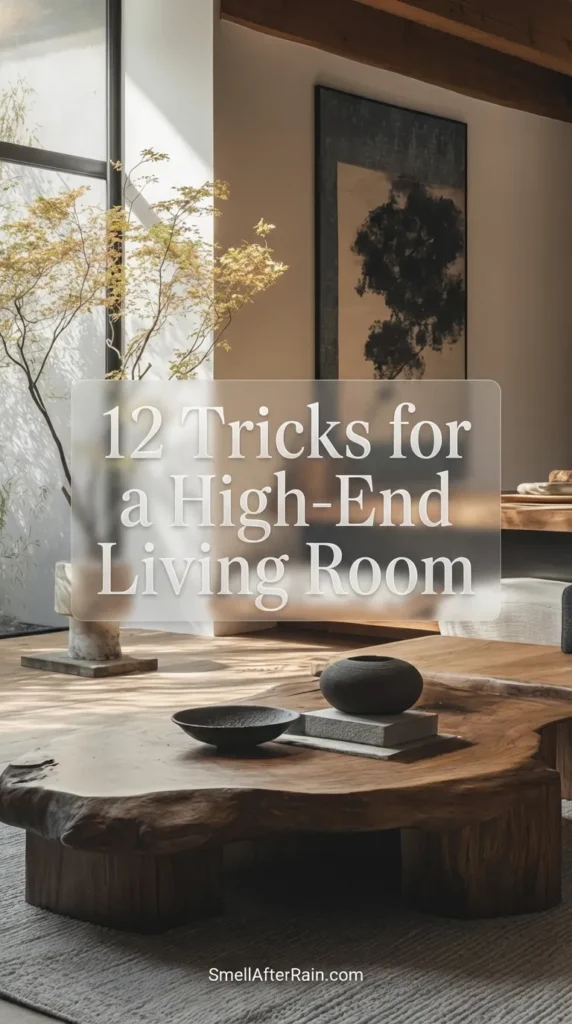
Material Selection Quick Reference
Not all materials carry equal visual weight. Understanding where to invest versus save makes the difference between looking expensive and being expensive.
- Always Invest: Flooring or large area rugs, primary sofa upholstery, and lighting fixtures. These cover significant square footage and get constant use.
- Safe to Save: Decorative accessories, throw pillows, and small side tables. These rotate seasonally and don’t define the room’s bones.
- Faux Luxury Options: High-quality LVP instead of hardwood, performance velvet instead of silk, and quartz instead of marble. Modern manufacturing makes these nearly indistinguishable.
- Texture Priorities: Linen, wool, natural stone, and solid wood always read as premium. Glass, acrylic, and high-gloss finishes feel budget unless executed exceptionally well.
When choosing between two items, pick the one with superior tactile qualities. People remember how things feel more than how they look in photos.
Avoiding the Fatal Mistakes
Mistake #1: Ignoring Scale Relationships
Furniture that’s too small for your room makes the whole space feel cheap. A 72-inch sofa in a 200-square-foot living room looks like doll furniture. Conversely, cramming oversized pieces into a small space creates claustrophobia.
Use painter’s tape to map furniture footprints on your floor before buying. Leave at least 30 inches for primary walkways and 18 inches between furniture pieces.
Mistake #2: All-White Everything
The all-white contemporary living room was trendy in 2018. Now it feels sterile and derivative. Introduce warmth through wood tones, caramel leather, or terracotta accents.
White works beautifully as a backdrop, but it needs companions. Think of it as your canvas, not your entire painting. Browse our complete collection of living room transformation ideas to see how color and neutrals coexist.
Mistake #3: Prioritizing Style Over Comfort
A modern classic living room should look refined and feel livable. If your guests perch awkwardly on your sculptural chairs, you’ve failed. Beauty and comfort aren’t mutually exclusive.
Test seating depth (minimum 22 inches for lounging), cushion firmness, and back support. The most expensive-looking rooms invite lingering, not posing for Instagram and leaving.
Mistake #4: Forgetting Practical Storage
Clutter destroys luxury faster than anything else. Incorporate closed storage that hides remotes, chargers, and everyday chaos. Credenzas, ottomans with hidden compartments, and built-in cabinetry all serve this purpose.
Visible storage should look intentional—curated book stacks, beautiful ceramics, and framed photos. Everything else goes behind doors.
Your Questions Answered
What’s the Real Difference Between Contemporary and Modern Living Rooms?
Modern design refers specifically to mid-20th century aesthetics—think Eames chairs and organic shapes. Contemporary means “of the moment” and evolves constantly. Contemporary spaces embrace curves, mixed metals, and bold art that modern purists might reject.
Contemporary allows more personality. You can mix eras and styles as long as they feel current. Modern adheres to stricter principles.
Can Small Spaces Achieve Luxury Living Room Design?
Absolutely. Small spaces benefit from the same principles with adjusted scale. Use mirrors to amplify light and create depth. Choose furniture with exposed legs to maintain visual flow.
In compact rooms, every piece must work harder. A sleeper sofa, nesting tables, and wall-mounted lighting preserve floor space while looking intentional.
What Three Furniture Pieces Should I Invest In First?
Your sofa, your primary light fixture, and your largest area rug. These define the room’s quality baseline. Everything else can be budget-friendly as long as these three anchor pieces show restraint and craftsmanship.
Consider allocating 40% of your budget to the sofa, 20% to lighting, and 20% to the rug. The remaining 20% covers everything else.
How Do I Avoid Looking Like a Hotel Lobby?
Personalization prevents the hotel vibe. Display books you’ve actually read, art that means something to you, and textiles with history. Hotels feel generic because they avoid personal references.
Incorporate one vintage or heirloom piece. It grounds the space in narrative and prevents the showroom effect.
What’s the Color Formula for a Modern Elegant Living Room?
Start with warm neutrals (greige, camel, ivory) as your 70% base. Add a sophisticated secondary like charcoal, navy, or forest green for 20%. Use brass, cognac, or terracotta as your 10% accent.
Avoid pure black and stark white as primaries. They photograph dramatically but feel harsh in person.
Which Architectural Details Can I DIY?
Picture frame molding, board-and-batten walls, and ceiling medallions are beginner-friendly projects. You need basic carpentry skills and patience. YouTube tutorials make these accessible to most homeowners.
Hire out electrical work for new lighting and any structural changes. But decorative carpentry is surprisingly achievable.
How Do I Add Warmth to a Minimal Living Room?
Layer natural materials aggressively. Swap metal for wood wherever possible. Add textile weight through linen curtains, wool rugs, and layered throws.
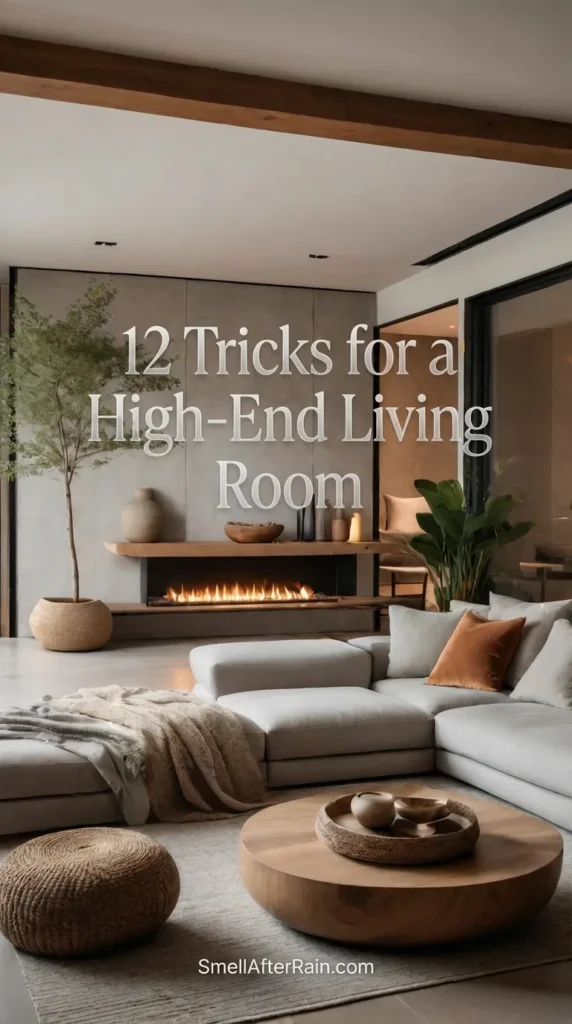
Introduce curves through arched mirrors, rounded coffee tables, or sculptural lamps. Curves soften minimal spaces without cluttering them.
What’s the Real Difference Between a $5,000 and $20,000 Living Room?
The $20,000 room invests in custom built-ins, premium upholstery, and designer lighting. The $5,000 room achieves 80% of the same visual impact through smart material choices and DIY architectural details.
Both can look expensive if the $5,000 room prioritizes architectural integrity and restraint. Most people can’t distinguish high-end from well-executed budget when the fundamentals are solid.
Your Next Step Toward Transformation
Creating a contemporary living room that radiates luxury isn’t about maxing out credit cards. It’s about understanding material psychology, spatial relationships, and the quiet confidence of restraint. These twelve strategies work because they address how humans perceive quality, not arbitrary trends.
Start with your architectural bones—ceiling details, wall treatments, and window drama. Move to your hero furniture pieces that command attention. Finish with the sensory layer of texture, lighting, and curated objects.
Remember that luxury is a feeling, not a price point. When your space makes you exhale the moment you enter, you’ve succeeded. That’s the essence of contemporary interior design done right.