- 1. Mastering the Kelvin Scale for Emotional Warmth
- 2. The Limewash Effect: Adding History to New Walls
- 3. The Double-Rug Method for Instant Grounding
- 4. Wood Tones: The Walnut vs. Oak Debate
- 5. Velvet and Bouclé: The Texture Power Couple
- 6. Window Dressing: The Importance of the 'Puddle'
- 7. Curved Architecture in a Boxy Apartment
- 8. The Unmade Bed Aesthetic: Linen Logistics
- 9. Scentscaping with Earthy Base Notes
- 10. The Vintage Patina Rule
- 11. Books as Insulation: The Paper Texture
- 12. Greenery That Mimics the Wild
- Frequently Asked Questions
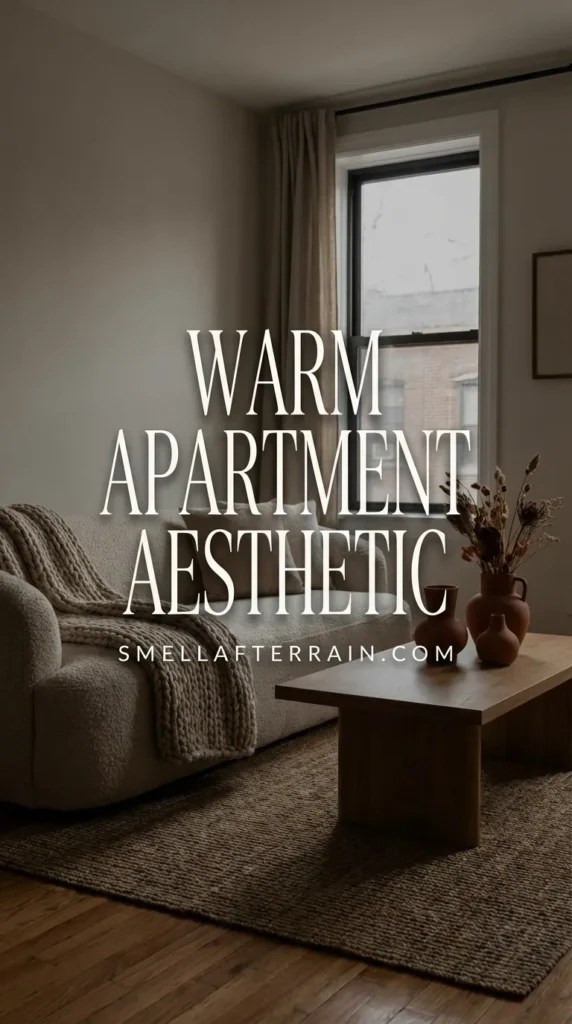
I am currently holding a rough-hewn ceramic mug filled with spiced chai. The steam is rising in a lazy spiral, and the heat from the ceramic is seeping into my palms. It matches the room perfectly.
I’m sitting on my favorite armchair—a worn cognac leather piece that squeaks softly when I shift—and looking at how the afternoon light catches the grain of my oak coffee table. This specific moment, this tactile connection between my hands and my home, is exactly what I mean when I talk about a warm apartment aesthetic.
It isn’t just about buying beige things. It’s about texture. Lately, I have become obsessed with the way things feel. I find myself running my hands over fabric swatches, testing the grit of unpolished wood, and hunting for velvet that feels like a hug.
Creating a cosy apartment aesthetic is an architectural endeavor as much as a decorative one. You have to build the warmth layer by layer, almost like a contractor laying a foundation.
I used to think a clean, white box was the epitome of style. I was wrong. Real style, the kind that makes you want to cancel plans and stay in, is about depth. It’s about creating a homey apartment that holds you.
Here are my 12 architectural secrets to building a space that feels as warm as this cup of chai.
1. Mastering the Kelvin Scale for Emotional Warmth
Let’s start with the invisible paint: light. You can buy all the blankets in the world, but if your bulbs are 5000K (daylight blue), your warm living room aesthetic is dead on arrival.
I treat lighting plans like a blueprint. For a truly warm feel, you need to stay strictly between 2400K and 2700K on the Kelvin scale. This emits a golden, candle-like glow that mimics the feeling of sunset.
But it’s not just the bulbs; it’s the diffusion. I avoid exposed bulbs unless they are vintage Edisons with a very low lumen count. Instead, I look for shades made of linen, rice paper, or amber glass.
These materials act as a filter, softening the harshness of electricity into something organic. As I discussed in my guide on lighting mistakes that kill earthy vibes, the goal is to eliminate shadows in the corners of the room.
Shadows make a space feel small and cold. By placing low-level floor lamps in corners, you expand the visual warmth of the room.
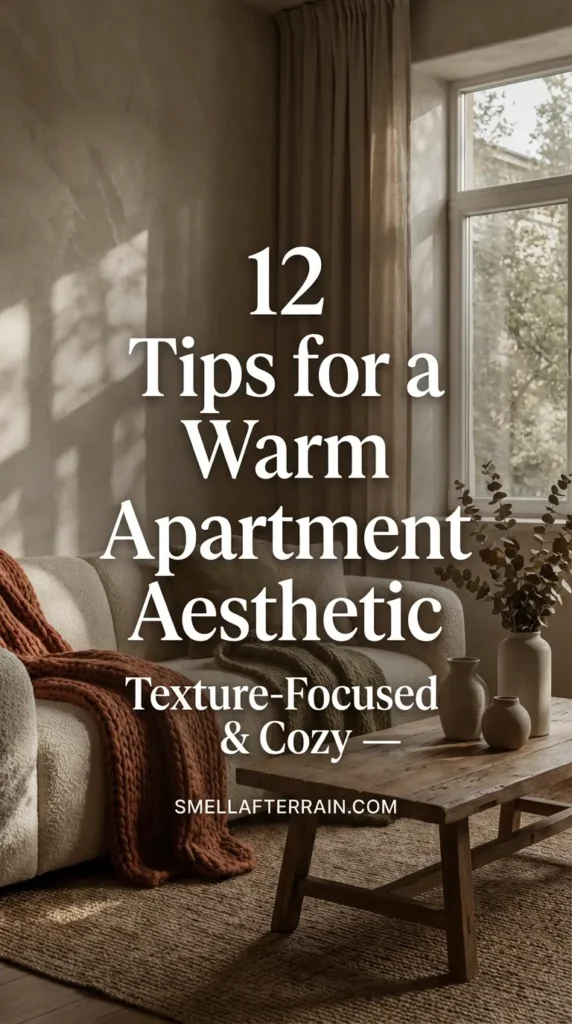
2. The Limewash Effect: Adding History to New Walls
Most apartments come with standard flat drywall. It’s smooth, it’s practical, and it is utterly soulless. To get that earthy apartment feel, you need to disrupt that smoothness.
My current obsession is limewash paint. Unlike standard latex paint, which sits on top of the wall like a plastic film, limewash penetrates and calcifies.
It creates a mottled, suede-like texture that catches the light differently depending on the time of day. When I touch my walls now, they feel like stone, like they have been there for centuries.
If you are renting and can’t paint, consider peel-and-stick textured wallpaper that mimics plaster or woven grasscloth. The goal is to stop the eye from sliding off the wall and give it something to ‘grip’ onto visually.
I outlined similar strategies for adding depth without clutter in my piece on designing a minimalist living room with soul. Texture is the antidote to sterility.
3. The Double-Rug Method for Instant Grounding
A single rug is functional. Two rugs are a design statement. In my own little apartment aesthetic journey, I realized that one rug often looks like a postage stamp floating in a sea of laminate flooring.
The solution is layering. I start with a large, natural fiber rug as the base—usually jute or sisal. It’s tough, gritty, and brings in that raw wood element.
Then, I layer a smaller, softer rug on top. This could be a vintage Persian rug, a sheepskin, or a high-pile Moroccan wool rug.
This does two things. First, it physically adds insulation, making the floor warmer to the touch. Second, it creates a visual hierarchy. The bottom layer creates a designated zone, while the top layer invites you to take your shoes off.
I explore more about floor layering in my article on softening contemporary living spaces. It’s the quickest way to fix a cold floor.
4. Wood Tones: The Walnut vs. Oak Debate
Plastic and chrome are cold to the touch. Wood is warm. It retains heat, it has grain, and it changes over time. But not all woods create the same vibe.
For a cozy vintage apartment, I gravitate towards darker woods like walnut or teak. They absorb light, creating a moody, intimate atmosphere.
However, if your space is small, you might prefer white oak or ash, which reflect light while still offering organic grain patterns. The key is to mix them intentionally.
Don’t be afraid to mix wood tones, but keep the undertones consistent. I usually stick to warm, honey-based undertones rather than cool, ashy ones.
Running your hand along the edge of a solid wood table is a grounding experience that veneer just can’t replicate. You can see examples of mixing woods in my post about warm Scandinavian design principles.
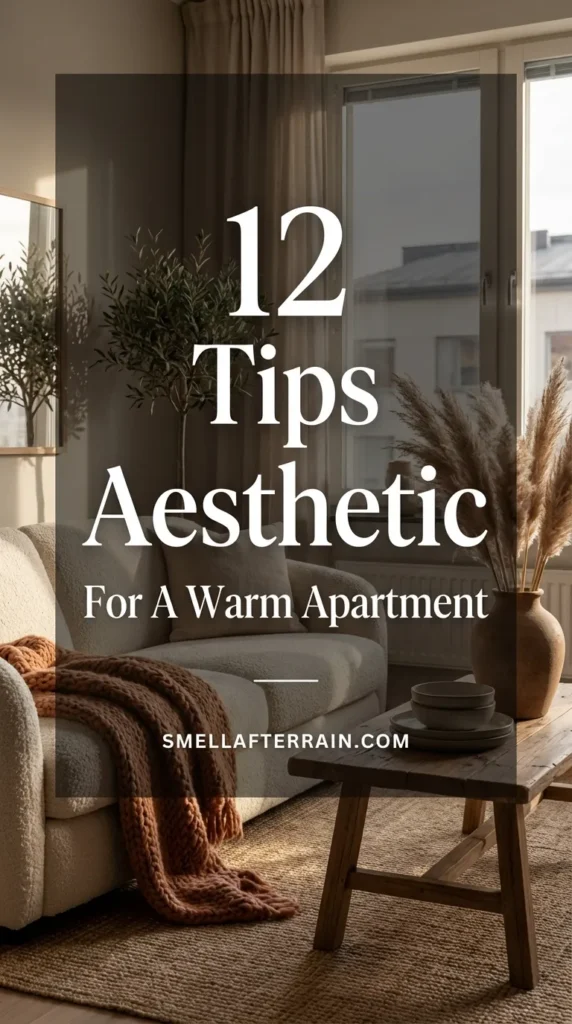
5. Velvet and Bouclé: The Texture Power Couple
Here is where my texture obsession truly takes over. In a comfy apartment aesthetic, the fabrics you choose for your upholstery are critical.
I love the contrast between velvet and bouclé. Velvet is smooth, dense, and reflects light with a soft sheen. It feels luxurious and heavy.
Bouclé, on the other hand, is knobby, matte, and light-absorbent. It feels like a favorite sweater.
Putting a velvet pillow on a bouclé sofa (or vice versa) creates a tactile dialogue. It makes you want to touch everything. I avoid synthetics that feel slippery or cold.
Cotton velvet, in particular, has a breathability that polyester velvet lacks. It ages better, developing a soft crush over time that looks incredibly inviting. I dive deeper into selecting luxury fabrics in my guide to creating a luxury feel in everyday spaces.
6. Window Dressing: The Importance of the ‘Puddle’
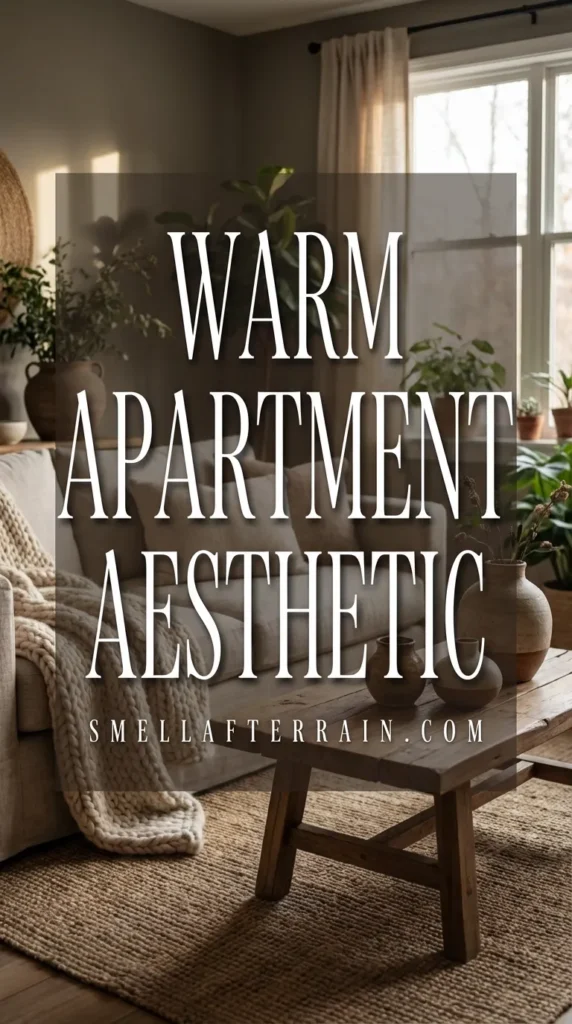
Naked windows are the enemy of warmth. Blinds are functional, but they are hard and linear. To soften a room, you need curtains, and you need a lot of them.
I always adhere to the “high and wide” rule—hanging the rod as close to the ceiling as possible and wider than the window frame. But the real secret to a warm bedroom aesthetic is the “puddle.”
I add an extra 2-3 inches to the length of my curtains so they pool slightly on the floor. This creates a look of abundance and relaxation.
It implies that the fabric is heavy and luxurious, not skimpy. I prefer heavy washed linen for this. The way light filters through linen weave highlights the texture of the fabric itself.
For more on how drapery transforms a room’s value, check out my thoughts on cozy design elements that look expensive.
7. Curved Architecture in a Boxy Apartment
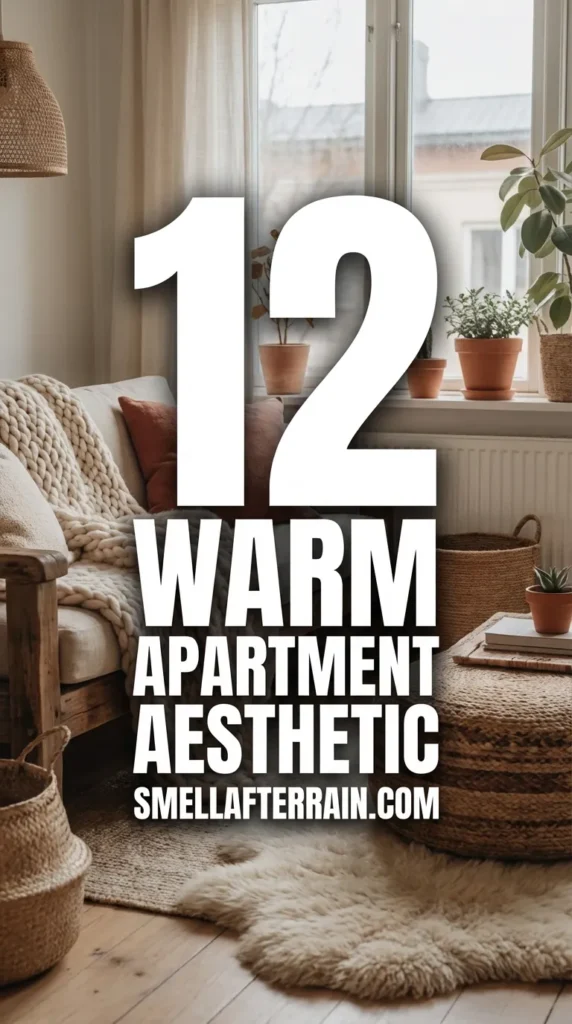
Most apartments are boxes. Square rooms, rectangular windows, sharp corners. This geometry feels rigid and somewhat aggressive.
To introduce a cool apartment aesthetic that still feels warm, you need to break the grid. I do this with curved furniture.
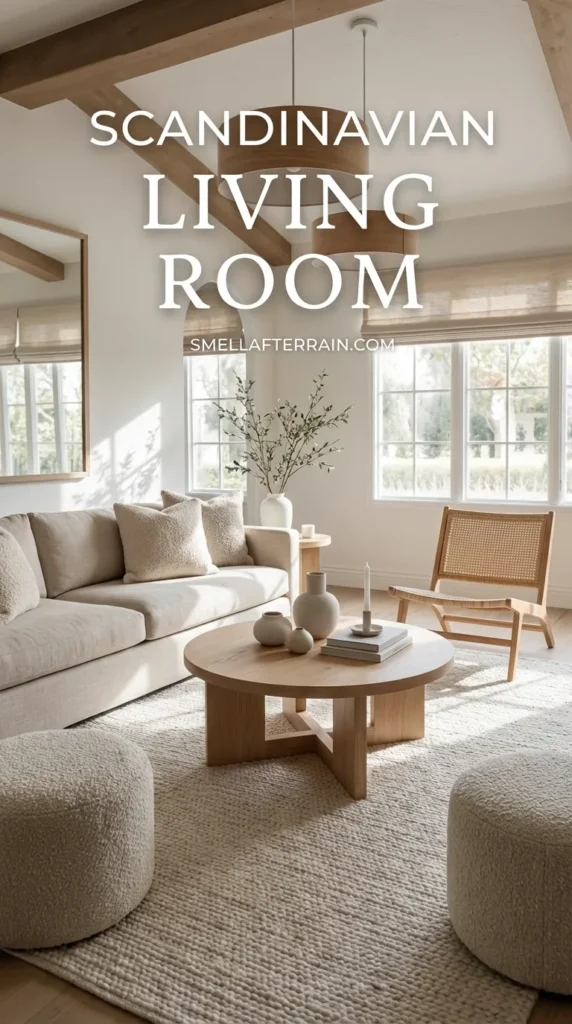
A round coffee table, an arched mirror, or a sofa with a curved back softens the flow of the room. Your eye glides over curves rather than stopping abruptly at corners.
Psychologically, curves are perceived as safer and more welcoming than sharp angles. It’s a subtle shift, but it changes the energy of the entire room.
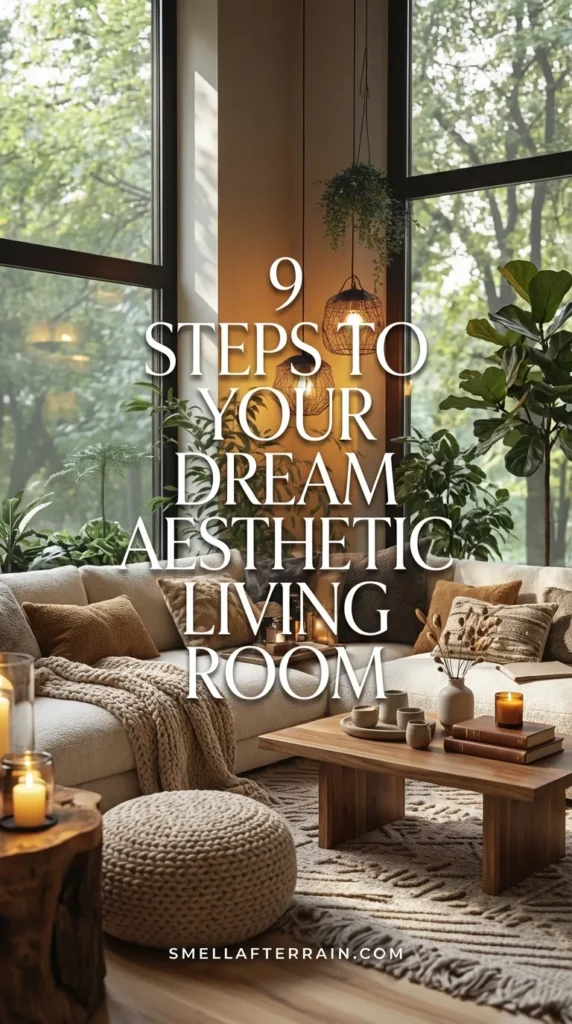
Even small accessories, like spherical vases or round pillows, can help disrupt the boxiness. I mapped out this flow strategy in my 9-step guide to your dream aesthetic.
8. The Unmade Bed Aesthetic: Linen Logistics
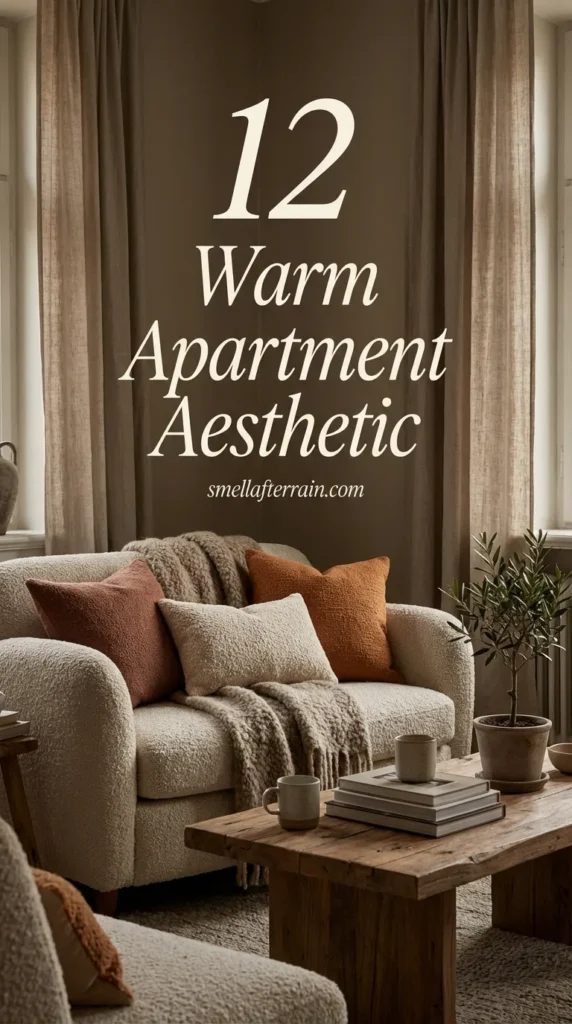
A perfectly made hospital corner bed feels sterile. A warm bed looks like it’s just been slept in, or is waiting for you to crawl back in.
This is the art of the “messy” bed. I use 100% flax linen bedding because it has a natural crinkle that looks beautiful even when unironed.
The key is volume. I use a duvet insert that is one size larger than the duvet cover. If I have a Queen bed, I use a King insert in a Queen cover.
This makes the duvet look puffy, cloud-like, and incredibly inviting. Layering a chunky knit throw at the foot of the bed adds another texture dimension.
It’s about creating a nest. You can find more bedding layering techniques in my post on timeless cozy ideas for luxury living.
9. Scentscaping with Earthy Base Notes
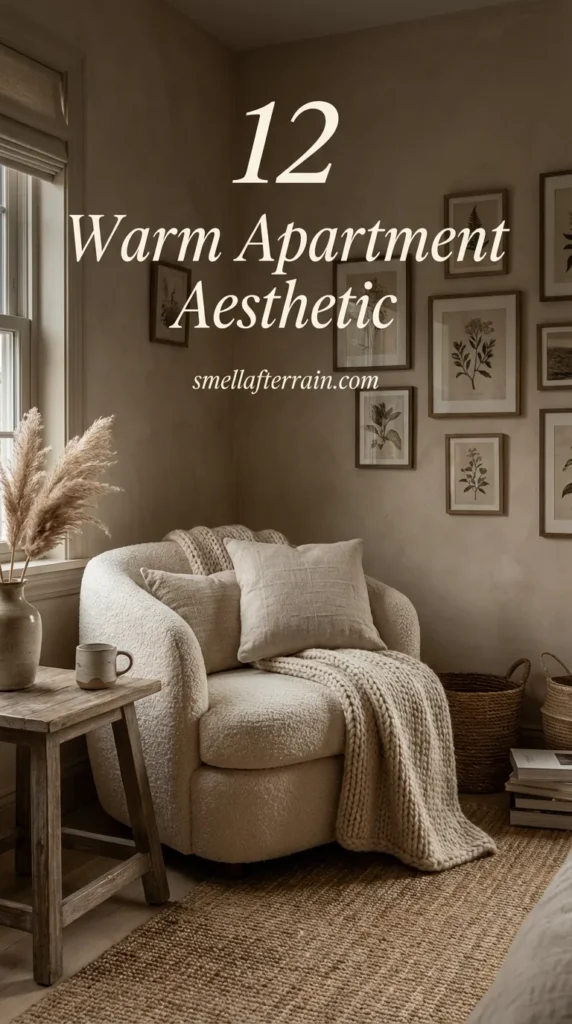
Visuals are only one part of the equation. A truly warm home aesthetic engages the nose immediately.
I stay away from sweet, sugary scents which can feel cloying. Instead, I look for earthy base notes: cedar, amber, sandalwood, patchouli, and tobacco.
These scents are grounding. I use a combination of beeswax candles (which purify the air) and stone diffusers.
The scent should be subtle, like a background hum, not a shout. It triggers the limbic system to relax instantly upon entering the door.
It’s the invisible texture of the air itself. It complements the wood and leather notes in the furniture.
10. The Vintage Patina Rule
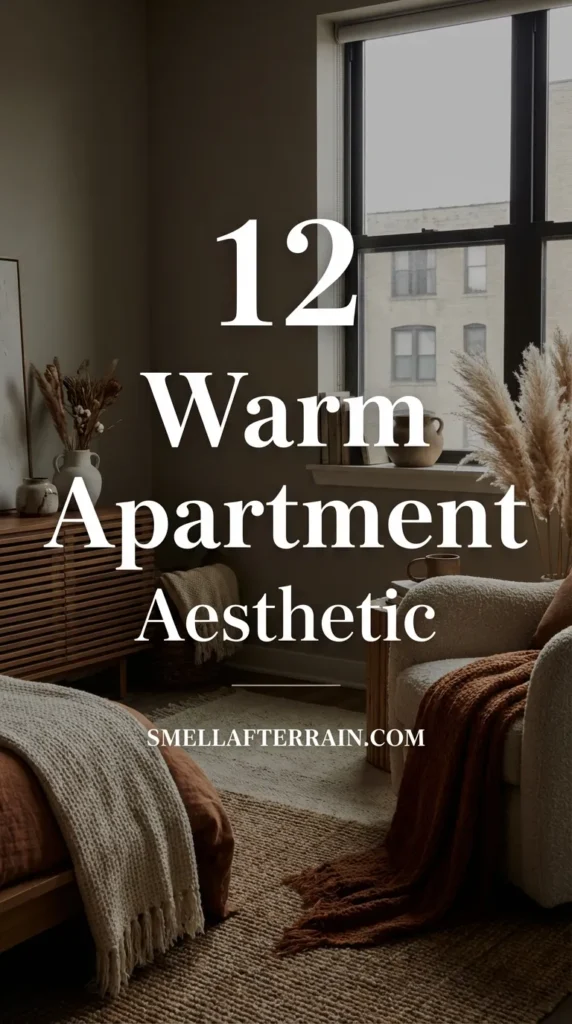
New things feel… new. They lack story. To make an apartment feel homey, you need friction. You need things that show wear.
I always include at least three vintage items in every room. It could be a brass candlestick with tarnished edges, a wooden bowl with knife marks, or a leather ottoman that has softened with age.
This concept of patina—the sheen produced by age and use—is impossible to fake. It adds a layer of time to the space.
It stops the room from looking like a showroom and makes it look like a life. It anchors the cozy vintage apartment vibe.
Hunting for these pieces is my favorite weekend activity. The tactile difference between old brass and new plated metal is unmistakable.
11. Books as Insulation: The Paper Texture
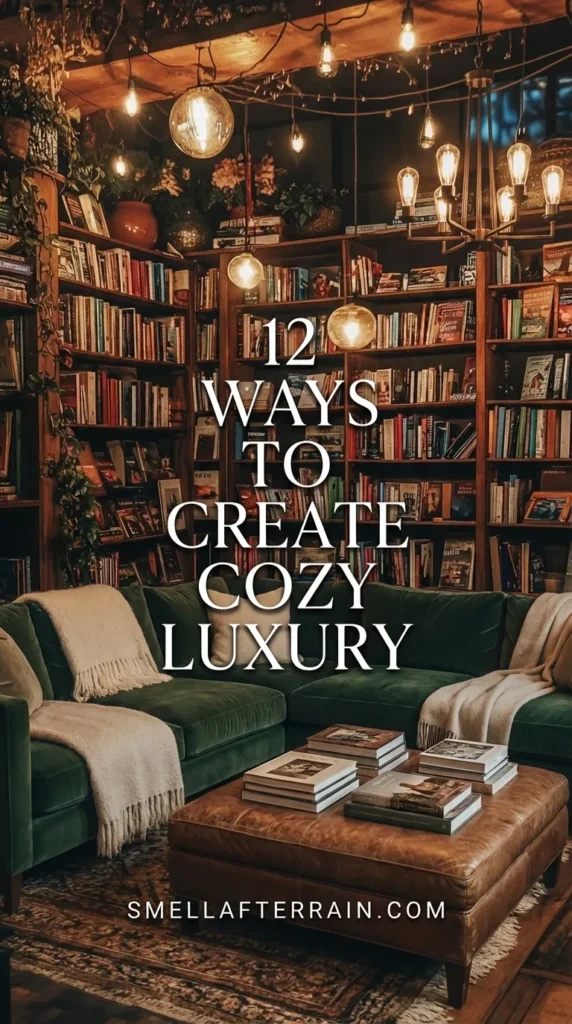
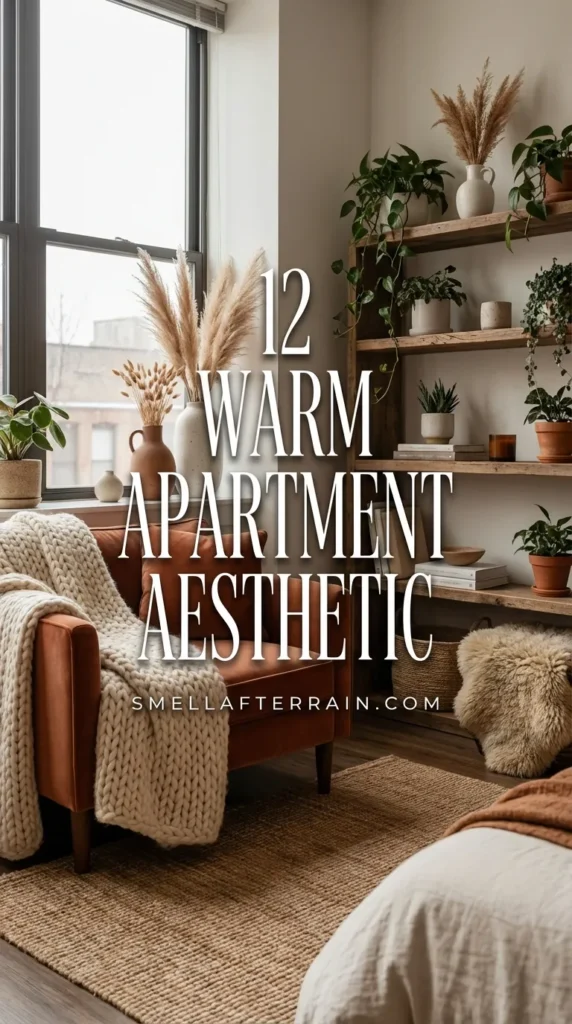
I love books, not just for the stories, but for their physical properties. Paper is warm. It absorbs sound and softens acoustics.
A room with empty walls echoes. A room lined with bookshelves sounds quiet and muffled. I stack books horizontally and vertically to create visual interest.
I often remove the glossy dust jackets to reveal the cloth-bound spines underneath. The fabric texture of old books contributes to the overall warmth of the room.
They are physical blocks of knowledge and comfort. I treat them as building blocks for the room’s perimeter.
For more on styling shelves without clutter, visit my main living room ideas hub.

12. Greenery That Mimics the Wild
Finally, life. You need living things. But for a warm aesthetic, I’m picky about my plants.
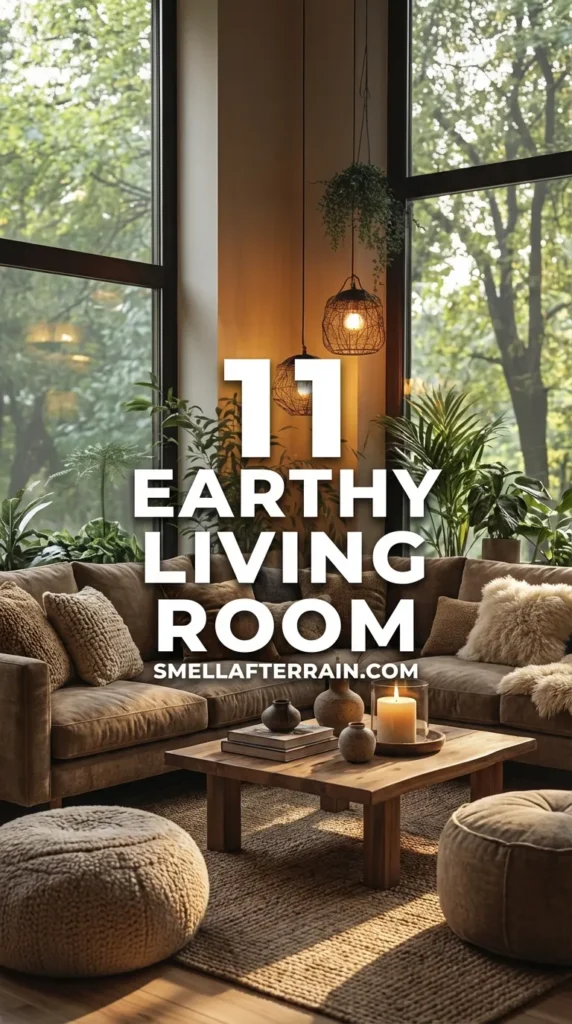
I prefer plants with darker, moodier leaves like Rubber Trees or Monsteras over bright, lime-green ferns. I also love incorporating dried elements.
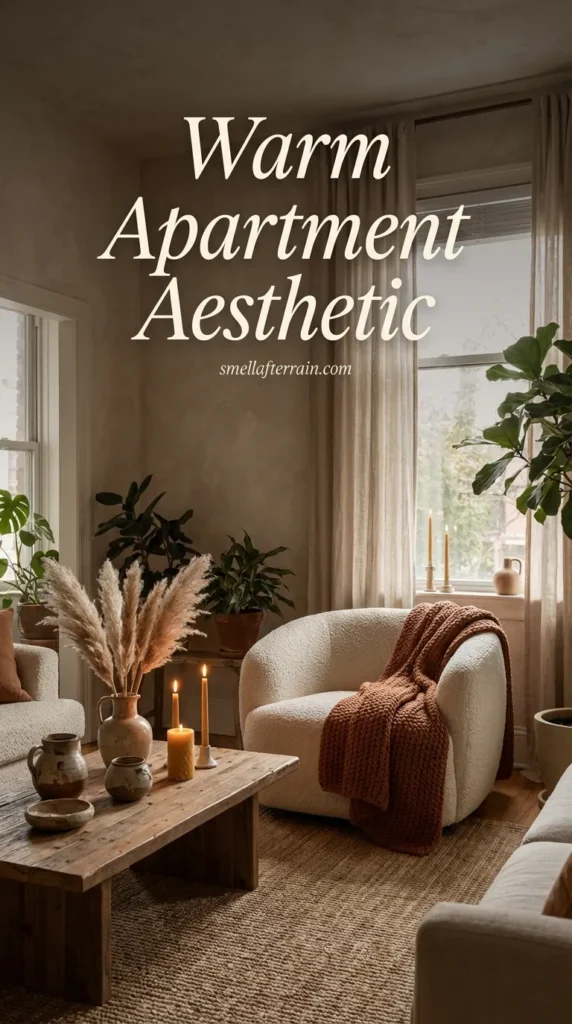
Dried pampas grass, wheat stems, or preserved eucalyptus add a beige, feathery texture that lasts forever. They bridge the gap between living plants and dead wood furniture.
They catch the light beautifully, especially during the golden hour. It’s a low-maintenance way to bring nature indoors.
This connection to the outdoors is vital. You can read more about connecting nature to design in my article on Scandinavian nature-inspired living rooms.
Frequently Asked Questions
How can I make my rental apartment warm without painting?
Focus on the largest surface areas you can control: the floors and the windows. A large, plush area rug can cover 80% of cold rental flooring. Floor-to-ceiling heavy linen curtains (hung using command hooks or tension rods if necessary) cover bland walls and add softness. Lighting is also key—swap out all cool-toned bulbs for warm 2700K bulbs immediately.
What colors are best for a warm apartment aesthetic?
Think ‘earth tones’ but with depth. Terracotta, rust, olive green, warm beige (like oatmeal), chocolate brown, and deep ochre are perfect. Avoid stark whites and cool grays. If you want a neutral palette, opt for ‘greige’ or cream with yellow undertones rather than blue undertones.
How do I mix warm and cool tones without it looking messy?
The 80/20 rule works wonders here. If you want a warm room, make 80% of the elements warm (wood, beige, gold, cream) and use cool tones (blue, grey, silver) for 20% of the accents as a crisp contrast. This prevents the room from feeling ‘muddy’ or overheated.
Can a small apartment still handle dark, warm colors?
Absolutely. There is a myth that small spaces must be white to feel big. Dark, warm colors can actually blur the corners of a room, creating an ‘infinity effect’ where you can’t tell where the walls end. It creates a cozy, jewel-box effect that is incredibly comforting, especially for a bedroom.
What is the most important texture for a cozy vibe?
If I had to pick one, it would be wood. Whether it’s furniture, a bowl, or picture frames, wood brings an organic warmth that no fabric can replicate. It grounds the space. Second to that would be a chunky knit wool or bouclé throw blanket—something with visible, tactile weave.
Creating a warm home is a journey of collection. It takes time to find the right textures, the right smells, and the perfect light. But once you do, you’ll never want to leave. Stay cozy.