- 1. The Soul Audit: Assessing Your Canvas
- 2. The Palette: Defining Your Warmth
- 3. The Layout: Mastering Flow in Small Spaces
- 4. The Foundation: Why Rugs Change Everything
- 5. The Light: Sculpting the Atmosphere
- 6. The Investment: Furniture That Holds You
- 7. The Texture: Layering the Cozy Factor
- 8. The Curator’s Eye: Styling Shelves and Surfaces
- 9. The Invisible Layer: Scent and Sound
- Frequently Asked Questions
- A Final Thought on Coming Home
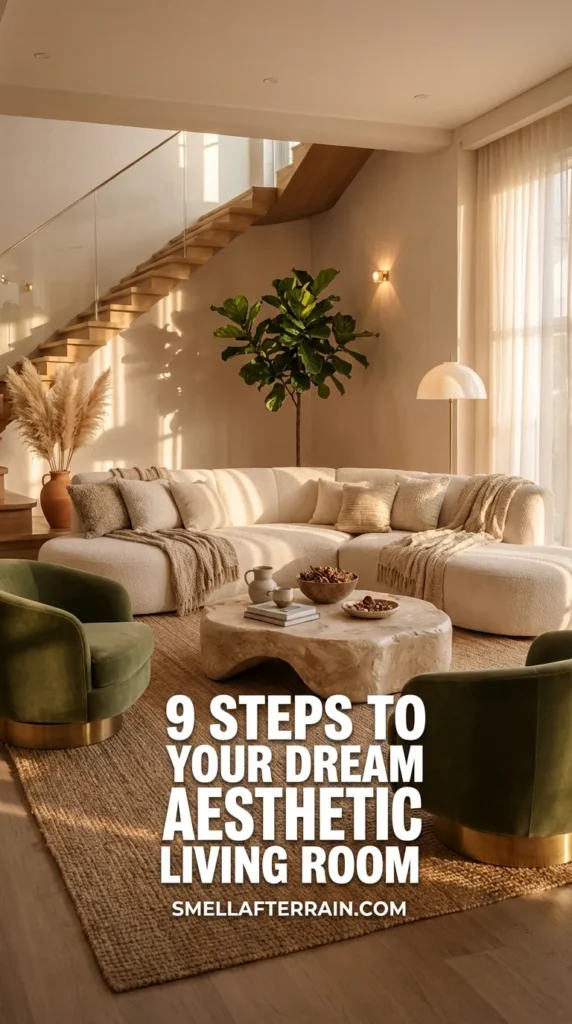
There is a specific moment I wait for every autumn. It’s that first afternoon when the sky turns a bruised purple, the rain starts to drum a steady rhythm against the glass, and I realize I have absolutely nowhere to be.
I used to feel guilty about these moments. I thought I should be out, doing, achieving. But lately, I’ve realized that the most profound work happens when we simply sit still.
That is, if your space allows you to.
I’ve walked into so many apartments that feel like waiting rooms. They have furniture, sure. They have a lamp. But they lack that aesthetic living room quality—the feeling that the room is wrapping its arms around you.
Creating a sanctuary isn’t about buying a matching set from a catalogue. It’s about texture, intentionality, and a bit of constructional magic. I treat my home projects with the rigorous planning of a master contractor, but the heart of a poet. I want to share my personal blueprint with you.
Whether you are dealing with a small apartment interior or a sprawling open plan, the principles of calm remain the same. Here is my nine-step execution guide to building a space that feels like a hug.
1. The Soul Audit: Assessing Your Canvas
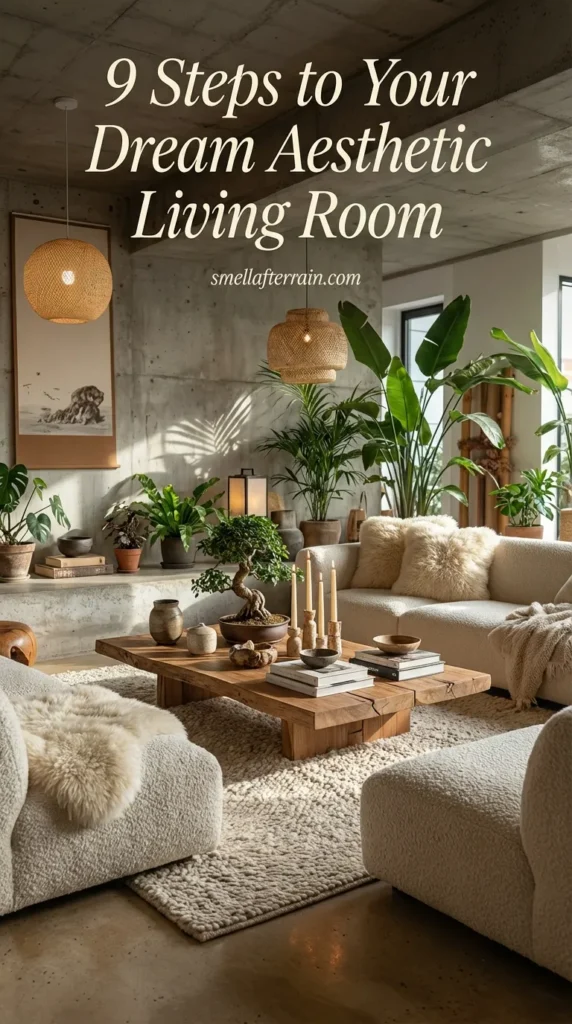
Before I ever buy a paint sample or browse a store, I sit on the floor. Literally. I sit in the center of the empty (or messy) room and I just listen to the space.
Most people skip this. They rush to fill the void. But to create a true dream apartment decor, you need to understand the bones of what you’re working with.
Grab a notebook. Write down the answers to these questions:
- Where is the light? Watch how the sun moves across the floor from morning to dusk. Does the corner get moody shadows? Does the window glare at noon?
- What is the noise level? Can you hear the street? If so, we need heavy textiles to dampen the sound.
- How do you want to feel? Do you want to feel energized or sedated? My personal preference is always a calm, safe stillness.
This phase is about honesty. If you have a small living room decor situation, acknowledge it. Don’t fight the size; embrace the intimacy of it. A small room is just a cozy cocoon waiting to happen.
Measure everything. And I mean everything. The wall width, the window height, the distance from the outlet to the corner. Keep these numbers in your phone. There is nothing more heartbreaking than falling in love with a vintage credenza only to realize it blocks your doorway.
2. The Palette: Defining Your Warmth
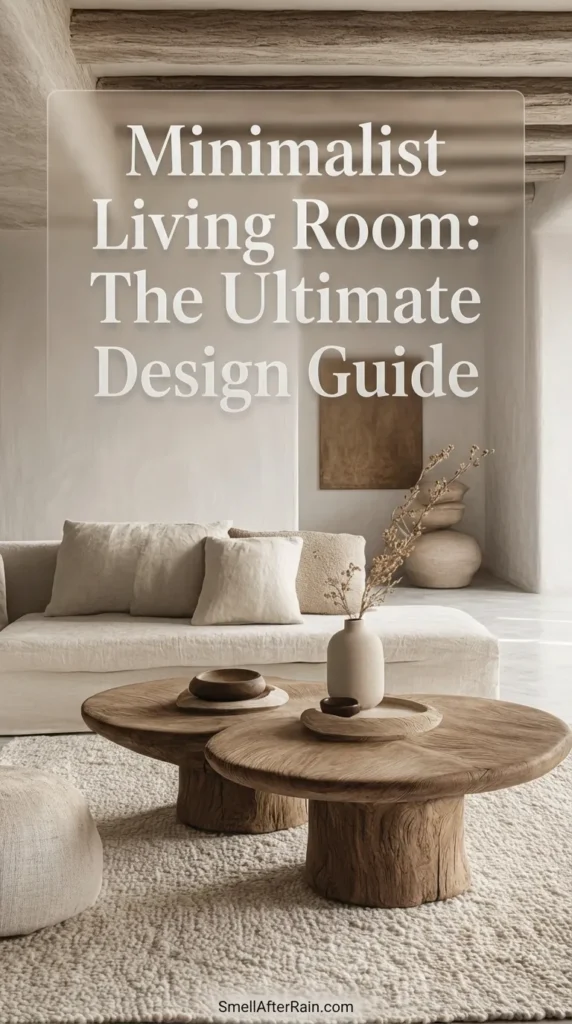
I used to think a minimalist living room meant white walls and sterile surfaces. I was so wrong. True minimalism is about the absence of clutter, not the absence of soul.
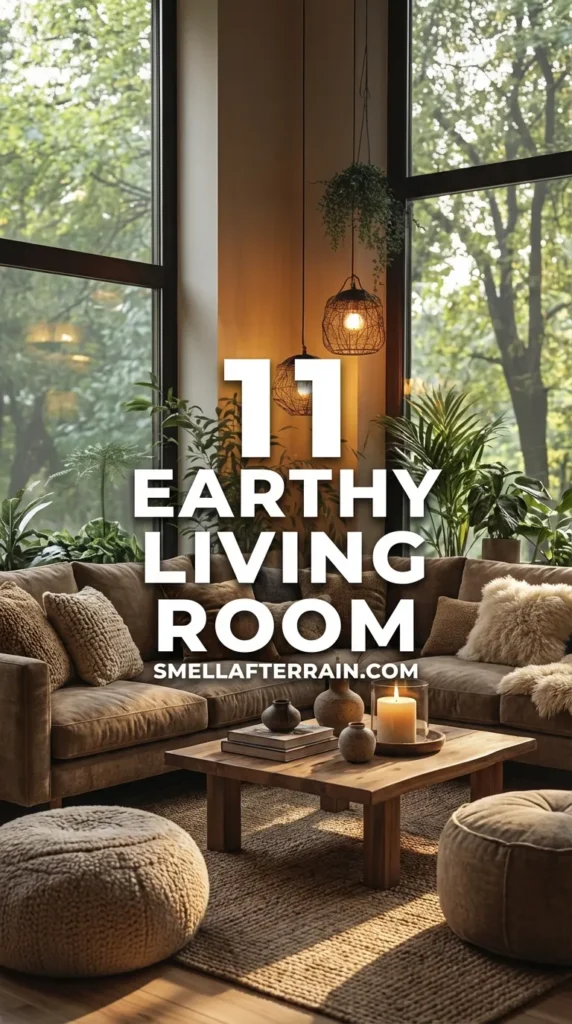
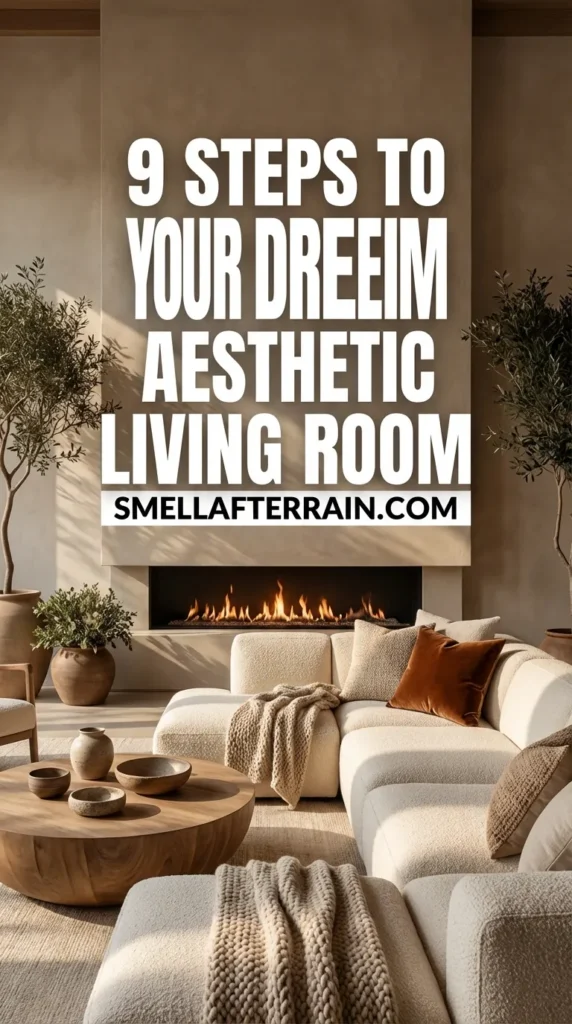
For a warm apartment aesthetic, I lean heavily into organic neutrals. I call this the “unbleached” look. Think of materials in their raw state:
- Oatmeal and Linen: These provide a soft, breathable base.
- Terracotta and Clay: For grounding warmth.
- Sage and Moss: To bring the outside in.
The 60-30-10 rule is a classic for a reason, and I use it religiously. 60% of the room should be your dominant neutral (walls, large rug). 30% is your secondary color (sofa, curtains). 10% is the accent (cushions, art, vase).
If you are struggling to find that balance between stark and cluttered, I wrote a deep dive on this. You can read my thoughts on balancing minimalism and warmth here. It’s a delicate dance, but once you find that rhythm, the room breathes.
Remember, paint changes with light. Always test a swatch and watch it for 24 hours. The “perfect beige” at 10 AM might turn pink at 6 PM.
3. The Layout: Mastering Flow in Small Spaces
This is where the “Contractor” hat comes on tight. Layout is not about where things fit; it’s about how you flow through the space like water.
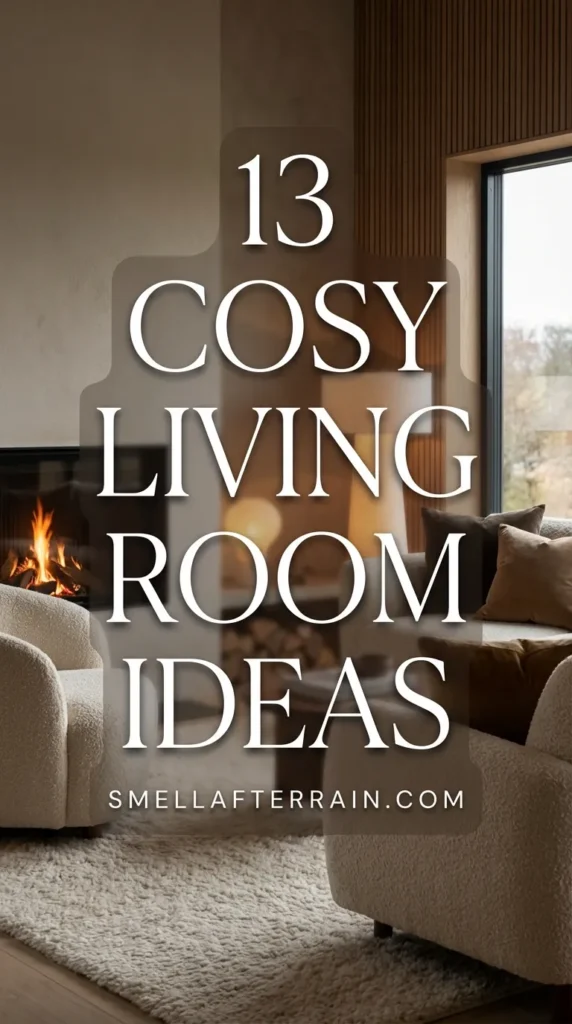
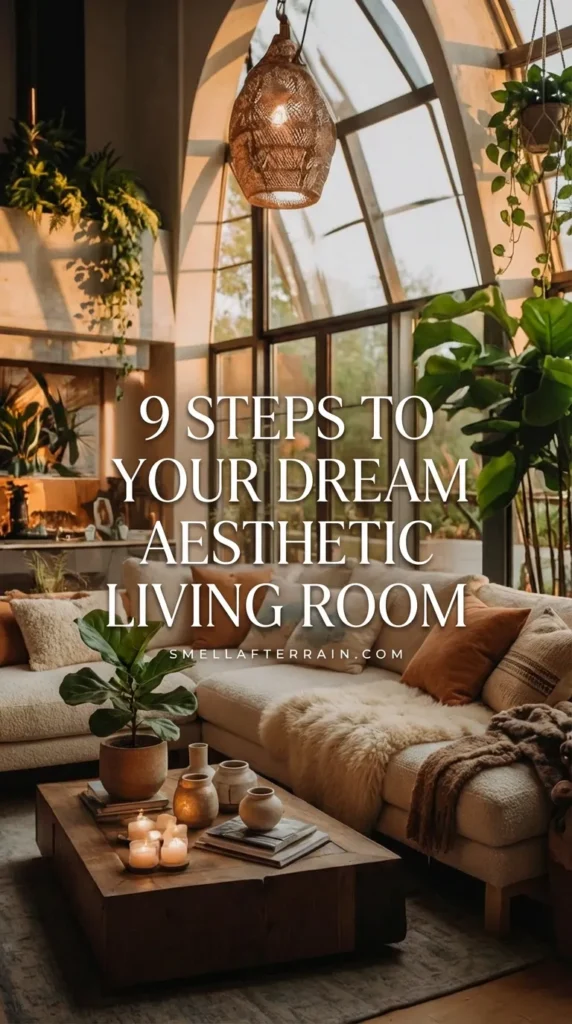
In cosy living room ideas, the biggest mistake I see is pushing all the furniture against the walls. It creates a weird, empty dance floor in the middle of the room that feels cold and uninviting.
Here is my rule: Float the furniture.
Even in a small apartment interior, pulling the sofa just three inches off the wall creates a shadow line that makes the room feel deeper. If you have the space, place the sofa in the middle of the room to define a zone.
Create conversation circles. The coffee table should be close enough to the sofa that you can put a drink down without leaning forward awkwardly—about 14 to 18 inches is the sweet spot.
For more specific configurations, especially if you are dealing with tricky angles, I have outlined several layouts in my collection of general living room concepts. The goal is to ensure you never have to shout across the room to be heard.
4. The Foundation: Why Rugs Change Everything
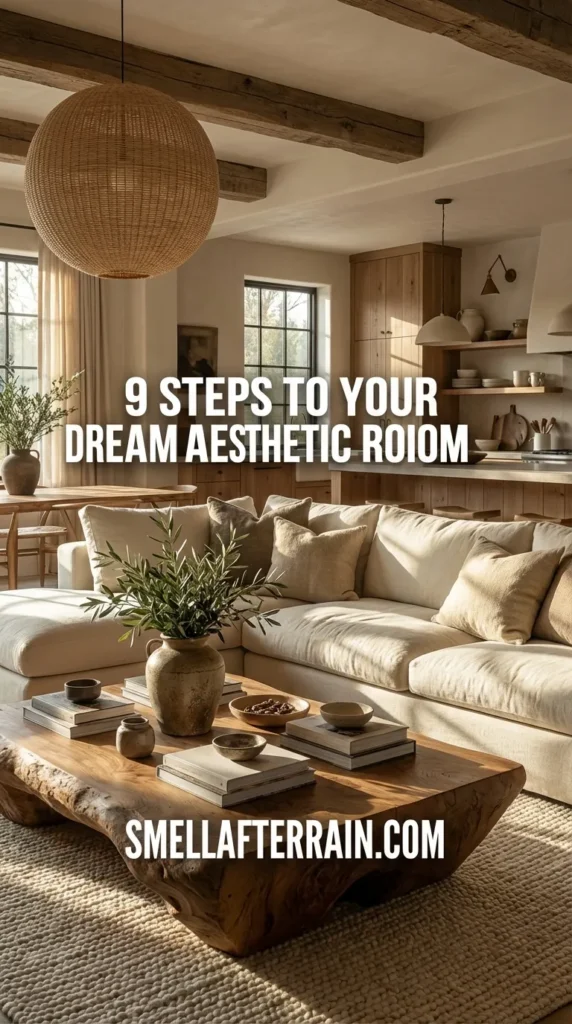
If the walls are the canvas, the rug is the primer. A rug anchors the living room vibes immediately. Without it, furniture feels like it’s floating in zero gravity.
Here is the cardinal sin of living room decor: The postage stamp rug.
A rug that is too small makes the room look cheap and disjointed. Your rug should be large enough that at least the front feet of all main furniture pieces (sofa, chairs) sit on it. Ideally, all feet should be on it.
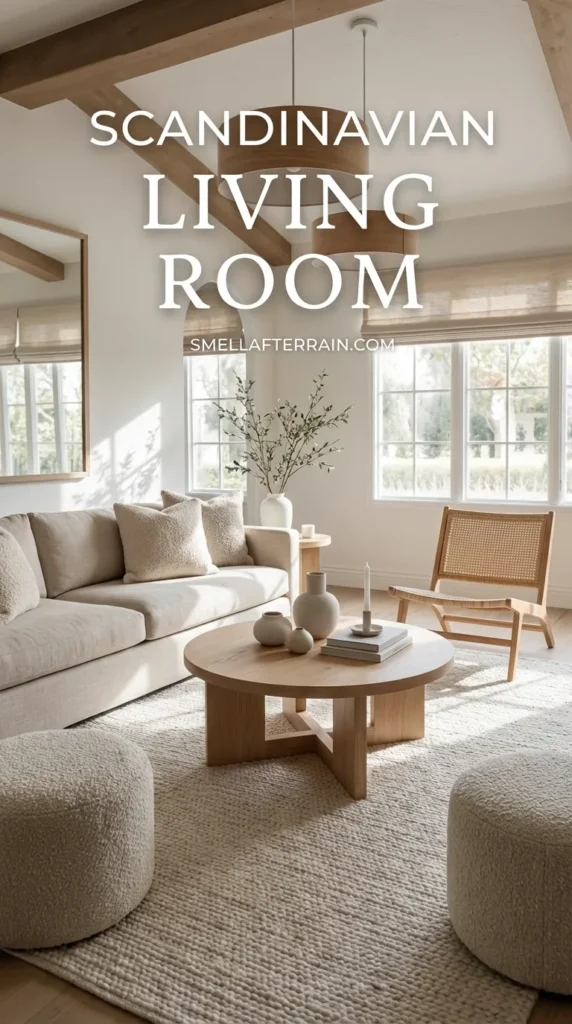
For a cozy living room design, I prefer high-pile wool or a dense jute layered with a vintage hide. Texture underfoot changes how you walk. It slows you down. It signals to your brain that you are entering a zone of comfort.
If you are renting and hate the existing carpet, layer a large area rug right over it. It’s the quickest way to hide a landlord’s questionable taste and inject your own personality.
5. The Light: Sculpting the Atmosphere
I never use the “Big Light.” You know the one—the overhead fixture that makes everything look like a hospital waiting room.
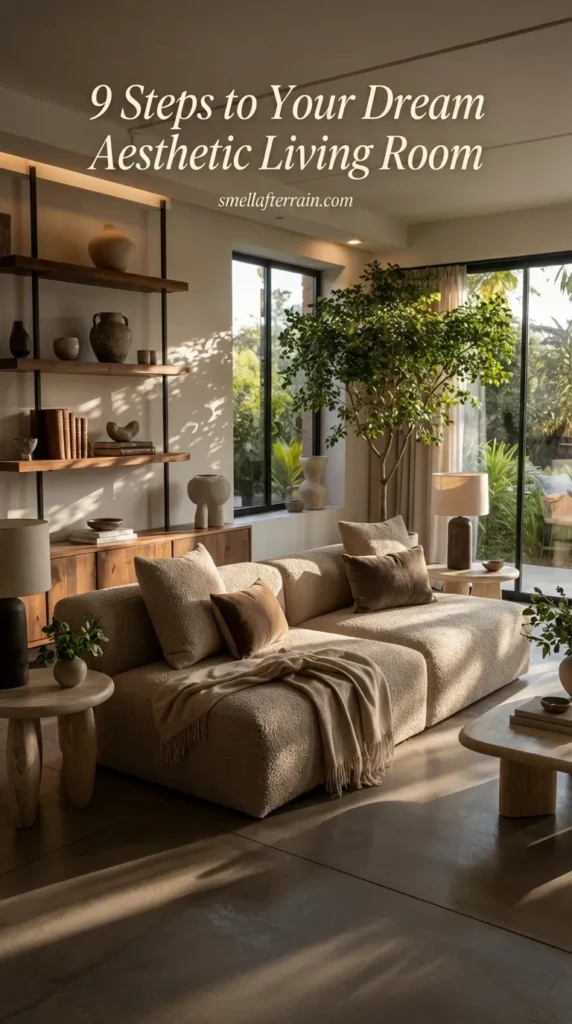
Lighting is the jewelry of the home. It sets the mood. For a dream apartment decor, you need three layers of light:
- Ambient: The general glow. Soft table lamps with fabric shades.
- Task: A reading lamp by your favorite chair.
- Accent: A small light highlighting a plant or a bookshelf.
Pay attention to color temperature. You want bulbs that are 2700K (Kelvin). This mimics the warm glow of a sunset or candlelight. Anything above 3000K starts to look blue and clinical, killing the warm apartment aesthetic instantly.
I recently explored how lighting dictates the mood in modern spaces. If you want to see how this plays out in sleeker designs, check out my notes on the contemporary living room lighting styles.
6. The Investment: Furniture That Holds You
There is a difference between a chair you sit on and a chair you sit in. I hunt for the latter.
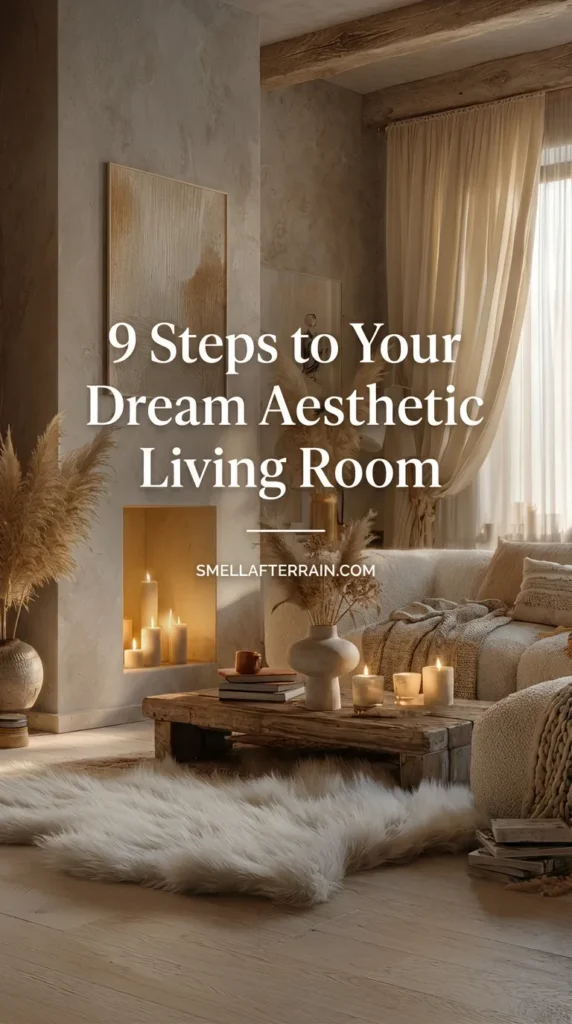
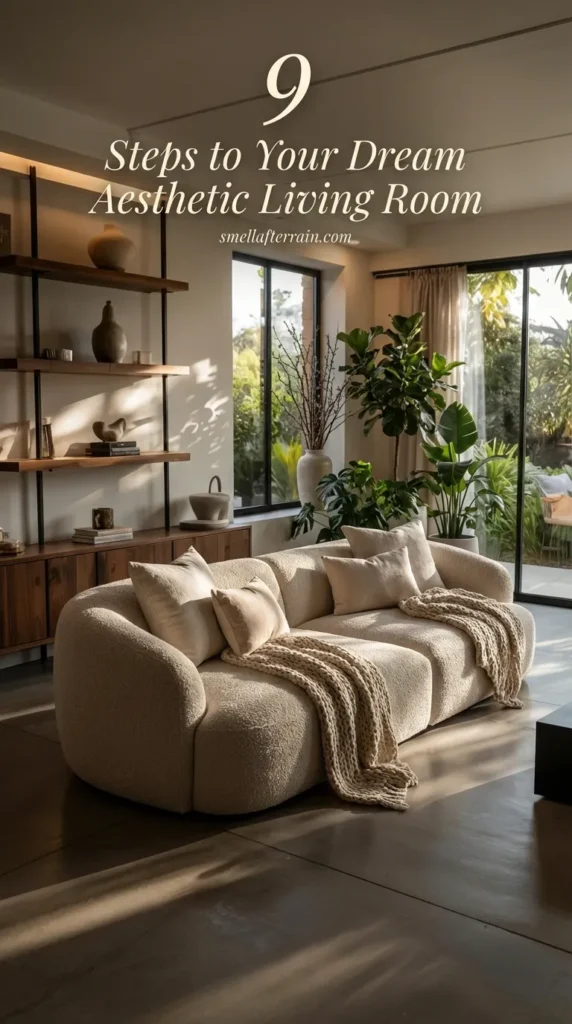
When selecting a sofa, focus on depth. A standard sofa is about 36 inches deep, but if you love to curl up (and I know I do), look for something 40 inches or deeper. It’s a game changer for living room inspo apartment searching.
Don’t be afraid of curves. Curved furniture softens the harsh rectangles of apartment walls. A round coffee table or a curved sofa arm invites flow and movement.
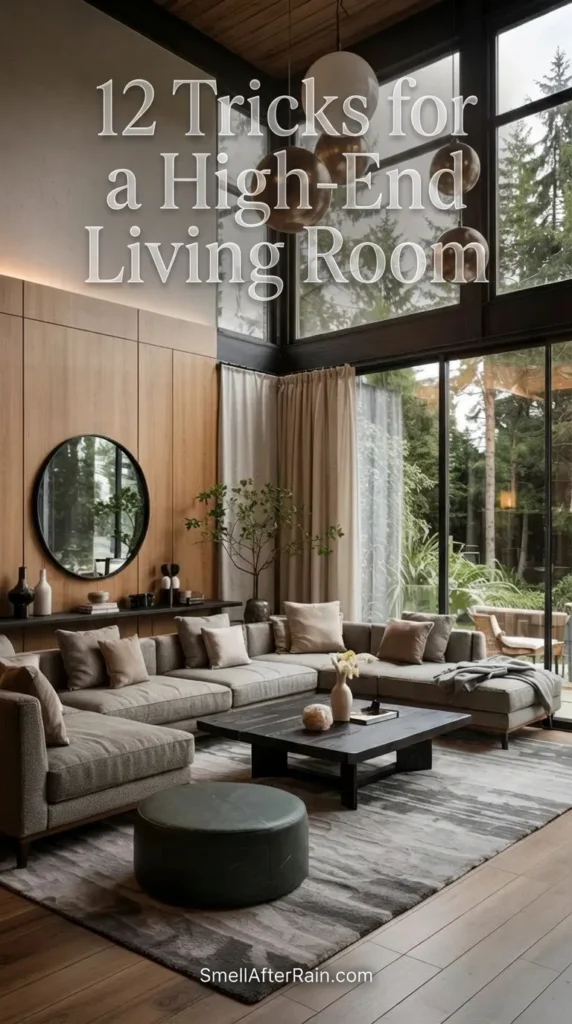
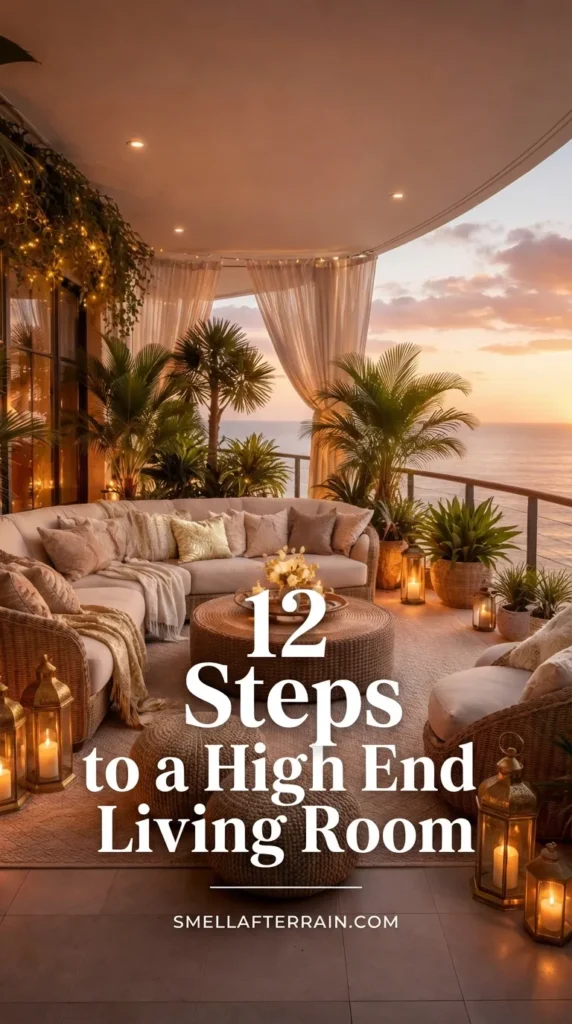
I also believe in mixing eras. A brand new sofa looks better next to a vintage side table. It adds history. It adds narrative. If you are looking to elevate your space to something that feels truly high-end, read my guide on creating a luxury feel through furniture selection.

7. The Texture: Layering the Cozy Factor
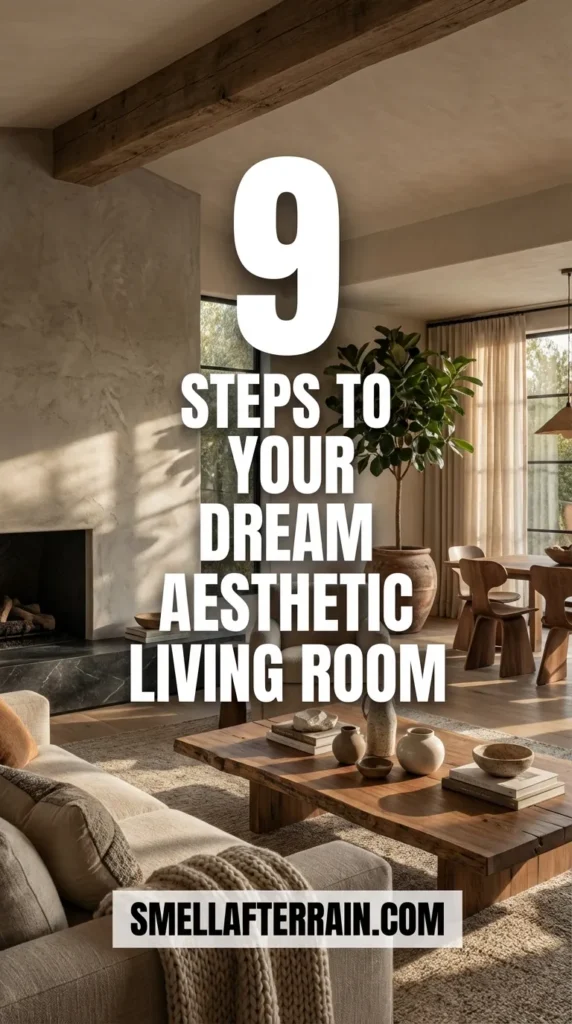
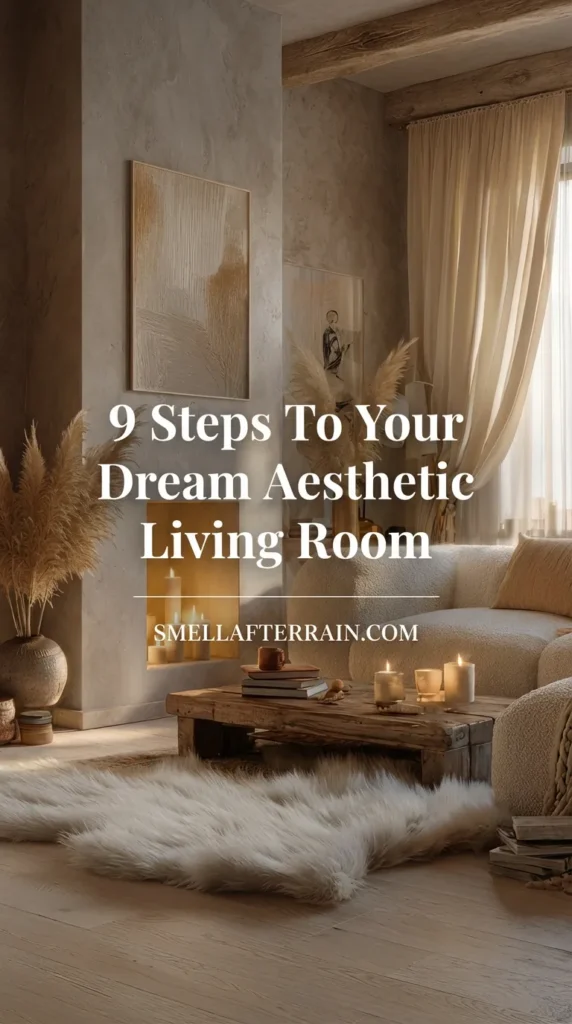
This is my favorite part. Texture is the secret sauce of aesthetic living room design. It is visual touch.
If everything is smooth (leather sofa, glass table, hardwood floor), the room feels slippery and cold. You need friction. You need things that beg to be touched.
Here is my formula for texture layering:
- The Base: A heavy weave sofa (boucle or velvet).
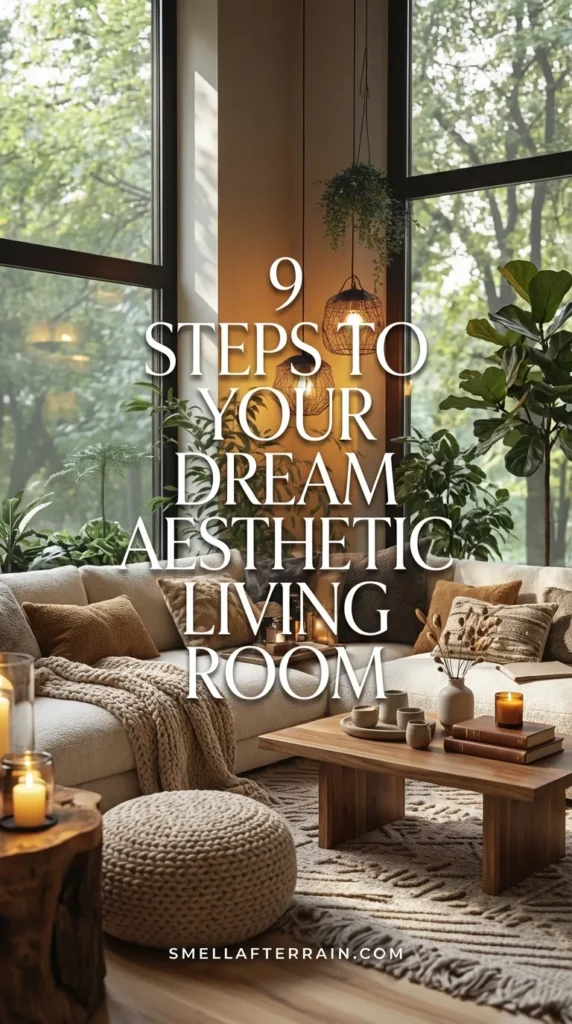
- The Throw: A chunky knit blanket draped casually.
- The Contrast: A smooth wooden bowl or a brass candlestick.
- The Organic: A woven basket for storage.
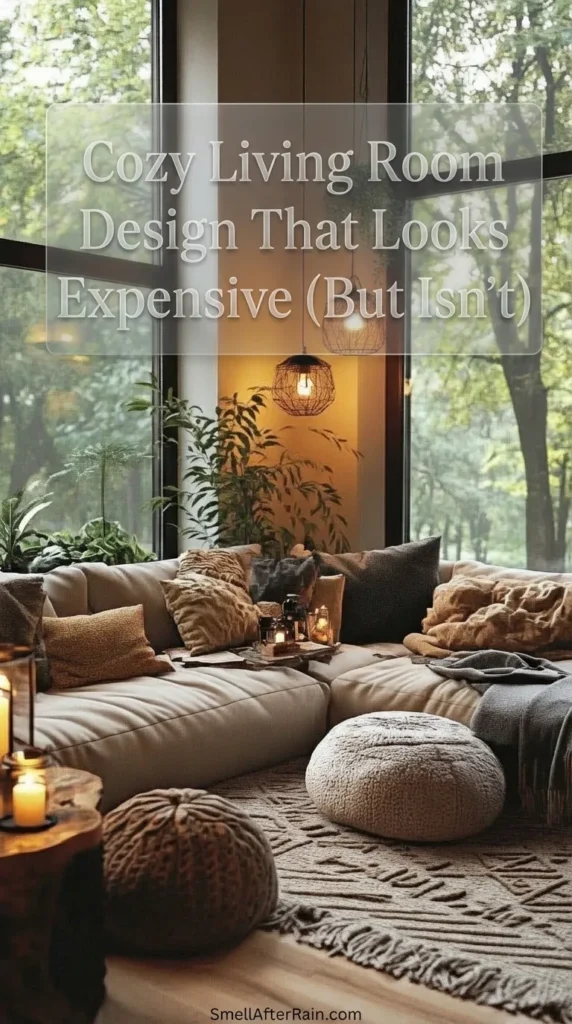
I can’t stress enough how much this matters for creating a high-end look on a budget. It’s not about the price tag; it’s about the weave. I dive deeper into specific fabrics in my article on cozy design that looks expensive.
8. The Curator’s Eye: Styling Shelves and Surfaces
I am a reorganize-the-bookshelf-at-midnight kind of person. It soothes me.
Styling decor is where your personality shines through. But be careful—there is a fine line between “curated” and “cluttered,” especially in small living room decor.
Group items in threes. The human eye loves odd numbers. A stack of books, a candle, and a small sculptural object create a perfect vignette.
Leave negative space. You don’t need to fill every inch of the shelf. Empty space allows the beautiful objects to breathe and be seen. It creates visual silence.
Also, bring in life. A dried branch for drama, or a trailing pothos for softness. Plants are the only decor that actually cleans the air for you.
Interestingly, I often borrow styling tips from bedroom sanctuaries. The principles of calm transfer well. You might find some crossover inspiration in my bedroom styling ideas.
9. The Invisible Layer: Scent and Sound
We design with our eyes, but we live with all our senses. You can have the most beautiful cosy living room ideas executed perfectly, but if it smells stale, the magic is broken.
I named my site Smell After Rain for a reason. That scent—petrichor—is the ultimate signal of renewal and calm. While we can’t always have rain, we can curate the scent of our home.
Avoid harsh chemical air fresheners. Opt for soy candles, essential oil diffusers, or simply simmering a pot of water with cinnamon and orange peels on the stove.
Layer this with sound. A soft jazz playlist or the sound of rain (even recorded) completes the sensory experience. This is the final step in the “construction” of your vibe. It’s the invisible roof over your head.
Frequently Asked Questions
How do I make my small living room look aesthetic?
Focus on scale and decluttering. Use a large rug to define the space, keep your color palette cohesive (monochromatic works wonders for expanding space visually), and utilize vertical space with tall shelving or curtains hung from the ceiling to draw the eye up. Good lighting is critical—shadowy corners make a room feel smaller.
What is the secret to a warm apartment aesthetic?
Texture and lighting. Avoid cool-toned LED bulbs; stick to warm white (2700K). Layer different materials like wood, linen, wool, and ceramics. The mix of textures creates a sense of depth and warmth that flat colors cannot achieve alone.
Can I have a minimalist living room that is also cozy?
Absolutely. I call this “Warm Minimalism.” Instead of stark white and chrome, choose warm whites, creams, and natural woods. Keep the furniture lines clean but choose fabrics that are soft and inviting. Minimalism is about intentionality, not discomfort.
What are the best colors for a small apartment living room?
Light neutrals like off-white, cream, and soft greige reflect light and make the walls recede, making the room feel larger. However, don’t be afraid of a dark, moody color if you want a cozy, den-like vibe. A deep charcoal or forest green can blur the edges of the room and make it feel infinite.
How do I decorate a rental apartment without losing my deposit?
Focus on things you can take with you. Invest in great furniture, rugs, and lighting. Use command hooks for art. Swap out the cabinet hardware or light fixtures (just keep the old ones to put back when you move). Textiles are your best friend—curtains and rugs cover a multitude of rental sins.
How do I arrange furniture in a weirdly shaped living room?
Don’t try to force a symmetrical layout in an asymmetrical room. Create zones. Use rugs to define the “living area” separate from a “reading nook” or “dining spot.” Angle furniture to direct the flow of traffic. Floating furniture away from the walls often helps smooth out awkward angles.
What is the most important piece of furniture to invest in?
The sofa. It is the largest piece in the room and the one you will use the most. A cheap sofa will sag and look tired within a year. Invest in a high-quality frame and durable fabric. It anchors the entire aesthetic of the living room.
A Final Thought on Coming Home
Creating this space takes time. Don’t rush to finish it in a weekend. Let the layers accumulate slowly. Wait for the right piece of art. Save up for the chair that feels like a hug.
Because when the rain starts to fall and the world outside gets loud, you deserve a corner of the world that is soft, quiet, and unmistakably yours.
Stay cozy,
Elara