- 1. Circadian Lighting: Syncing Biological Rhythms
- 2. Biophilic Integration: The Psychology of Nature
- 3. Chromotherapy: The Science of Color Temperature
- 4. Tactile Serenity: The Softness Protocol
- 5. Spatial Perception: Mirrors and Volume
- 6. Scent Scaping: The Olfactory Pathway to Calm
- 7. Cognitive Decluttering: Minimalist Storage Solutions
- 8. Hydrotherapy Zones: The Bathtub as Sanctuary
- 9. Organic Geometry: Softening The Hard Lines
- 10. Acoustic Dampening: Designing Silence
- 11. Hardware Kinetics: The Touch of Luxury
- 12. Personal Narrative: Art and Emotional Anchors
- Frequently Asked Questions
- Conclusion
Your bathroom is not merely a functional utility station; it is the bookend of your day. It is where you prepare to face the world in the morning and where you wash away its stresses at night. From an interior psychology perspective, creating an aesthetic bathroom goes far beyond selecting trendy tiles or gold faucets. It is about crafting an environment that lowers cortisol levels, regulates your nervous system, and induces a state of deep, restorative relaxation.
The concept of a vibey bathroom is rooted in how space communicates with the subconscious. Does the room feel expansive or claustrophobic? Do the textures invite touch or repel it? Whether you are designing a sprawling master suite or looking for apartment bathroom aesthetic hacks, the goal remains the same: sanctuary. In this guide, we explore the intersection of design and psychology.
If you are ready to transform your space into a retreat that rivals high-end spas, explore our broader collection of bathroom ideas. Below, we dissect the 12 psychological pillars of designing a truly aesthetic and emotionally intelligent bathroom.
1. Circadian Lighting: Syncing Biological Rhythms
Light is the primary zeitgeber (time-giver) for the human body. An aesthetic bathroom must do more than just illuminate; it must support your circadian rhythm. Harsh, cool-toned overhead lighting can trigger alertness at the wrong time, disrupting your sleep cycle during an evening soak. Conversely, dim lighting in the morning can leave you groggy.
To achieve a truly cozy bathroom aesthetic, layer your lighting. Use dimmable sconces with a warm color temperature (2700K-3000K) for evening rituals. This mimics the setting sun and signals to your brain that it is time to wind down. For morning tasks, install vanity lighting that sits closer to natural daylight (4000K) to stimulate cortisol production for wakefulness.
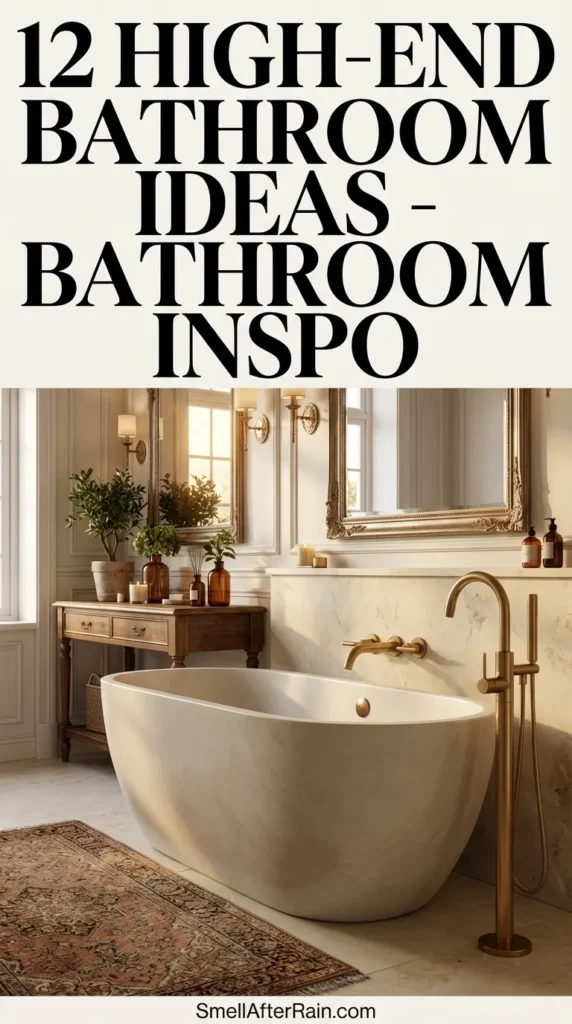
Consider the placement of shadows. Downlighting often creates unflattering shadows on the face, which can negatively impact self-perception and mood. Side-mounted sconces provide even illumination, enhancing the bathroom vibes and making you feel better about yourself the moment you look in the mirror. For deeper insights into high-end lighting schemes, read our guide on master bath ideas and luxury design secrets.
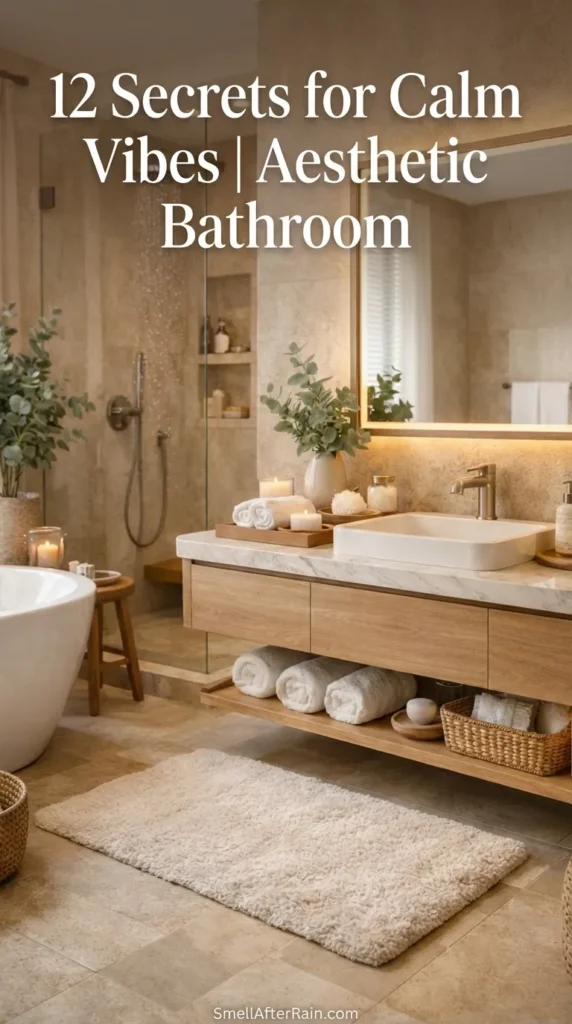
2. Biophilic Integration: The Psychology of Nature
Humans possess an innate tendency to seek connections with nature, a phenomenon known as biophilia. Integrating plant life into your bathroom aesthetic decor is not just a trend; it is a psychological necessity for stress reduction. The high humidity of bathrooms makes them ideal environments for tropical plants like ferns, pothos, and orchids.
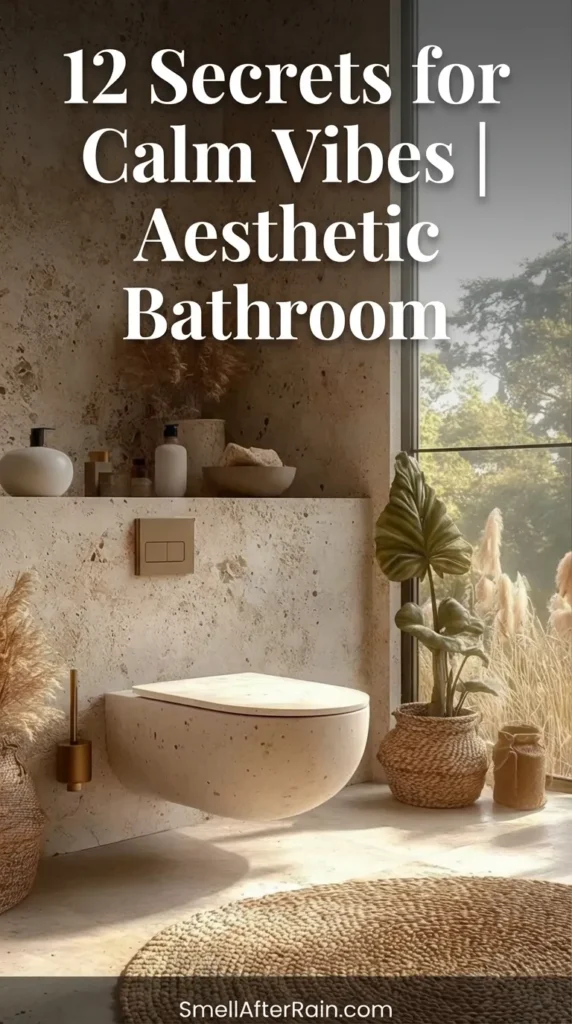
But biophilic design extends beyond potted plants. It involves the use of natural materials—stone, wood, clay—that ground us. A teak shower mat or a live-edge wooden shelf introduces organic irregularity into a room often dominated by sterile, straight lines. These elements soften the visual noise and create a cute bathroom aesthetic that feels alive.
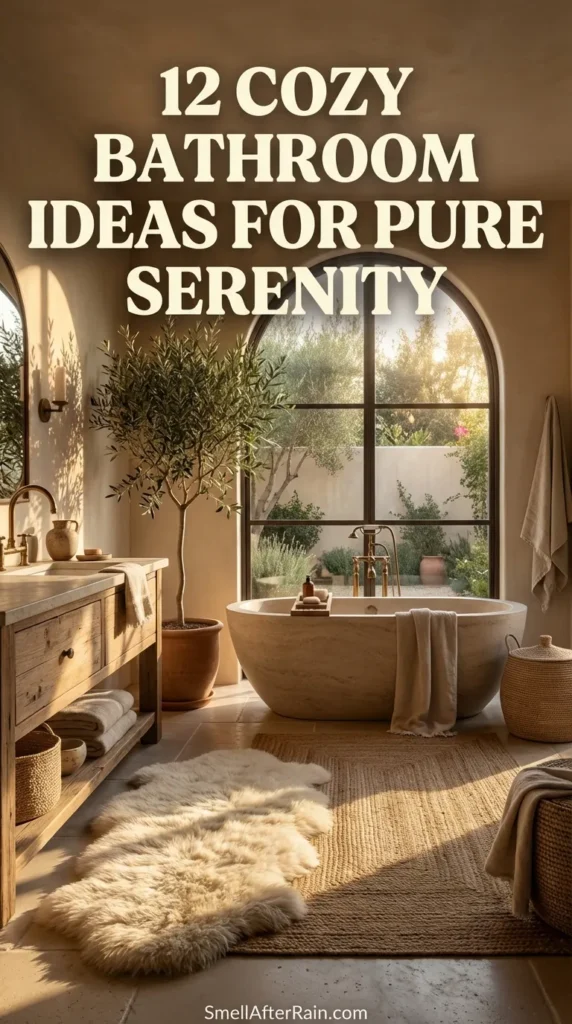
If you lack natural light, consider preserved moss walls or high-quality faux botanicals. The visual cue of greenery alone can lower blood pressure. For more ways to bring the outdoors in, check out these 12 cozy bathroom ideas for pure serenity.
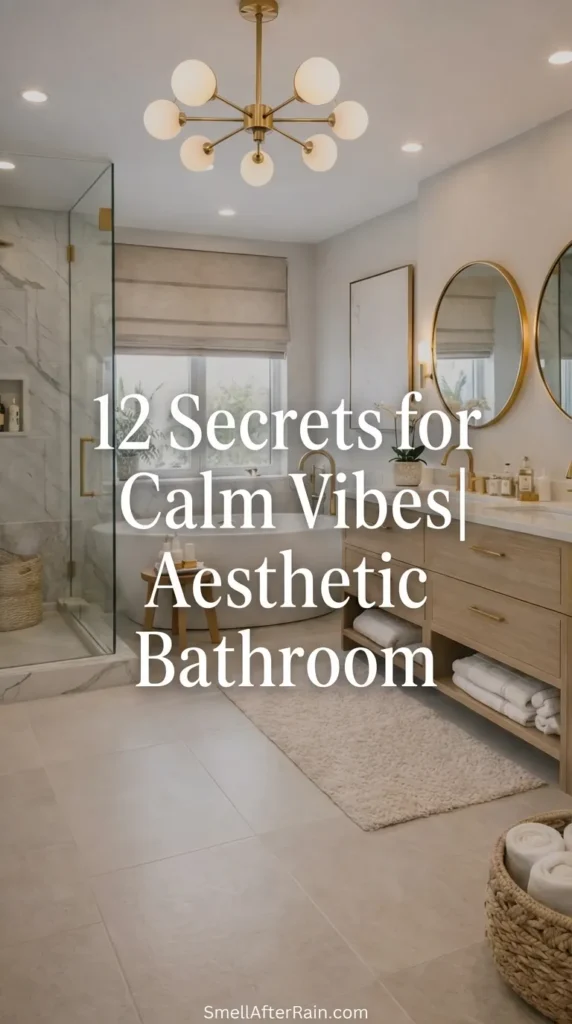
3. Chromotherapy: The Science of Color Temperature
Color profoundly influences mood. In a minimalist bathroom, the palette often leans toward monochromatic whites or grays. While clean, these can sometimes feel clinical or cold. To create a space that feels nurturing, we look to “warm minimalism” or “quiet luxury.”
Psychologically, earth tones—sandy beiges, terracottas, warm greiges—evoke a sense of stability and safety. They mimic the colors of the earth, providing a grounding effect. Cool tones like spa blues and sage greens are also effective; they are associated with water and vegetation, promoting tranquility and focus.
Avoid high-saturation colors like bright reds or oranges in large quantities, as they can induce anxiety or over-stimulation. Instead, use color to create a “cocooning” effect. Painting the ceiling the same color as the walls can blur the boundaries of the room, making a small bathroom aesthetic feel more expansive yet intimate. Explore more regarding color palettes in our article on quiet luxury and high-end bathroom ideas.
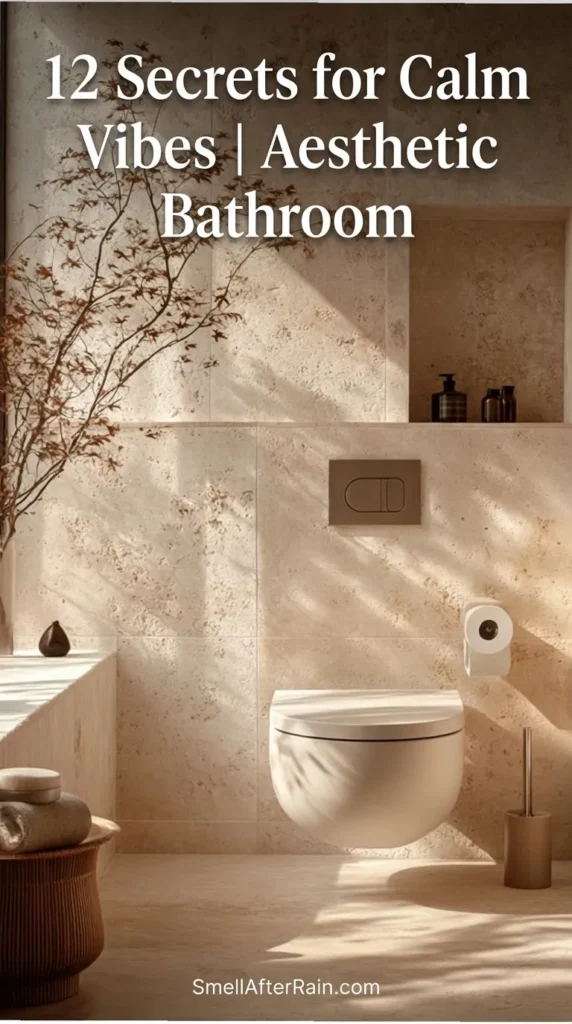
4. Tactile Serenity: The Softness Protocol
We experience the world through touch. In a bathroom, where we are often barefoot and exposed, the tactile experience is paramount. Hard surfaces like porcelain, tile, and glass dominate the bathroom landscape. To balance this, you must introduce “tactile softness.”
Invest in high-GSM (grams per square meter) cotton towels that feel weighty and plush. A thick, shaggy bath mat doesn’t just absorb water; it provides a comforting transition from the hard tub to the floor. Consider a waffle-knit shower curtain or a linen robe hook. These textures invite interaction and signal comfort to the nervous system.
Even the finish of your fixtures matters. Brushed nickel or matte black hardware feels softer and warmer to the touch than polished chrome. This attention to tactile detail elevates the bathroom aesthetic from a visual concept to a physical reality.
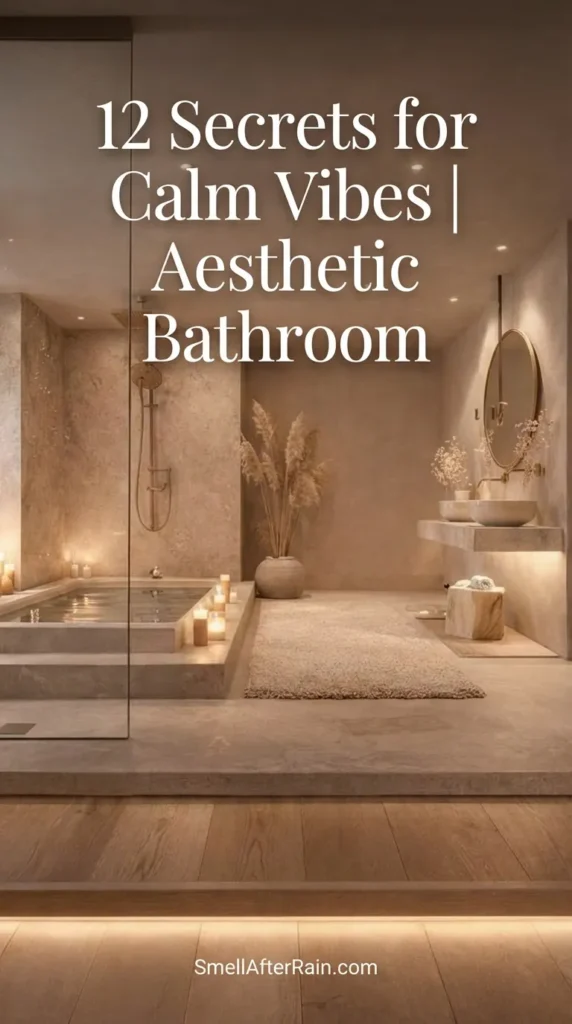
5. Spatial Perception: Mirrors and Volume
For those dealing with an apartment bathroom aesthetic, the perception of space is crucial. Claustrophobia triggers a fight-or-flight response, which is the antithesis of relaxation. Mirrors are the psychologist’s tool for spatial manipulation.
A large, frameless mirror can double the visual volume of a room, tricking the brain into perceiving more open space. However, placement is key. Ensure the mirror reflects something pleasing—a plant, a piece of art, or a window—rather than a toilet or a hamper. This is often referred to as “curating the reflection.”
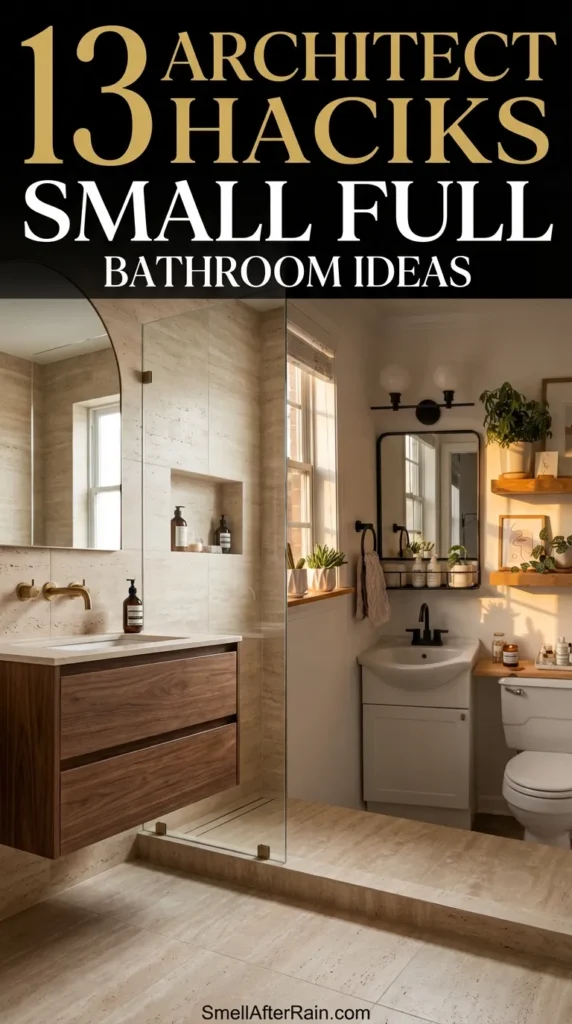
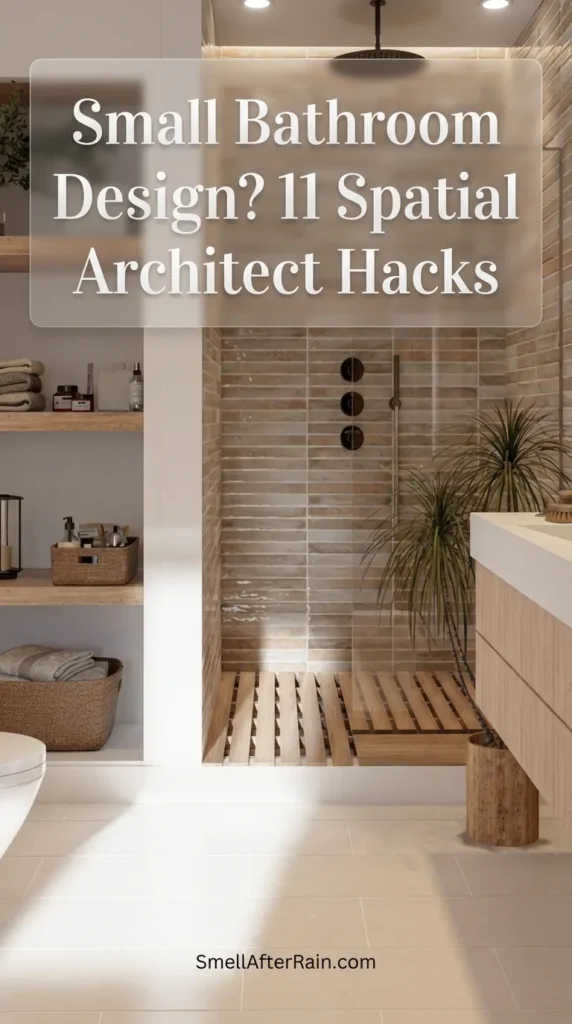
Backlit mirrors also contribute to the vibey bathroom feel by providing a soft glow that floats the mirror off the wall, adding depth and reducing the visual weight of the fixture. For specific architectural tricks on maximizing limited square footage, review our small full bathroom ideas and architect hacks.
6. Scent Scaping: The Olfactory Pathway to Calm
The olfactory bulb has a direct link to the amygdala and hippocampus, the brain’s centers for emotion and memory. This makes scent one of the fastest ways to alter your mood. “Scent scaping” involves layering fragrances to define the purpose of the room.
For a bathroom aesthetic focused on energy and cleanliness, notes of eucalyptus, lemon, and mint are ideal. For evening relaxation, shift to lavender, chamomile, or sandalwood. Avoid synthetic air fresheners that can cause headaches; opt for reed diffusers, essential oil nebulizers, or high-quality soy candles.
Hanging fresh eucalyptus branches in the shower is a popular bathroom inspo aesthetic trend for a reason: the steam releases the natural oils, turning your shower into a therapeutic steam room. Visit Smell After Rain to explore how sensory details define the home experience.
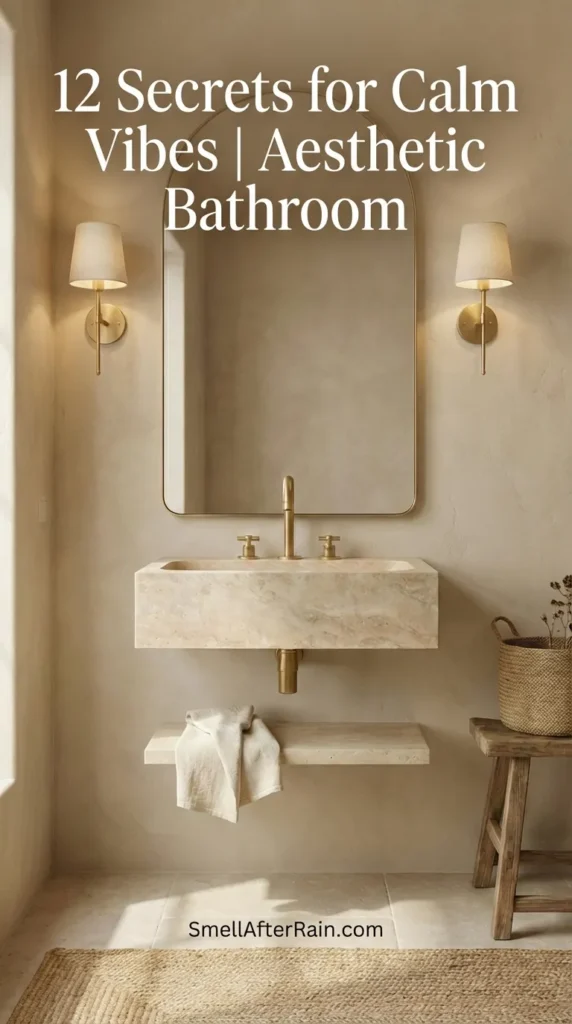
7. Cognitive Decluttering: Minimalist Storage Solutions
Visual clutter equals mental clutter. When you walk into a bathroom and see half-empty shampoo bottles, tangled cords, and scattered makeup, your brain registers unfinished tasks. This increases cognitive load, preventing relaxation. A minimalist bathroom is not about having zero items; it is about having zero visual noise.
Implement closed storage solutions. Decant brightly colored branded soaps into uniform amber or clear glass bottles. This reduces the “commercial noise” of logos and labels, creating a cohesive visual field. Use woven baskets to hide toilet paper and linens.
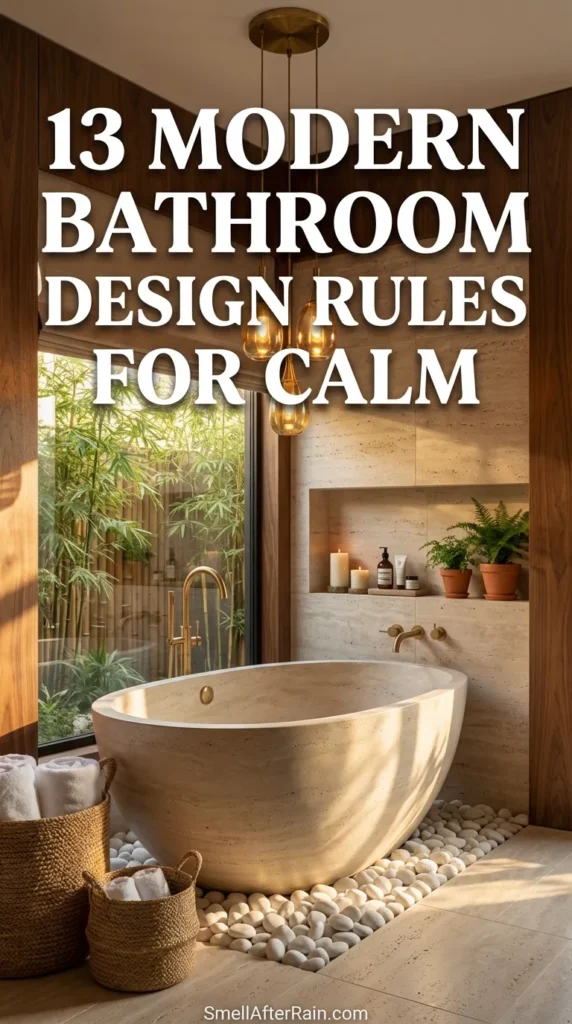
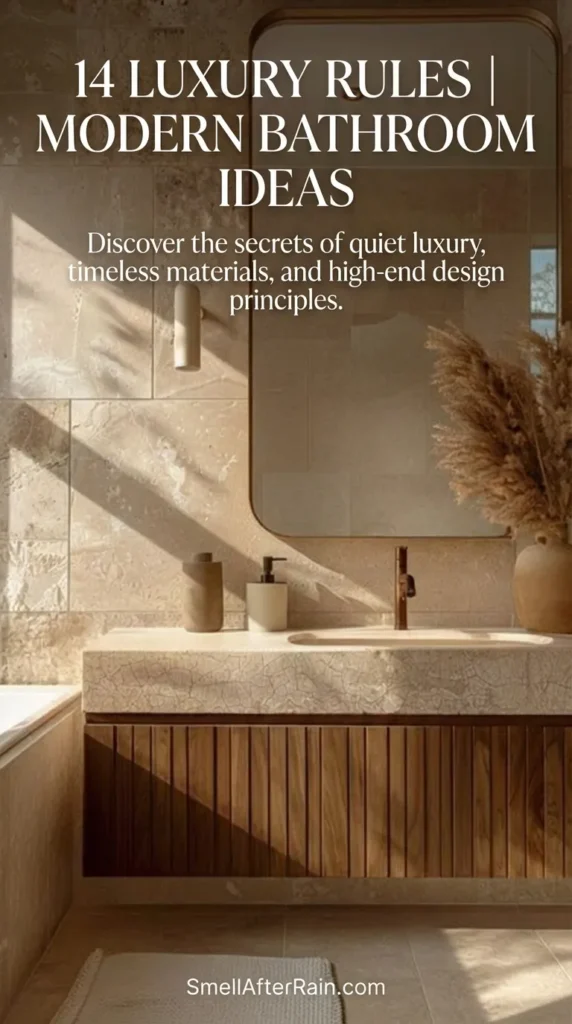
When the environment is ordered, the mind is free to wander. This is a core tenet of modern design psychology. Learn the rules of reductive design in our piece on modern bathroom ideas and luxury rules.
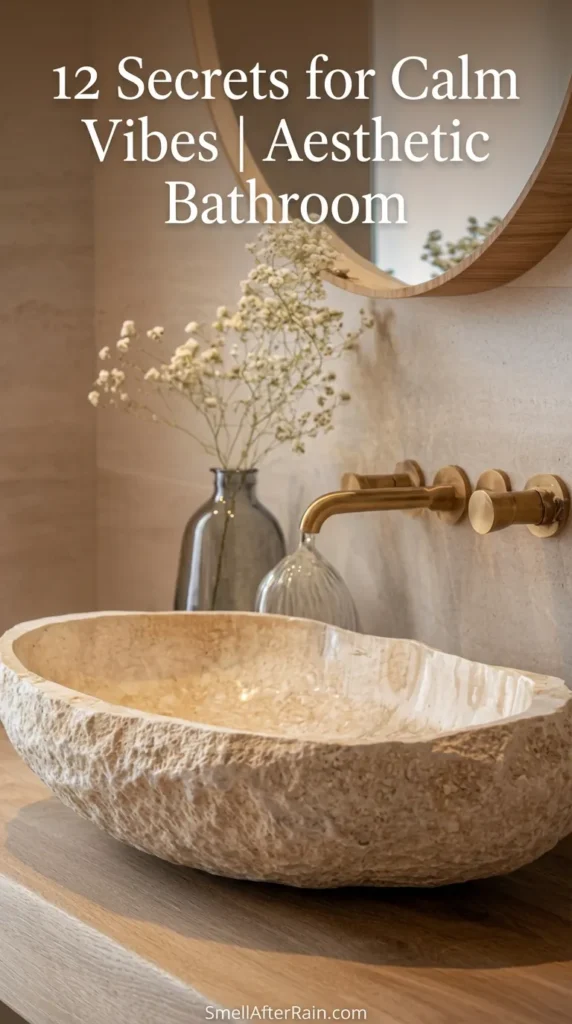
8. Hydrotherapy Zones: The Bathtub as Sanctuary
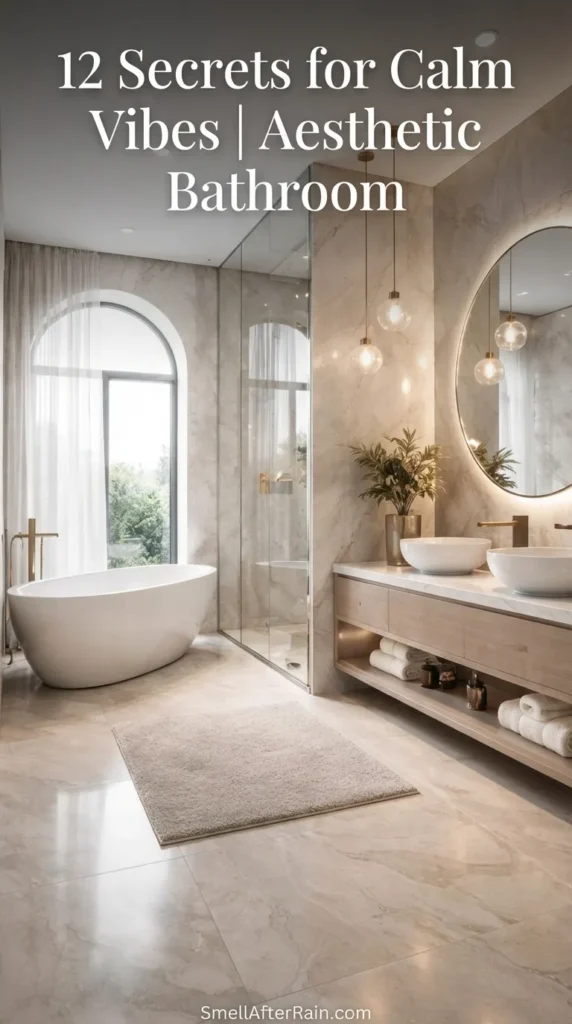
Water has been used therapeutically for millennia. The sensation of weightlessness in water relieves joint pressure and signals the muscles to release tension. If space allows, a freestanding tub acts as a sculptural focal point that invites indulgence.
For a cozy bathroom, add a bath tray made of natural wood to hold a book, a candle, or a drink. This simple addition transforms the tub from a vessel for washing into a zone for leisure. Even in a shower-only bathroom, a high-quality rain showerhead can simulate the sensation of a gentle downpour, providing a meditative experience.
The sound of running water is white noise that masks household chaos, creating an auditory bubble of privacy. Treat your water source as the heart of the room.
9. Organic Geometry: Softening The Hard Lines
Bathrooms are inherently angular: square tiles, rectangular vanities, sharp corners. In psychology, sharp angles are associated with danger or caution, while curves suggest safety and fluidity. To achieve a cute bathroom aesthetic or a serene vibe, introduce organic geometry.
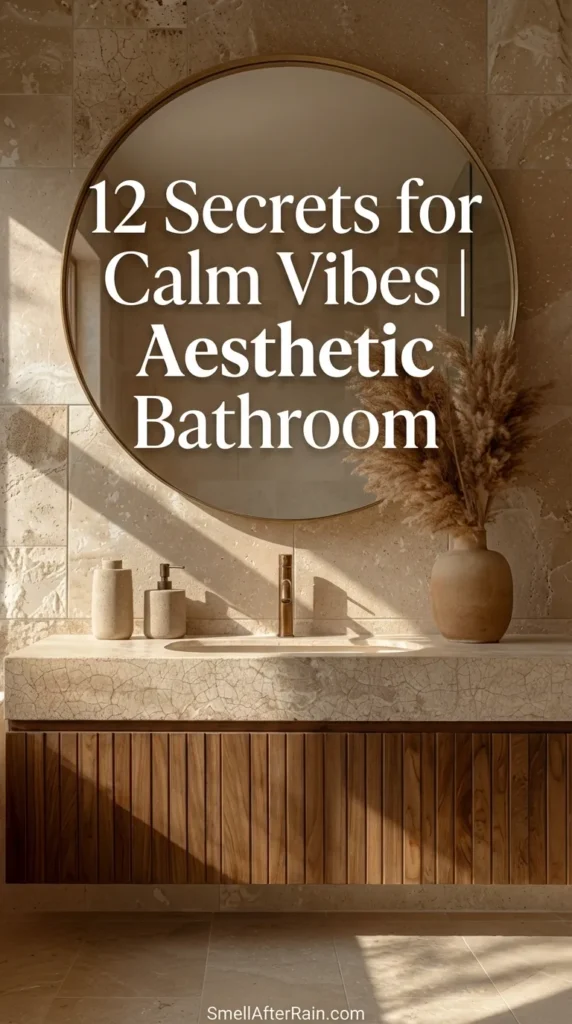
Choose round or oval mirrors instead of rectangular ones. Opt for a vanity with curved edges. Use circular rugs to break up the grid of the floor tiles. Arched doorways or shower niches are currently trending because they evoke a sense of ancient, protective architecture.
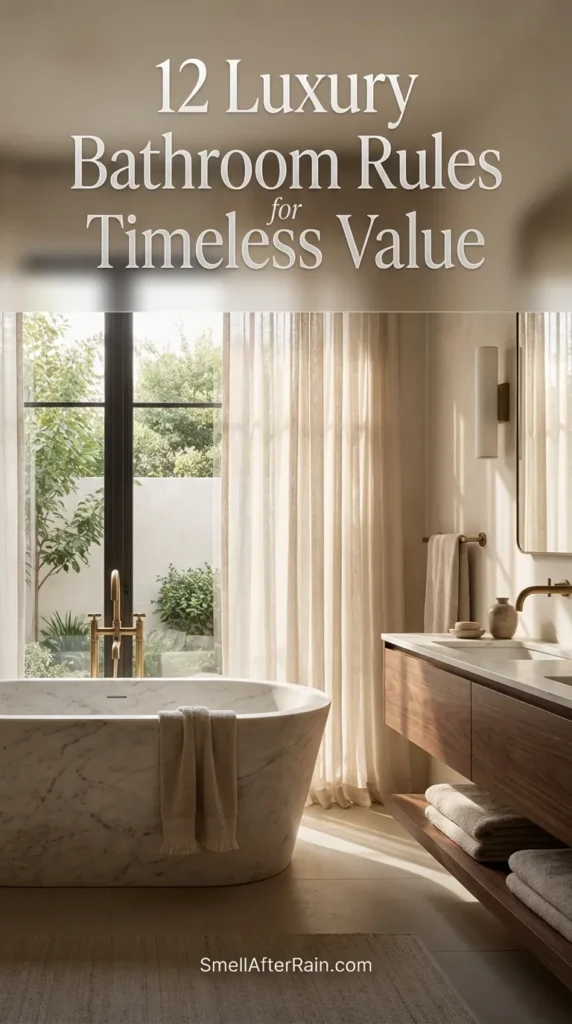
Softening the geometry of the room makes it feel more welcoming and less rigid. It encourages flow rather than stagnation. For a deeper dive into modern forms, read 13 modern bathroom design rules for calm.
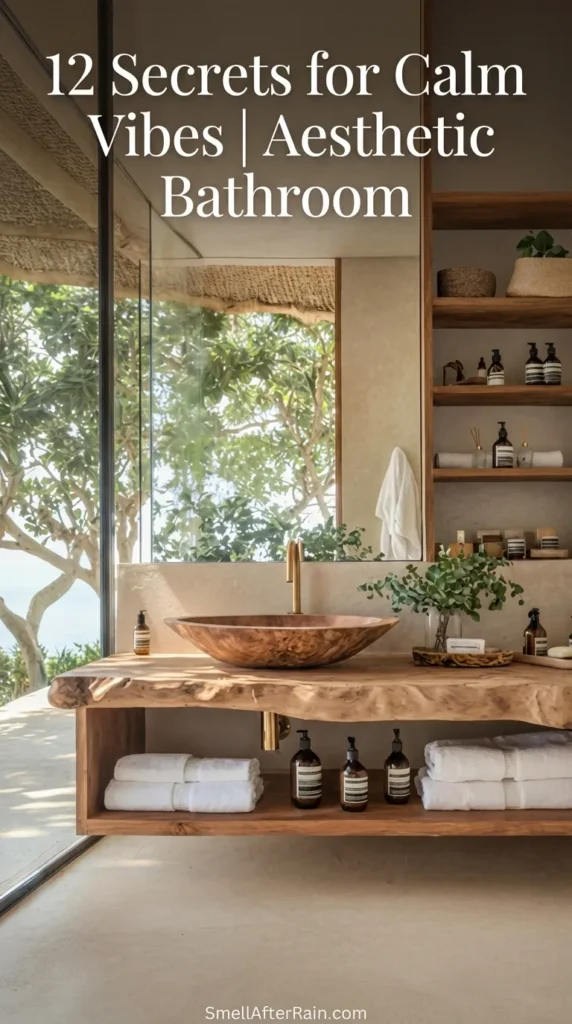
10. Acoustic Dampening: Designing Silence
The “echo chamber” effect of tiled bathrooms can be jarring. Hard surfaces bounce sound waves, creating a cold, hollow acoustic environment. True luxury is quiet. An aesthetic bathroom should sound as soft as it looks.
To dampen sound, introduce soft materials. We’ve mentioned towels and rugs, but you can also consider window treatments. Heavy linen curtains or fabric roman shades absorb sound much better than plastic blinds. If you have the budget, acoustic ceiling panels hidden behind moisture-resistant paint can make a significant difference.
A quiet room feels private and secure, essential qualities for a space where you are most vulnerable.
11. Hardware Kinetics: The Touch of Luxury
The physical interaction with your bathroom—turning a handle, pulling a drawer, pushing a button—should feel substantial and smooth. Cheap, wobbly hardware breaks the illusion of sanctuary. This is known as “haptic feedback” in design psychology.
Upgrade your faucets and cabinet pulls to solid brass or weighted steel. The resistance and weight of a quality handle convey permanence and reliability. Mixing metals (e.g., black faucet with brass light fixtures) adds visual interest and prevents the room from looking like a builder-grade showroom.
Think of hardware as the jewelry of the room; it’s a small detail that defines the overall bathroom aesthetic decor quality.
12. Personal Narrative: Art and Emotional Anchors
Finally, a truly aesthetic space must reflect its occupant. A generic “hotel style” bathroom can feel impersonal and sterile. Incorporate art that speaks to you. It could be a framed print of a calm seascape, a vintage sketch, or a small sculpture.
These items serve as “emotional anchors,” reminding you of places or feelings you cherish. They ground you in your identity. Place art where it can be seen from the tub or the vanity. Ensure it is framed properly to withstand humidity.
By blending your personal narrative with the principles of design psychology, you create a space that is not just vibey, but deeply restorative. Start your journey at Smell After Rain for more inspiration.
Frequently Asked Questions
1. How can I make my rental bathroom look aesthetic without renovating?
Focus on reversible changes. Swapping out the mirror, changing the shower head, and replacing cabinet hardware are high-impact upgrades you can take with you when you move. Use peel-and-stick wallpaper or tiles for a temporary color change. Invest heavily in textiles like a high-end shower curtain, plush rugs, and matching towel sets to cover unattractive surfaces.
2. What is the best color for a small bathroom to make it feel bigger?
While white is the traditional choice for expanding space, it can feel clinical. Soft, light neutrals like pale greige, off-white, or very light sage green reflect light while adding warmth. Painting the ceiling the same color as the walls blurs the edges of the room, drawing the eye up and creating an illusion of height and volume.
3. How do I add warmth to a grey and white bathroom?
To warm up a cool-toned bathroom, introduce natural wood elements. A teak stool, a bamboo bath mat, or wooden shelving adds immediate warmth. woven baskets for storage and brass or gold hardware also counteract the coolness of grey and white. Finally, ensure your light bulbs are warm white (2700K-3000K).
4. What creates the “clean girl aesthetic” in a bathroom?
The “clean girl aesthetic” focuses on minimalism, organization, and neutrality. Key elements include clear acrylic organizers, uniform glass bottles for products, fluffy white towels, and a lack of visual clutter. The vibe is effortless, polished, and hygienic, relying heavily on natural light and simple, high-quality basics.
5. Why is lighting so important for bathroom vibes?
Lighting dictates the mood. Bright, cool lighting is functional for grooming but can prevent relaxation. Warm, dimmable lighting triggers the parasympathetic nervous system, helping you de-stress. Layering your lighting allows the room to serve both functional and emotional needs, transforming it from a utility space to a sanctuary.
Conclusion
Creating an aesthetic bathroom is an exercise in empathy toward your future self. It involves anticipating your needs—for light, for quiet, for comfort—and designing a space that meets them. By applying these 12 psychological secrets, from circadian lighting to biophilic design, you transform your bathroom into a powerhouse of well-being. It becomes more than just a room; it becomes a daily reset button for your soul.