- 1. Circadian Lighting: The Psychology of the Glow
- 2. The 'Cocoon Effect' for Tiny Spaces
- 3. Earthy Palettes: Grounding Your Emotions
- 4. Tactile Haptics: The Science of Texture
- 5. Biophilic Integration: Reducing Cortisol Naturally
- 6. The Acoustic Softening: Rugs and Textiles
- 7. Warm Woods & Organic Imperfection
- 8. Scent-Scaping: The Olfactory Gateway to Calm
- 9. Vintage Anchors: Nostalgia as Comfort
- 10. Living Finishes: The Warmth of Patina
- 11. The 'Spa' Layout: Flow and Mindfulness
- 12. Art & Personal Artifacts: Identity Reinforcement
- Frequently Asked Questions
- Conclusion
In the realm of interior design, the bathroom is often treated as a purely utilitarian space—a cold chamber of ceramic, porcelain, and chrome designed for efficiency. However, from the perspective of an interior psychologist, this approach ignores a fundamental human need: the need for sanctuary. A Cozy Bathroom Aesthetic is not just about aesthetics; it is about regulating your nervous system. It is about creating a space where the noise of the outside world is dampened, and your body can transition from a state of high-alert sympathy to rest-and-digest parasympathy.
When we curate a Warm Bathroom, we are essentially mimicking the ancestral safety of a cave or a forest clearing. We are looking for signals of safety, warmth, and enclosure. Whether you are working with expansive footage or searching for clever Tiny Bathroom Ideas, the principles of comfort remain rooted in how our brains process sensory input. By manipulating light, texture, and color, we can transform a sterile washroom into a restorative retreat.
Here are 12 psychology-backed design strategies to cultivate deep relaxation in your bathroom.
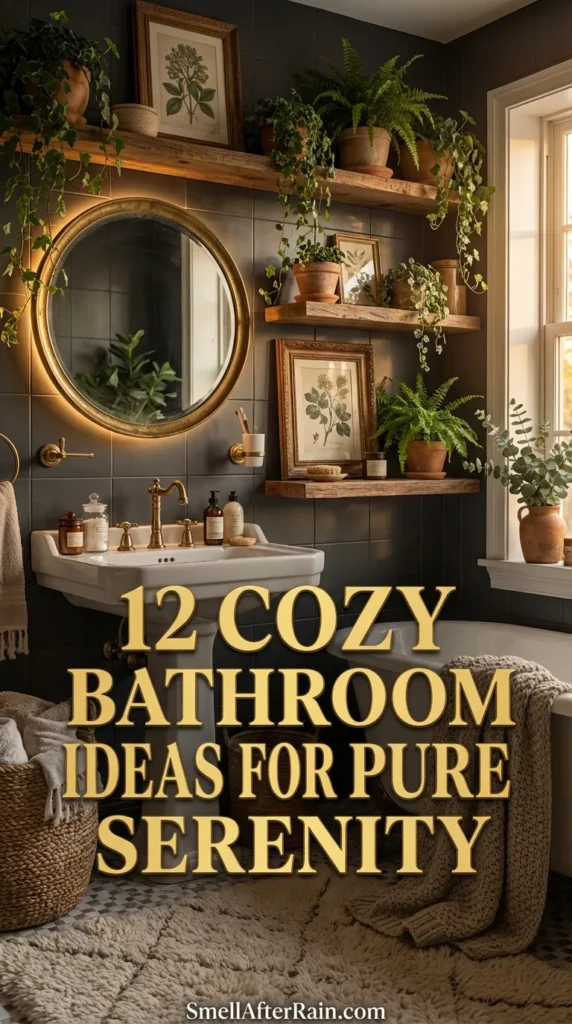
1. Circadian Lighting: The Psychology of the Glow
Lighting is the single most critical factor in defining the emotional temperature of a room. In many modern bathrooms, the default is high-kelvin, blue-tinted lighting that mimics daylight. While this is useful for applying makeup, it is detrimental to relaxation. Blue light suppresses melatonin and triggers cortisol, telling your brain it is time to work.
To achieve a truly Cosy Bathroom, you must prioritize warmer light temperatures, ideally between 2400K and 2700K. This range mimics the golden hue of firelight or a sunset, which signals to the primitive brain that the day is ending and it is safe to rest.
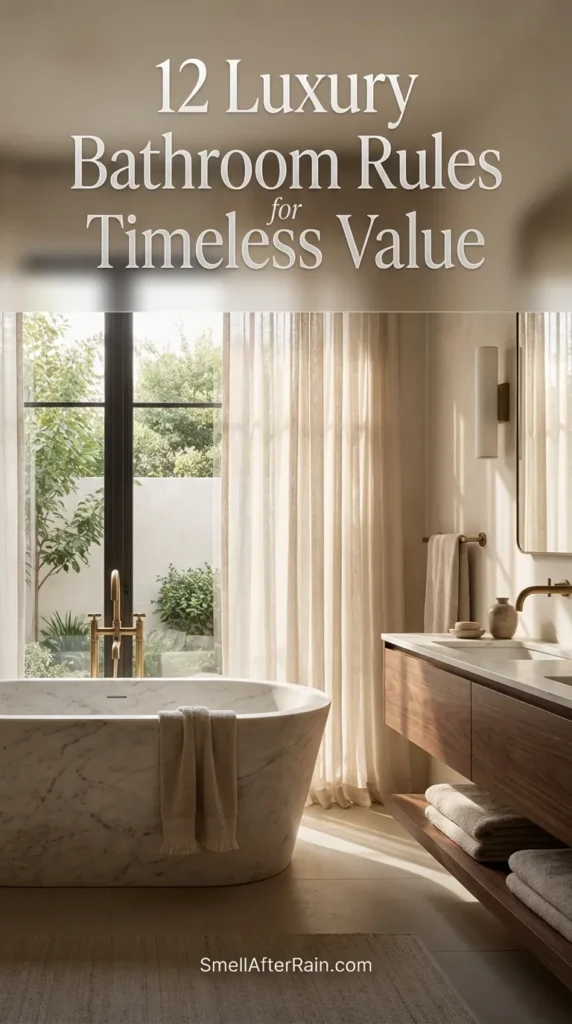
Layering is key here. Avoid a single overhead glare. Instead, utilize wall sconces, dimmable vanity lights, and even moisture-safe lamps. For those looking to elevate their space further, explore deeper luxury implementations in our guide on master bath luxury design secrets.
Psychologist’s Tip
Install a dimmer switch. The ability to lower the light intensity allows you to manually control your environment’s energy level, giving you a sense of agency and calm.
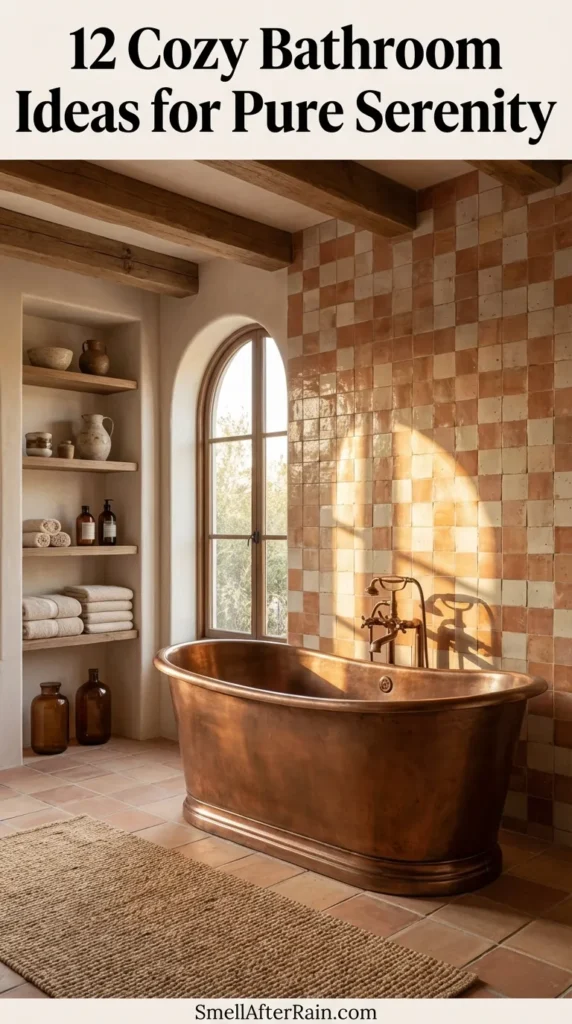
2. The ‘Cocoon Effect’ for Tiny Spaces
There is a misconception that dark colors make a room feel claustrophobic. In reality, deep, rich tones in a small space can create a “cocooning” effect that feels incredibly protective and safe. Tiny Bathroom Ideas often focus on painting everything white to “expand” the space, but this can sometimes result in a clinical, exposed feeling.
Embracing the smallness of the room can turn it into a jewel box. Painting the walls and ceiling the same rich color—such as a deep charcoal, forest green, or navy—blurs the boundaries of the room. This technique, known as “color drenching,” removes visual noise and creates a seamless, enveloping atmosphere.
If you are struggling with limited square footage in other parts of your home, similar principles apply to creating intimate book nooks where enclosure is a feature, not a bug.
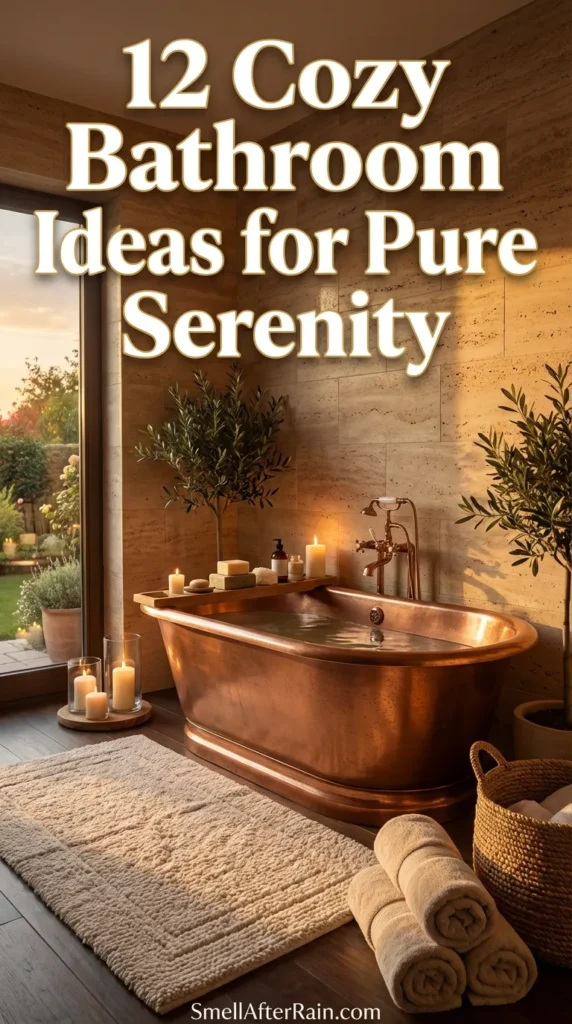
3. Earthy Palettes: Grounding Your Emotions
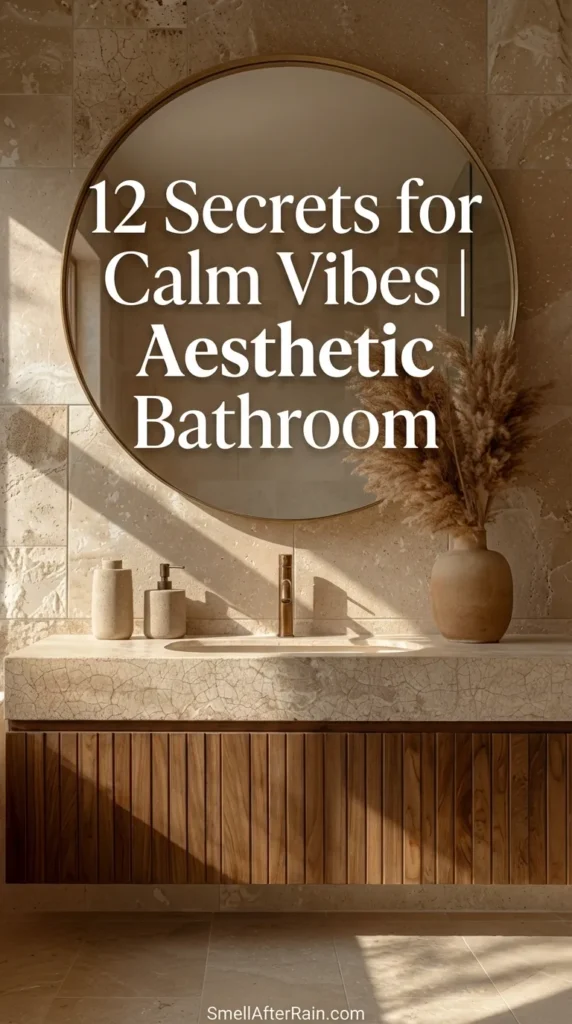
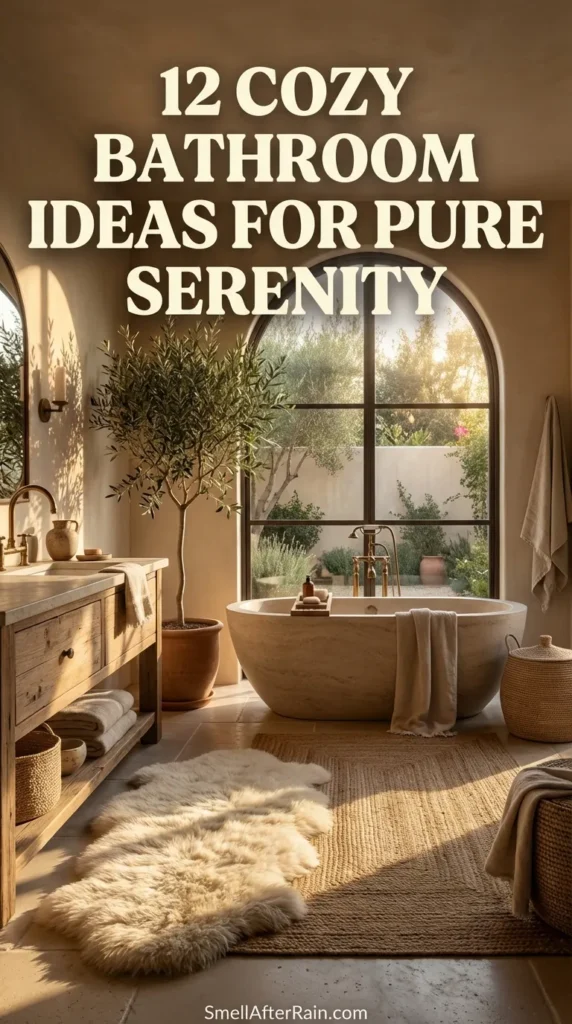
Color psychology suggests that humans feel most at ease when surrounded by the colors of nature. An Earthy Bathroom palette leverages this evolutionary preference. Shades of terracotta, sand, ochre, and warm beige trigger a subconscious association with the earth, which is inherently grounding.
Unlike stark white, which can feel sterile and demanding of cleanliness, earthy tones are forgiving and warm. They reflect light in a softer way, reducing glare and eye strain. When selecting tiles or paint, look for undertones of brown or yellow rather than blue or gray.
- Terracotta: Evokes warmth and Mediterranean sun.
- Sage Green: Represents renewal and plant life.
- Warm Greige: A softer alternative to concrete gray.
For more inspiration on using these palettes throughout your home, check out our broader collection of home aesthetic ideas.
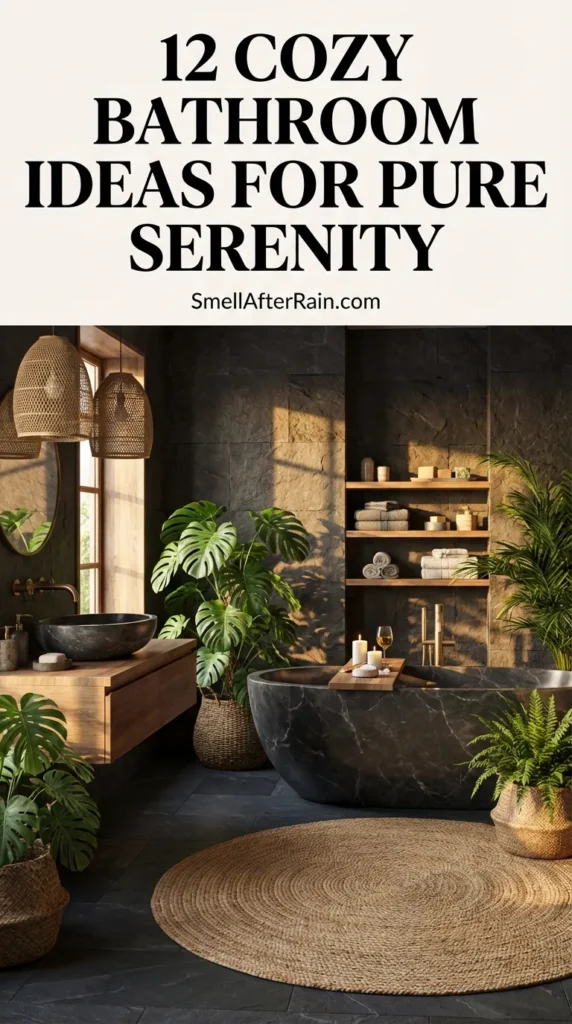
4. Tactile Haptics: The Science of Texture
We experience the world through touch (haptics) just as much as sight. A bathroom full of slick surfaces—glass, mirror, tile—can feel “slippery” to the mind, lacking friction and warmth. Cozy Bathroom Decor must interrupt these hard surfaces with softness.
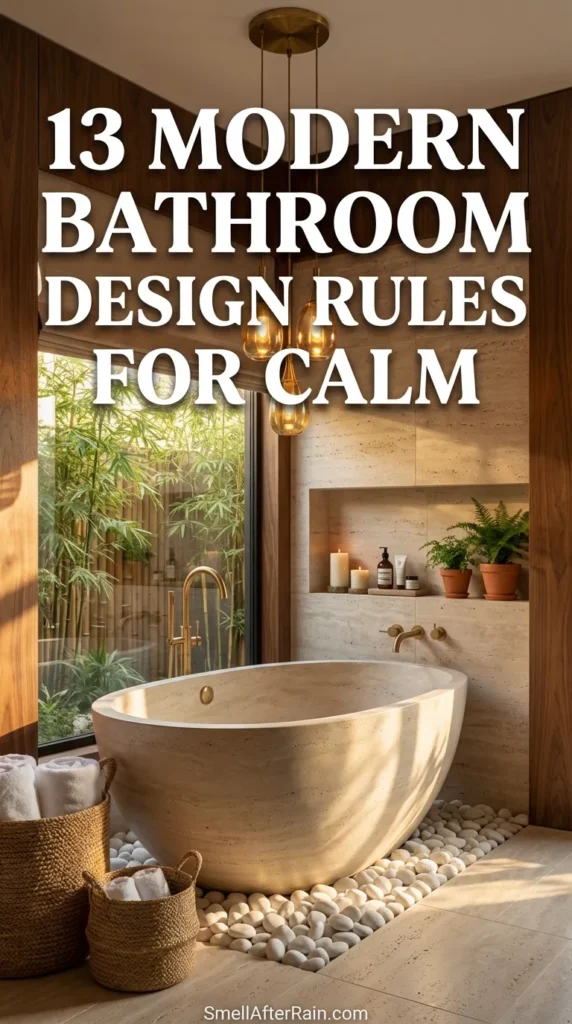
Incorporate high-texture elements like waffle-weave towels, plush cotton rugs, or a woven laundry basket. The variation in texture invites touch and slows down the visual scan of the room. A nubby bathmat underfoot provides immediate sensory feedback that signals comfort to the brain.
5. Biophilic Integration: Reducing Cortisol Naturally
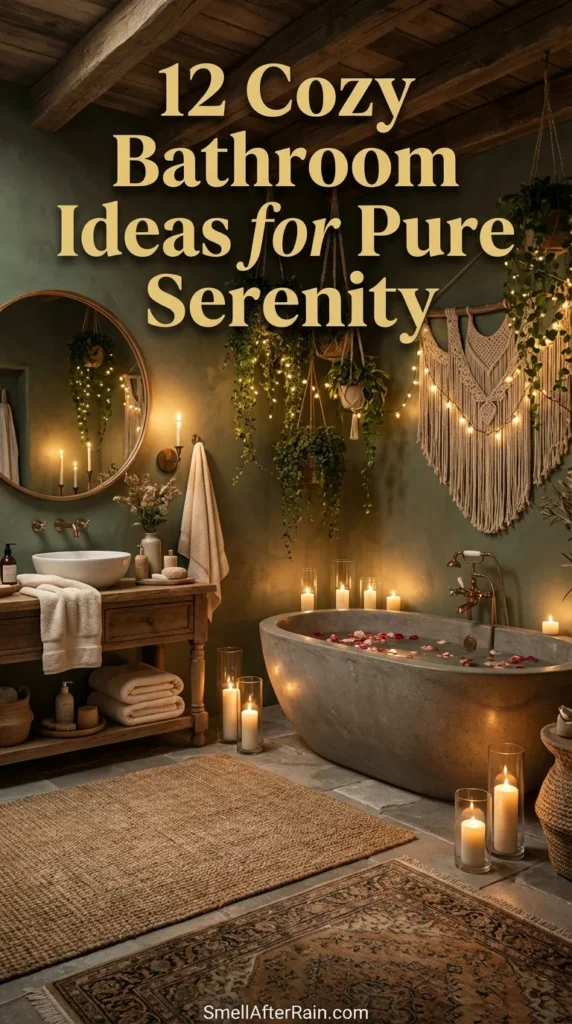
Biophilia is the innate human tendency to seek connections with nature. Studies consistently show that merely looking at greenery can lower blood pressure and cortisol levels. A Cottagecore Bathroom heavily relies on this principle, blurring the line between indoors and outdoors.
Bathrooms are actually ideal environments for many plants due to the high humidity. Ferns, Pothos, and Snake Plants thrive in these conditions. If you lack natural light, preserved moss walls or high-quality faux botanicals can still trigger a similar psychological response, although living plants are superior for air quality.
For ideas on how to integrate greenery into other functional spaces, see our guide on kitchen ideas where herbs and plants play a central role.
6. The Acoustic Softening: Rugs and Textiles
Sound plays a huge role in the “feeling” of a room. Bathrooms are notorious for hard echoes, which can subconsciously heighten anxiety. A cozy room sounds “deadened” or soft. To achieve Small Bathroom Inspo that feels luxurious, you must address acoustics.
Adding a vintage runner rug instead of a standard bath mat adds a layer of fabric that absorbs sound waves. If you have a shower curtain, opt for a heavy linen or cotton outer curtain rather than thin plastic. Even hanging plush robes on the back of the door contributes to sound absorption.
7. Warm Woods & Organic Imperfection
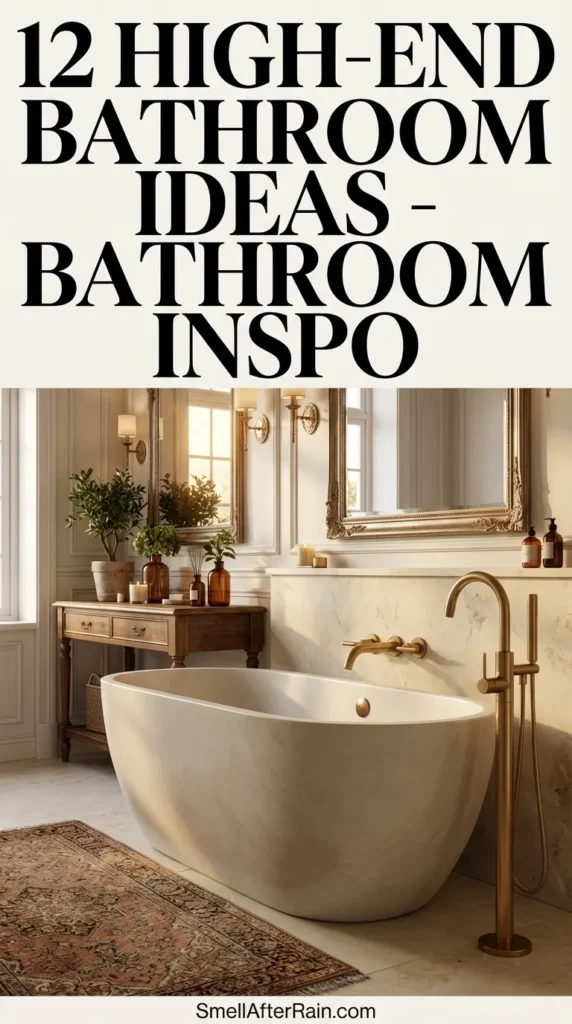
Wood introduces an organic element that counters the coldness of stone and ceramic. The grain patterns in wood are examples of “organized complexity,” which the human brain finds stimulating yet relaxing to look at. This is a core component of Cozy Bathroom Design.
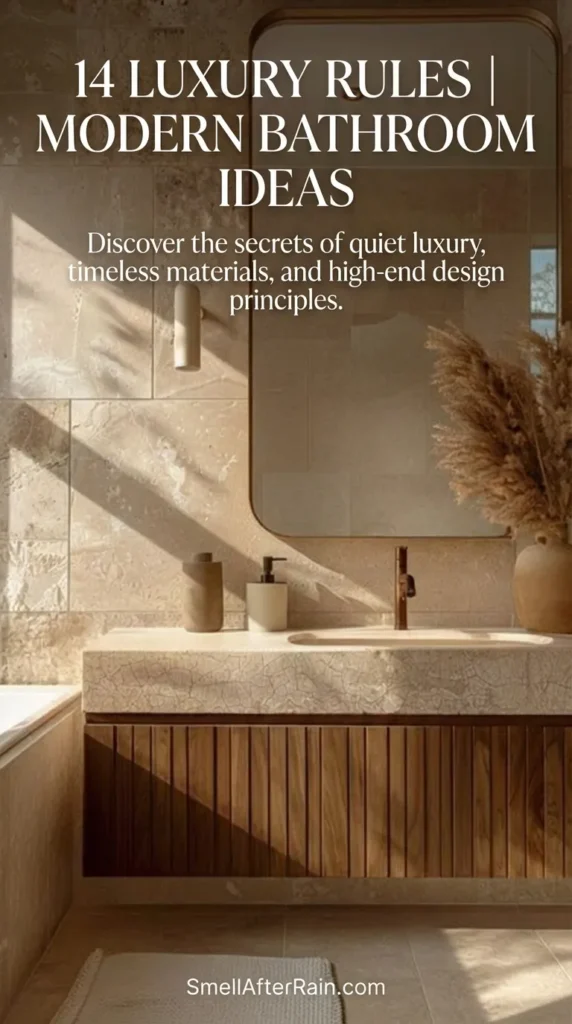
Incorporating a teak shower bench, bamboo shelving, or a wooden vanity brings warmth into the space. The imperfections in wood—knots and variations—remind us of the natural world, fostering a sense of ease. This approach aligns well with the design philosophy found in various rooms and nooks designed for comfort.
8. Scent-Scaping: The Olfactory Gateway to Calm
The olfactory bulb in the brain is directly connected to the amygdala and hippocampus, the centers for emotion and memory. This makes scent the fastest way to alter your mood. A truly Warm Bathroom engages the nose.
Move beyond synthetic air fresheners. Use essential oils like eucalyptus (which opens the airways and mimics a spa) or lavender (which promotes sleep). Hanging a bundle of fresh eucalyptus in the shower allows the steam to release the natural oils, creating an immersive sensory experience.
9. Vintage Anchors: Nostalgia as Comfort
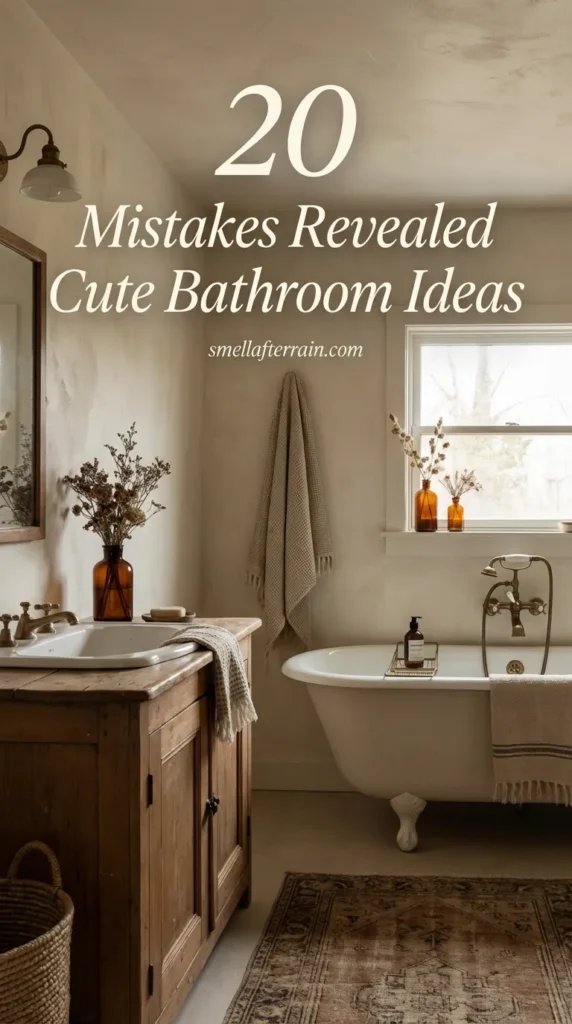
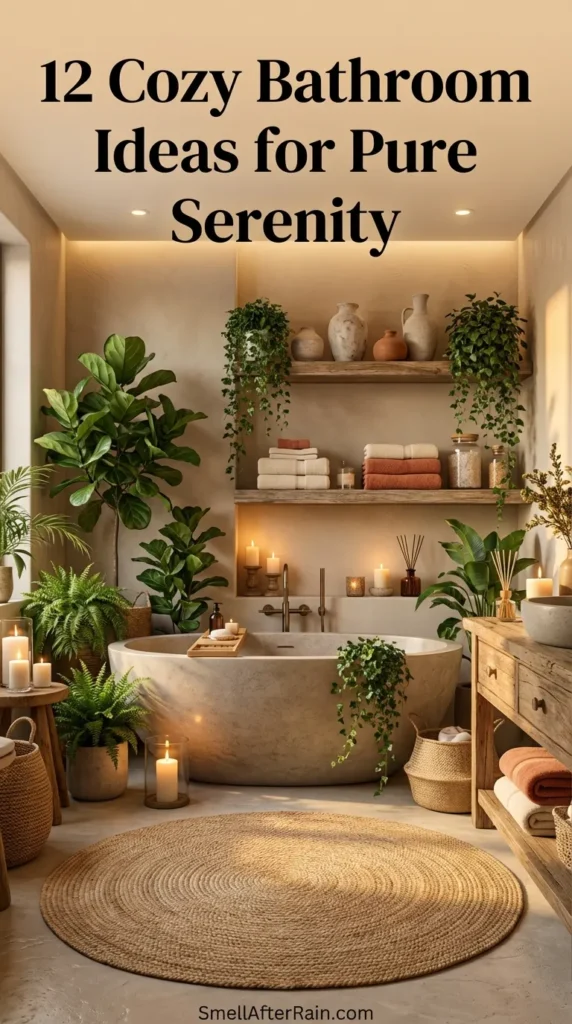
Newness can sometimes feel cold. Vintage items carry a sense of history and permanence that grounds a space. Incorporating a vintage mirror, an antique stool, or a repurposed dresser as a vanity adds soul to the room. This taps into the psychology of nostalgia, which fosters feelings of social connectedness and warmth.
Merging the old with the new is a hallmark of the Cozy Bathroom Aesthetic. It suggests that the space has evolved over time, rather than being manufactured in a showroom.

10. Living Finishes: The Warmth of Patina
Chrome and stainless steel are the standards for bathroom hardware, but they are visually cold (cool tones). Unlacquered brass, copper, or oil-rubbed bronze are “living finishes.” They warm up the palette of the room and develop a patina over time.
This aging process is aesthetically pleasing because it shows life and use. The golden or brownish hues of these metals coordinate beautifully with the Earthy Bathroom color schemes mentioned earlier, bridging the gap between hardware and decor.
11. The ‘Spa’ Layout: Flow and Mindfulness
Clutter causes cognitive load. When your eyes scan a room and see dozens of bottles, brushes, and tools, your brain has to process each item, which creates micro-stresses. A cozy bathroom is a decluttered bathroom.
Ensure that your layout promotes flow. Keep countertops clear, storing daily items in drawers or baskets. The transition from your sleeping area to the bathing area should be seamless. For tips on harmonizing these adjacent spaces, read our article on bedroom ideas.
12. Art & Personal Artifacts: Identity Reinforcement
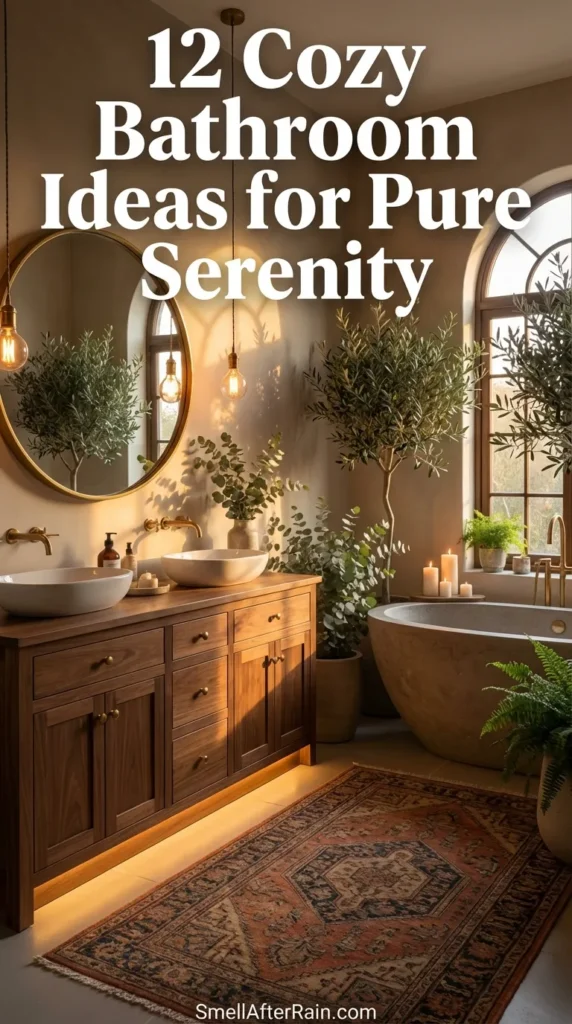
Finally, a space feels cozy when it feels like yours. Clinical bathrooms lack identity. Hanging art in the bathroom—whether it’s a framed print, a canvas (in a well-ventilated spot), or a sculptural piece—signals that this is a living space, not just a washroom.
Viewing art stimulates the pleasure centers of the brain. Choose pieces that evoke serenity, such as landscapes or abstract forms in soothing colors. This final touch transforms the room from a generic Small Bathroom Inspo photo into a personal sanctuary.
For more comprehensive guides on transforming every corner of your home, explore our full directory at bathroom ideas.
Frequently Asked Questions
How can I make a white bathroom feel cozy without painting?
If you cannot paint your walls, focus on the “layers” of the room. Introduce warmth through textiles like a high-pile rug in a warm beige or terracotta tone. Switch out cool white light bulbs for warm 2700K bulbs. Add wood elements, such as a bamboo bath mat or wooden shelves, to counteract the sterility of the white tile.
What are the best plants for a windowless bathroom?
For bathrooms with no natural light, you have two options: grow lights or low-light tolerant plants that you rotate out. Snake Plants (Sansevieria) and ZZ Plants are incredibly resilient and can tolerate low light for extended periods. However, high-quality faux plants are often the best psychological substitute in completely dark rooms.
Is a cozy bathroom aesthetic expensive to achieve?
Not at all. The “cozy” feeling comes from sensory inputs—lighting, texture, and scent—which are often low-cost upgrades. Swapping a shower curtain, adding a vintage rug found at a thrift store, and changing lightbulbs are budget-friendly ways to drastically alter the mood of the room.
Does a small bathroom have to be light colored to feel big?
No. While light colors reflect more light, they don’t necessarily make a room feel “better.” A small bathroom painted in a dark, moody color creates a jewel-box effect that feels intentional and intimate. It shifts the focus from “cramped” to “cozy and enclosed.”
How do I mix modern fixtures with cozy decor?
Contrast is key. If you have modern, sleek fixtures, balance them with organic, rough textures. Pair a sleek modern sink with a woven wicker basket or a rough-hewn wooden stool. The juxtaposition of the slick modern elements with the raw natural elements creates a balanced, warm environment.
Conclusion
Creating a Cozy Bathroom is an exercise in mindfulness. It requires looking past the trends and focusing on how the environment interacts with your senses. By adjusting the light to soothe your circadian rhythm, introducing the grounding textures of nature, and curating a space that feels safe and enclosed, you turn a daily routine into a ritual of restoration.