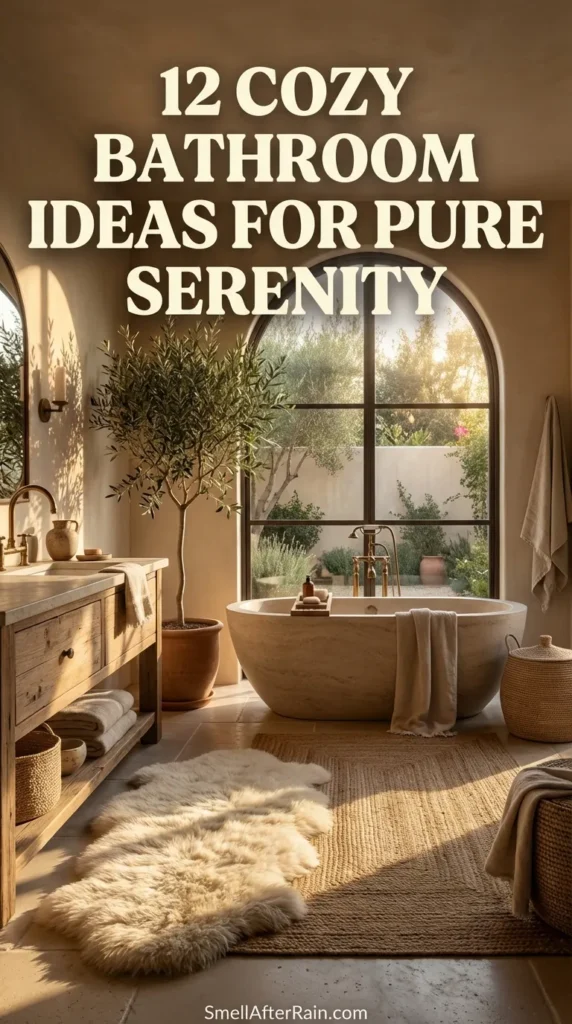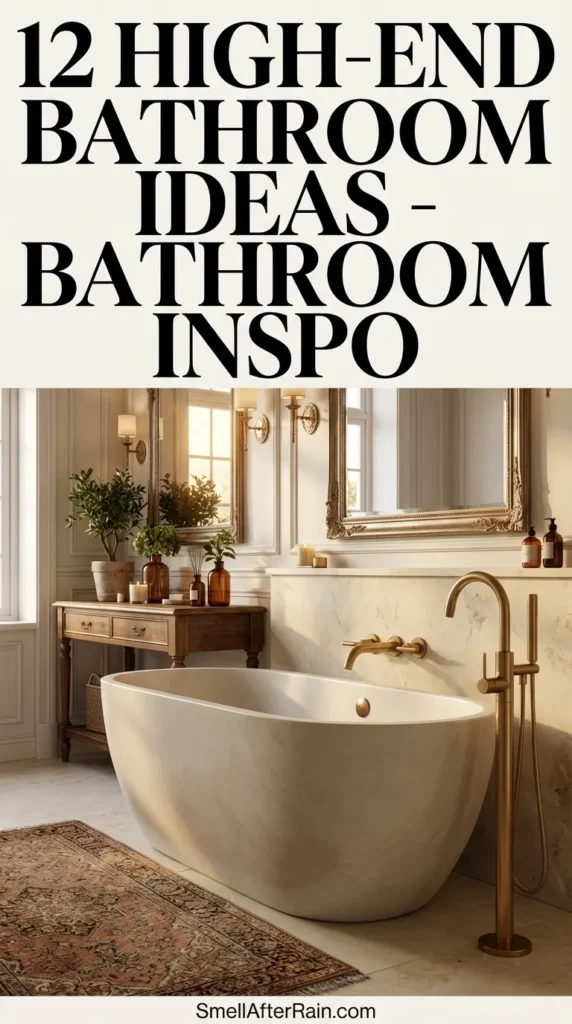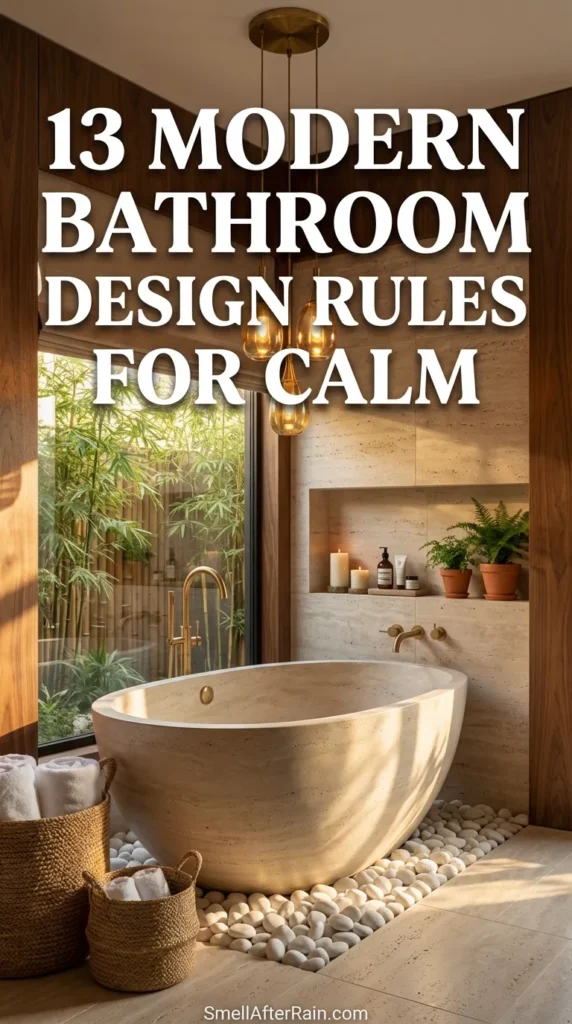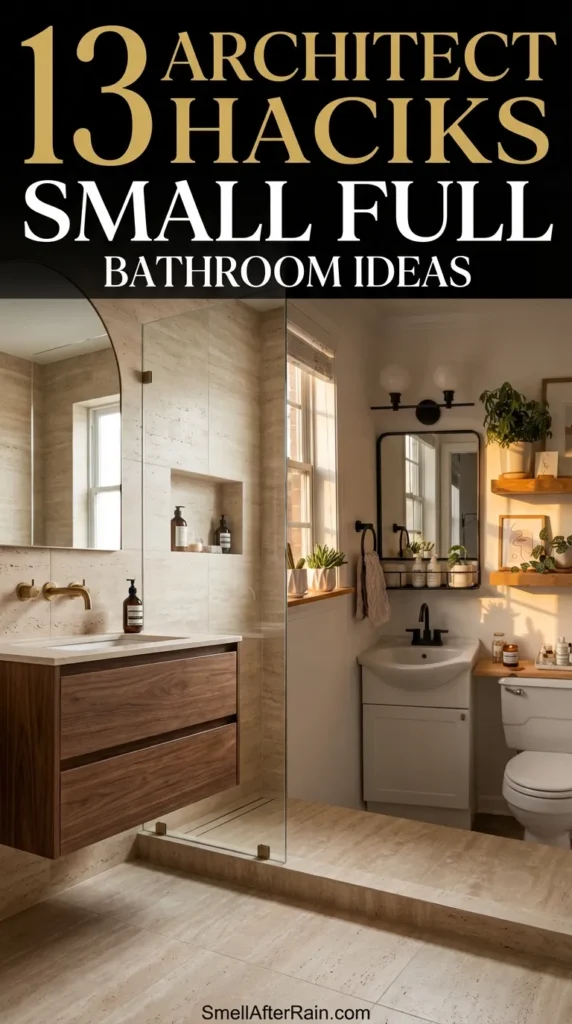
- 1. The Floating Vanity: Recovering Floor Surface Area
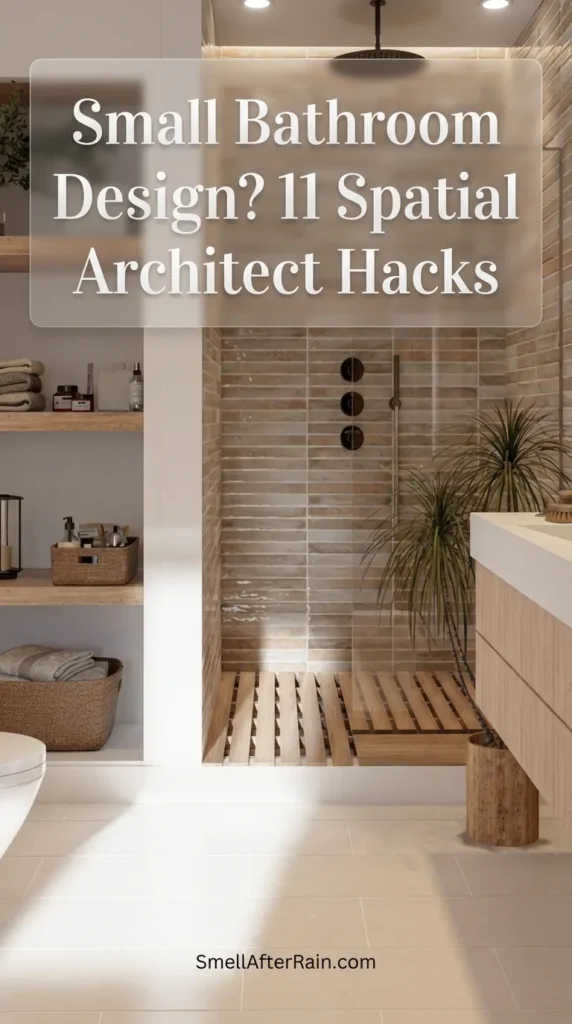
- 2. Large-Format Porcelain: Erasing Visual Grid Lines
- 3. Vertical Recessed Niches: The Z-Axis Strategy
- 4. Frameless Glass Shields: Removing Visual Barriers
- 5. The Continuous Flooring Technique: Curbless Showers
- 6. Wall-Mounted Faucets and Hardware: Saving Depth
- 7. Strategic Mirror Placement: Doubling Light and Depth
- 8. High-Gloss Finishes: Maximizing Light Reflectivity
- 9. Monochromatic Palettes: Reducing Visual Noise
- 10. Compact and Corner Fixtures: Optimizing Dead Zones
- 11. Layered Lighting Architecture: Expanding Spatial Perception
- Frequently Asked Questions
- Conclusion
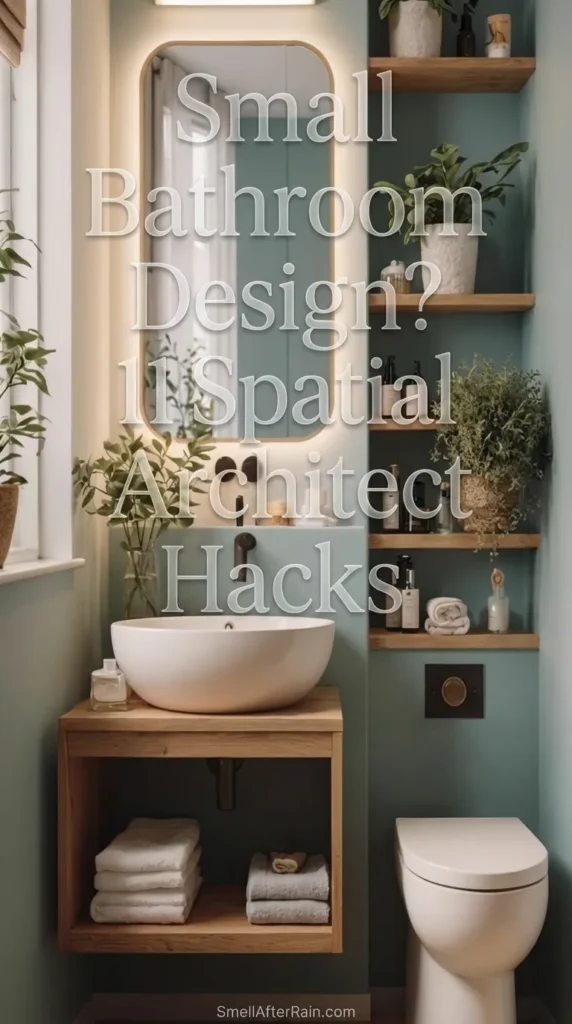
When approaching a Small Bathroom Renovation, the primary constraint is rarely the square footage itself; it is the inefficiency of the layout. As a spatial architect, I view Bathroom Interior Design not merely as decoration, but as a puzzle of volume and flow. In compact environments, every millimeter counts, and the psychological perception of space is just as critical as the physical dimensions. A successful redesign transforms a claustrophobic closet into a sanctuary of Minimalist Small Bathrooms.
Many homeowners make the mistake of shrinking their ambitions when they should be expanding their strategy. Drawing parallels from efficient small full bathroom ideas, we know that visual continuity is the secret weapon. Whether you are looking for Tiny Bathroom Ideas for a powder room or a full wet room, the goal is to deceive the eye and maximize utility without clutter. At Smell After Rain, we believe that luxury is not defined by size, but by the thoughtful execution of details. Below, we dissect 11 architectural hacks to revolutionize your small space.
1. The Floating Vanity: Recovering Floor Surface Area
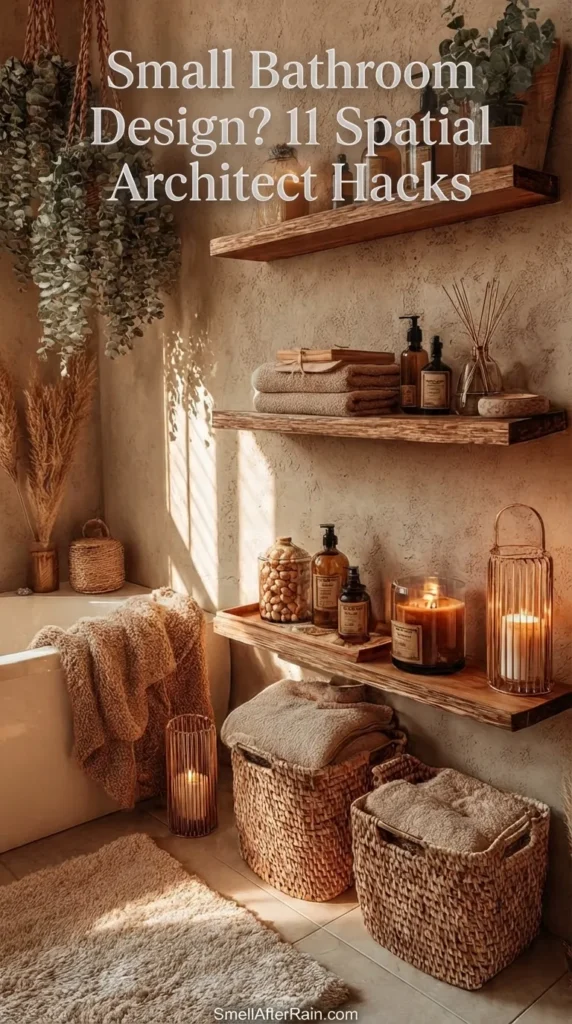
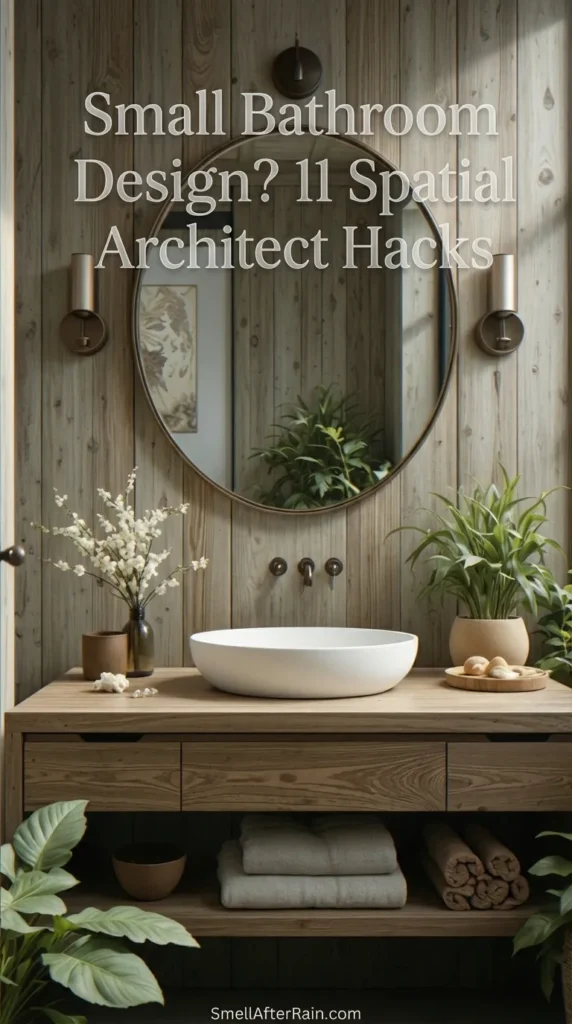
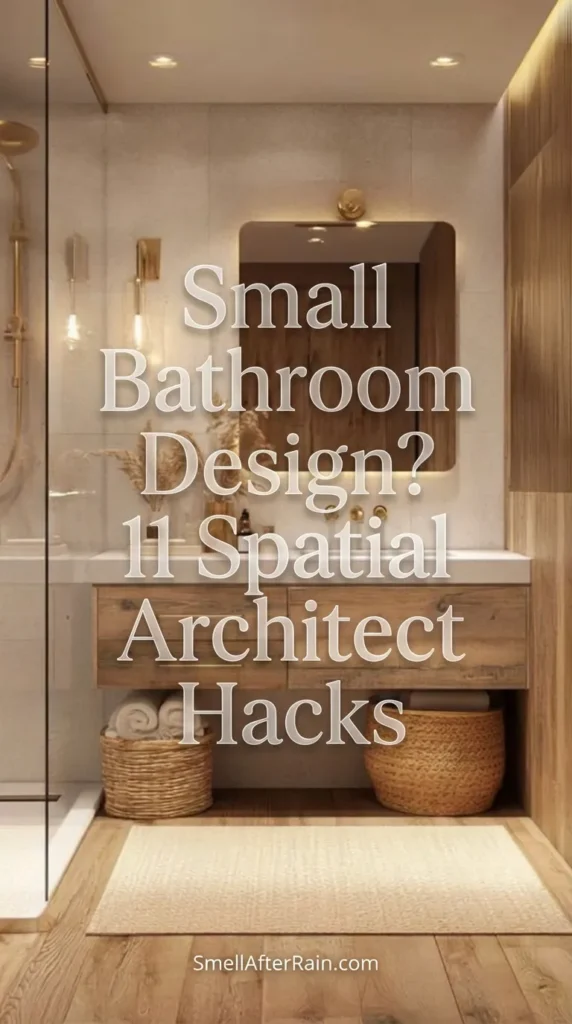
In the realm of Bathroom Ideas For Small Rooms, the floor is your most valuable real estate. Traditional vanity units that extend to the floor create a visual block, effectively terminating the room at the cabinet front. This reduces the perceived depth of the room significantly.
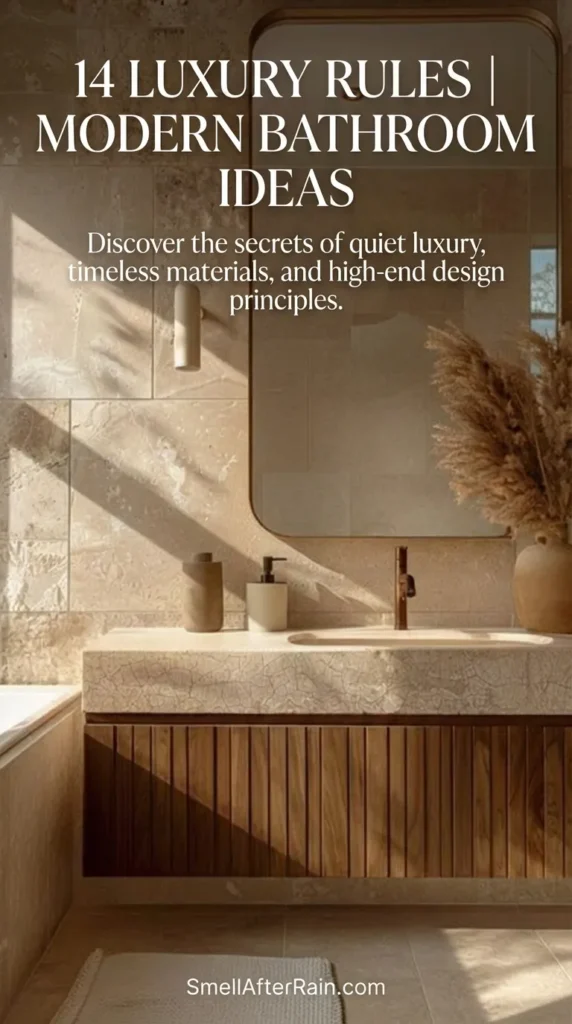
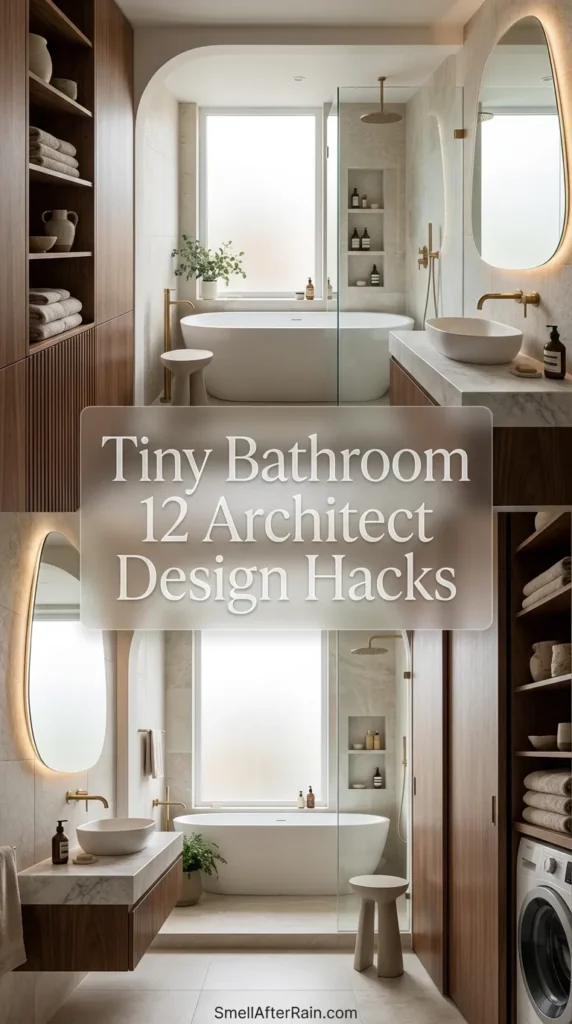
The architectural solution is the wall-mounted, or “floating,” vanity. By lifting the cabinetry off the ground, you allow the flooring material to extend all the way to the wall. The human brain calculates the size of a room based on the visible floor area. By revealing the floor beneath the sink, you trick the brain into perceiving the room as larger than it actually is. This is a staple in modern bathroom design rules.
Furthermore, this space allows for functional additions like baskets for towels or a step stool for children, which can be tucked away when not in use, maintaining that critical open flow.

2. Large-Format Porcelain: Erasing Visual Grid Lines
A common misconception in Bathroom Decor Ideas is that small rooms require small tiles. In reality, using subway tiles or small mosaics in a tight space increases the number of grout lines. This creates a dense visual grid that can make the walls and floor feel busy and constricted.
To combat this, architects employ large-format porcelain tiles (e.g., 24×48 inches). Fewer grout lines mean a more seamless surface. When the eye can travel across a surface without interruption, the space feels expansive. This approach aligns with the principles of quiet luxury, where simplicity and material quality speak louder than ornamentation.
Material Continuity
For maximum impact, carry the same large-format tile from the floor up the walls. This blurs the boundaries between horizontal and vertical planes, creating an envelope effect that feels infinite rather than boxed in.
3. Vertical Recessed Niches: The Z-Axis Strategy
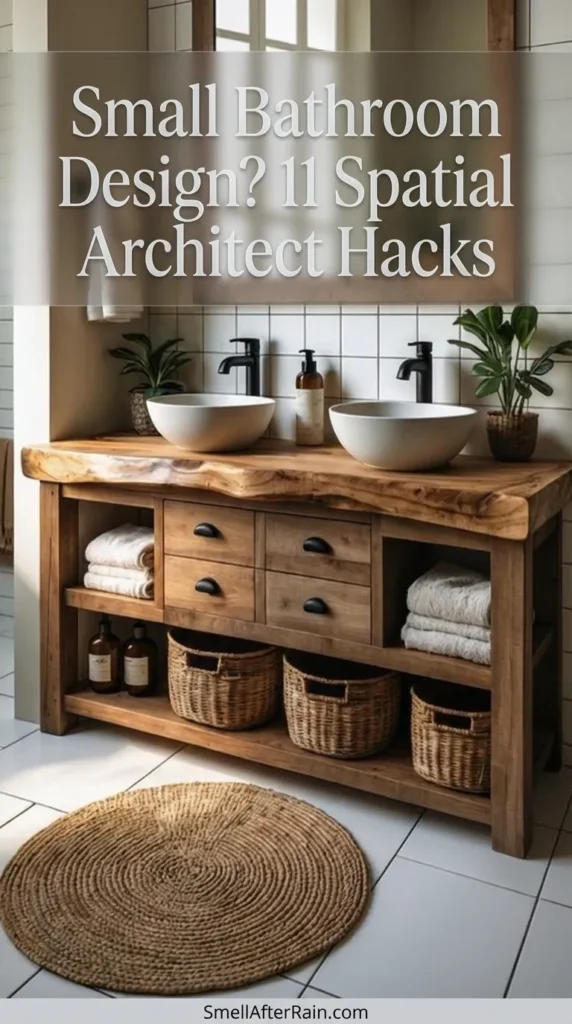
Storage is the nemesis of Small Toilet Design and bath layouts. protruding shelves encroach on your movement zones (the “flow”). The architectural fix is to utilize the stud cavities—the empty space inside your walls.
Recessed niches are essential for Minimalist Small Bathrooms. By framing out a box between the wall studs, you gain storage depth without stealing a single inch of floor space. This is where you store shampoos, soaps, and decorative elements. Unlike hanging racks, a niche integrates into the architecture.
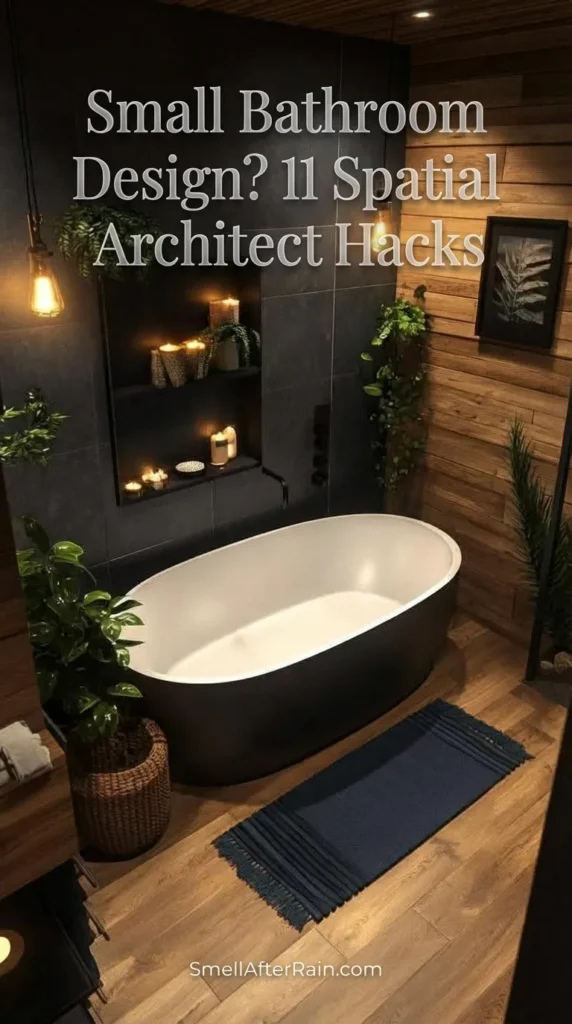
For a high-end look, illuminate the niche with waterproof LED strips. This adds depth and turns a functional element into a focal point, a technique often seen in luxury master bath designs but perfectly applicable to tiny footprints.
4. Frameless Glass Shields: Removing Visual Barriers
The shower curtain is a visual wall. In a 5×8 bathroom, drawing a shower curtain effectively cuts the room size in half. To maintain the full visual volume of the room, you must eliminate opaque barriers.
Install a clear, frameless glass panel or door. This ensures that when you enter the room, your eye travels all the way to the back wall of the shower. It is one of the most effective Bathroom Ideas For Small Bathrooms to instantly double the perceived space. If privacy is a concern, consider switchable smart glass that turns opaque with a click, but keep it clear when not in use.
This transparency is crucial for bathroom ideas focused on openness. Heavy hardware and frames stop the eye; frameless glass lets it wander.
5. The Continuous Flooring Technique: Curbless Showers
Fragmentation shrinks space. When you have a bathroom floor, a shower curb (threshold), and then a different shower floor tile, you are chopping the room into tiny zones. The “Curbless” or zero-entry shower is a hallmark of accessible and spacious design.
By sloping the subfloor properly, you can run the main bathroom floor tile directly into the shower area without a barrier. This creates a single, unified plane. Combined with a linear drain, this setup is the pinnacle of sleek, Modern Bathroom Ideas. It removes the physical and visual trip hazard, making the room feel like one large wet room rather than a segmented utility space.
For more on achieving this seamless look, explore our guide on modern luxury rules.
6. Wall-Mounted Faucets and Hardware: Saving Depth
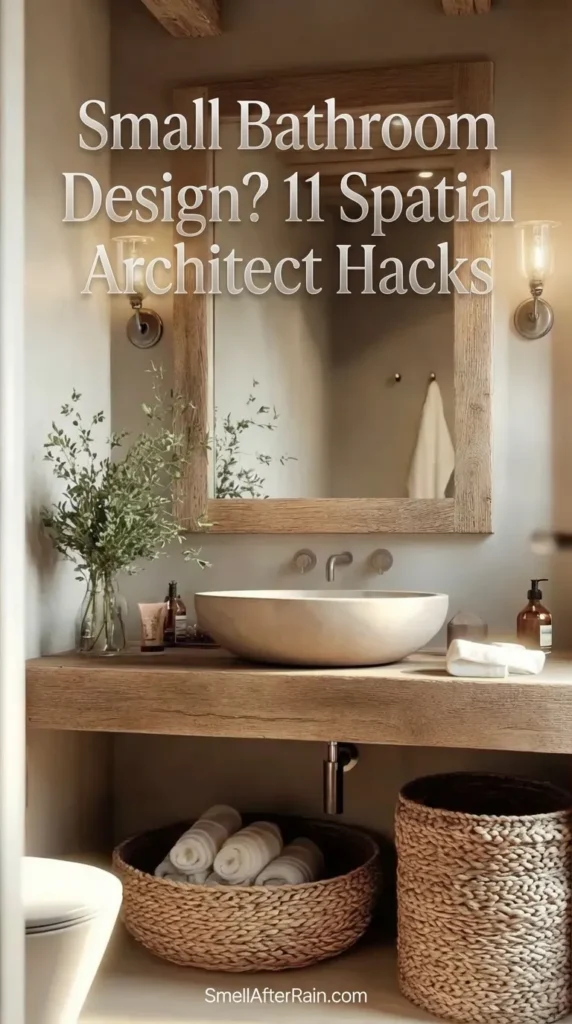
Standard vanity depths range from 18 to 21 inches. In a tight space, shaving off 3 inches can significantly improve traffic flow. One way to enable a narrower vanity is to move the plumbing into the wall.
Wall-mounted faucets eliminate the need for a faucet deck on the sink/countertop. This allows for a much narrower sink profile (front-to-back), which in turn allows for a shallower vanity cabinet. This is a subtle Small Bathroom Renovation hack that yields wider walkways. It also simplifies cleaning, as there is no faucet base to collect grime and hard water deposits.
7. Strategic Mirror Placement: Doubling Light and Depth
Mirrors are not just for checking your reflection; they are architectural windows. A large mirror reflects the room back onto itself, effectively doubling the visual volume. For Tiny Bathroom Ideas, consider a mirror that spans the entire wall above the vanity, or even floor-to-ceiling mirrors in transition areas.
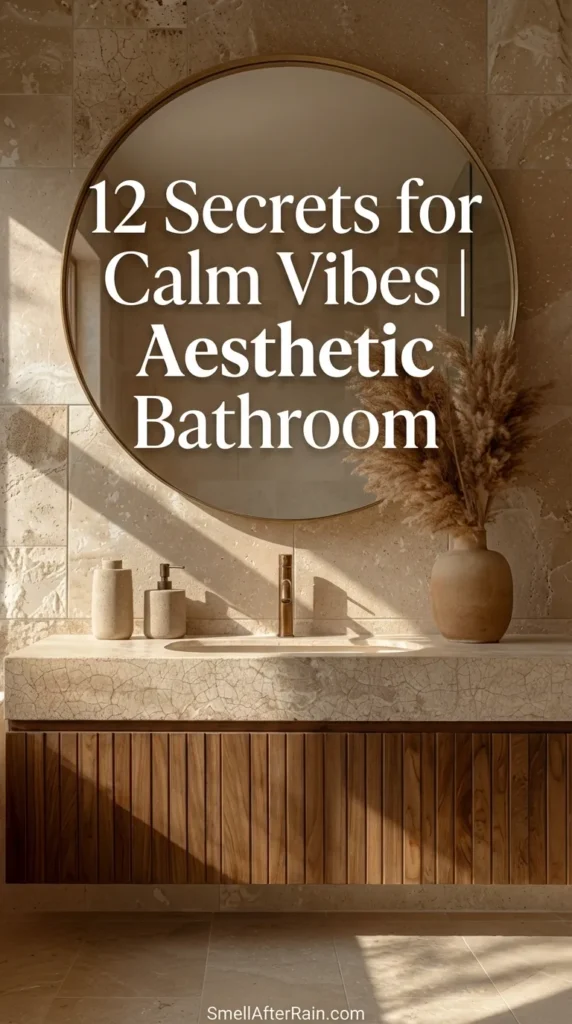
Positioning a mirror opposite a window is particularly powerful. It bounces natural light into the darker corners of the room. If a window isn’t available, placing a mirror opposite a bright light source mimics this effect. This manipulation of light and reflection is central to creating aesthetic calm vibes in cramped quarters.
8. High-Gloss Finishes: Maximizing Light Reflectivity
Texture plays a massive role in how space is perceived. Matte finishes absorb light, which can make a small room feel cozy but also smaller. High-gloss or semi-gloss finishes on tiles, cabinetry, and even ceilings reflect light, keeping the photons bouncing around the room.
Consider glazed ceramic tiles for the walls or a lacquered finish for the vanity. This doesn’t mean the room needs to look like a hall of mirrors, but introducing reflective surfaces helps to brighten the overall ambiance. This technique is often used in cozy bathroom ideas to prevent “cozy” from becoming “cave-like.”
9. Monochromatic Palettes: Reducing Visual Noise
High contrast shrinks space. A checkerboard floor or distinctively different wall colors define the edges of the room sharply. To blur the edges, architects use monochromatic or low-contrast color schemes. This is a core tenet of Bathroom Design Styles leaning towards minimalism.
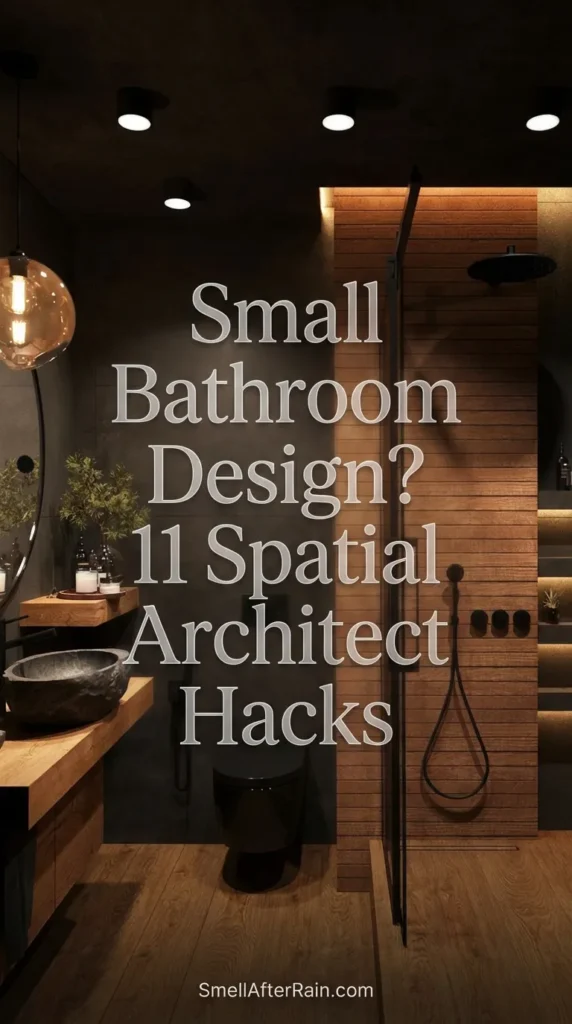
When the wall tile matches the paint, and the vanity blends with the floor tones, the eye doesn’t stop at the intersections. White, cream, pale grey, and beige are classic choices because they are high-LRV (Light Reflectance Value) colors. However, dark monochromatic rooms (like charcoal or navy) can also work by dissolving corners into shadow, creating an infinite, moody depth often found in high-end concepts.
10. Compact and Corner Fixtures: Optimizing Dead Zones
Standard toilets and sinks are designed for standard homes. For a Small Toilet Design, you must look at compact elongated or round-bowl toilets, or even wall-hung toilets with in-wall tanks. An in-wall tank system saves up to 10 inches of depth—a massive gain in a small powder room.
Additionally, corners are often dead space. A corner vanity or a corner shower enclosure can free up the center of the room for movement. While sometimes viewed as retro, modern corner fixtures are sleek and geometric, fitting perfectly into contemporary layouts.
Just as one might optimize Small Kitchen Ideas by using corner lazy susans, the bathroom corner sink is a geometry hack that reclaims the center of the room.
11. Layered Lighting Architecture: Expanding Spatial Perception
A single overhead flush mount creates harsh shadows and makes the room feel small and cave-like. To expand the space, you need layered lighting: ambient, task, and accent.
- Ambient: Recessed cans or a central fixture for general light.
- Task: Sconces at eye level (flanking the mirror) to eliminate shadows on the face.
- Accent: LED strips under the floating vanity or inside the shower niche.
Lighting the perimeter of the room (washing the walls with light) pushes the walls visually outward. Accent lighting under a floating vanity enhances the floating effect mentioned in point #1. For a deeper dive into lighting for serenity, review our guide to aesthetic bathroom secrets.
Frequently Asked Questions
What are the best colors for a small bathroom without windows?
For windowless bathrooms, the goal is to simulate brightness. High-LRV (Light Reflectance Value) colors like crisp whites, soft creams, or very pale greys are ideal. These colors reflect artificial light efficiently. However, you can also go the opposite route with a moody, dark “jewel box” design using deep navys or blacks, provided you have excellent layered lighting to create drama rather than gloom.
Is a bathtub or a shower better for small bathroom resale value?
Generally, a walk-in shower is preferred in small bathrooms because it uses space more efficiently and feels more spacious. However, real estate experts suggest keeping at least one bathtub in the home (usually in the guest or family bath) for families with small children. If this is your only bathroom, a deep soaking tub with a glass panel might be the best compromise.
Can I use wallpaper in a small bathroom?
Absolutely. Wallpaper can add depth and interest. In a small space, large-scale prints often work better than tiny, busy patterns which can feel cluttering. Ensure the wallpaper is vinyl or specifically rated for high-humidity environments, especially if the room lacks powerful ventilation.
How do I add storage without cluttering the room?
Focus on vertical storage and “hidden” storage. Use the space above the toilet for a custom cabinet or open shelving. Utilize the back of the door for hooks or racks. Most importantly, use recessed niches inside the shower and walls to keep items flush with the wall surface rather than protruding into the room.
What is the minimum size for a functional small bathroom?
A standard full bathroom (sink, toilet, tub/shower) usually requires a minimum of 36 to 40 square feet (approx. 5×8 feet). A powder room (sink and toilet only) can be as small as 15 to 20 square feet. However, functionality depends heavily on the layout and code clearances (usually 21-24 inches of clearance in front of fixtures).
Conclusion
Transforming a Small Bathroom Interior is an exercise in precision. By adopting the mindset of a spatial architect, you move beyond simple decoration and start manipulating volumes, light, and flow. Whether it is installing a floating vanity to reveal floor space, using large-format tiles to reduce visual noise, or employing smart glass for transparency, these 11 hacks provide a roadmap to a bathroom that feels grander than its footprint.
Remember, the most successful Bathroom Ideas For Small Rooms are those that prioritize cohesion. Stick to a limited palette, reduce visual clutter, and invest in quality lighting. For more inspiration on elevating your home’s most intimate spaces, continue exploring the curated design guides at Smell After Rain.