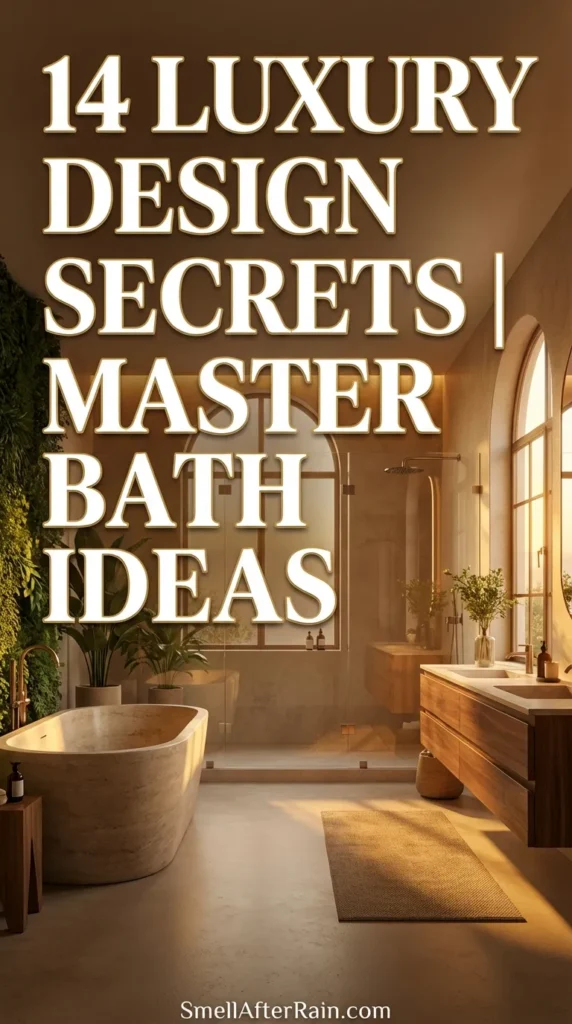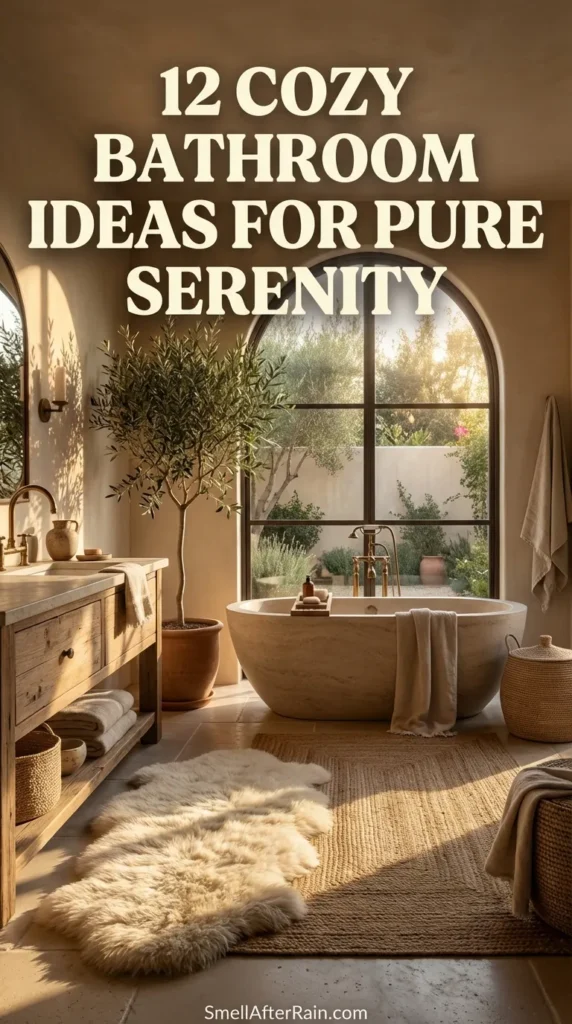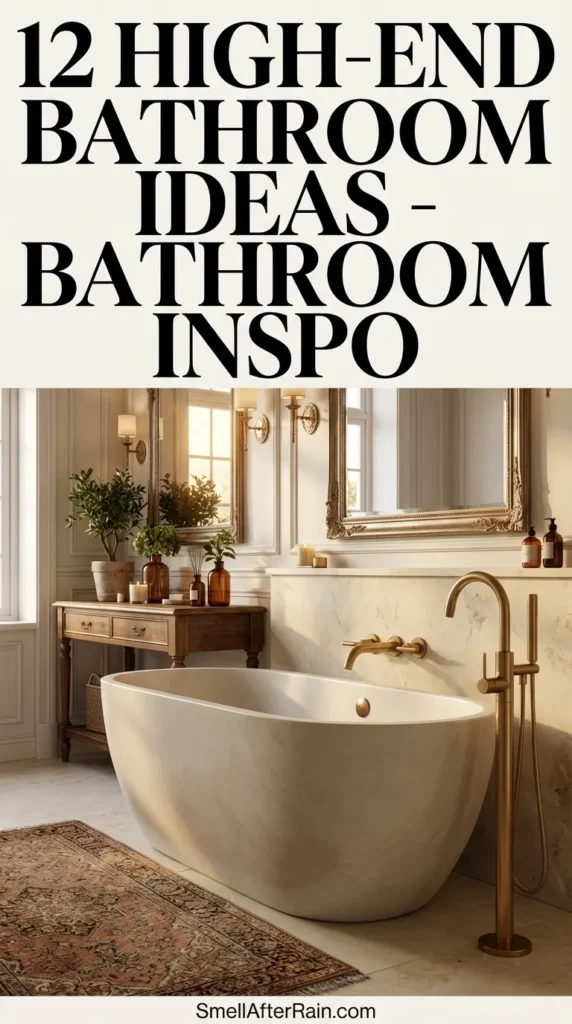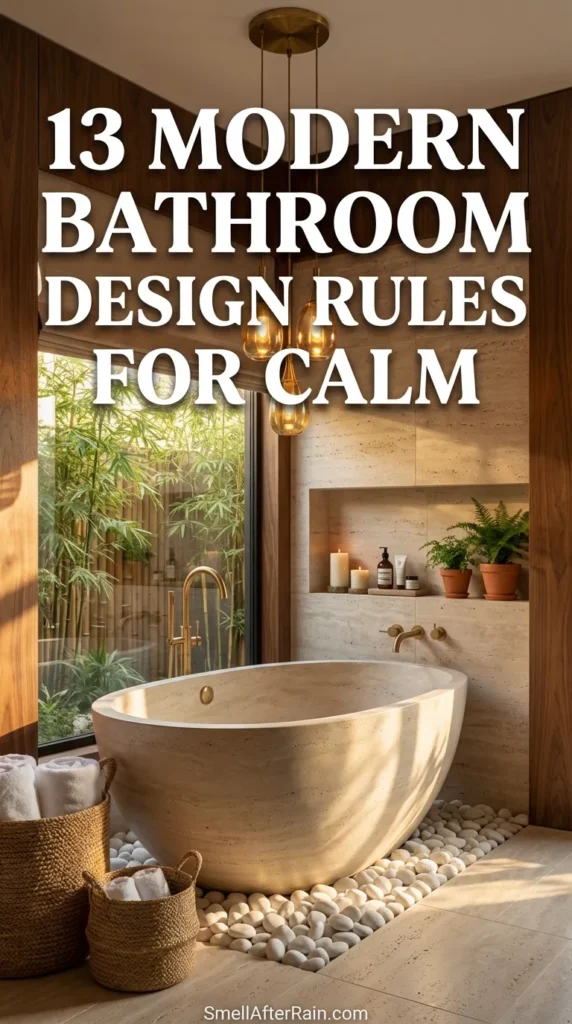
- 1. The Monolithic Stone Statement
- 2. Venetian Plaster & Limewash Walls
- 3. The Art of Unlacquered Brass
- 4. The 'Wet Room' Architecture
- 5. Invisible Storage Cabinetry
- 6. Layered Lighting Schematics
- 7. The Sculptural Freestanding Tub
- 8. Radiant Heated Flooring Systems
- 9. Softening with Floor-to-Ceiling Drapery
- 10. Fluted Glass & Steel Partitions
- 11. Integrated Smart Water Technology
- 12. The Curated Art Niche
- 13. Warm Wood & Organic Textures
- 14. Scentscaping & Sensory Design
- Frequently Asked Questions
- Conclusion
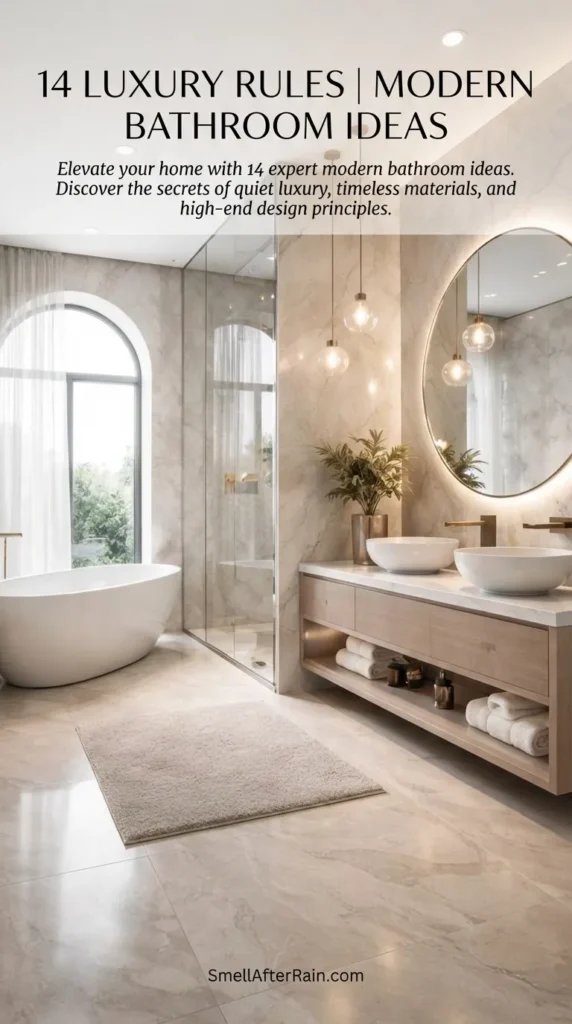
True luxury is not about excess; it is about the absence of friction. When we approach modern bathroom ideas from a high-end designer perspective, we move beyond the transient trends of TikTok and Pinterest and step into the realm of “Old Money” aesthetics—design that is built to last, to age gracefully, and to elevate the property value of your home substantially. A truly modern luxury bathroom is an investment in your daily well-being, a sanctuary where material science meets art.
As the Lead Architect at Smell After Rain, I have curated a list of principles that define the current apex of interior architecture. Whether you are working with a sprawling master suite or looking for small full bathroom ideas, the philosophy remains the same: quality over quantity, and timelessness over trend. In this comprehensive guide, we will explore the best bathroom ideas that define the quiet luxury movement.
1. The Monolithic Stone Statement
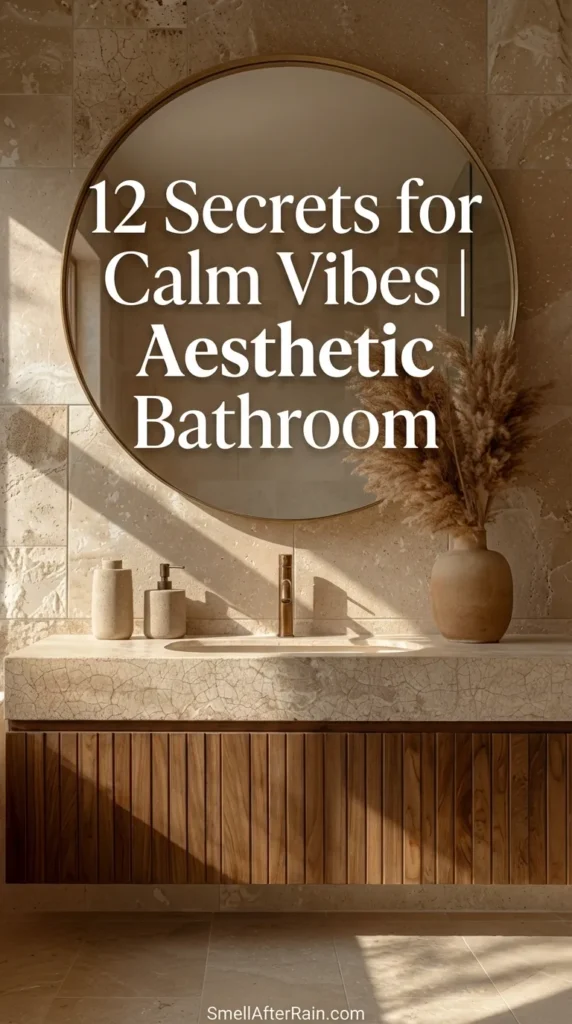
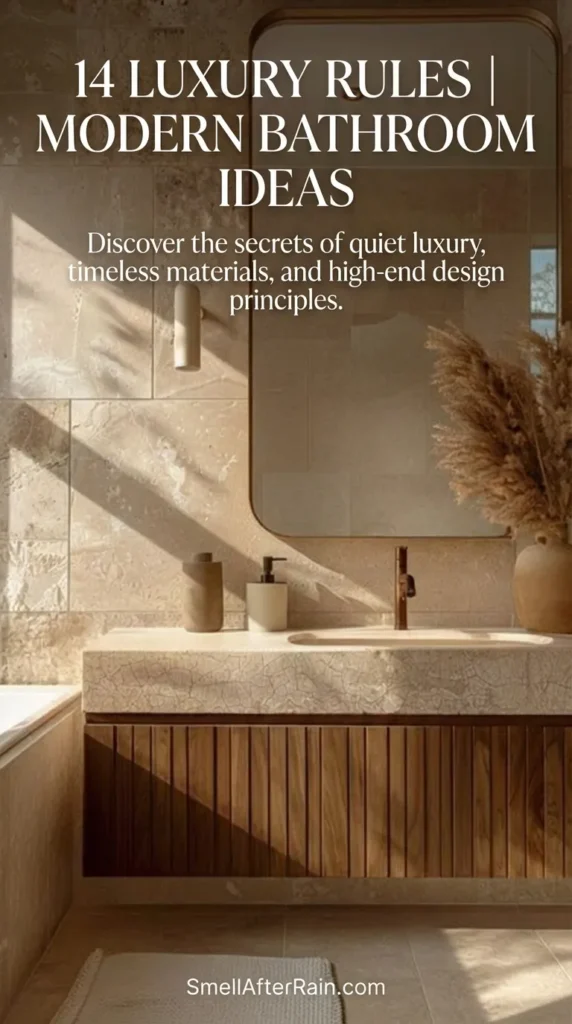
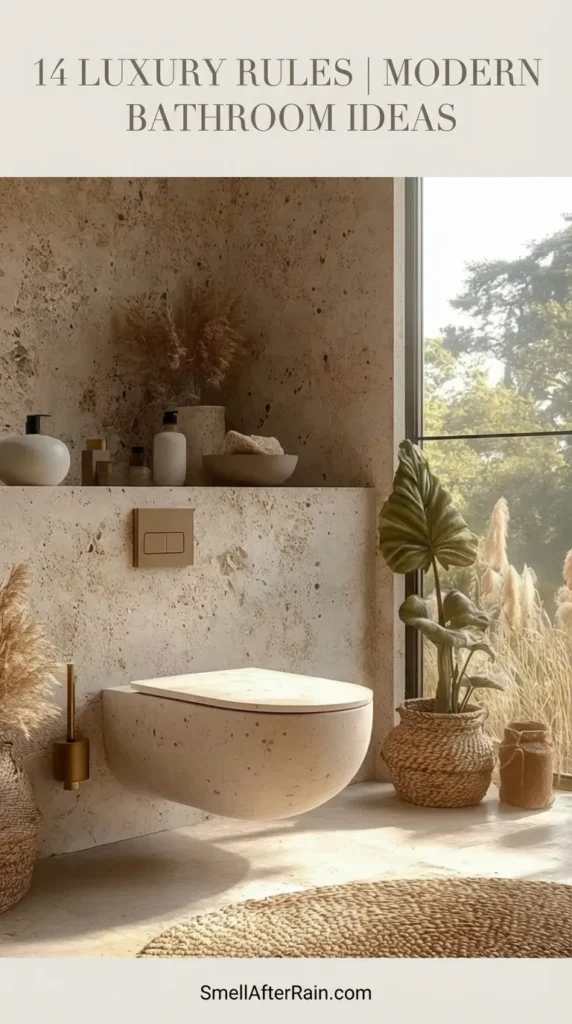
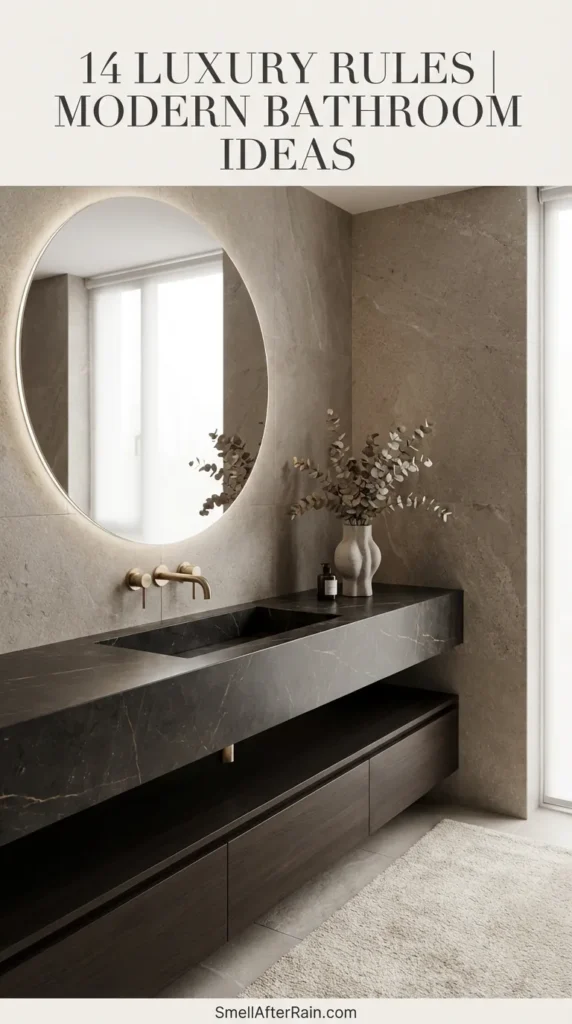
In the world of high-end interiors, the countertop is no longer just a slab placed atop a box. The current standard for a modern luxury bathroom is the monolithic stone sink. This involves fabricating the vanity from a single block of stone—or mitering slabs to appear as such—to create a seamless, heavy, and architectural anchor in the room.
While quartz has been popular for its durability, the “Old Money” aesthetic favors natural stones that carry history. Calacatta Viola, Arabescato Corchia, or a deep, moody soapstone offer veining that acts as art. The key here is the edge detail. We are moving away from standard eased edges toward thick, 4-inch mitered aprons or reverse-beveled edges that catch the light. This single element transforms a contemporary bathroom from a utility space into a gallery.
For those interested in the deeper nuances of high-end material selection, our guide on quiet luxury and high-end bathroom ideas explores how to select stones that hold their value over decades.
2. Venetian Plaster & Limewash Walls
One of the biggest mistakes in amateur design is tiling every vertical surface. While tile is necessary for wet zones, wrapping an entire room in porcelain can make it feel sterile and cold—like a hospital rather than a spa. The antidote to this is texture.
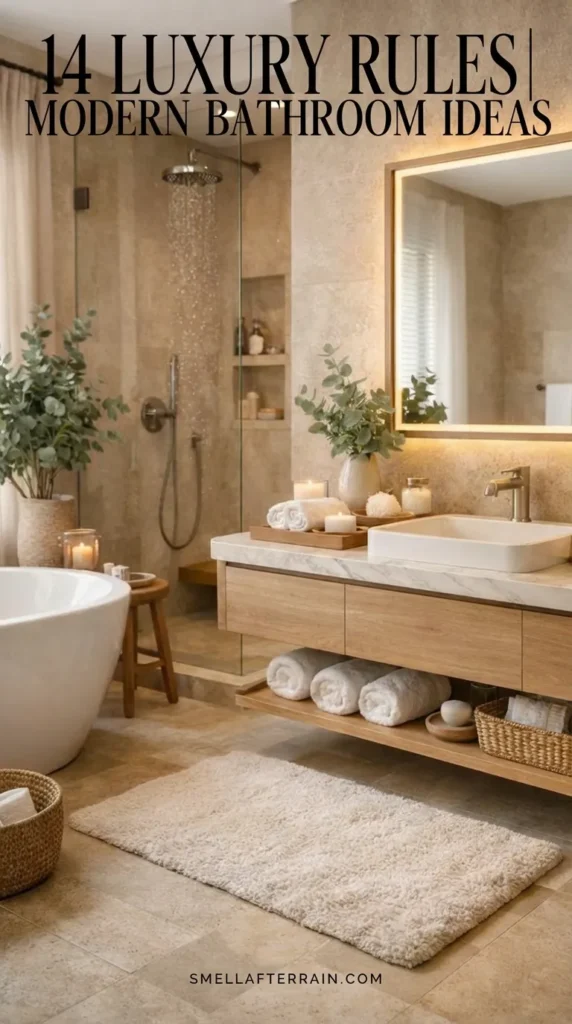
Venetian plaster and limewash paints are ancient techniques that have found a permanent home in modern bathroom interior design. These materials provide a velvety, soft-touch finish that absorbs light rather than reflecting it, creating a moody, atmospheric depth. Unlike flat paint, plaster is breathable and naturally resistant to mold, making it functionally superior for humid environments.
By applying a Tadelakt (a waterproof Moroccan plaster) to shower walls or a limewash to the vanity area, you introduce an organic warmth that creates an immediate sense of calm. This texture pairs beautifully with the crisp lines of modern fixtures, striking that perfect balance between the rustic and the refined.
3. The Art of Unlacquered Brass
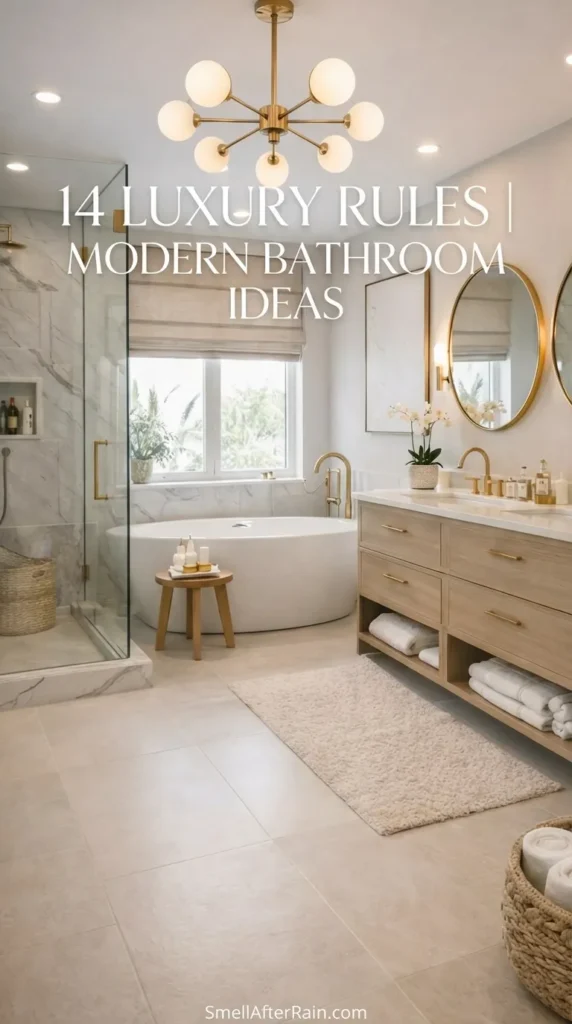
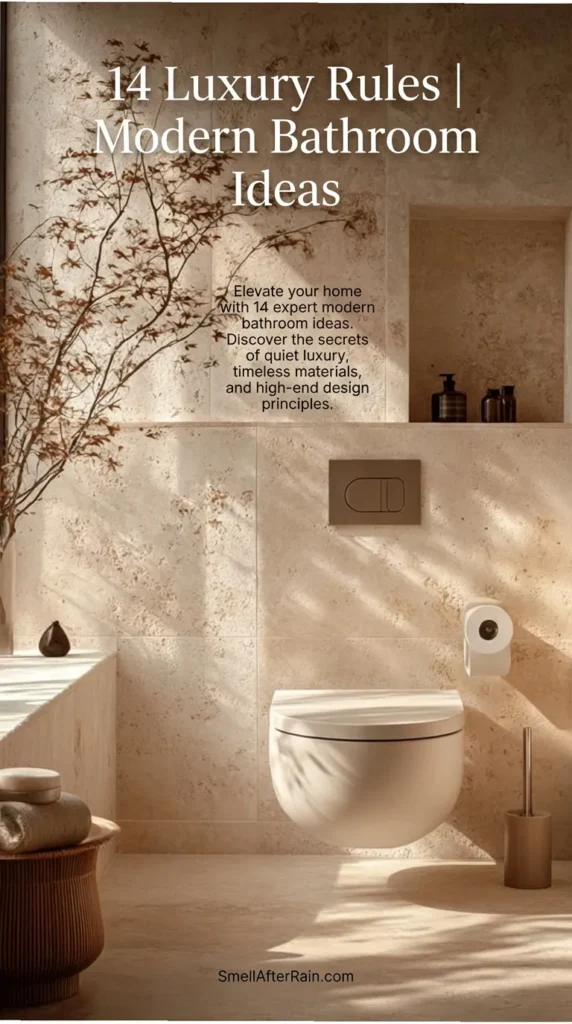
Chrome is standard. Matte black is trendy. Unlacquered brass is timeless. In the hierarchy of bathroom design styles, living finishes sit at the top. Unlacquered brass is raw metal that has not been sealed with a synthetic coating. Over time, it reacts with the oxygen, water, and oils from your hands to develop a unique patina—a darkening and mellowing that gives the space a sense of history.
This “living finish” is a hallmark of the aesthetic bathroom found in historic European hotels and estates. It signals to guests that the materials are real, solid, and enduring. If you prefer a cooler tone, Polished Nickel is the superior alternative to Chrome. Polished Nickel has a warmer, champagne-like undertone compared to the blue-ish hue of Chrome, offering a much richer visual profile.
4. The ‘Wet Room’ Architecture
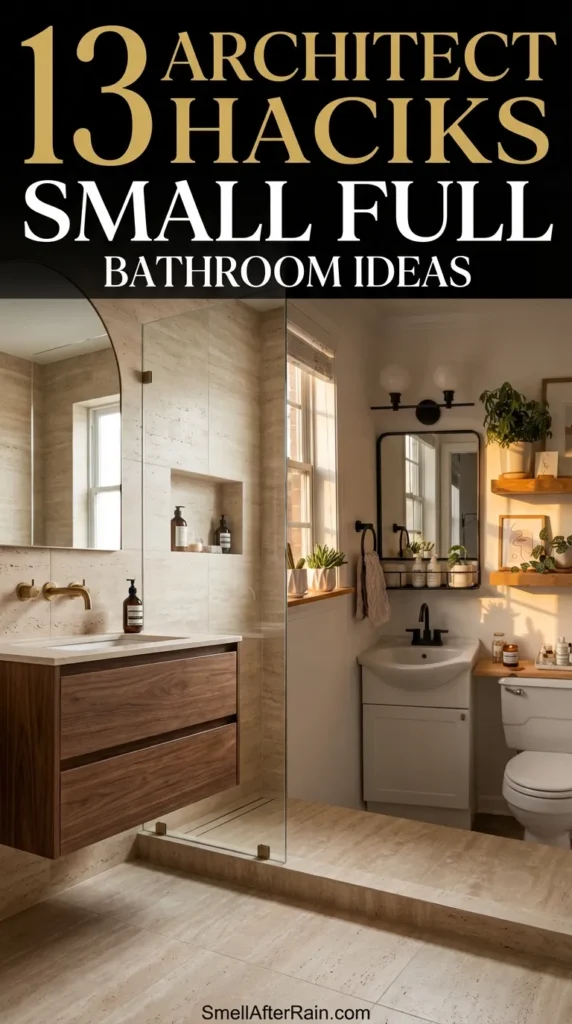
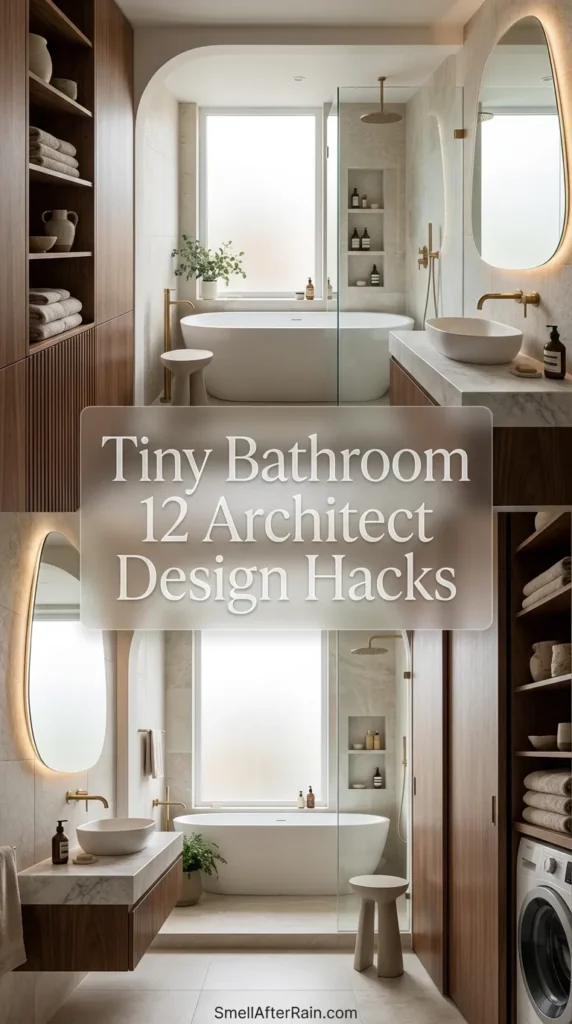
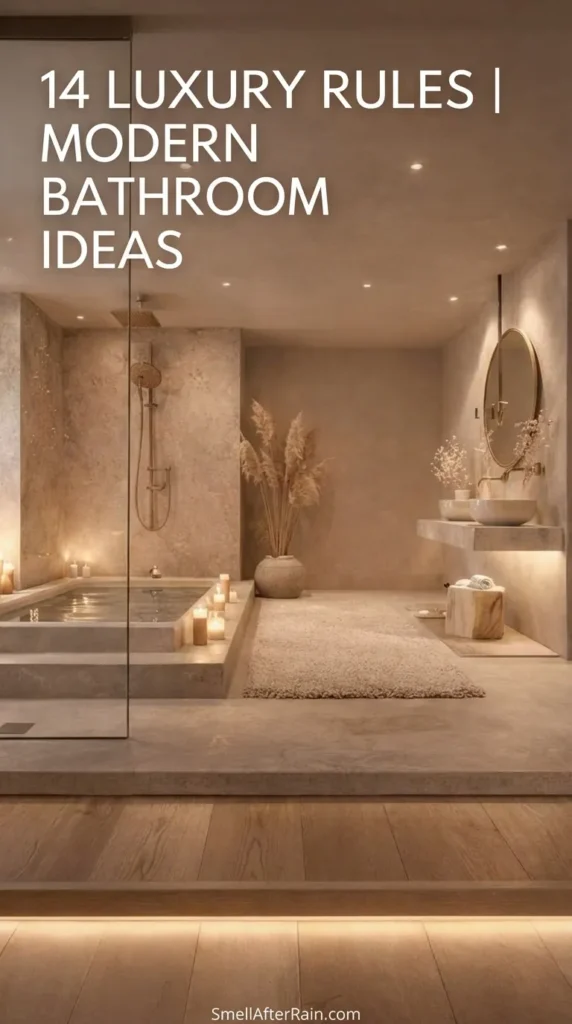
Space planning is the invisible luxury. The “Wet Room” concept involves enclosing the shower and the bathtub behind a single glass partition or within a fully waterproofed zone. This is particularly brilliant for small full bathroom ideas where space is at a premium.
By unifying these zones, you visually expand the floor plan. The eye travels all the way to the back wall without being interrupted by a shower curb or a tub apron. It requires precise engineering—specifically regarding floor gradients and linear drains—but the result is a seamless, spa-like experience that maximizes every square inch of a small modern bathroom.
5. Invisible Storage Cabinetry
Clutter is the enemy of luxury. In a high-end modern bathroom, the daily accouterments (toothbrushes, creams, cords) should never be visible. However, storage must not look like utility closets. We are seeing a shift toward “hidden” storage: walls of cabinetry that mimic paneling, recessed medicine cabinets that sit flush with the mirror, and vanity drawers with integrated electrical outlets.
The goal is to have a place for everything so the countertops remain pristine. This approach aligns with the principles we discuss in our 13 modern bathroom design rules for calm, where visual noise is reduced to absolute zero. Using push-to-open latches eliminates the need for hardware, further streamlining the bathroom design interior.
6. Layered Lighting Schematics
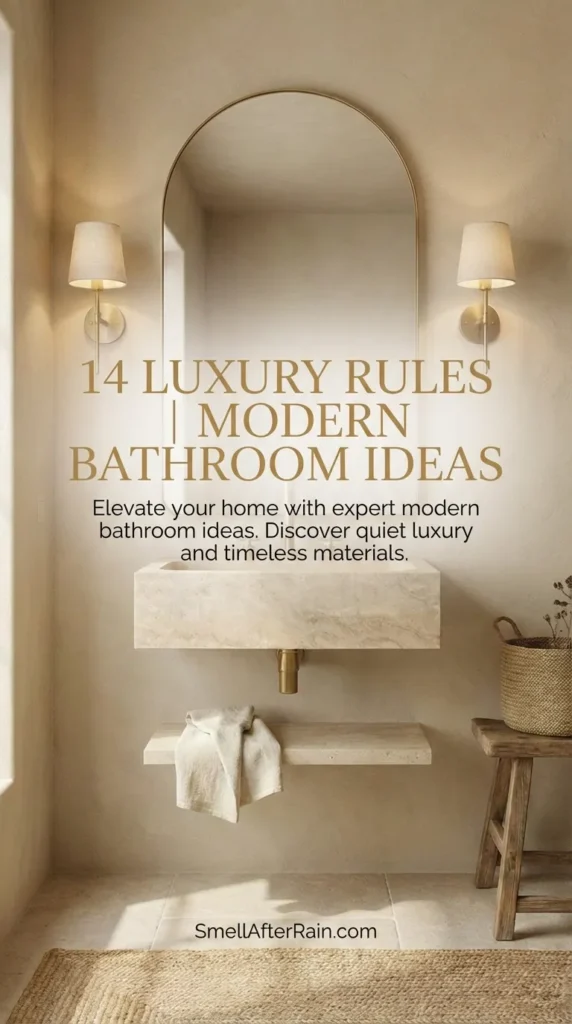
Lighting is the jewelry of the room, but it is also the makeup artist. A single overhead fixture is unflattering and casts harsh shadows. A designer approach involves three layers of light:
- Task Lighting: Sconces mounted at eye level (approx. 66 inches from the floor) on either side of the mirror. This provides cross-illumination for grooming without shadows.
- Ambient Lighting: A flush mount or chandelier that provides a general glow.
- Accent Lighting: LED strips tucked into shower niches, under a floating vanity, or behind a mirror to create a soft, night-light ambiance.
Dimmer switches are non-negotiable. Being able to lower the lights for a bath changes the chemical response of your brain, signaling relaxation.
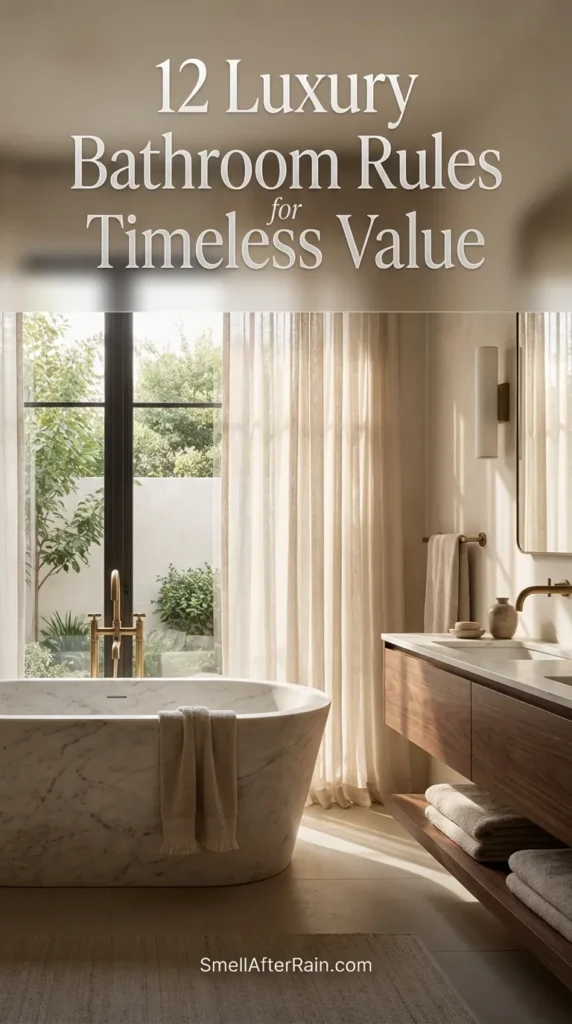
7. The Sculptural Freestanding Tub
In a modern luxury bathroom, the bathtub is not just a vessel for water; it is a sculpture. Built-in tubs with tiled decks are often replaced by freestanding organic shapes. Whether it is a matte white resin composite or a hammered copper statement piece, the tub dictates the flow of the room.
Placement is key. If possible, position the tub near a window or centered on a feature wall to create a focal point. For those with ample square footage, the master bath ideas regarding luxury layouts often suggest placing the tub on a slight platform or beneath a dedicated chandelier to denote its importance in the daily ritual.
8. Radiant Heated Flooring Systems
Luxury is felt, not just seen. There is perhaps no greater physical luxury in a bathroom than stepping onto a warm stone floor on a cold morning. Radiant heating systems are installed beneath the tile and can be controlled via smart thermostats.
Beyond the comfort factor, radiant heat dries out the moisture on the floor faster, reducing mold and humidity issues. It is an invisible upgrade that buyers immediately appreciate and adds significant value to the home’s heating efficiency.
9. Softening with Floor-to-Ceiling Drapery
This is a controversial point for some, but a staple for high-end designers. Bathrooms are filled with hard surfaces: stone, glass, metal, porcelain. To counter this hardness, you need softness. In a well-ventilated master bath, floor-to-ceiling linen drapery adds a vertical element of softness that elevates the room to a living space.
Using performance fabrics that are mildew-resistant allows you to bring this bedroom aesthetic into the bath. It blurs the lines between the sleeping and washing zones, a concept we explore when discussing the flow of bedroom ideas into en-suites. The drapes also provide superior acoustic dampening, making the room sound as quiet as it looks.
10. Fluted Glass & Steel Partitions
Standard clear glass is functional, but fluted (ribbed) or reeded glass is architectural. It offers privacy while still allowing light to filter through, and the texture adds a vintage industrial nod that feels incredibly modern. When framed in thin steel (black or bronze), fluted glass partitions act as room dividers that segment the toilet or shower area without closing off the space visually.
This texture refracts light beautifully, creating a shimmering effect that adds dynamism to a small modern bathroom. It hides water spots better than clear glass, making it a practical choice for the maintenance-conscious homeowner.
11. Integrated Smart Water Technology
We are in the age of the smart home, and the bathroom is catching up. However, true luxury technology is discreet. We aren’t talking about flashing lights and screens. We are talking about digital thermostatic shower valves that allow you to set your perfect water temperature precisely.
Smart toilets with bidet functions, heated seats, and auto-open lids (like the Toto Neorest) have become the gold standard in bathroom interior ideas. These elements should integrate seamlessly into the design, hidden behind sleek interfaces that do not disrupt the visual harmony.
12. The Curated Art Niche
Why should art be reserved for the hallway or living room? A contemporary bathroom benefits immensely from curated artwork. The key is protection and placement. Framed vintage oil paintings (or high-quality prints) add a layer of sophistication that tile patterns simply cannot achieve.
Designers are now building “dry niches”—recessed areas specifically lit and designed to house sculpture or framed art away from water sources. This signals that the room is a place of contemplation.
13. Warm Wood & Organic Textures
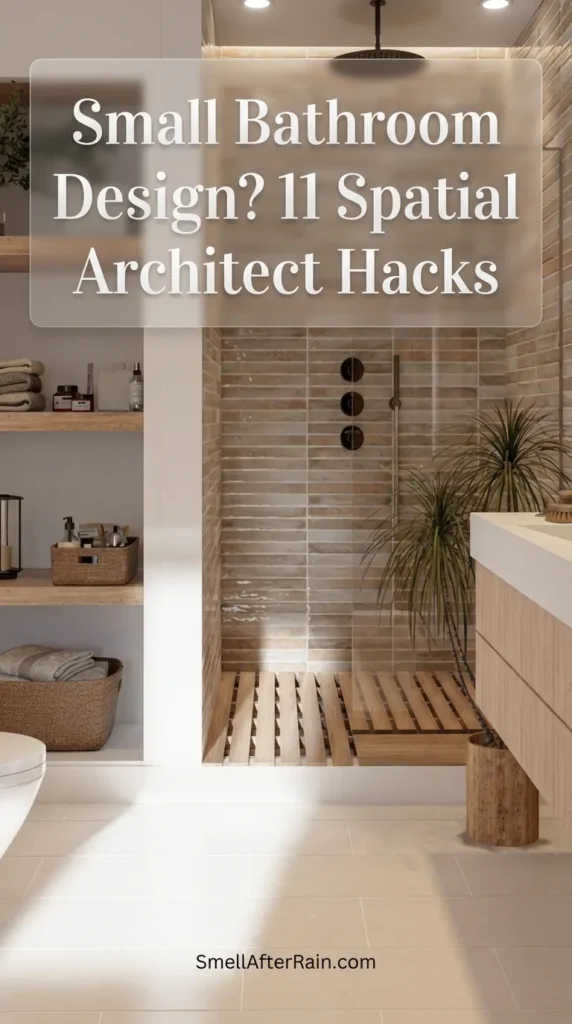
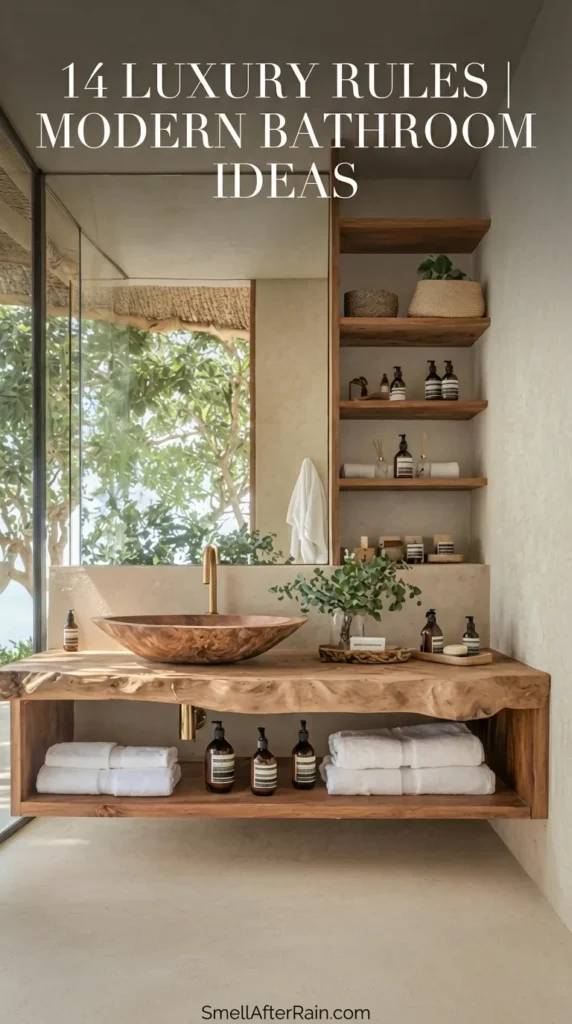
To prevent a modern bathroom from feeling sterile, organic elements are essential. A floating vanity in white oak, walnut, or teak introduces a grain pattern that grounds the airy, stone-filled space. The trend is moving away from high-gloss lacquers toward matte, open-grain wood finishes that feel natural to the touch.
For a deeper dive into creating warmth, our article on cozy bathroom ideas for pure serenity highlights how wood slats and teak shower benches can bring a sauna-like atmosphere to your home.
14. Scentscaping & Sensory Design
The final rule of luxury is scent. The visual design is only one component; the olfactory experience completes the illusion of the sanctuary. High-end hotels utilize “scentscaping”—pumping a signature fragrance through HVAC systems or using reed diffusers.
In a residential setting, this means investing in high-quality, long-lasting diffusers with notes of sandalwood, eucalyptus, or bergamot. It also means designing for sound—using solid core doors and sound-dampening insulation in walls to ensure the bathroom remains a private retreat from the rest of the household.
Frequently Asked Questions
What creates the “Old Money” look in a modern bathroom?
The “Old Money” aesthetic relies on natural materials that patina over time, such as marble and unlacquered brass. It avoids synthetic materials, trendy geometric tiles, or flashy LEDs. The focus is on heritage craftsmanship, heavy hardware, and a neutral, warm color palette that feels collected rather than bought from a showroom set.
How can I make a small bathroom look luxurious?
In a small bathroom, consistency is key. Carry the floor tile up the walls to blur the boundaries of the room. Use a wall-mounted toilet and a floating vanity to reveal more floor space, which tricks the eye into seeing a larger area. Invest in one high-end focal point, like a marble sink or a stunning light fixture, to draw attention away from the size.
Are wet rooms practical for everyday use?
Yes, wet rooms are incredibly practical. They are easier to clean because there are fewer nooks and crannies (like shower tracks) for mold to grow. They also offer universal accessibility, making them a smart choice for aging in place, which increases the long-term value of the home.
What is the best lighting temperature for a bathroom?
For a bathroom, you want to aim for 3000K (Kelvin). This is a crisp, bright white that mimics daylight but isn’t as blue or sterile as 4000K or 5000K. Avoid 2700K (warm white) for task lighting near the mirror, as it can skew colors when applying makeup, though it is excellent for ambient mood lighting.
Is a bathtub necessary for resale value?
Real estate data generally suggests that keeping at least one bathtub in the home is important for resale, particularly for families with young children. However, in a master suite, if space is tight, a massive luxury shower often yields a higher ROI than a cramped shower-tub combo. If you have the space, a freestanding tub is a significant value-add.
Conclusion
Designing a modern luxury bathroom is an exercise in restraint and material appreciation. By following these 14 rules, you move away from the disposable culture of fast interiors and create a space that offers daily respite and lasting value. Remember that the most beautiful bathrooms are those that serve the user seamlessly, where every texture, light source, and layout decision has been made with intention. For more inspiration on elevating your home, explore our archives on bathroom ideas and begin your renovation journey.