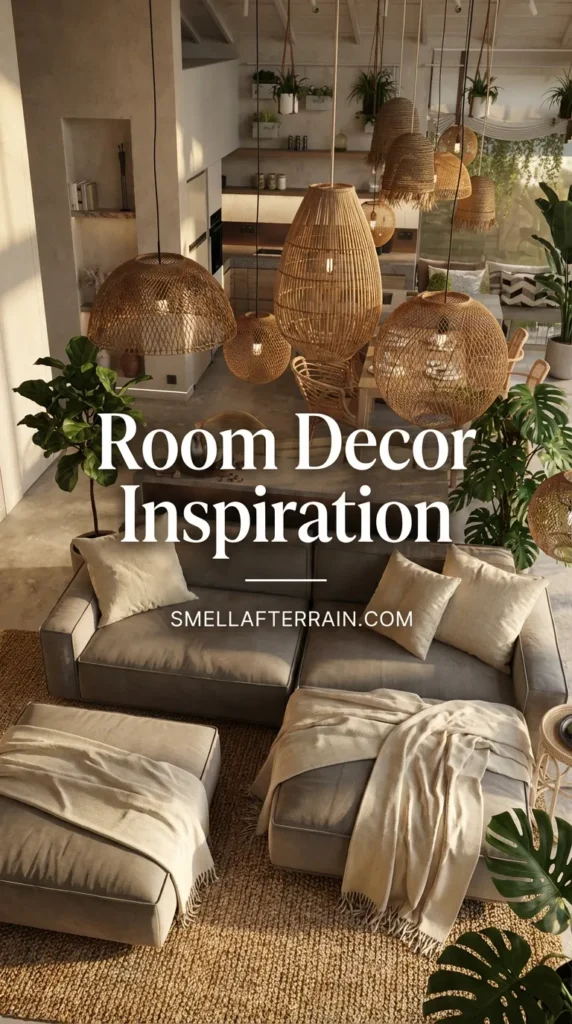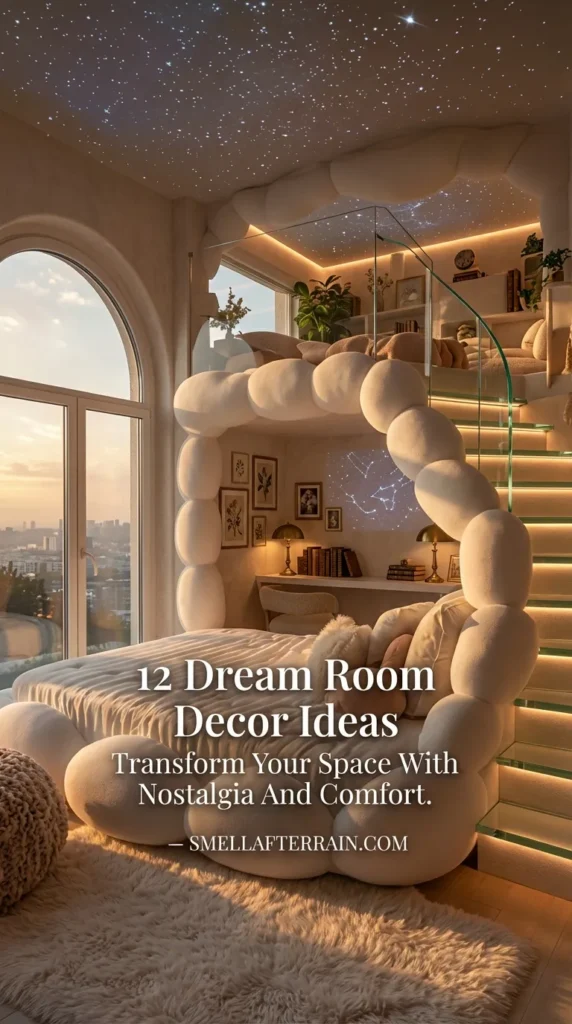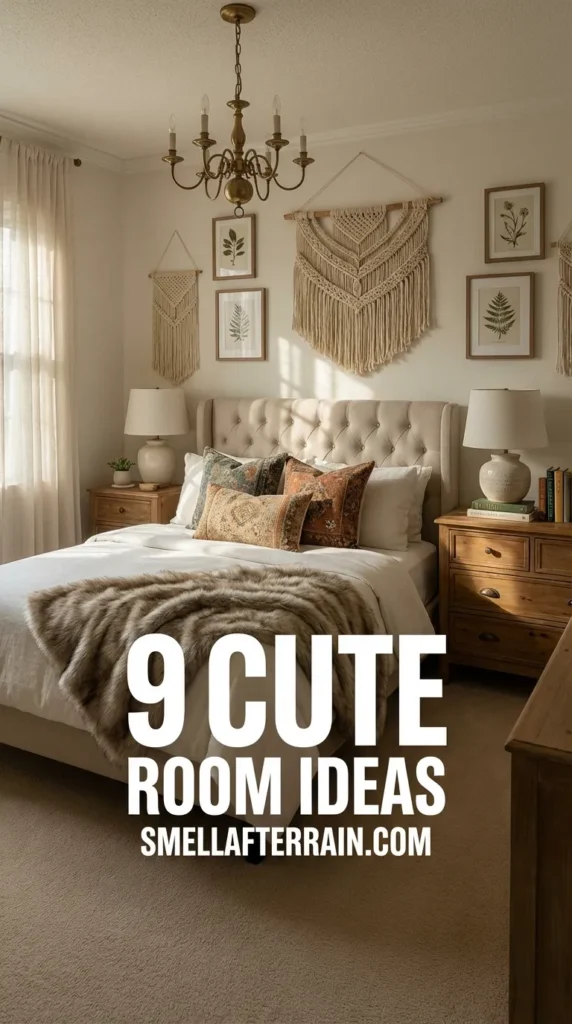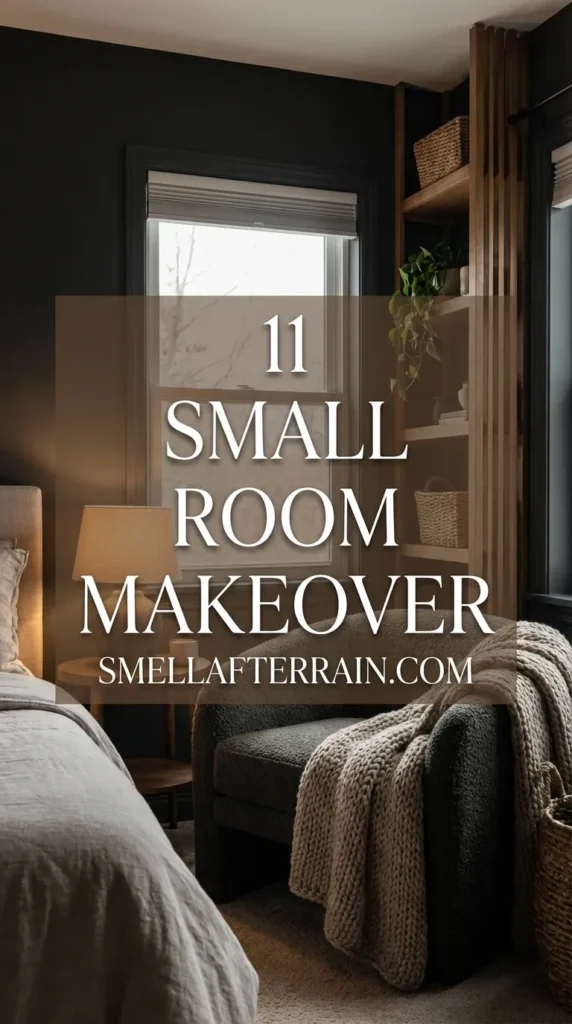
- 1. Grounding Anxiety With Heavy Found Woods
- 2. Tactile Security And The Chunky Texture Rule
- 3. The Biophilic Embrace Through Foraged Elements
- 4. Warm Lighting Psychology And Circadian Rhythms
- 5. Curvilinear Comfort With Sanded Edges
- 6. Asymmetrical Balance In Vintage Displays
- 7. Chromatic Therapy Using Muddy Earth Tones
- 8. The Nostalgia Effect With Scented Upcycling
- 9. Acoustic Softening Through Layered Fabrics
- 10. Spatial Flow And The Prospect-Refuge Theory
- 11. Visual Weighting With Grounded Color Palettes
- 12. The Micro-Environment Of Womb-Like Nooks
- 13. Kinetic Elements That Soothe Peripheral Vision
- 14. Purposeful Empty Space For Cognitive Rest
- Frequently Asked Questions
Yesterday, tucked away in the dusty back corner of my favorite thrift store, I found a deeply scratched, heavy oak spindle chair. I dragged it home, sanded its tired arms just enough to smooth the rough edges, and draped it in a heavy wool throw I knitted myself. Sitting in it last night, listening to the rain against my window, I felt an overwhelming sense of empowerment. There is profound joy in taking discarded pieces and building your own sanctuary from scratch, proving that true comfort cannot be bought in a showroom.
True comfy room decor is fundamentally about understanding how your environment communicates directly with your nervous system. As someone who constantly studies interior psychology, I want to show you how to curate spaces that actually heal and restore your energy. I have spent years analyzing exactly why certain worn textures make our shoulders drop instantly. Let us explore the science of serenity and how you can build a deeply restorative space using things you already have or can easily rescue.
You absolutely do not need a massive budget to create an aesthetic living room that feels like a warm hug. It feels so incredibly empowering to realize that the most calming spaces are born from resourcefulness, not endless purchasing. By applying specific psychological principles to salvaged items, you can trick your brain into feeling deeply safe. Here is my personal collection of calm, broken down into fourteen actionable rules for your own home.
1. Grounding Anxiety With Heavy Found Woods
When we think about creating comfortable spaces, our busy minds rarely jump straight to heavy, solid wooden objects. Yet, environmental psychology tells us that profound visual gravity is absolutely essential for our daily nervous system regulation. Massive wooden furniture acts as a deeply reassuring anchor in an otherwise floating room, providing a subconscious sense of permanent stability. I recently salvaged a deeply scarred storage trunk from a neighborhood curb exchange to serve this exact grounding purpose.
Instead of buying flimsy particleboard furniture, I always hunt for solid, discarded pieces that carry real weight and history. Sanding down a thrifted mahogany dresser connects you physically to the materials that will eventually support your daily life. This tactile effort makes the final piece feel uniquely yours, completely elevating your room ideas cozy aesthetic. It is exactly this kind of intentional effort that is crucial for creating a breathable small room makeover that feels deeply authentic.
- Solid wood naturally lowers our perceived spatial anxiety by providing an unshakeable visual foundation.
- Upcycling old furniture engages your creative brain, replacing mindless consumption with purposeful, rewarding labor.
- Leaving some scratches visible honors the history of the piece, reminding us that perfection is not required for beauty.
Our brains are ancient, and they subconsciously scan our environments for structural integrity and safety. Surrounding yourself with dense, heavy materials signals to your primal mind that you are protected from the elements. This is why a chunky reclaimed wood coffee table will always feel safer than delicate glass and chrome.
2. Tactile Security And The Chunky Texture Rule
Our skin is our largest organ, packed with sensory receptors that constantly crave reassuring tactile feedback. When we touch chunky, rough, or deeply woven fabrics, our brains release oxytocin, the hormone responsible for feelings of profound safety. This biological response is the secret engine driving every truly cozy room aesthetic you have ever admired online. I used to think perfectly smooth silk was luxurious, but now I know I crave texture, not perfection.
My favorite resourceful trick is visiting local estate sales to hunt for vintage, oversized knit sweaters. I take these heavy wool garments, wash them carefully, and transform them into deeply textured pillowcases for my reading chairs. This simple act of upcycling creates bespoke textiles that rival high-end boutiques for a fraction of the cost. These tactile projects perfectly align with my essential principles for cozy room decor that prioritize actual physical comfort.
- Deep textures absorb harsh light, softening the visual harshness of a room immediately.
- Mixing conflicting fabrics like rough corduroy and soft cashmere creates a dynamic sensory landscape for your hands.
- Heavyweight fabrics provide mild compression therapy, mimicking the deeply calming effects of a weighted blanket.
Every time you walk past a nubby boucle chair and reach out to brush it, your nervous system sighs in relief. We are physically starved for complex textures in our modern world of smooth glass screens and flat plastics. By aggressively introducing salvaged textures, you manually override your modern stress responses.
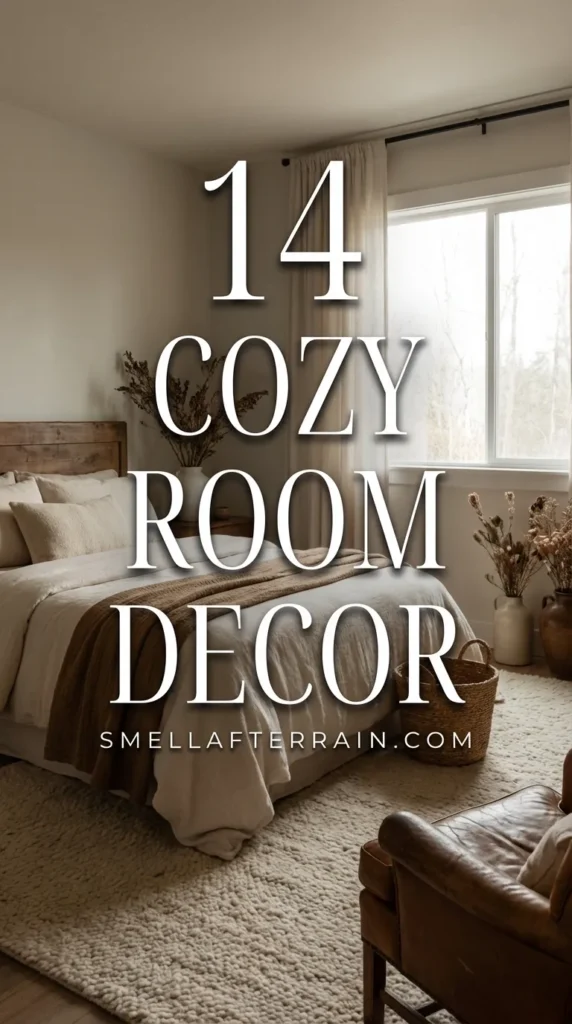
3. The Biophilic Embrace Through Foraged Elements
Biophilic design is not just a trendy buzzword; it is an evolutionary imperative deeply coded into our DNA. The savanna hypothesis dictates that humans naturally feel calmest in environments that subtly mimic lush, life-sustaining natural landscapes. We do not need expensive tropical houseplants to achieve this fundamental biological need for nature. I find immense peace in foraging fallen, beautifully twisted branches from my neighborhood park after a heavy rainstorm.
Bringing these organic shapes indoors bridges the jarring gap between our sterile modern boxes and the wild world outside. I love arranging dried thistles in mismatched terracotta pots I constantly rescue from the dusty shelves of local charity shops. This approach is completely foundational when incorporating organic textures into aesthetic room decor on a practically nonexistent budget. It proves that nature provides the most beautiful art if we simply take the time to notice it.
- Displaying found branches adds vertical height and dramatic shadows to forgotten corners of your bedroom.
- Dried foliage requires absolutely zero maintenance while still providing crucial biological visual cues.
- Grouping natural elements in odd numbers creates an asymmetric harmony that pleases the human eye.
When you sit in a room filled with subtle nods to the forest, your cortisol levels naturally drop. You are silently telling your primitive brain that resources are plentiful and shelter is absolutely secure. This is the very definition of true, unshakeable comfort.

4. Warm Lighting Psychology And Circadian Rhythms
Lighting is the single most aggressive psychological manipulator in any interior space, capable of inducing either panic or total serenity. Harsh, blue-toned overhead lights halt melatonin production entirely, keeping our bodies trapped in a state of high-alert midday productivity. To create a warm bedroom aesthetic, we must strictly mimic the comforting, amber glow of a setting sun. This means embracing multiple, low-level light sources scattered thoughtfully throughout the living space.
I refuse to use overhead lighting, relying entirely on a curated collection of thrifted brass table lamps and mismatched sconces. Replacing their modern bulbs with low-kelvin amber lights instantly transforms the energy of the entire house. These small, localized pools of warm light draw you in, creating intimate zones perfect for quiet reflection or reorganizing bookshelves. This precise lighting strategy is one of my favorite high end room makeover ideas that last without costing a fortune.
- Aim for lightbulbs rated between 2000K and 2700K to perfectly replicate the soothing glow of candlelight.
- Placing lamps at chest height or lower prevents harsh, unnatural shadows from casting across your face.
- Using vintage lampshades with slight fabric imperfections adds a deeply comforting, diffused quality to the light.
As the evening progresses, moving from task lighting to these warm, amber pools signals to your body that the day is done. It is a biological permission slip to finally rest your mind and body. You can literally orchestrate your own peace through the simple flick of a thrifted switch.
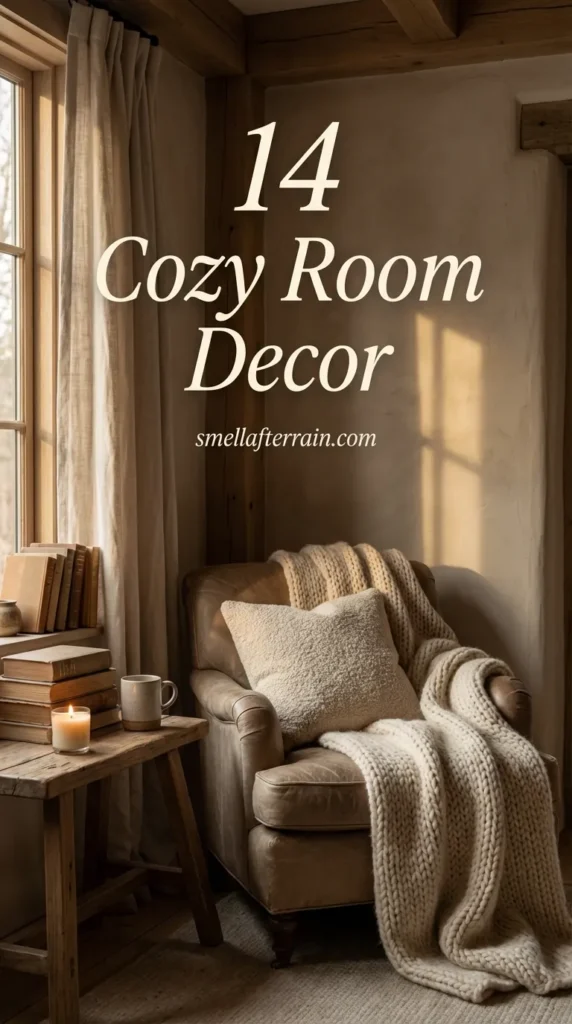
5. Curvilinear Comfort With Sanded Edges
Neuroarchitectural studies reveal that human amygdalas, the fear centers of our brains, react defensively to sharp, jagged angles in furniture. Conversely, sweeping curves and soft, rounded edges immediately signal safety and encourage physical relaxation. This is why we are instinctively drawn to plush, rounded sofas and circular coffee tables when seeking refuge. We interpret sharp corners as physical threats, raising our baseline tension without us even realizing it.
Knowing this, I deliberately seek out rounded vintage pieces, or I take matters into my own hands with sandpaper. If I find a beautiful but harshly angled wooden side table, I will spend an afternoon softening its edges by hand. This resourceful customization completely alters the psychological impact of the furniture, making it infinitely more inviting. Implementing these curved shapes is essential for executing dream room ideas that truly feel like home on a cellular level.
- Circular rugs can visually soften a rigid, boxy room by breaking up the aggressive grid lines of the floor.
- Draping a heavy blanket over a sharp chair back immediately masks the harsh angle from your peripheral vision.
- Choosing oval mirrors over rectangular ones introduces a gentle, organic flow to your wall displays.
Your eyes naturally want to glide across a room rather than bounce abruptly off sharp corners. By curating curvilinear shapes, you create a visual lullaby for your tired mind. It is a subtle but incredibly powerful way to engineer domestic tranquility.
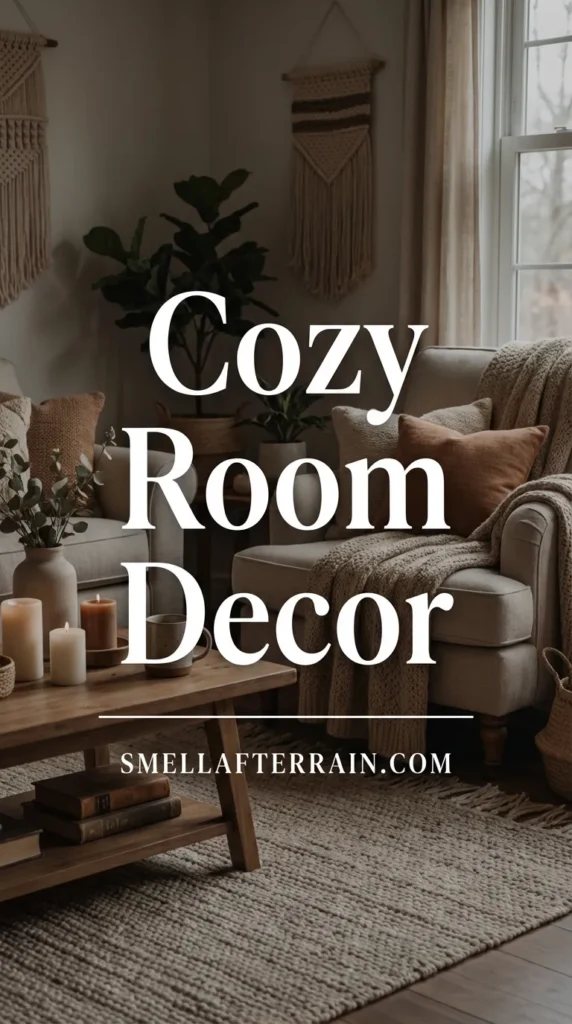
6. Asymmetrical Balance In Vintage Displays
Perfect symmetry is often praised in classical design, but it can actually feel incredibly sterile and museum-like to live in. True coziness relies heavily on the Japanese concept of wabi-sabi, which celebrates the profound beauty found in imperfection and asymmetry. When a room is perfectly mirrored, our brains feel pressure to maintain that impossible standard, causing lingering background anxiety. A slightly off-center arrangement feels infinitely more human, lived-in, and forgiving of our daily messes.
I love leaning mismatched, thrifted art frames against the wall rather than mathematically measuring and hanging them in a rigid grid. This casual, asymmetrical approach allows my collection to grow organically whenever I find a new treasure. It feels deeply personal, acting as a visual diary of my resourceful adventures rather than a curated catalog page. This relaxed philosophy is my absolute favorite method for gathering authentic and calming room inspo ideas without feeling overwhelmed.
- Group objects in odd numbers, like threes or fives, to keep the eye moving naturally across the display.
- Balance a tall, heavy floor lamp on one side of a sofa with a low, sprawling plant on the other.
- Allow your book stacks to be slightly uneven, showing that they are actually read rather than just displayed.
This deliberate asymmetry gives your space a sense of effortless, breathing grace. It silently communicates to anyone entering that they do not need to be perfect to be welcomed here. That underlying message of acceptance is the very core of a cozy room inspiration.
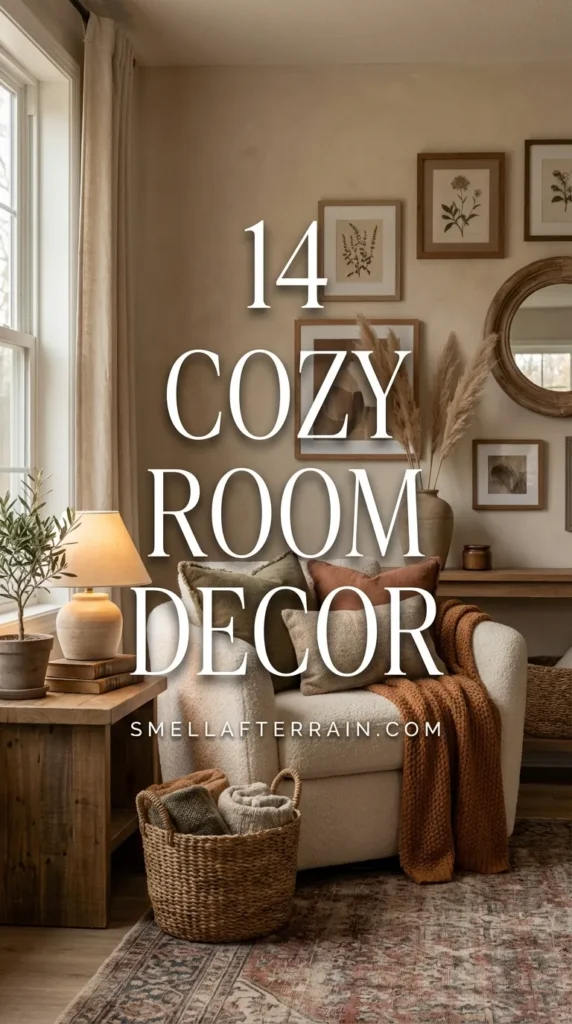
7. Chromatic Therapy Using Muddy Earth Tones
Color is not just visual; it is experiential, acting as an electromagnetic wavelength that directly influences our physiological state. Bright, highly saturated colors like stark white or vivid red stimulate the nervous system, raising heart rates and increasing alertness. For a deeply cozy bedroom aesthetic, we must turn to low-arousal colors that have a slightly muddy, muted undertone. Sage greens, warm terracottas, and deep ochres mimic the comforting stability of the natural earth.
I never buy expensive, brand-new paint from the store to achieve these complex, healing colors. Instead, I visit the clearance section for mistinted paints, happily mixing them together in my garage to create bespoke, muddy hues. This unpredictable process forces me to let go of perfection, resulting in gorgeously complex colors that change beautifully with the shifting light. It is a thrilling way of exploring deeply personal aesthetic room ideas while saving items from the landfill.
- Muddy colors contain hints of brown or gray, which actively absorb excess light and quiet the room’s energy.
- Painting the baseboards the same muddy color as the walls creates a seamless, enveloping visual hug.
- Using leftover matte paints prevents harsh glare, further softening the psychological impact of the walls.
When you surround yourself with tones pulled directly from a damp forest floor, your breathing naturally slows down. These colors do not demand your attention; they simply support your existence in the background. It is chromotherapy executed through pure resourcefulness.
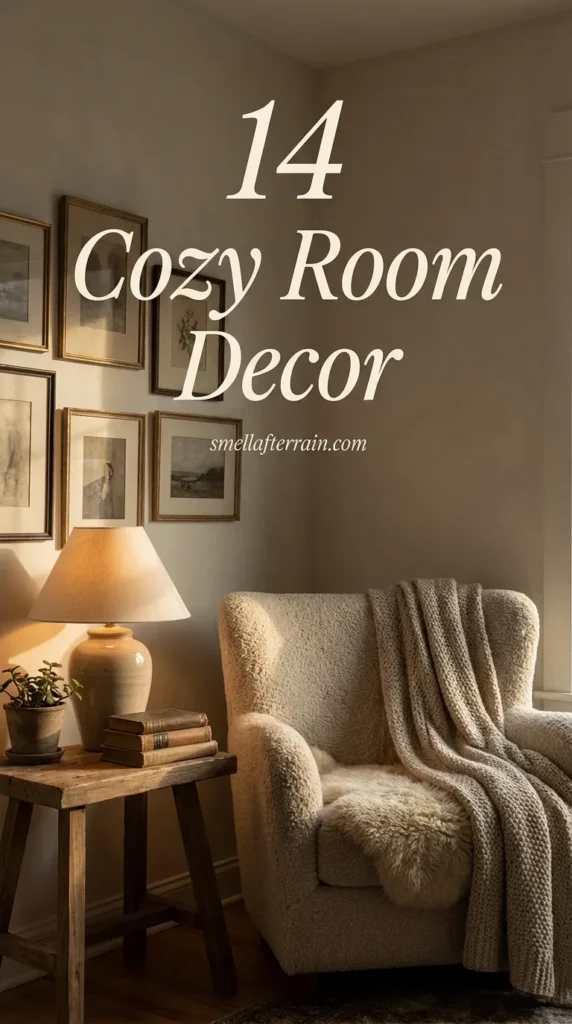
8. The Nostalgia Effect With Scented Upcycling
Our olfactory bulb is directly wired to the limbic system, the area of the brain responsible for emotion and memory. This means that scent is the fastest, most aggressive way to alter the psychological atmosphere of a room. However, synthetic, overwhelming air fresheners can trigger headaches and a subtle sense of biological alarm. True comfort requires natural, nostalgic scents that evoke memories of safety, like baking bread, old books, or the smell of rain.
I collect chipped, beautiful vintage teacups from thrift stores specifically to use as unique vessels for homemade beeswax candles. Melting down old, half-used candle scraps and pouring them into these rescued cups is a deeply therapeutic, quiet weekend ritual. The resulting subtle honey scent combined with the history of the teacup creates a profoundly comforting sensory experience. Understanding this emotional connection is the core philosophy here at Smell After Rain when designing intimate spaces.
- Beeswax naturally purifies the air as it burns, providing a subtle, sweet scent without harsh chemicals.
- Placing dried lavender bundles in salvaged jars around the room offers a constant, gentle aromatherapy.
- Simmering leftover fruit peels on the stove is a free, zero-waste method to instantly cozy up a space.
By curating the scent profile of your room with natural, found items, you create an invisible layer of comfort. It welcomes you home the second you open the door, long before you even take off your coat. This nostalgic embrace is impossible to replicate with commercial products.

9. Acoustic Softening Through Layered Fabrics
We rarely consider the acoustic landscape of our homes, yet echoing spaces trigger significant subconscious stress and cortisol spikes. Hard surfaces bounce sound waves aggressively, making a room feel vast, cold, and entirely unwelcoming. To create a truly comfy room decor experience, we must actively muffle this auditory chaos using strategic layers of thick materials. A quiet room physically feels like a protective sanctuary against the overwhelming noise of the outside world.
I am notoriously obsessed with rescuing damaged, beautiful Persian rugs from estate sales, even if they have worn patches. I layer these rugs right over each other, hiding the imperfections while creating a dense, sound-absorbing foundation for the room. I also sew thick, heavy curtains out of discounted canvas drop cloths to completely deaden the sound of passing street traffic. These acoustic interventions are absolute foundational concepts for thoughtful room decor that actually functions as a retreat.
- Hanging a heavy, thrifted quilt on a large blank wall acts as beautiful art while significantly reducing room echo.
- Adding thick felt pads to the bottom of every piece of furniture stops the jarring sound of scraping wood.
- Layering multiple thin rugs is often cheaper than buying one massive rug, and it provides superior sound dampening.
When you walk into a properly softened room, the silence is almost physically palpable, wrapping around you instantly. Your brain immediately recognizes that it no longer has to filter out background noise, allowing deep relaxation to begin. It is a sonic hug built from discarded textiles.
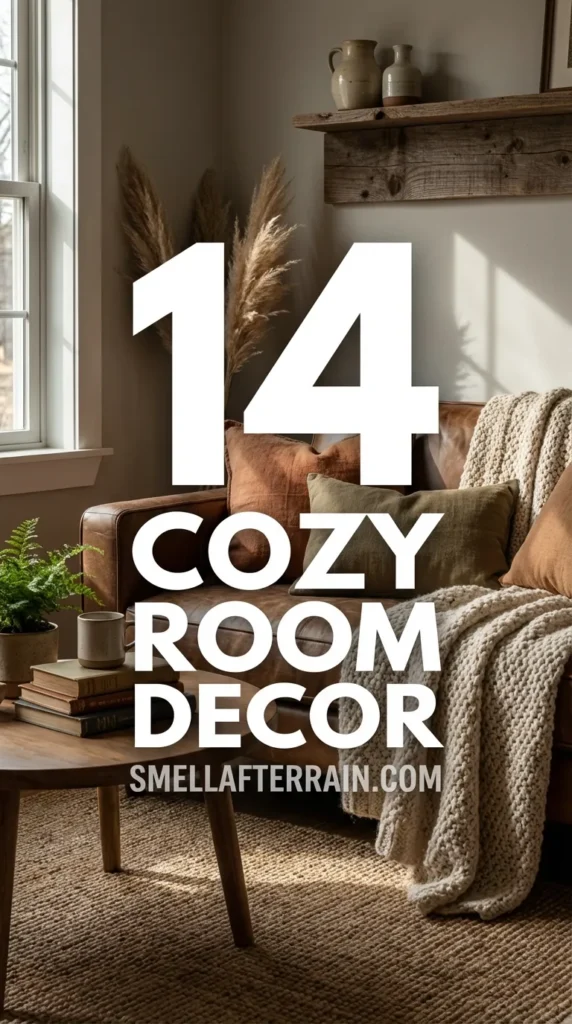
10. Spatial Flow And The Prospect-Refuge Theory
Evolutionary psychology heavily references the prospect-refuge theory to explain why certain furniture layouts feel inherently better than others. Humans desire spaces where they have a clear view of their surroundings (prospect) while their back is completely protected (refuge). Pushing a sofa into the middle of a room with its back exposed to a doorway triggers primal, low-grade vulnerability. To achieve a cozy room aesthetic, furniture must be arranged to provide this crucial sense of psychological shelter.
I spend hours sliding my heavy, thrifted furniture across the floor, testing different layouts until my nervous system finally settles. Tucking a heavy reading chair into a deeply protected corner while still facing the main window is always my primary goal. It costs absolutely nothing to rethink your spatial flow, yet it completely transforms the emotional resonance of your home. This resourceful maneuvering is perfect for curating unexpectedly cute room ideas with vintage finds that already exist in your space.
- Never position a bed or main seating area with its back directly facing the primary entrance of a room.
- Create winding, meandering walkways between furniture to encourage a slower, more deliberate physical pace.
- Use a tall, found bookshelf to create an artificial wall, instantly manufacturing a cozy refuge in a larger room.
When your environment is structured to protect your vulnerable blind spots, your vigilant brain can finally clock out for the day. You stop scanning for imaginary threats and finally sink completely into the present moment. This is the unseen architecture of genuine comfort.
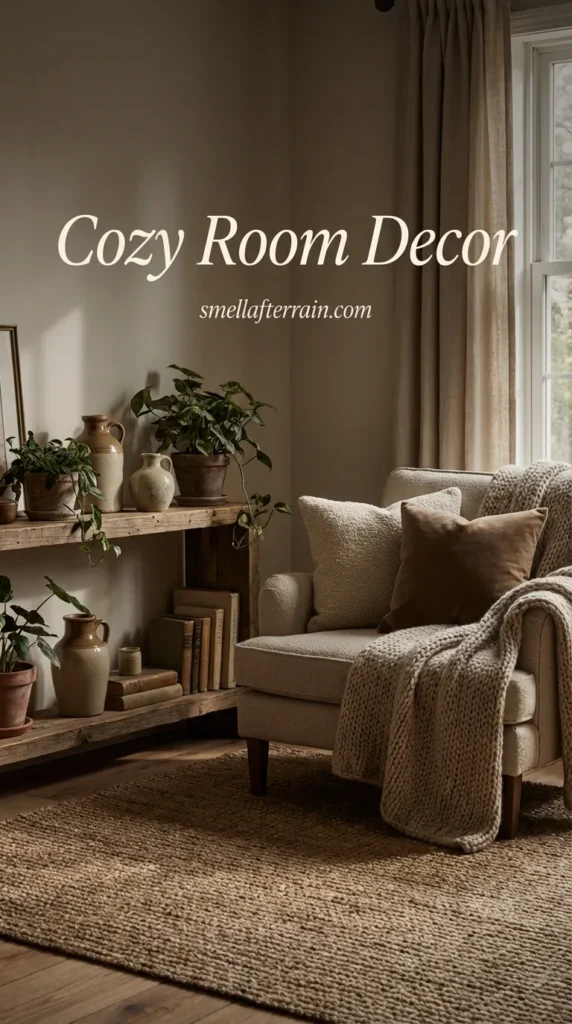
11. Visual Weighting With Grounded Color Palettes
Just as physical gravity anchors our bodies, visual gravity anchors our perception of a three-dimensional space. Rooms that feature dark, heavy colors on the ceiling and light colors on the floor feel psychologically inverted and deeply unsettling. To create a grounded, serene environment, we must mimic nature, where the dark earth sits below the light, airy sky. This principle of visual weighting is non-negotiable for creating spaces that feel inherently relaxing to inhabit.
When I rescued my battered wooden dresser, I decided to paint only the bottom half in a deeply saturated, muddy charcoal. I left the top half stripped to its natural, lighter wood grain, instantly giving the piece a profound sense of anchoring. This technique pulls the eye downward, encouraging a physical settling of the body into the space. It is a brilliant strategy for implementing accessible and easy room decor solutions with leftover paint supplies.
- Use deeply saturated, heavy rugs to firmly anchor the floating furniture to the floor of the room.
- Keep ceilings and upper walls painted in lighter, expansive shades to prevent the room from feeling oppressive.
- Place darker, visually heavier decorative items on the lower shelves of bookcases, saving delicate items for the top.
This subtle gradient of visual weight tells your brain exactly where the ground is, reducing cognitive processing. It creates an environment that feels solid, reliable, and deeply rooted. You feel safely held by the room itself.

12. The Micro-Environment Of Womb-Like Nooks
Humans have an innate, deeply ingrained desire for envelopment, craving spaces that physically wrap around us like a protective cocoon. Large, open-concept spaces are visually impressive, but they are absolutely terrible at providing this necessary psychological comfort. We must actively construct smaller micro-environments within our larger rooms to satisfy this biological need for intimate enclosure. These tiny, dedicated nooks are where the deepest, most restorative relaxation actually takes place.
I built my favorite reading corner using stacked, vintage wooden milk crates and a heavily patched, thrifted velvet floor cushion. By pulling a salvaged folding screen around the corner, I created a tiny room within a room that feels completely separate. It is my designated spot for waiting for the rain, surrounded by towering stacks of reorganized books. This kind of spatial hacking is brilliant for maximizing comfort with resourceful dorm room ideas or tiny apartments.
- Drape a sheer, thrifted scarf over a corner chair to create a makeshift, intimate canopy that lowers the ceiling height.
- Group large floor plants tightly around a seating area to build natural, breathing walls for your nook.
- Dedicate one specific corner solely to a quiet activity, training your brain to relax the moment you enter it.
These micro-environments offer a psychological retreat from the demands of the broader household. They are tiny sanctuaries of extreme coziness, built entirely from imagination and salvaged materials. They prove that safety is about enclosure, not square footage.
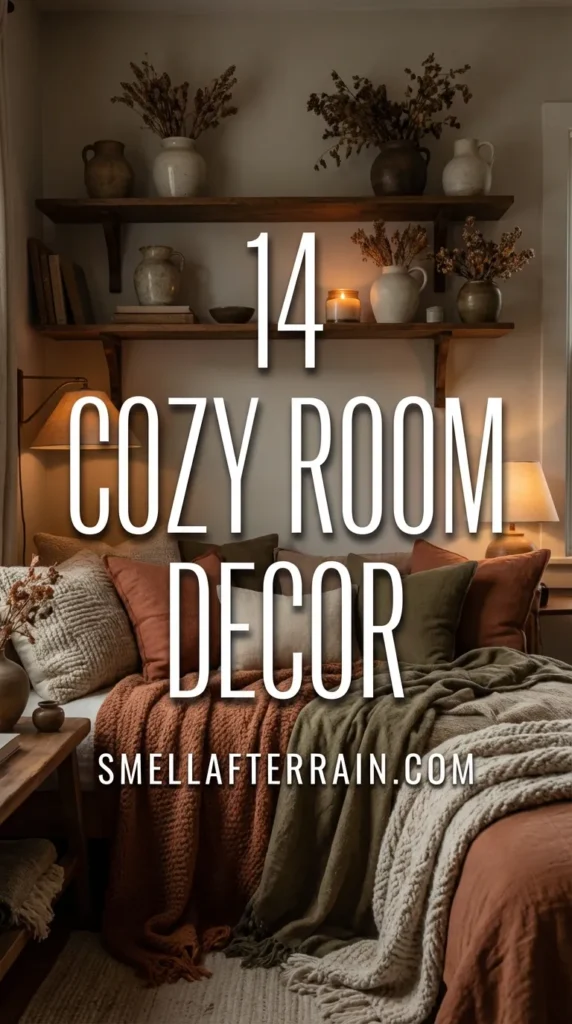
13. Kinetic Elements That Soothe Peripheral Vision
A completely static room can sometimes feel unnervingly lifeless, resembling a sterile museum diorama rather than a living, breathing home. Our peripheral vision evolved to monitor gentle, rhythmic movements in nature, like tall grass swaying in a soft breeze. Introducing slow, predictable kinetic elements into a room mimics this natural environment, providing a deeply hypnotic, soothing effect on the brain. It is the final, often overlooked layer of a truly dynamic, cozy room decor strategy.
I love hanging bundles of foraged, dried wildflowers from the ceiling using thin, almost invisible fishing line. As the air naturally circulates through the room, the flowers gently sway, casting softly dancing shadows against the walls. I also use wildly inexpensive, thrifted sheer fabrics as window treatments, allowing them to billow slowly whenever a window is cracked. It breathes an incredible, quiet life into the room without requiring batteries or electricity.Place a vintage ticking clock in the room; the steady, rhythmic pendulum motion is incredibly mesmerizing and grounding.Use sheer, lightweight curtains that respond beautifully to the natural air currents of your home’s ventilation.Hang a beautifully balanced, DIY mobile made from found beach glass or smooth river stones in an empty corner.
These subtle movements catch your eye just enough to pull you out of anxious thought loops. They root you firmly in the present moment, acting as a gentle, continuous meditation prompt. It is a brilliant way to let the room actively comfort you.

14. Purposeful Empty Space For Cognitive Rest
The most difficult psychological rule to master, especially for resourceful creators who love to rescue items, is the implementation of negative space. Every single object in a room demands a tiny fraction of your brain’s processing power, contributing to overall cognitive load. If every wall and surface is covered, your mind has absolutely nowhere to rest, leading to subtle, chronic visual fatigue. True coziness requires purposeful, deliberate empty spaces where the eye can land on absolutely nothing.
After a frantic weekend of thrifting and arranging, I always force myself to walk through the room and aggressively remove three items. I might take down a painting, clear off a crowded side table, or roll up a distracting secondary rug. This editing process feels painful at first, but the sudden breathability it introduces to the space is always worth it. Knowing when to stop adding is the ultimate secret to mastering room ideas cozy layouts without crossing into chaotic clutter.Leave at least one primary wall completely bare to act as a visual palate cleanser for the room.Clear the top surfaces of dressers and tables, leaving only one or two deeply meaningful items.Embrace the shadows in empty corners rather than feeling the constant urge to fill them with furniture.
Empty space is not a lack of decor; it is a highly intentional design choice that amplifies the beauty of everything else. It gives your mind the precious room it needs to finally wander, dream, and heal. Sometimes, the most powerful thing you can create is simply room to breathe.
Frequently Asked Questions
How do I make my room cozy without spending money?
The most profound coziness comes from resourceful reimagining, not shopping. Move your furniture to create protected, intimate nooks following the prospect-refuge theory. Forage for natural elements like branches or stones to introduce biophilic calming cues. Finally, layer the blankets and textiles you already own to physically soften the acoustic and tactile landscape of the room.
What colors trigger the most calming psychological response?
Low-arousal, muddy earth tones are the absolute best for nervous system regulation. Think of colors found on a damp forest floor: sage greens, deep terracottas, and warm, muted ochres. These colors absorb harsh light and do not aggressively stimulate the visual cortex, allowing your brain to completely relax.
How does lighting affect room psychology?
Harsh, overhead blue light mimics the midday sun, triggering cortisol production and keeping you in a state of high alert. To feel cozy, you must replicate the setting sun using low-placed, amber-toned lamps. This localized, warm lighting naturally triggers melatonin production, signaling to your body that it is finally time to rest.
Why do layered textures make a room feel safer?
Our skin constantly seeks reassuring tactile feedback to confirm our physical safety. Deep, chunky textures like wool, boucle, and worn wood provide this sensory reassurance, triggering the release of oxytocin. Additionally, heavy fabrics physically absorb echoing sound waves, muffling chaotic noise and creating a protective, womb-like auditory environment.
Can a minimalist room still be incredibly cozy?
Absolutely, as long as the minimalist space prioritizes warm textures and organic shapes. A room with very few items can feel deeply comforting if those items are heavy, rounded, and texturally complex. Purposeful empty space actually reduces cognitive load, which is a massive component of psychological relaxation.
How do I incorporate vintage finds without looking cluttered?
The secret is utilizing the power of negative space and visual weighting. Group your thrifted treasures in odd numbers to create intentional vignettes, leaving plenty of empty space around them. Ensure your heavier, darker vintage pieces remain low to the ground to anchor the room naturally.