
- Phase 1: The Sensory Audit & Blank Slate
- Phase 2: The Palette of Silence
- Phase 3: Architectural Lighting Layers
- Phase 4: Wall Treatments That Breathe
- Phase 5: Flooring Anchors and Sound Dampening
- Phase 6: Window Filtration Strategy
- Phase 7: The Primary Nesting Station
- Phase 8: Concealed Storage Architecture
- Phase 9: High-Tactility Textile Layering
- Phase 10: Organic Integration Protocols
- Phase 11: The Analog Curio Display
- Phase 12: Scent Scaping as Invisible Decor
- Phase 13: The Technology Camouflage
- Phase 14: The Final Atmosphere Stress Test
- Frequently Asked Questions
I am currently reading Silence: In the Age of Noise by Erling Kagge, and it has completely dismantled how I look at my home. Kagge writes about silence not just as the absence of sound, but as the ability to find wonder in the everyday. It made me realize that my recent restlessness wasn’t just about stress; it was about visual volume.
My home felt loud, even when it was quiet. The clutter, the clashing colors, and the harsh lighting were creating a cacophony that my nervous system couldn’t ignore. I realized I didn’t just need a makeover; I needed a sensory detox.
So, I approached this transformation differently this time. I put on my “Project Manager” hat—treating my safe space with the rigor of a construction site but the soul of an artist. I wanted to build a room that felt like a deep exhale.
If you are looking for aesthetic room ideas that go beyond trends and actually lower your heart rate, you are in the right place. This is my fourteen-phase execution guide to building a sanctuary in a noisy world.
Phase 1: The Sensory Audit & Blank Slate
Before we bring a single pillow in, we must remove the visual noise. I treat this phase like a demolition, but instead of sledgehammers, we use cardboard boxes.
You cannot build a new aesthetic on top of old clutter. I recommend the “Zero-Base” method. I clear the room entirely, leaving only the heavy furniture that absolutely cannot move.
Once the room is stripped, I sit in the center of the floor. This is where I start seeking visual silence and tactile comfort above all else. I look for the friction points—where the light hits harshly, or where the echoes bounce too loudly.
This is the foundation of cute room ideas that actually function. We are clearing the canvas so we can be intentional about every single stroke we add back in.

Phase 2: The Palette of Silence
When choosing colors for a sensory detox, I step away from the paint deck and look at nature. I crave colors that don’t demand attention but rather absorb it.
I avoid stark whites, which can feel clinical and vibrating. Instead, I hunt for “muddied” tones. Think oatmeal, washed linen, sage that borders on grey, and plaster pinks.
These shades are what I call “low-velocity colors.” They don’t rush at you; they recede. As I’ve explored in my thoughts on creating timeless high-end room makeovers, the goal is a monochromatic base with subtle variations.
If you paint the walls a soft beige, the trim should be a slightly darker beige. This lack of sharp contrast soothes the eye and makes the room feel expansive and wrapped.

Phase 3: Architectural Lighting Layers
The “Big Light” (your ceiling fixture) is the enemy of calm. In this phase, we act as lighting engineers. We need to build three distinct layers of illumination to control the mood.
First is the ambient layer, which should never come from the center of the ceiling. I prefer perimeter lighting, like sconces or uplighting behind a plant, to wash the walls gently.
Second is the task layer. This is where your reading lamp comes in. I always ensure the bulb is 2700K (Kelvin)—a warm, yellowish light that mimics sunset and signals your brain to rest.
The final layer is the “candlelight” layer. This isn’t just actual candles; it’s tiny, amber-glow lamps placed low on shelves. This layering creates pockets of shadow and light, adding depth to your room inspo decor.

Phase 4: Wall Treatments That Breathe
Flat paint often feels dead to me. In my quest for texture, I’ve realized that walls need to have a pulse. This is where material choice becomes critical for that “Master Contractor” finish.
I love limewash paint for this. It has a chalky, velour-like texture that catches the light differently throughout the day. It feels ancient and grounded, perfect for a bedroom setup that feels established.
If painting isn’t an option, consider a large-scale textile hanging. A heavy linen tapestry acts as a visual softener. It breaks up the hard, flat plane of drywall and introduces an element of softness immediately.
The goal is to stop the eye from sliding off the wall too quickly. We want the gaze to linger on the subtle imperfections and textures.
Phase 5: Flooring Anchors and Sound Dampening
A room that echoes is a room that feels anxious. This phase is about grounding the space and managing acoustics. The floor is the fifth wall, and it needs to be dressed.
I always start with a large area rug. The biggest mistake I see is choosing a rug that floats in the middle of the room like a postage stamp. The rug should slide under the front legs of your furniture to anchor everything together.
For a sensory detox, material matters. I hunt for high-pile wool or vintage hand-knotted rugs. These materials are dense and absorb sound waves, creating that hushed library atmosphere we all crave.
Layering is also a beautiful technique here. I often place a smaller, softer sheepskin over a large jute rug. As I discuss in my guide to general room decor principles, this adds visual hierarchy and treats your feet to different textures.
Phase 6: Window Filtration Strategy
Windows are the eyes of the room, but we don’t always want them wide open. We need to control the flow of energy and light. Hard blinds are functional, but they offer zero softness.
My strategy involves a dual-track system. First, a sheer linen curtain that stays closed most of the day. It filters harsh sunlight into a dreamy, diffused glow that makes everyone and everything look better.
Over that, I install heavy velvet or wool blackout drapes. These aren’t just for sleep; they add a vertical column of soft fabric that frames the view and insulates the room against outside noise.
Install the curtain rod as high as possible—closer to the ceiling than the window frame. This draws the eye up and makes your small room makeover feel twice as grand.

Phase 7: The Primary Nesting Station
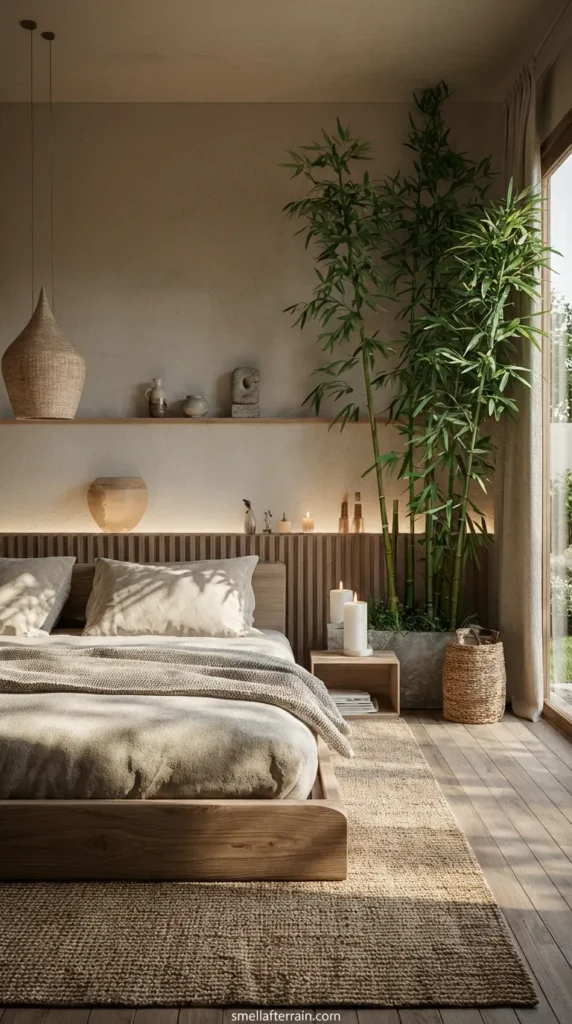
Whether this is a bed in a bedroom or a reading chair in a living area, the “Nest” is the heart of the room. It must be inviting enough to pull you in from the doorway.
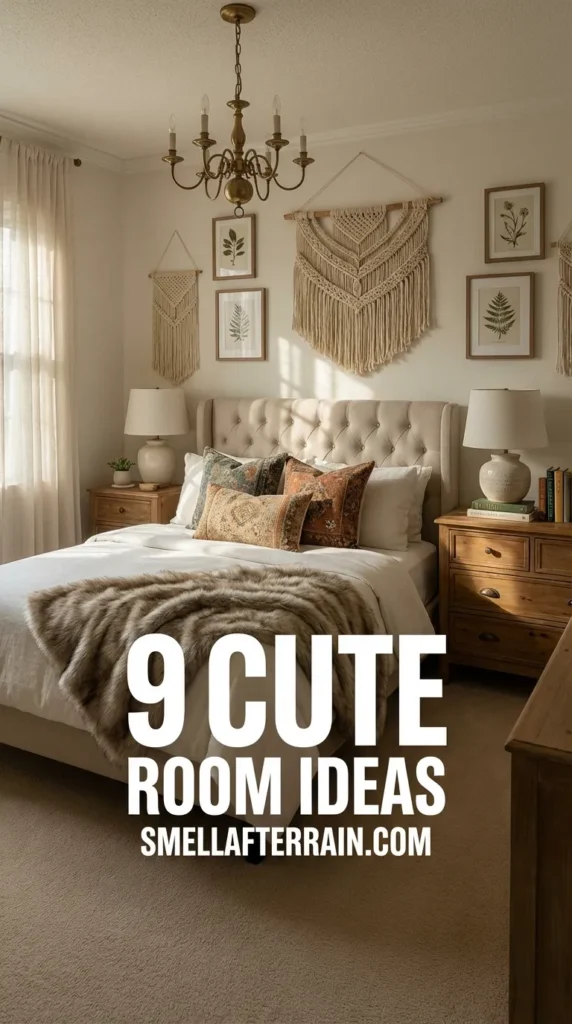
I focus on the headboard or the chair back. It needs to be solid and supportive. I love upholstered headboards in bouclé or worn velvet because they offer physical comfort when you are sitting up reading.
The bedding or upholstery must pass the “cheek test.” If I can’t rest my face against it comfortably, it doesn’t belong. This is the core of cozy room decor—if it looks good but feels scratchy, it’s a failure.
For more on structuring your sleep sanctuary, I’ve written extensively about this in my collection of peaceful bedroom ideas and layouts. The nest is where the day ends, so it must be perfect.
Phase 8: Concealed Storage Architecture
Clutter is visual noise. To achieve a true sensory detox, we need aggressive storage solutions that hide the mess while looking beautiful.
I avoid open shelving unless I am prepared to curate it constantly. Instead, I opt for closed cabinetry or dressers with deep drawers. The goal is to hide the “life admin” stuff—cords, papers, lotions—away from sight.
I use decorative boxes that match the room’s palette to store smaller items on surfaces. A leather box on a nightstand can hold lip balm and chargers, keeping the surface clean.
This discipline allows the eye to rest. When you scan the room, you shouldn’t see a to-do list represented by piles of objects. You should see clean lines and curated beauty.

Phase 9: High-Tactility Textile Layering
This is my favorite phase. This is where we dress the room. I don’t just buy matching pillow sets; I collect fabrics that feel like a hug.
The secret is mixing weights and weaves. I might pair a chunky cable-knit throw with a smooth silk pillow and a rough linen duvet. The contrast creates interest without needing loud colors.
Don’t forget the throw blankets. I believe you need one within reach of every seat. They are the ultimate tool for chill room aesthetic vibes, signaling that it is time to stop working.
I often look for inspiration in my gallery of dream room ideas, where textiles play the starring role in defining the room’s character.
Phase 10: Organic Integration Protocols
A room without life feels static. We need to introduce organic elements to bridge the gap between indoors and outdoors. But as a “Contractor” of calm, I am picky about plants.
I avoid finicky plants that drop leaves and cause stress. I prefer structural, hardy plants like a Rubber Tree or a Snake Plant. Their dark green, waxy leaves provide a grounding contrast to neutral walls.
The vessel is just as important as the plant. I skip the plastic nursery pots and use aged terracotta, woven seagrass baskets, or heavy ceramic pots. The texture of the pot adds another layer to the room.
Dried florals are also a wonderful option for low-maintenance beauty. A vase of dried eucalyptus smells incredible and adds a sculptural element that lasts for months.
Phase 11: The Analog Curio Display
While we hid the clutter in Phase 8, we now need to bring back the soul. This is the curated display of items that bring you joy. But there is a rule: Meaning over volume.
I select three to five items to display on a dresser or shelf. Maybe it’s a piece of driftwood from a beach trip, a vintage camera, or a stack of poetry books. These are your “Artifacts of Calm.”
Give these items breathing room. Negative space is a luxury. By spacing them out, you honor the object and allow the eye to appreciate its shape and history.
If you struggle with arranging these small vignettes, I have some thoughts on styling cute room ideas with vintage finds that might help you strike the balance.
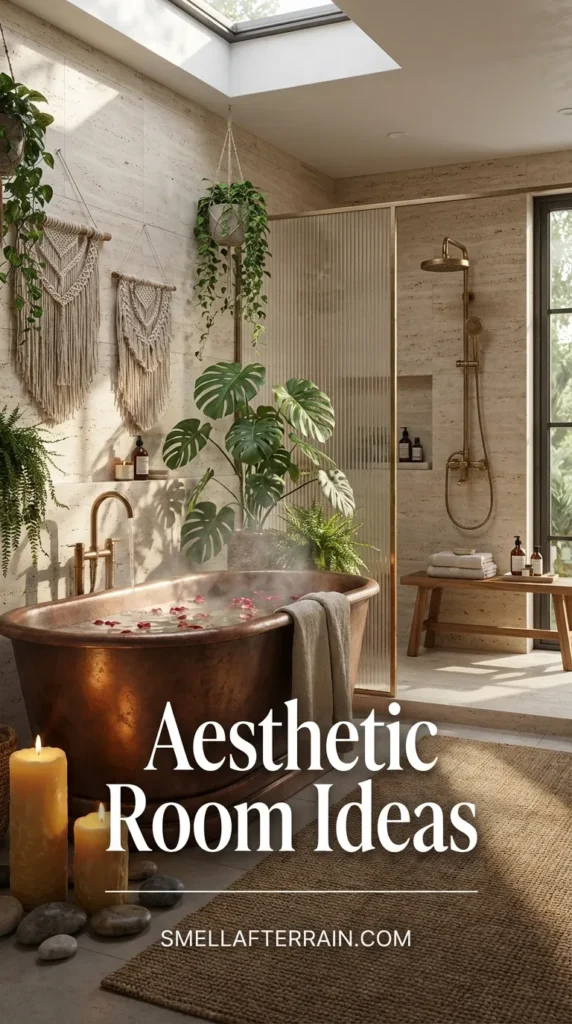
Phase 12: Scent Scaping as Invisible Decor
We often forget that our eyes aren’t the only way we experience a room. Smell is a powerful trigger for the nervous system. This phase is about designing the air.
I steer clear of synthetic, sugary candles. They often lead to headaches. Instead, I look for essential oil diffusers or soy candles with notes of sandalwood, amber, or bergamot.
The goal is a scent that is barely there—a “skin scent” for the room. It should smell like clean laundry, rain, or a forest floor. This invisible layer ties the entire sensory experience together.
I also keep a linen spray by the bed. A quick spritz of lavender before sleep becomes a ritual that tells my body the day is officially over.

Phase 13: The Technology Camouflage
Nothing breaks the spell of a room ideas inspiration board faster than a tangle of black wires. Technology is necessary, but it is aesthetically aggressive.
I use cord covers painted the same color as the wall to hide cables running down from TVs or lamps. I use cable management boxes to hide power strips.
If possible, I try to banish the TV from the bedroom entirely. If it must stay, I consider a frame TV that looks like art when off, or I hide it inside an armoire. The black void of a screen is a visual drain.
This phase is tedious, but it is the difference between a room that feels “nice” and a room that feels “professionally curated.”
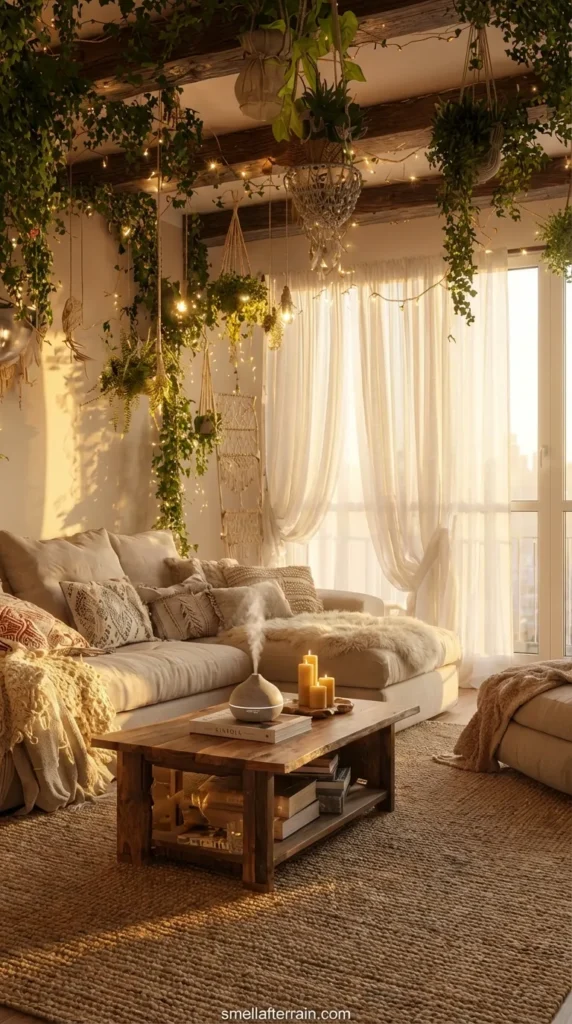
Phase 14: The Final Atmosphere Stress Test
The final phase isn’t about buying anything. It’s about sitting. Once the room is assembled, I sit in every chair. I lie on the bed. I walk through the space.
I ask myself: Is there a glare on the TV? Is the rug tripping me up? Is the lamp too bright? This is the “punch list” phase where we tweak the small details.
I adjust the angle of the chair. I swap a pillow. I dim the lights. I make sure that the room serves me, not the other way around. It needs to be a functional machine for relaxation.
This process ensures that your aesthetic room decor isn’t just for Instagram—it’s for living. It ensures the space holds you in that state of “sensory detox” we established at the start.
If you are looking to expand this feeling to other parts of your home, you might find my living room layout guides or even my kitchen styling tips helpful for maintaining this flow throughout the house.
Frequently Asked Questions
How can I make my room aesthetic with no money?
The most powerful tool you have is layout and decluttering. Start by emptying the room (Phase 1) and only putting back what you love. Rearrange your furniture to create a new flow—try floating your bed or desk away from the wall. Swap decor with friends or forage for organic elements like branches or wildflowers to add life without spending a dime.
What is the most relaxing color for a bedroom?
While blue is often cited, I find warm neutrals to be the most grounding. Think clay, oatmeal, warm greys, or muted sage green. These earth tones mimic nature and wrap the room in warmth. Avoid bright, high-saturation colors like red or bright yellow, as they stimulate the brain rather than calm it.
How do I mix textures without it looking messy?
Stick to a monochromatic color palette. When the colors are similar, you can go wild with texture. Mix a fuzzy rug, a velvet chair, a linen curtain, and a knit throw—all in shades of cream or beige. The lack of color contrast makes the texture contrast look intentional and sophisticated, not chaotic.
What lighting is best for a chill vibe?
Always choose “Soft White” or “Warm White” bulbs, specifically between 2700K and 3000K. Avoid “Daylight” bulbs (5000K) as they look like office lighting. Use multiple low-light sources (lamps, sconces) rather than one bright ceiling light to create pools of warmth.
How do I make a small room look aesthetic?
Go vertical. Use floor-to-ceiling curtains to draw the eye up. Install shelves high on the walls for storage. Keep the floor as clear as possible to create the illusion of space. A large mirror can also double the visual size of the room and bounce soft light around.
Creating a home is a slow process. It doesn’t happen overnight. But by following these phases, you are building a foundation for a life that feels a little softer, a little quieter, and a lot more like you. I hope you find your calm.
Stay cozy,
Elara