- 1. The Psychology of Dark Millwork
- 2. Architectural Symmetry and Built-ins
- 3. Investing in the Rolling Ladder
- 4. Textural Layering with Velvet and Leather
- 5. The Importance of Specific Task Lighting
- 6. Creating Micro-Zones with Rugs
- 7. Maximizing Vertical Space in Small Rooms
- 8. The Art of Shelf Styling and Negative Space
- 9. Integrating Smart Audio for Ambiance
- 10. Converting Transitional Spaces and Corridors
- 11. Window Treatments for Light Control
- 12. Curating 'Old Money' Accessories
- Frequently Asked Questions
- Conclusion
There is a distinct difference between a room that simply holds books and a curated home library that serves as a sanctuary for the mind. In the realm of high-end interior design, the home library aesthetic is currently experiencing a renaissance, heavily influenced by the “Old Money” trend and a return to tactile, meaningful luxury. It is not merely about storage; it is about creating a dream library cozy enough to lose oneself in, yet sophisticated enough to elevate the overall property value of your estate.
Whether you are working with a sprawling study or seeking small home library design solutions for an urban apartment, the principles of luxury remain constant: intentional materiality, sophisticated lighting, and architectural integrity. As a designer, I encourage clients to view the library not just as a functional space, but as an investment in their lifestyle.
Below, we explore 12 architectural and decorative strategies to achieve a timeless, sophisticated reading space. For more inspiration on elevating every corner of your home, visit Smell After Rain.
1. The Psychology of Dark Millwork
The foundation of the “Old Money” library aesthetic lies in its envelope. White walls often feel too clinical for a space intended for introspection. To achieve a truly cozy home library reading space, we must embrace the psychology of color drenching. Deep, saturated hues—think Oxford Blue, Hunter Green, or a rich Charcoal—create an immediate sense of intimacy.
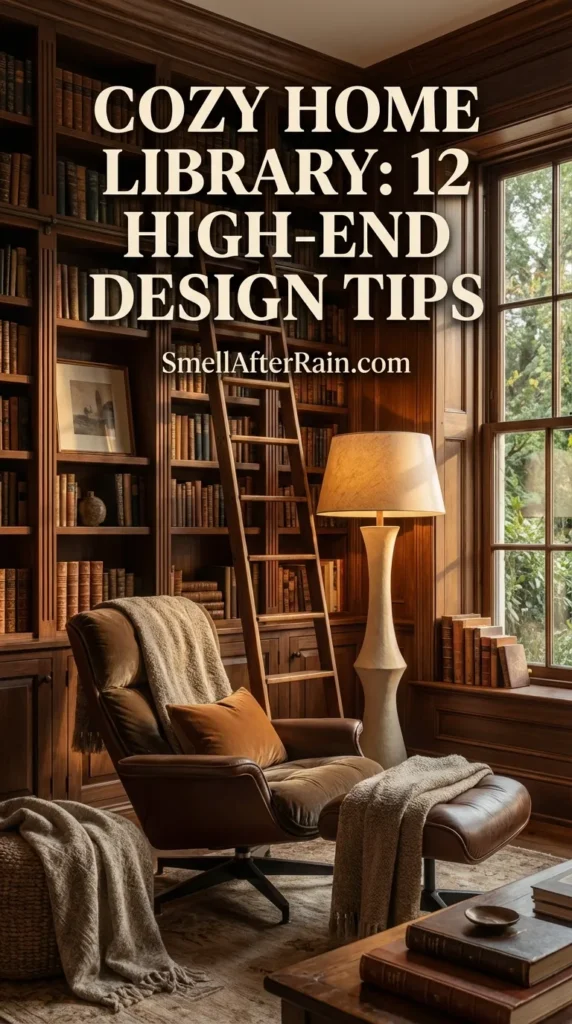
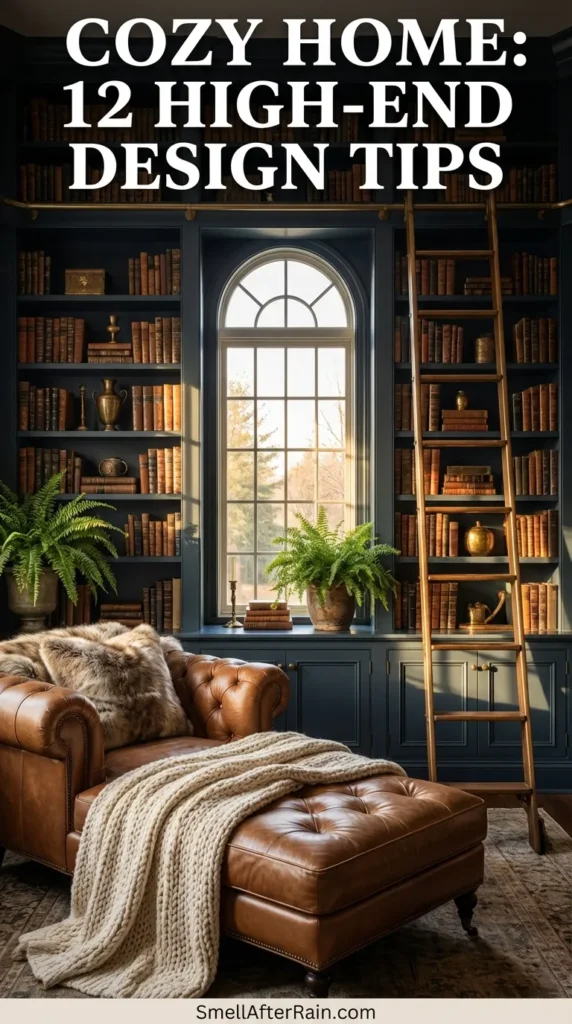
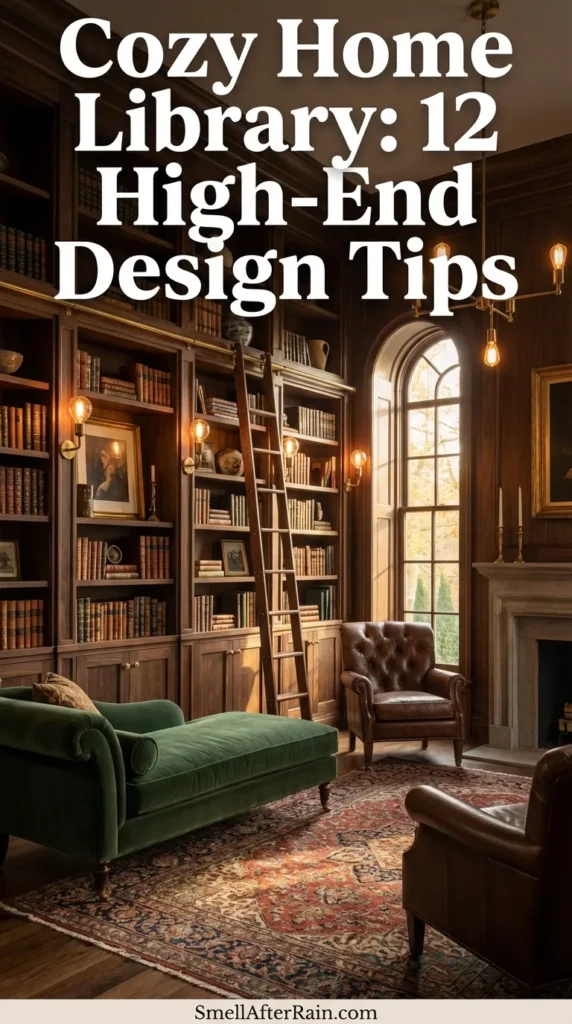
However, the pinnacle of luxury is custom millwork. Paneling walls in walnut, mahogany, or cherry wood provides a warmth that paint simply cannot mimic. The grain of the wood adds organic texture, while the darkness of the material absorbs light, creating a cocooning effect. If solid wood paneling is outside the renovation scope, high-quality veneers or painting existing bookshelves in a high-gloss lacquer of a dark shade can mimic the depth of traditional joinery.
2. Architectural Symmetry and Built-ins
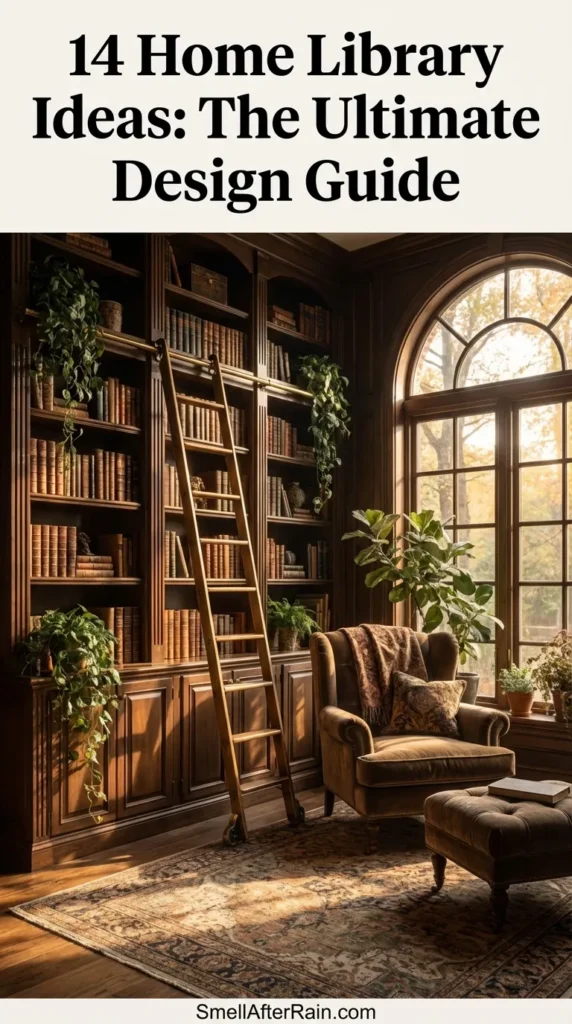
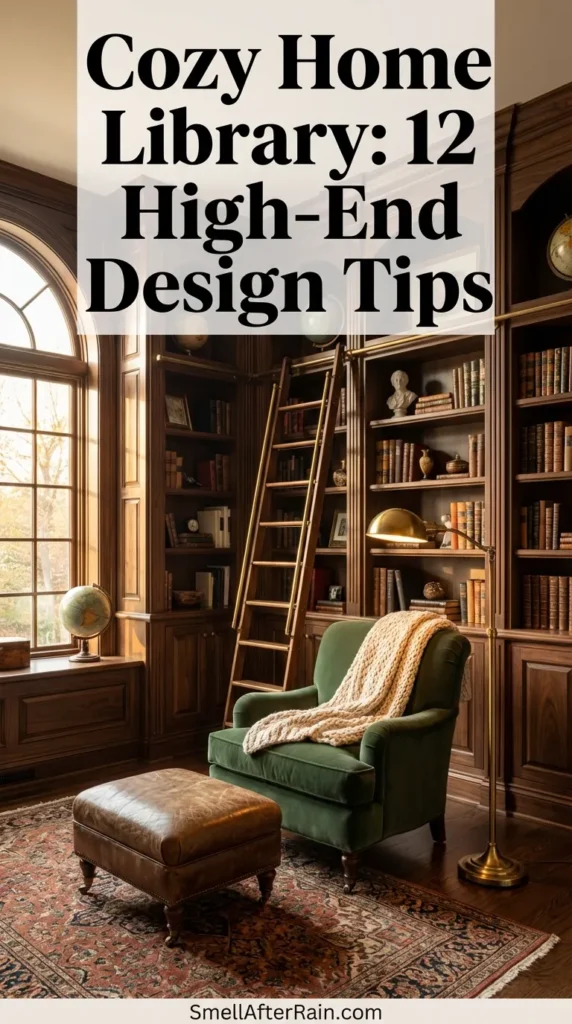
Nothing disrupts a high-end aesthetic faster than freestanding, flimsy bookcases that don’t fit the space. House library ideas that center on luxury almost exclusively feature floor-to-ceiling built-ins. These structures should feel like part of the home’s original architecture, not an afterthought.
Symmetry provides a sense of calm and order, which is essential for a reading environment. Flanking a fireplace or a large window with identical shelving units creates a focal point that anchors the room. For those interested in how built-ins define a space, explore our guide on rooms and nooks layout strategies. The integration of baseboards and crown molding that wraps seamlessly around the shelving units is the detail that separates a DIY project from a designer execution.
3. Investing in the Rolling Ladder
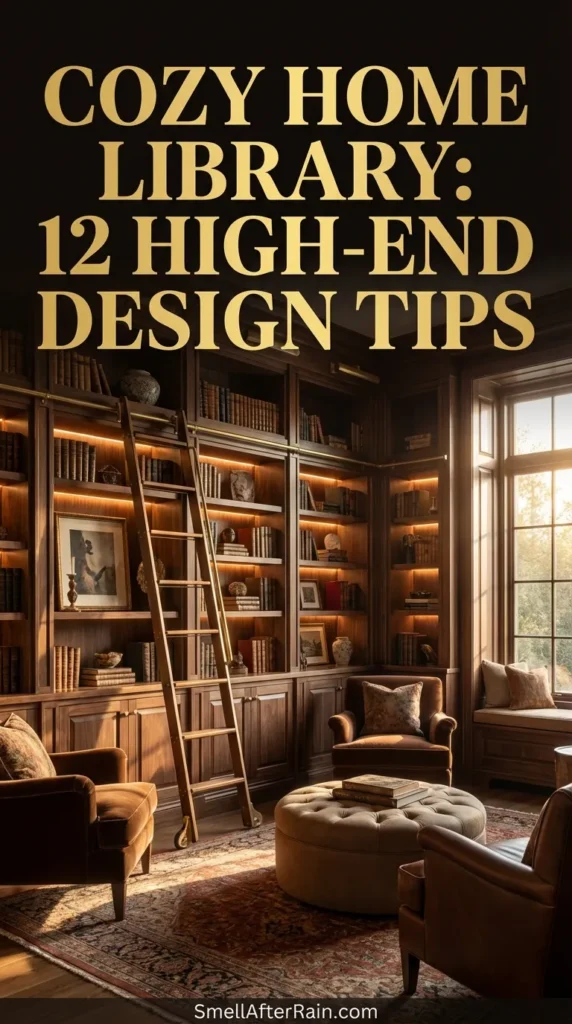
Perhaps the most iconic element of a grand library is the rolling ladder. While functionally necessary for shelves that reach 10 or 12 feet high, aesthetically, it serves as a piece of mobile sculpture. It implies a collection of books so vast that specialized equipment is required to access them.
Material selection here is paramount. Avoid industrial-looking aluminum. Instead, opt for solid timber rails and hardware finishes in unlacquered brass or oil-rubbed bronze. The gentle sound of the wheels gliding across a rail adds an auditory layer to the home library aesthetic that screams quality.
4. Textural Layering with Velvet and Leather
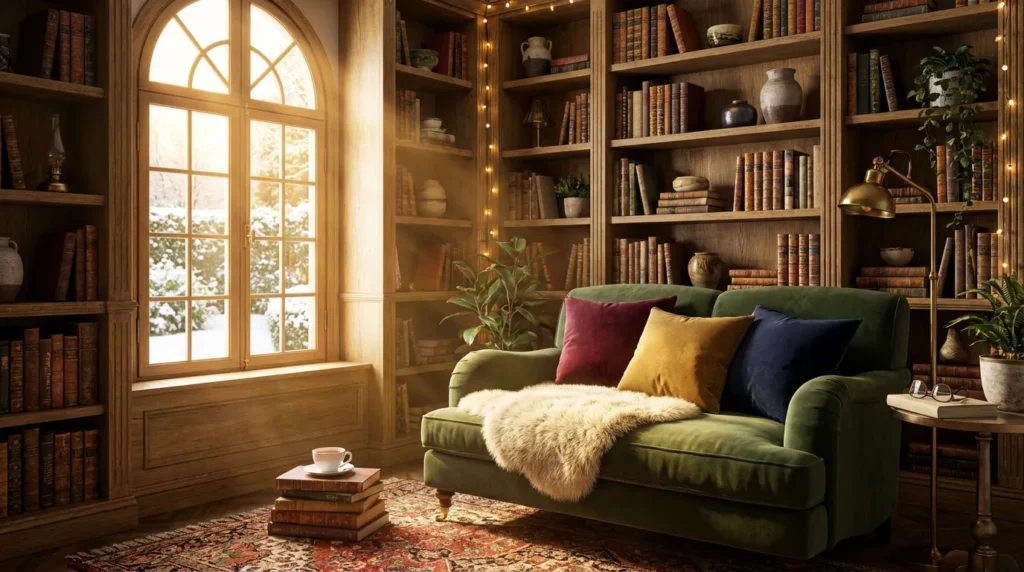
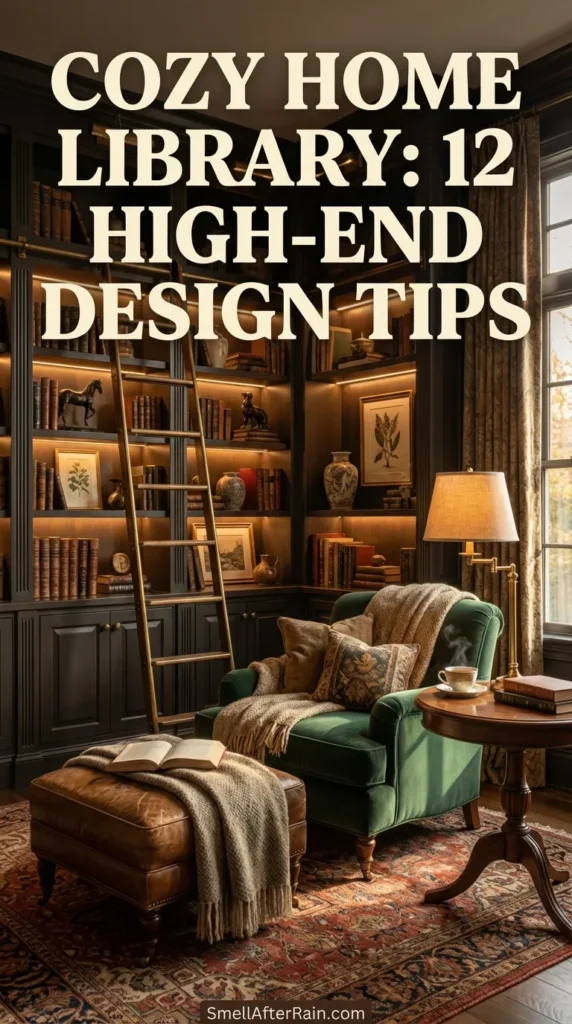
A library is a sensory experience. Once the architectural bones are in place, the furnishings must offer supreme comfort and tactile richness. The classic choice is, of course, the Chesterfield sofa or wingback chair, upholstered in full-grain cognac leather. Leather ages beautifully, developing a patina that tells a story over time.
However, to soften the masculine energy of wood and leather, introduce heavy velvets. A mohair velvet ottoman or heavy velvet drapery adds sound absorption—crucial for a quiet small library room—and visual softness. Mixing these materials creates a depth that feels curated and collected rather than purchased from a showroom floor.

5. The Importance of Specific Task Lighting
Lighting in a library must perform a dual function: mood setting and task illumination. Overhead lighting should be kept to a minimum; reliance on a single central fixture often results in flat, uninspiring light. Instead, layer your lighting.
Articulating brass sconces mounted directly onto the bookshelves highlight the book spines and break up the vertical lines of the shelving. For the reading nook itself, a floor lamp with a focused beam is non-negotiable. Look for fixtures with adjustable heads and warmer color temperatures (2700K) to reduce eye strain while maintaining that warm, cozy library room idea vibe.
6. Creating Micro-Zones with Rugs
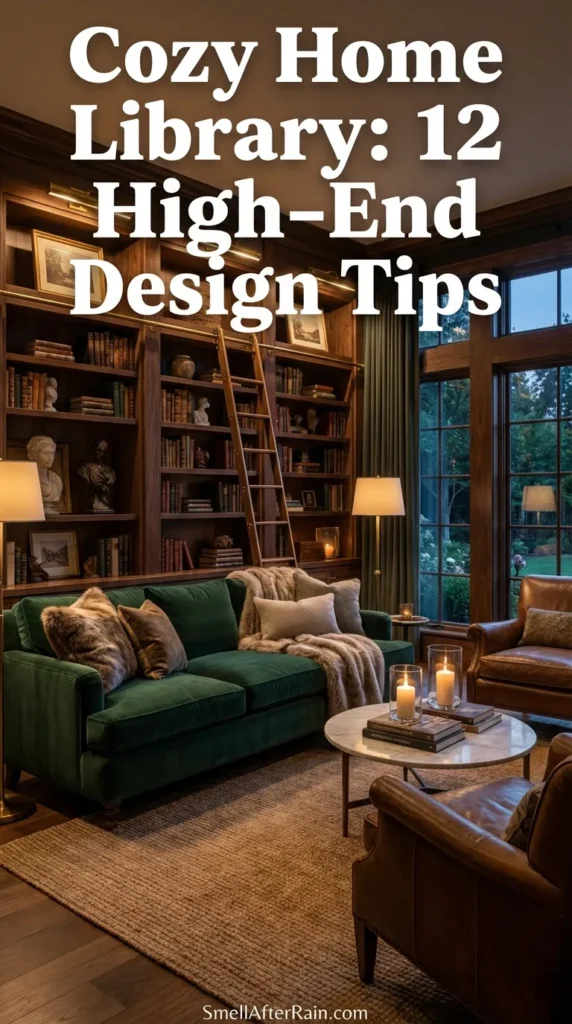
In interior design, flooring anchors the furniture. For a library, a vintage Persian or Oushak rug is the gold standard. These rugs, often hand-knotted from wool or silk, offer complex patterns that hide dust and wear while introducing a color palette that ties the room together.
If you are designing a small home library aesthetic, the rug defines the “reading zone” separate from the rest of the room. It adds a layer of acoustic insulation, dampening footsteps and echoing, which preserves the hushed atmosphere required for deep reading. Ensure the rug is large enough that all front legs of the furniture sit upon it.
7. Maximizing Vertical Space in Small Rooms
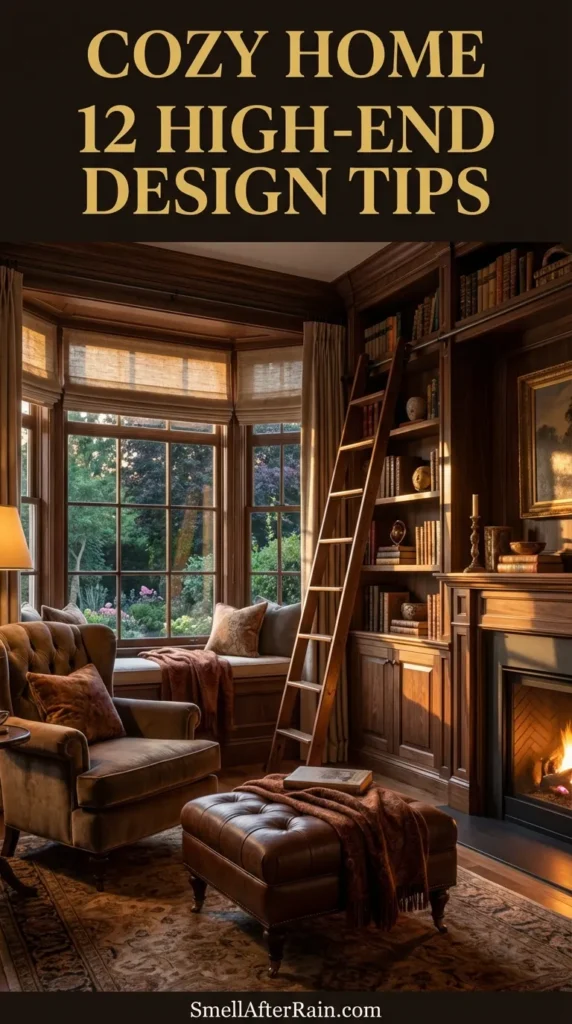
Not every home has a dedicated wing for a library. Often, we must be creative with small library room ideas. The secret to making a small space feel grand is verticality. By taking shelves all the way to the ceiling, you draw the eye upward, making the room feel taller and more expansive.
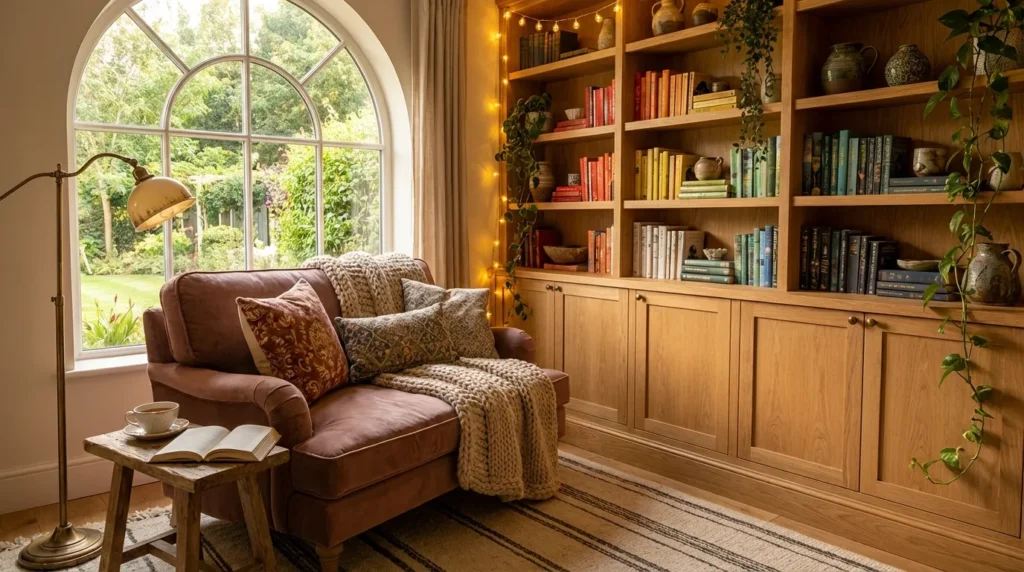
In tighter quarters, consider book nooks utilizing dead space, such as the area under a staircase or the awkward corners of a guest room. Even a narrow vertical strip of shelving can transform a dead corner into a literary feature. For more on maximizing tight spaces, read about designing the ultimate cozy book nook.

8. The Art of Shelf Styling and Negative Space
A common mistake is overcrowding shelves. While a library is for books, a wall of solid spines can feel oppressive. High-end styling involves “breathing room” or negative space. Break up rows of books by stacking some horizontally and leaning others vertically.
Intersperse the collection with meaningful objects—sculptural bookends, framed small-scale art, or antique clocks. This approach transforms the shelves from simple storage into a display of your personal narrative. It turns the library at home room ideas from functional to gallery-esque.
9. Integrating Smart Audio for Ambiance
Modern luxury is often invisible. While we focus on the visual and tactile, the auditory experience is vital for a dream library cozy atmosphere. Integrated smart sound systems allow for the playing of ambient noise—rainfall, crackling fire, or classical music—without the visual clutter of wires and speakers.
Hide speakers within the millwork or behind acoustically transparent fabric panels in the cabinetry. This seamless integration of technology ensures that the modern world doesn’t intrude on your vintage-inspired sanctuary.
10. Converting Transitional Spaces and Corridors
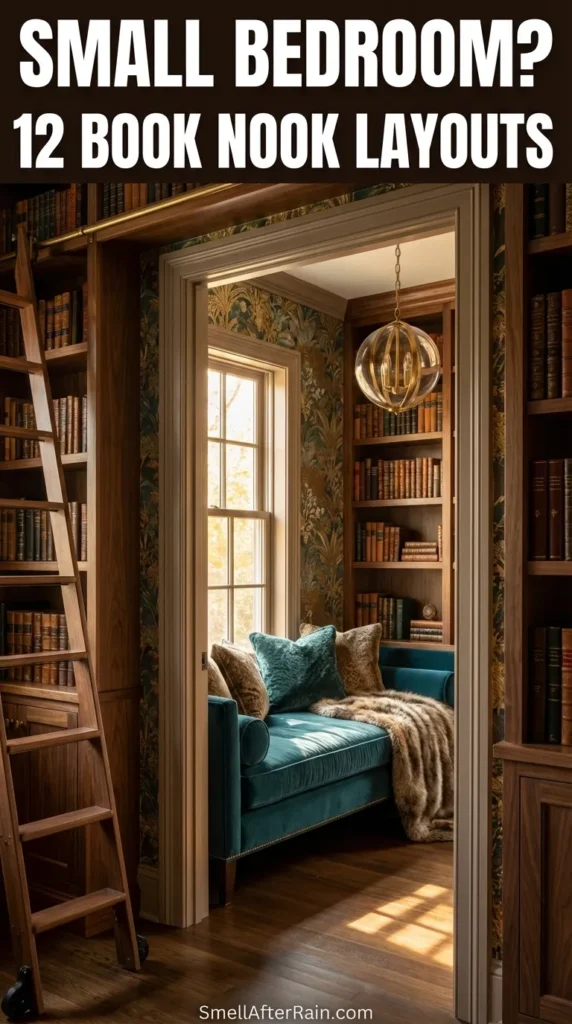
In many luxury homes, hallways are wasted square footage. A sophisticated design move is to widen a corridor slightly to accommodate shallow bookshelves, turning a passageway into a small home library room.
This “walk-through” library concept is charming and efficient. It encourages interaction with books on a daily basis. Ideally, this leads into private quarters. For inspiration on how this flows into sleeping areas, consider our insights on bedroom ideas where literature meets relaxation.
11. Window Treatments for Light Control
Natural light is the enemy of book preservation, yet essential for human comfort. UV rays can fade the spines of your precious first editions. Therefore, window treatments are a technical necessity as well as a decorative one.
Layering is key. Sheer linen curtains filter harsh light, while heavy velvet or wool drapes can block it out entirely for a moody, evening atmosphere. For a truly custom look, ensure the drapery hardware matches the metal finishes on your lighting and rolling ladder. If your library is near a culinary space, ensure fabrics are treated to resist odors—see more on space adjacencies in our kitchen ideas section.
12. Curating ‘Old Money’ Accessories
The final touch in any cozy home library reading space is the accessories. To nail the “Old Money” look, avoid mass-produced decor. Hunt for antiques: a vintage globe on a stand, a brass magnifying glass, a leather desk blotter, or a heavy crystal whiskey decanter.
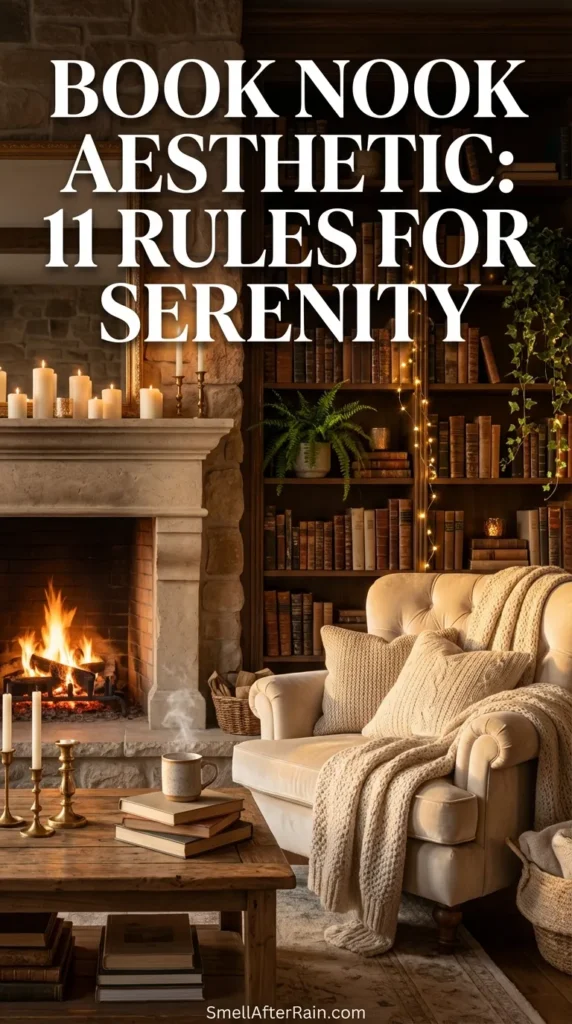
These items suggest a history and a life well-traveled. They provide the “clutter” that feels intentional and expensive. Even the choice of a throw blanket—cashmere or alpaca wool—signals a commitment to quality. For specific decor layouts, check out dreamy book nook ideas.
Frequently Asked Questions
What is the best paint finish for library shelves?
For a high-end look, satin or semi-gloss is preferred for cabinetry and shelving. These finishes are more durable and easier to clean than matte, and they reflect a small amount of light, highlighting the architectural details of the millwork. For a truly dramatic, “lacquered box” effect, high-gloss is a bold choice often used in luxury design.
How deep should home library shelves be?
Standard book depth requires shelves to be at least 10 to 12 inches deep. However, for art books and larger volumes, 14 to 15 inches is ideal. If you are designing built-ins, consider varying the depths—deeper at the bottom for heavy encyclopedias and storage cabinets, and shallower at the top for paperbacks.
How can I make a library cozy without a fireplace?
While a fireplace is a classic element, you can replicate the warmth through lighting and texture. Use lamps with warm bulbs (2700K) to create a golden glow. Incorporate heavy textures like velvet curtains, wool rugs, and faux fur throws. A high-quality electric fireplace insert or even a grouping of candles in a faux hearth can also provide that focal point of warmth.
Does a home library increase home value?
Yes, particularly if it involves high-quality, permanent built-ins. Custom millwork is considered a premium feature in real estate. A well-designed library suggests a lifestyle of leisure and intellect, which appeals to high-end buyers. It transforms a generic “bonus room” into a defined, luxury amenity.
Can I put a library in a bedroom?
Absolutely. A “sleeping library” is a highly coveted design trend. It involves lining the bedroom walls with shelves or creating a reading alcove within the master suite. This creates a private retreat separate from the main living areas, perfect for unwinding before sleep.
Conclusion
Creating a cozy home library that resonates with the high-end “Old Money” aesthetic is an exercise in restraint and quality. It requires looking beyond the immediate utility of book storage to the broader atmosphere of the room. By focusing on rich materials, proper lighting, and architectural symmetry, you can build a space that feels timeless.
Whether you are transforming a grand hall or refining a small home library aesthetic in a compact urban dwelling, the rules of luxury remain the same: quality over quantity, and comfort above all. For more luxury interior guidance, return to the main hub at Smell After Rain.