- 1. The Psychology of Enclosure: Creating Safety
- 2. Biophilic Integration: The Forest Effect
- 3. Circadian Lighting: Mimicking Firefly Glow
- 4. Tactile Grounding: Textures that Heal
- 5. The Palette of Mysticism: Color Psychology
- 6. Miniature Worlds: The Science of Awe
- 7. Olfactory Anchoring: Scenting the Story
- 8. Vertical Escapism: Drawing the Eye Upward
- 9. The Witch Aesthetic: Artifacts of Intent
- 10. Sonic Insulation: The Sound of Silence
- 11. Ergonomic Nests: Sustained Reading Comfort
- 12. Reflective Illusions: Expanding the Magic
- 13. The DIY Connection: The Ikea Effect
- Frequently Asked Questions
- Conclusion
In an increasingly digital and chaotic world, the home must serve as a sanctuary for the mind. As an interior psychologist, I don’t just look at how a room looks; I analyze how it makes you feel. A fairy book nook is not merely a decorative trend or a whimsical storage solution—it is a psychological anchor. It represents a threshold crossing from the mundane stress of daily life into a restorative state of imagination and safety.
Whether you are crafting a cozy book nook in a sprawling library or squeezing a reading corner into a small apartment, the goal is the same: to trigger the parasympathetic nervous system, lowering cortisol and inviting deep relaxation. By leveraging principles of biophilic design, color theory, and sensory integration, we can transform a simple shelf or corner into a portal to another world.
Below, we explore 13 psychological and aesthetic principles to build the ultimate fairy book nook that heals as much as it delights.
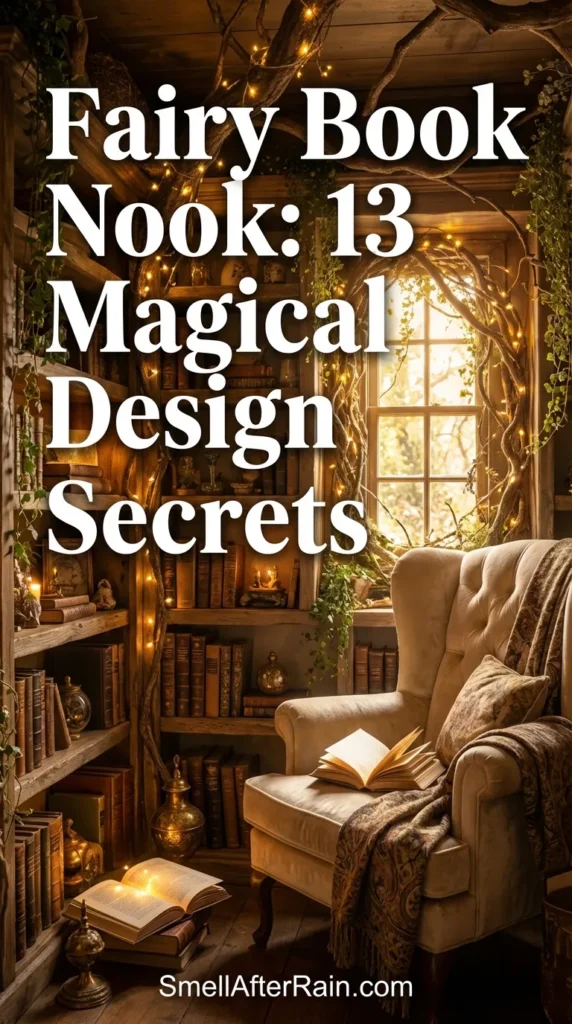
1. The Psychology of Enclosure: Creating Safety
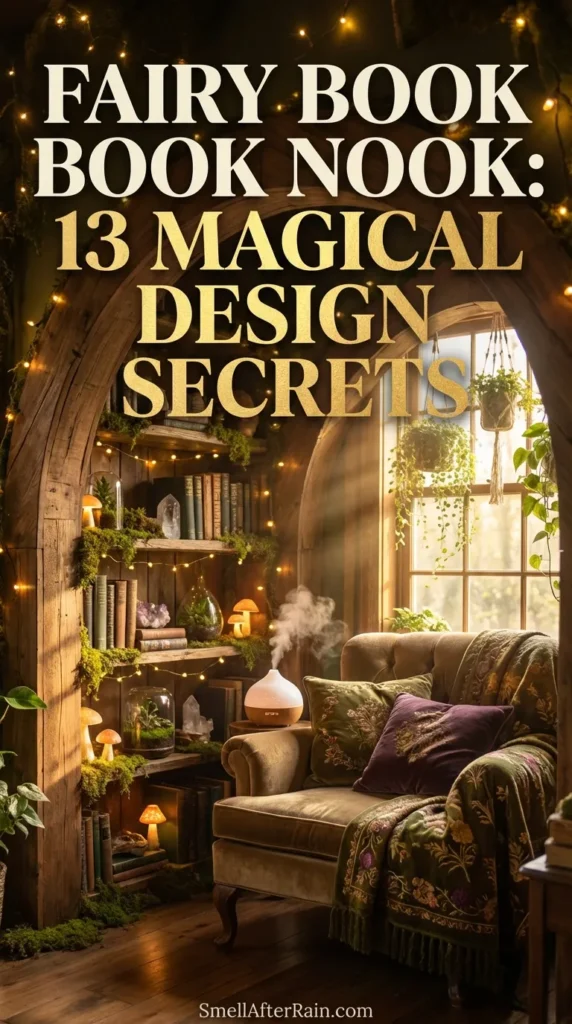
Humans have an evolutionary preference for “prospect and refuge.” We desire spaces where we feel protected (refuge) but can still observe our surroundings (prospect). A successful book nook aesthetic relies heavily on the concept of the ‘nook’ itself—a small, enclosed space that signals safety to our primal brain.
To achieve this in a book nook bedroom setup, avoid positioning your reading chair with your back to the door. Instead, create a recessed feeling. If you don’t have built-in alcoves, use tall bookshelves or hanging canopies to artificially lower the ceiling height immediately above your seating. This compression of space creates a “psychological hug,” instantly making the reader feel secure enough to disconnect from reality and enter the narrative world.
2. Biophilic Integration: The Forest Effect
Biophilia is the innate human instinct to connect with nature. A forest book nook isn’t just about sticking a plastic plant on a shelf; it is about replicating the fractal patterns and chaotic harmony of the woods to reduce mental fatigue. Research shows that looking at nature patterns can speed up stress recovery by up to 60%.
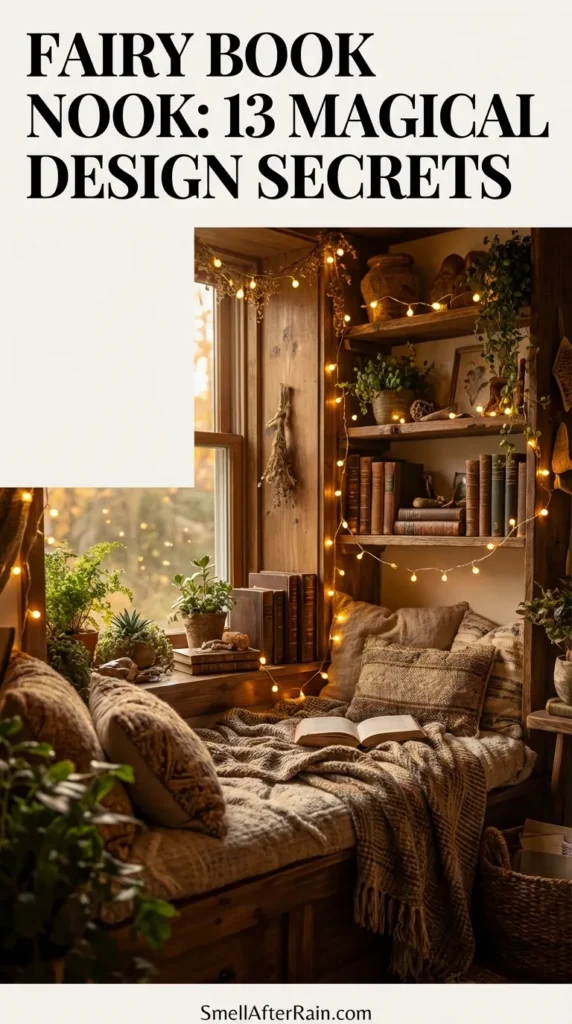
Incorporate trailing ivy (real or high-quality silk) that drapes over the edges of your shelves. Use raw wood with visible grain rather than painted MDF. The imperfections in the wood grain arrest the eye in a state called “soft fascination,” which restores cognitive focus. For a true fairy library feel, consider preserving moss walls behind your books. The texture and vibrant green hue stimulate vitality without the high energy of red or yellow.
3. Circadian Lighting: Mimicking Firefly Glow
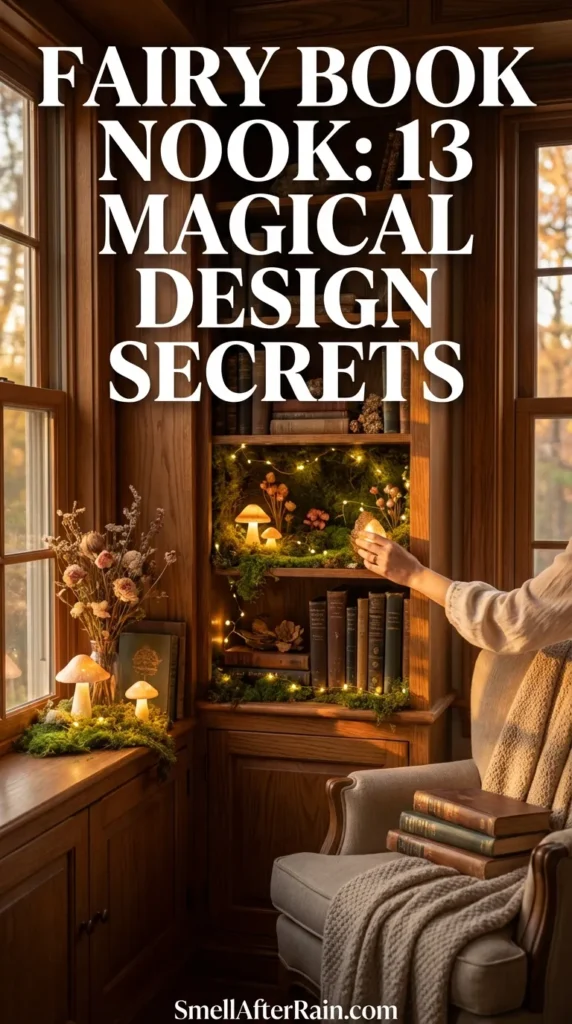
Lighting is the most critical variable in setting the mood. Harsh, blue-spectrum lighting suppresses melatonin and keeps the brain alert—the exact opposite of what we want in a reading sanctuary. To master the book nook aesthetic, you must layer light sources that mimic natural, low-sun phenomenon.
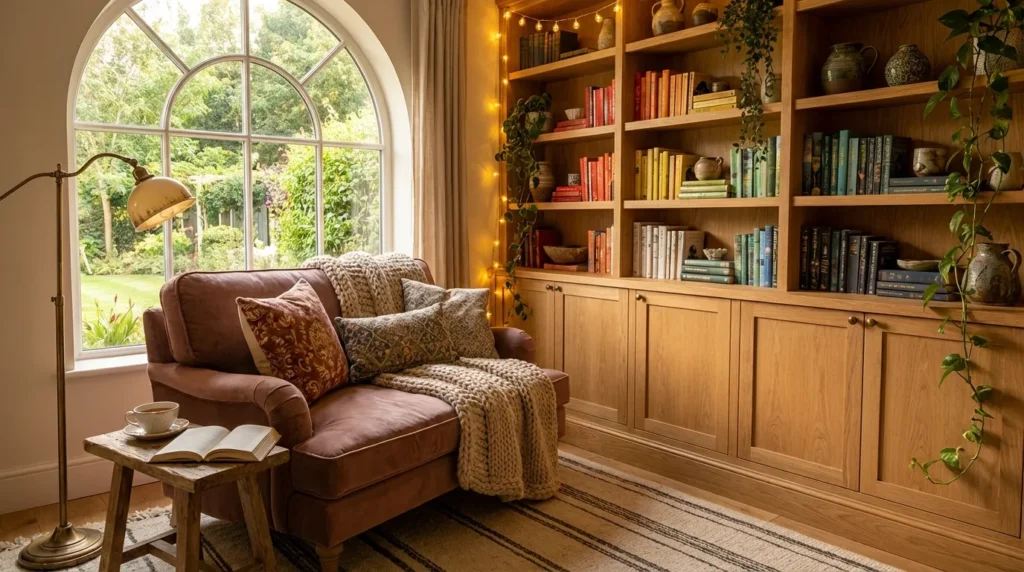
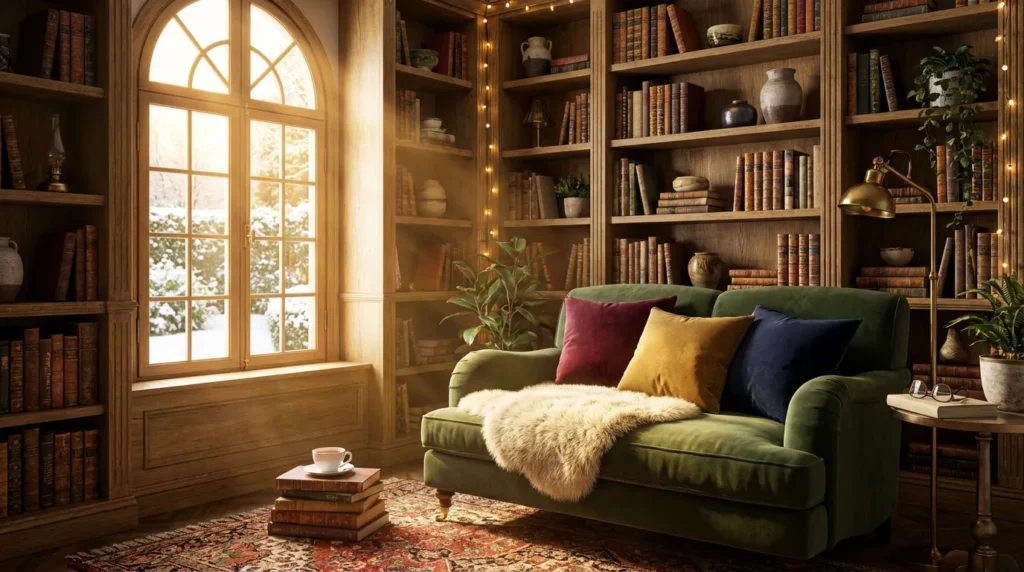
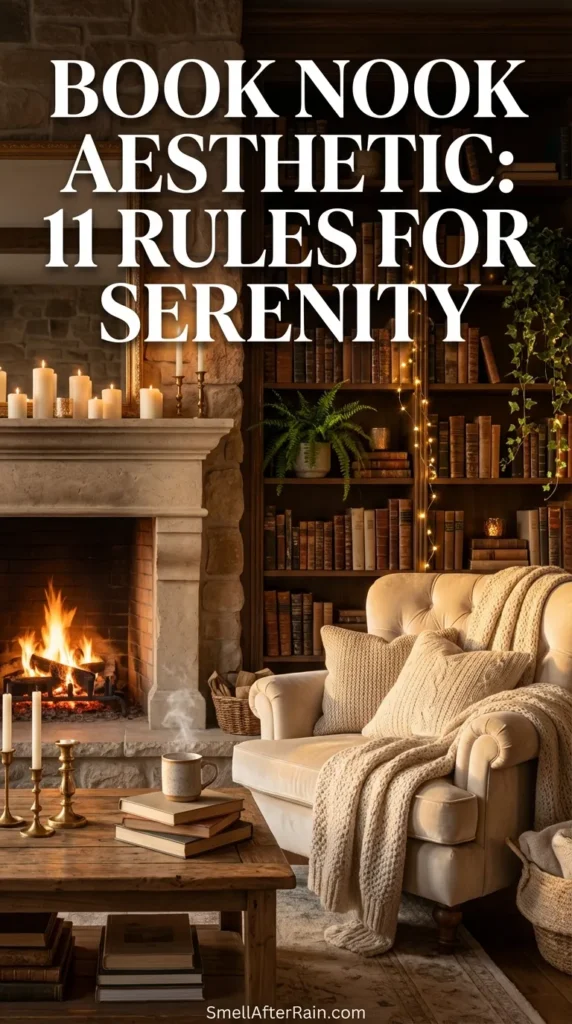
Utilize warm fairy lights (2700K or lower) woven between shelves to simulate fireflies or stars. This low-level, twinkling light creates a sense of wonder. For reading, avoid overhead lights. instead, use directed task lighting with a warm hue. Refer to our guide on rules for serenity to understand how light placement affects anxiety levels. Shadows are just as important as light in a fairy nook; they create mystery and depth.
4. Tactile Grounding: Textures that Heal
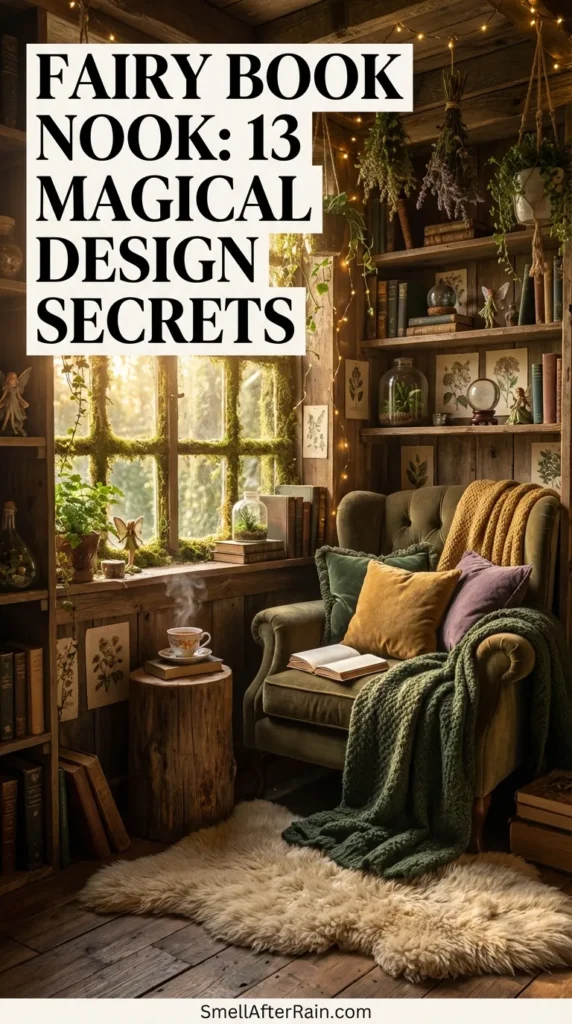
Disassociation from the body is common after a day of screen time. To ground yourself back in the present moment, your book nook must offer a rich tactile experience. This is often overlooked in standard small book nook ideas, where visual clutter takes precedence over touch.
Layer materials: a velvet cushion, a chunky knit wool throw, a rough wicker basket for storage, and the smooth spine of a leather-bound book. When your skin contacts these varied surfaces, it sends grounding signals to the brain. In a small bedroom layout, rug layering is essential. Place a high-pile faux fur rug under your feet to physically separate the “nook” zone from the rest of the room.
5. The Palette of Mysticism: Color Psychology
Color profoundly influences emotion. For a fairy or witch aesthetic, we steer away from clinical whites or high-energy oranges. instead, we look to the “twilight palette”—colors that exist in the transition between day and night.
- Deep Forest Green: Represents renewal and stability.
- Aubergine/Deep Purple: Associated with introspection, spirituality, and magic.
- Midnight Blue: Slows respiration and lowers blood pressure.
Paint the back of your bookshelves these dark hues to make the books pop and create an illusion of infinite depth. If painting isn’t an option, use removable wallpaper with botanical prints to enclose the space.
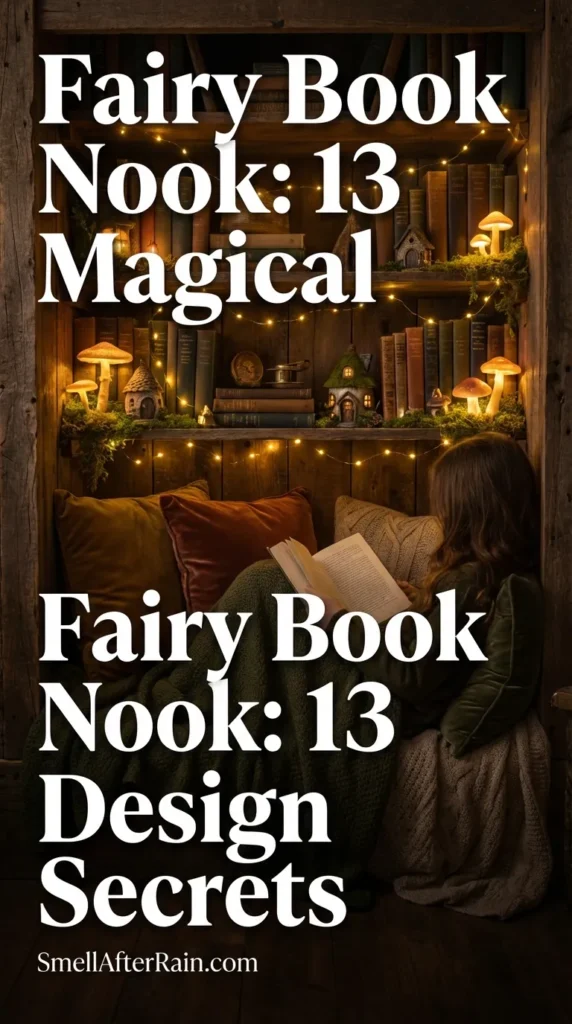
6. Miniature Worlds: The Science of Awe
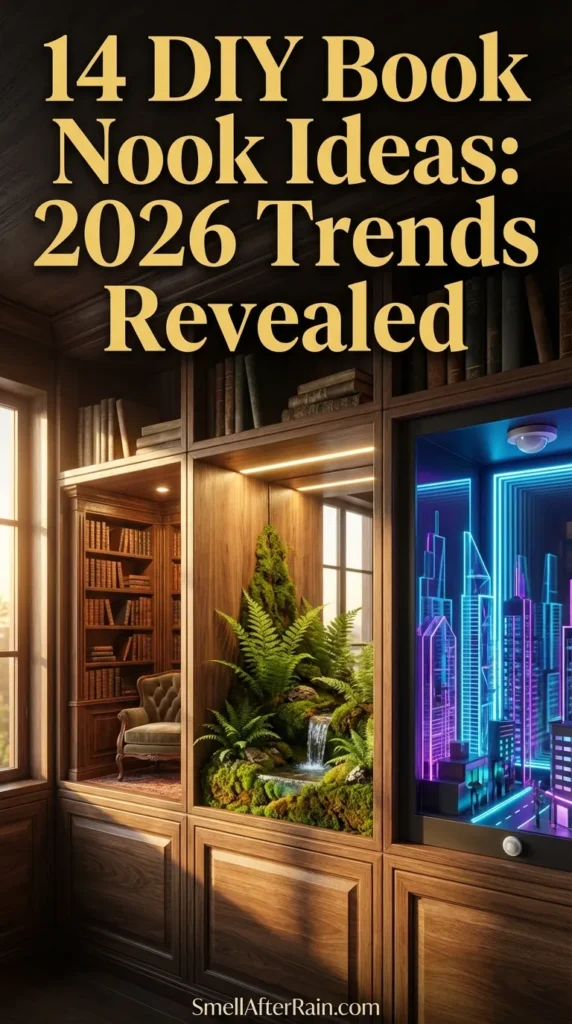
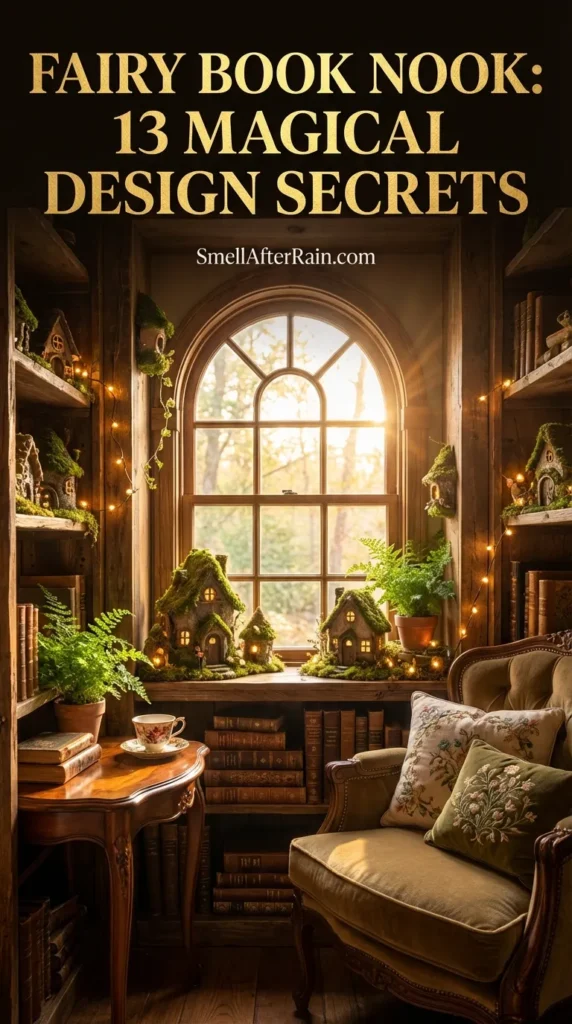
Why are we obsessed with shelf inserts and dioramas? Psychologically, viewing a miniature scene gives us a “god’s eye view,” offering a sense of control and order that we often lack in the real world. A booknook tutorial often focuses on construction, but the content of the diorama matters.
Create a magical shelf diorama that depicts a scene of safety—a tiny cottage with a lit window, a winding forest path, or a hidden library. When you gaze into this lit insert nestled between your novels, you experience a micro-dose of awe, which shifts your focus away from self-rumination.
7. Olfactory Anchoring: Scenting the Story
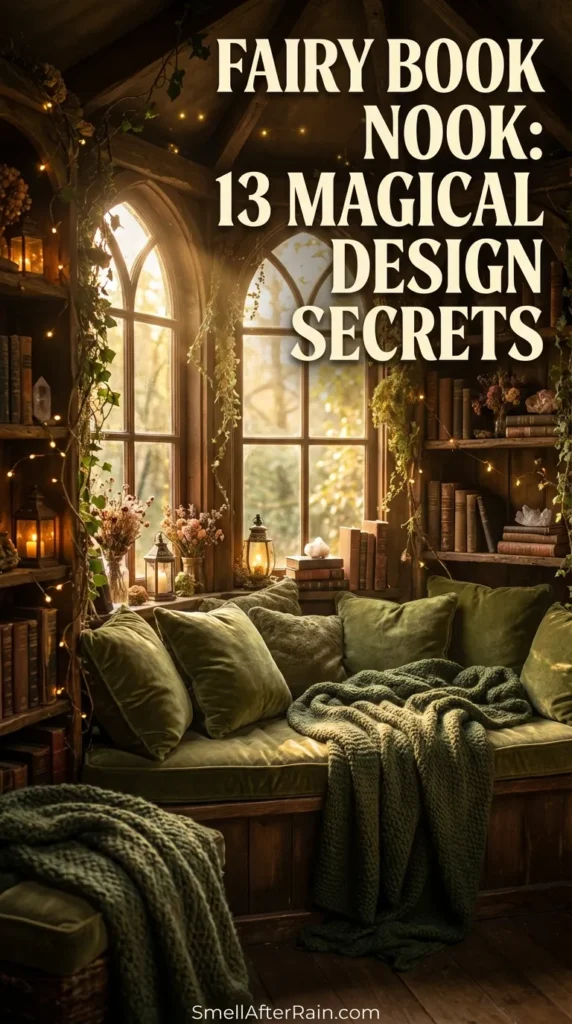
The olfactory bulb is directly connected to the amygdala and hippocampus, the brain’s centers for emotion and memory. To truly separate your book nook from the rest of your home, it needs a distinct scent profile.
For a forest fairy vibe, avoid artificial “sugar cookie” scents. Opt for complex, earthy notes like cedarwood, patchouli, damp earth (petrichor), and dried tobacco. Using a ceramic diffuser hidden behind books allows the scent to permeate the space gently. Over time, your brain will condition itself to relax the moment it smells that specific blend, creating an instant physiological drop in tension.
8. Vertical Escapism: Drawing the Eye Upward
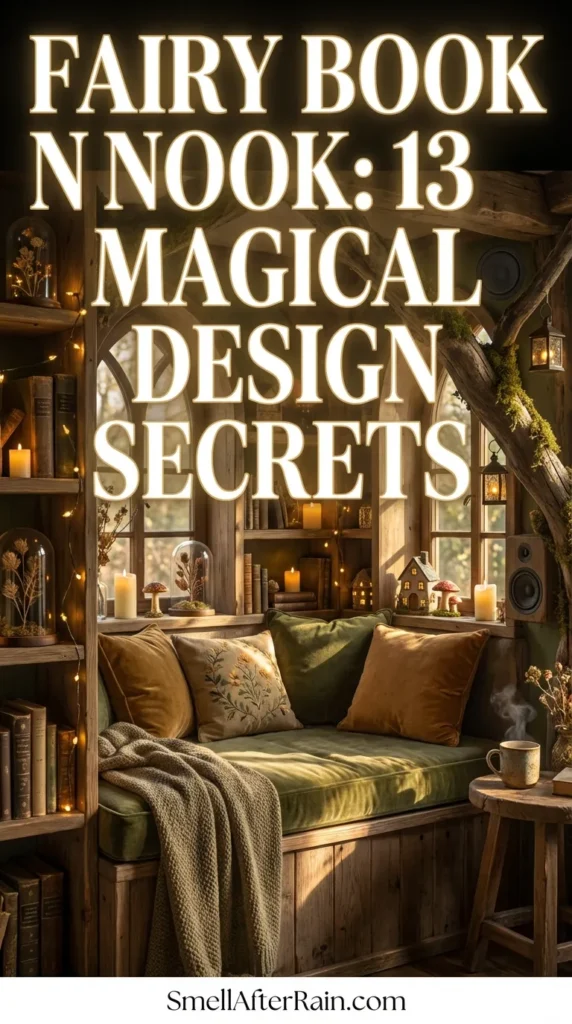
Low ceilings can feel oppressive, but vertical lines draw the eye upward, mimicking the grandeur of trees or cathedral pillars. In small book nook ideas, verticality is your best tool for expanding space.
Install shelves that go all the way to the ceiling. Even if the top shelves are hard to reach, place decorative items like vintage birdcages, dried botanicals, or crystals there. This draws the eye up and creates a sense of loftiness and air. Draping sheer fabric from a ceiling hook to create a canopy also emphasizes height and adds to the ethereal, fairy-tale atmosphere.
9. The Witch Aesthetic: Artifacts of Intent
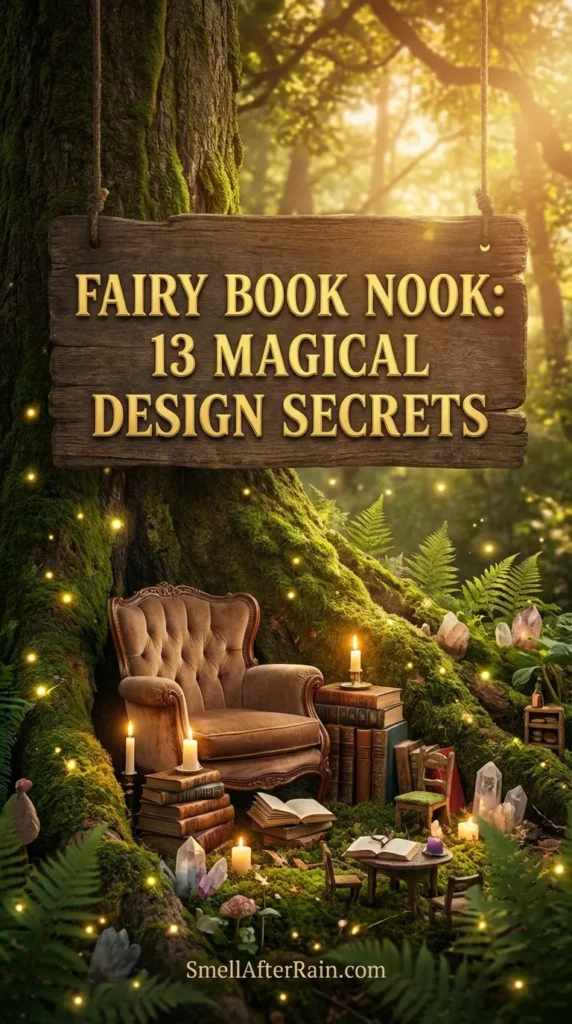
The witch aesthetic in interior design is less about Halloween decor and more about “intentionalism.” It involves curating objects that have personal meaning or connection to the natural world. This creates a space that feels inhabited and soulful rather than staged.
Include jars of dried herbs, crystals like amethyst (for calm) or selenite (for clarity), and vintage brass instruments (magnifying glasses, compasses). These items act as “totems”—physical anchors for your identity as a reader and dreamer. Group these items in odd numbers (3 or 5) to maintain visual interest and movement.
10. Sonic Insulation: The Sound of Silence
A visual paradise can be ruined by the hum of a refrigerator or traffic noise. To deepen the immersion of your fairy library, you must manage the soundscape. Soft materials (tapestries, rugs, velvet curtains) act as acoustic dampeners, reducing echo and absorbing high-frequency noise.
Beyond passive dampening, introduce active soundscapes. A small indoor water feature adds the sound of trickling water, which is a “pink noise” that masks distracting frequencies. Alternatively, hide a small Bluetooth speaker to play ambient forest sounds or crackling fire loops, enhancing the feeling of being elsewhere.
11. Ergonomic Nests: Sustained Reading Comfort
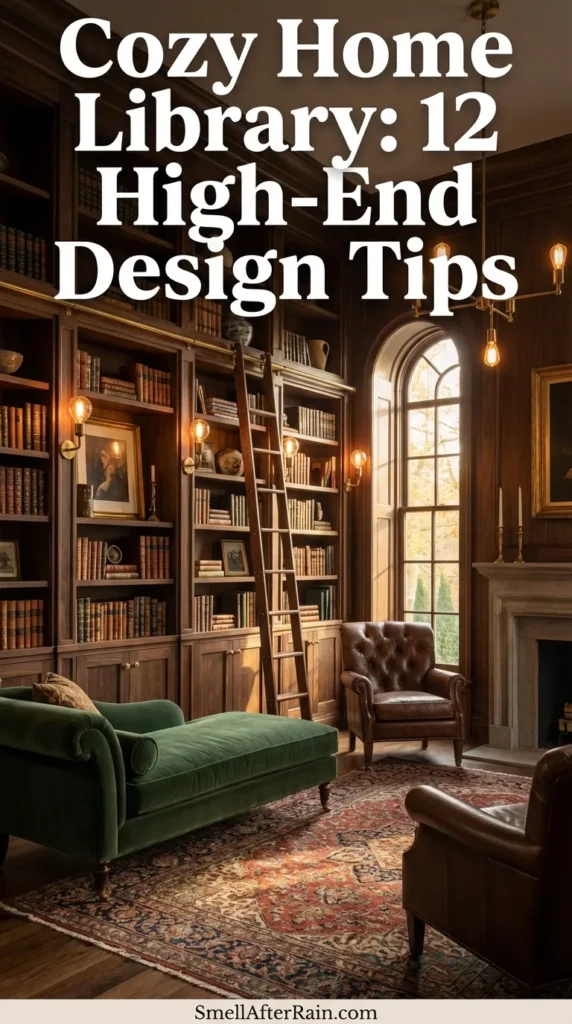
Psychological comfort is impossible without physical comfort. You cannot get lost in a book if your lower back aches. When exploring high-end design tips, ergonomics is often the differentiator between a pretty photo and a usable space.
Choose a chair that allows for multiple sitting positions—curling up, stretching out, or leaning back. An oversized armchair or a beanbag with structural support is ideal. Ensure you have a footrest; elevating the feet reduces heart strain and promotes relaxation. If you are building a window seat, ensure the foam is high-density (at least 4 inches thick) to prevent bottoming out during long reading sessions.
12. Reflective Illusions: Expanding the Magic
Mirrors are the magician’s best friend. In a compact book nook bedroom, mirrors can double the perceived amount of greenery and light. However, for a fairy aesthetic, avoid large, modern, frameless mirrors.
Use antique mirrors with slightly foxed (aged) glass. The imperfection adds character and softens the reflection, making it feel dreamlike. Positioning a small mirror behind a row of fairy lights or inside a bookshelf creates a “portal effect,” suggesting that the room continues into a hidden dimension beyond the wall.
13. The DIY Connection: The Ikea Effect
The “Ikea Effect” is a cognitive bias where people place a disproportionately high value on products they partially created themselves. Engaging in book nook ideas DIY projects deepens your emotional attachment to the space.
You don’t need to be a master carpenter. Simple projects like painting a thrifted shelf, pressing your own flowers for frames, or creating DIY booknooks (shelf inserts) from cardboard and clay can significantly boost your satisfaction. When you sit in the nook, you aren’t just consuming content; you are surrounded by your own creativity, which is deeply empowering.
Frequently Asked Questions
How do I make a book nook in a small room?
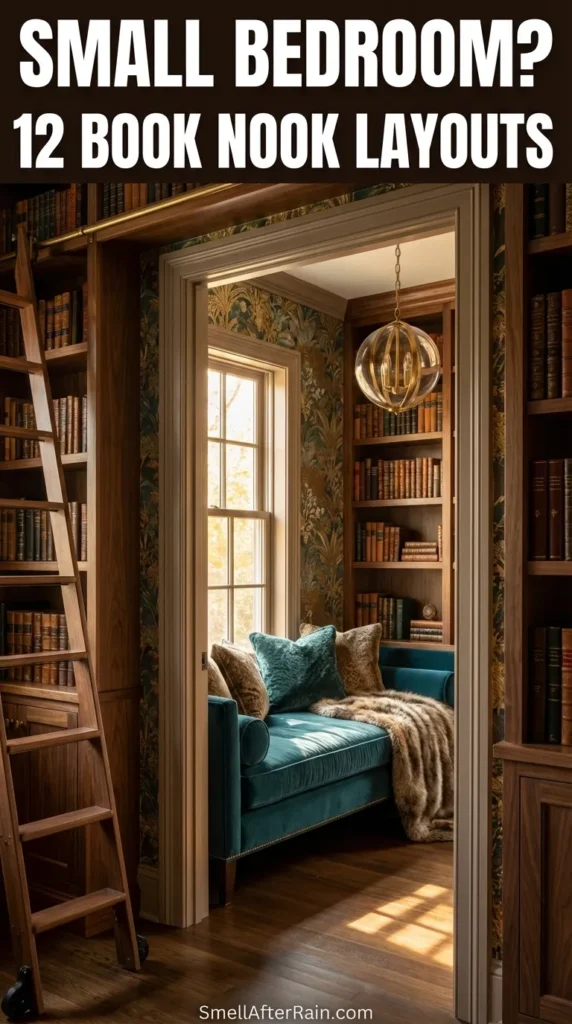
In small rooms, verticality is key. Utilize floating shelves to keep floor space clear. Transform a closet by removing the doors and installing a bench seat, or use a corner of the room with a canopy chair to create a “room within a room” without building walls. For layouts specifically designed for tight spaces, check our guide on small bedroom book nook layouts.
What materials do I need for a DIY book nook shelf insert?
For a basic DIY shelf insert, you will need a base structure (wood, heavy cardstock, or foam core), cutting tools (X-Acto knife), glue (PVA and superglue), and scenic materials like acrylic paint, dried moss, and miniature furniture. Battery-operated fairy lights are essential for the glowing effect. Many beginners start with pre-cut kits before designing their own from scratch.
What is the difference between cottagecore and fairycore for book nooks?
While both embrace nature, Cottagecore focuses on domestic rustic living (baking, gardening, gingham, farm life), whereas Fairycore emphasizes the magical, ethereal, and wild aspects of nature (butterflies, glitter, iridescent wings, moss, wild forests). A Cottagecore nook might have a patchwork quilt; a Fairycore nook will have sheer twinkling canopies and vine-covered shelves.
How can I light a book nook without an outlet?
Battery-operated LED puck lights and fairy lights are the standard solution. However, for a more polished look, look for rechargeable LED sconces that can be mounted magnetically. These allow you to have “hardwired” looking wall lamps that can be easily removed for charging, perfect for renters or awkward corners.
Are book nooks expensive to build?
They can range from free (rearranging existing furniture and using nature finds) to thousands of dollars (custom built-ins). The “Fairy” aesthetic is particularly budget-friendly because it celebrates eclectic, thrifted, and handmade items. Using foraged branches, second-hand books, and DIY crafts often produces a more authentic result than buying expensive new decor.
Conclusion
Creating a fairy book nook is more than a decorating project; it is an act of self-care. By understanding the psychology of safety, lighting, and sensory input, you can curate a space that not only houses your favorite stories but also protects your peace of mind. Whether you incorporate complex diy booknooks or simply drape a strand of lights over a velvet chair, the magic lies in the intention. For more inspiration on building your sanctuary, explore our full collection of ideas at Smell After Rain.