- 1. Assessing Space: From Dedicated Rooms to Library Nooks
- 2. The Psychology of Color: Mastering the Moody Home Library
- 3. Shelving Architecture: Built-ins vs. Free-standing Units
- 4. Lighting Layers: The Key to Visual Comfort
- 5. Seating Ergonomics: Choosing the Perfect Reading Chair
- 6. Verticality and Hardware: The Rolling Ladder Statement
- 7. Small Space Solutions: The Bedroom Library Layout
- 8. Aesthetic Themes: Old Money vs. Modern Minimalist
- 9. Acoustic Engineering: Rugs and Textiles
- 10. Organization Systems: Styling Your Spines
- 11. Biophilic Elements: Merging Plants with Pages
- 12. The Art of the Gallery Wall in Library Design
- 13. Preservation Science: Protecting Rare Editions
- 14. Whimsical Details: Adding Personality and Magic
- Frequently Asked Questions
In an era dominated by fleeting digital notifications and backlit screens, the resurgence of the physical book is more than a trend; it is a cultural movement toward mindfulness. The home library aesthetic represents a sanctuary for the mind, a tangible collection of knowledge, and a profound statement of personal identity. Whether you are converting a grand spare room or carving out a modest library nook in a hallway, the principles of design remain rooted in comfort, accessibility, and preservation.
Creating a dedicated reading space is not merely about stacking shelves. It requires a deep understanding of spatial dynamics, lighting temperatures, and material science. This ultimate encyclopedia of home library ideas will guide you through the architectural and stylistic decisions necessary to cultivate a space that rivals the world’s most famous athenaeums, scaled perfectly for your residence. If you are starting from scratch, consider this your blueprint for designing the ultimate cozy book nook home library.

1. Assessing Space: From Dedicated Rooms to Library Nooks
The first step in architectural planning is identifying the “real estate” available within your home. Historically, libraries were vast, cavernous rooms found only in manor houses. Today, the modern library room design is far more versatile. You do not need a ballroom; you need ingenuity.
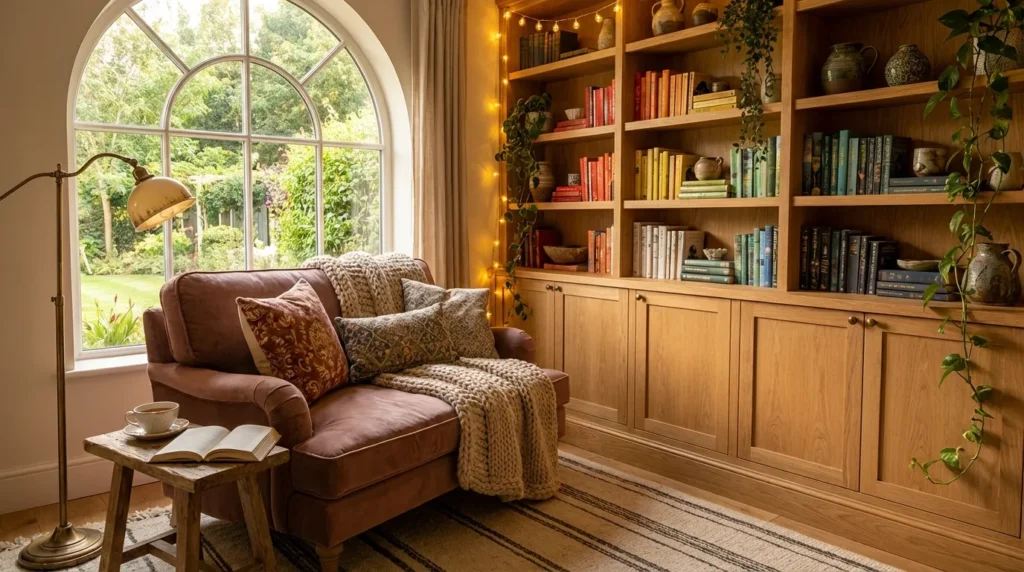
Start by auditing underutilized zones. A formal dining room that sees use twice a year is a prime candidate for a conversion. However, for those with limited square footage, the focus shifts to micro-environments. An awkward landing at the top of a staircase or the dead space beneath stairs can be transformed into a stunning literary retreat. When looking for inspiration on utilizing tight corners, exploring dreamy book nook ideas from cozy corners to magical shelf dioramas can reveal the potential of overlooked square footage.
2. The Psychology of Color: Mastering the Moody Home Library
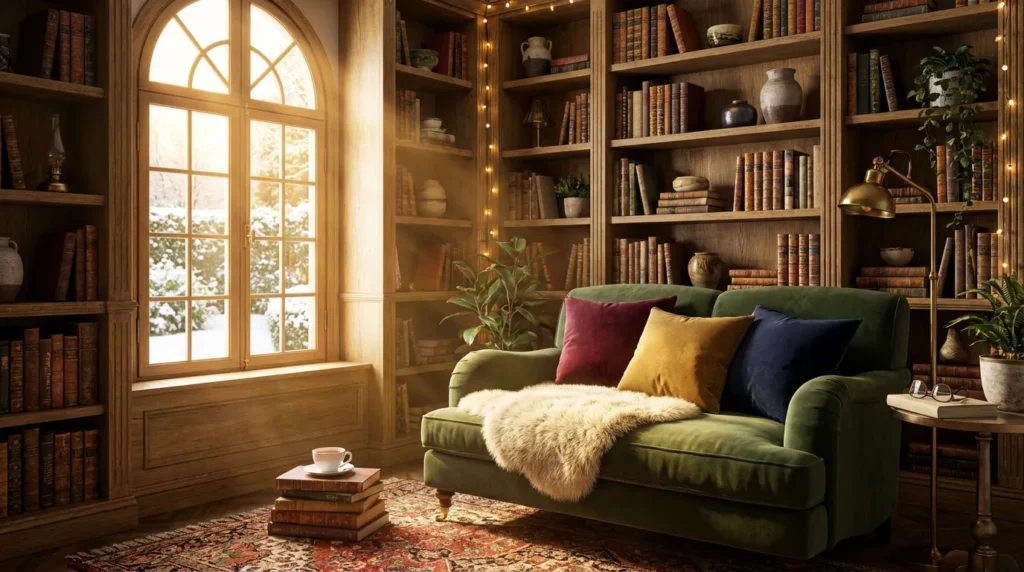
Color theory plays a pivotal role in how long one can comfortably remain in a room. While bright white spaces are excellent for high-energy tasks, a moody home library often benefits from darker, richer tones that envelop the reader. Deep forest greens, navys, charcoal grays, and oxblood reds reduce light bounce, allowing the eyes to focus on the page rather than the periphery.
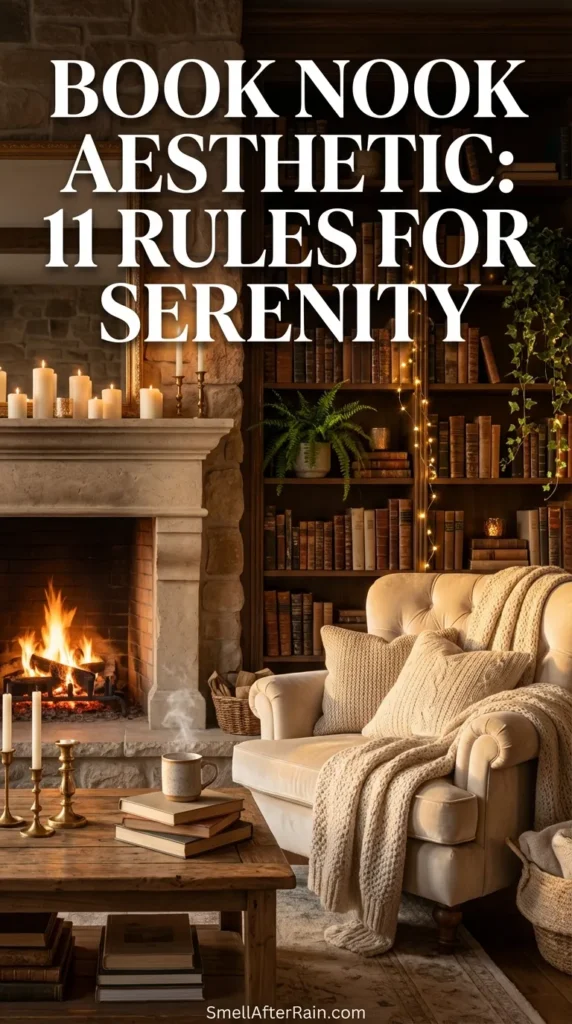
This aesthetic—often referred to as “Dark Academia”—evokes a sense of history and gravitas. Painting the ceiling the same color as the walls (color drenching) can make a small room feel infinite rather than cramped. However, if serenity is your goal over drama, lighter tones like sage or cashmere beige work beautifully. For a deeper dive into color psychology, review these 11 rules for serenity in book nook aesthetics.
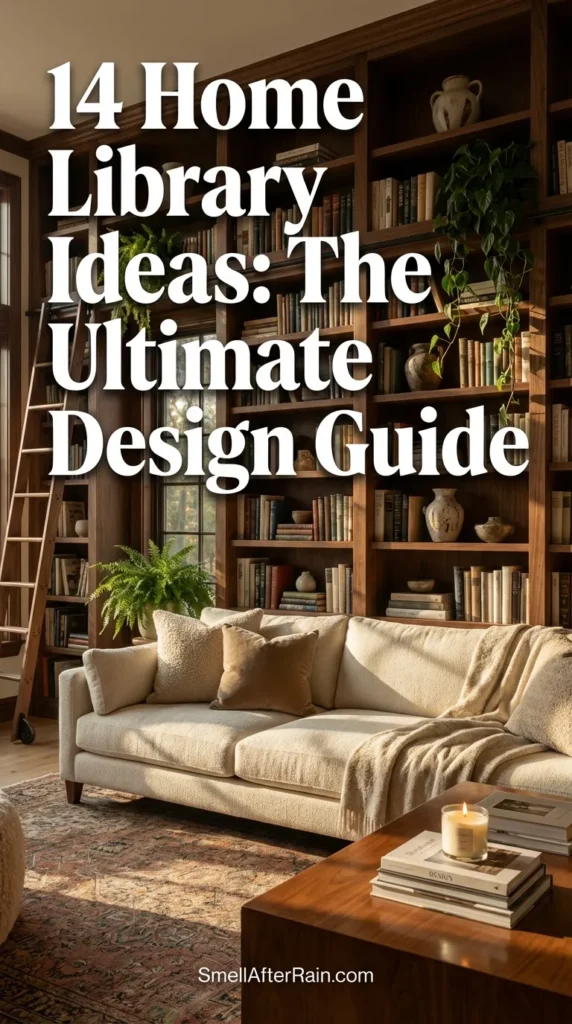
3. Shelving Architecture: Built-ins vs. Free-standing Units
The spine of any library is the shelving. The debate between custom built-in joinery and free-standing units is usually decided by budget and tenure. Built-ins add permanent value to a property and maximize vertical space, allowing for a seamless library wall that feels structural.
However, free-standing units offer flexibility. High-quality solid wood bookcases in oak or walnut provide warmth and durability. If opting for a DIY approach, reinforcing standard flat-pack bookcases with trim, crown molding, and a baseboard can mimic the look of custom cabinetry at a fraction of the cost. Ensure shelves are at least 10 to 12 inches deep to accommodate oversized art books.
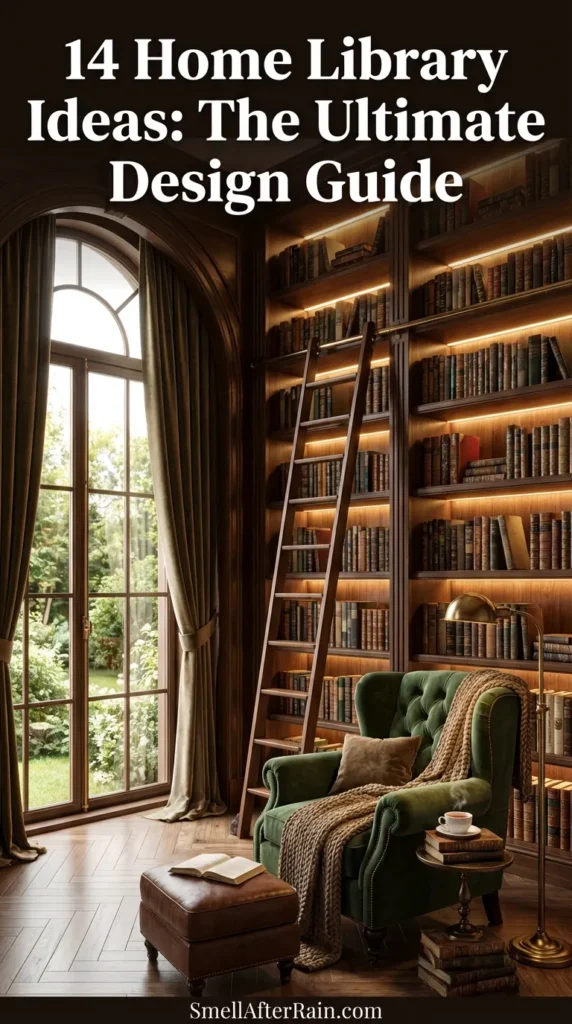
4. Lighting Layers: The Key to Visual Comfort
Lighting in a library serves two masters: the aesthetic and the functional. A single overhead fixture is insufficient and often creates glare. The gold standard for a reading room is a layered approach combining ambient, task, and accent lighting.
Ambient: Soft, dimmable overhead lighting or wall sconces that wash the room in a glow.
Task: A dedicated floor lamp or articulating sconce positioned near the armchair. The bulb temperature should be between 2700K and 3000K to prevent eye strain without being too clinical.
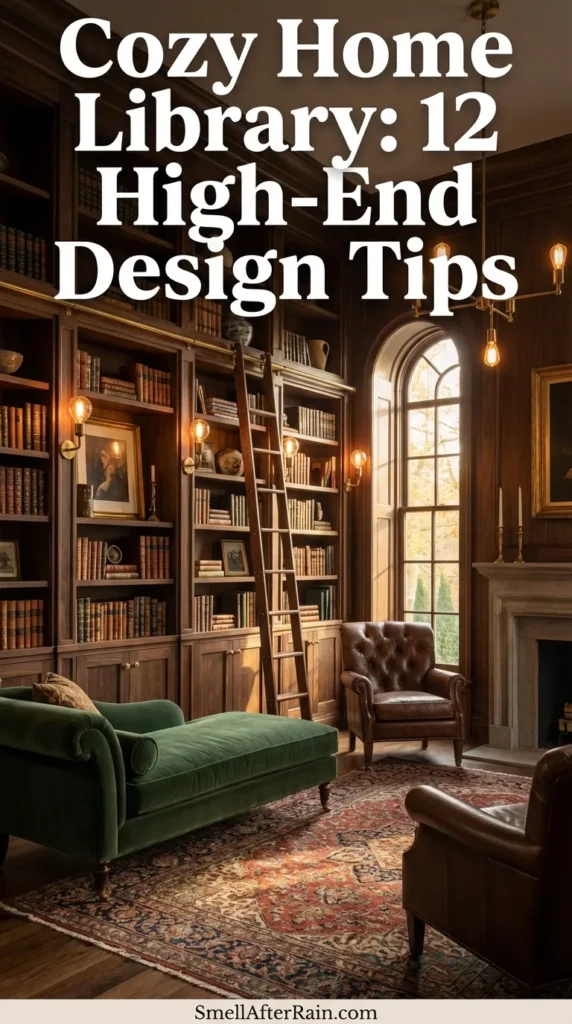
Accent: LED strip lighting hidden behind shelf lips or picture lights mounted on the bookcase header to highlight the collection. For specific luxury lighting setups, consult these 12 high-end design tips for a cozy home library.
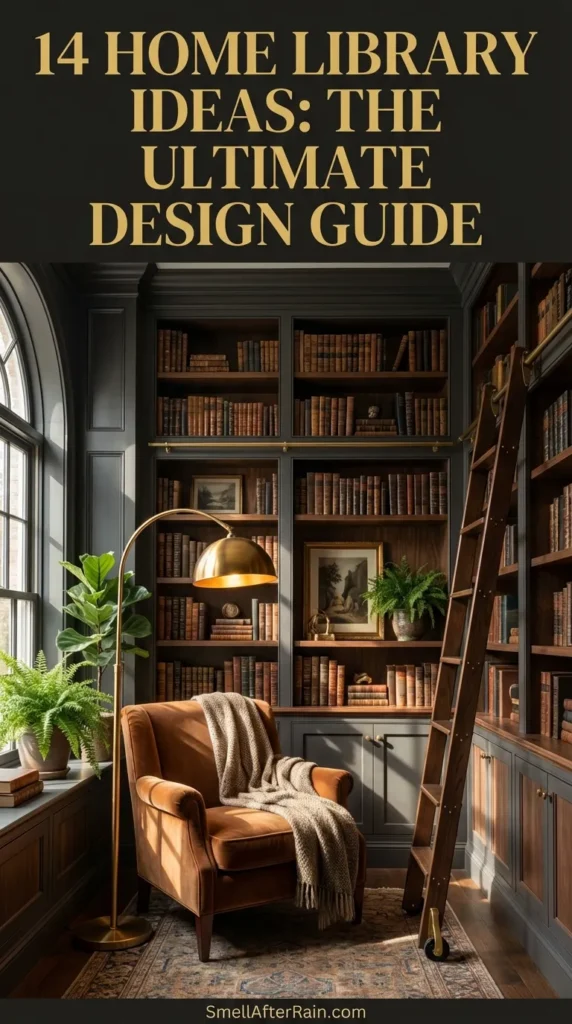
5. Seating Ergonomics: Choosing the Perfect Reading Chair
You cannot enjoy a book if your back aches after twenty minutes. The reading chair is the throne of the library. Material choice is paramount here; velvet offers tactile warmth, while worn leather provides a classic, cooler surface that ages beautifully.
Ergonomically, look for a chair with a high back to support the head and neck during long sessions. A matching ottoman is not a luxury; it is a necessity for circulation. The “sink-in” factor should be balanced—too soft, and you fall asleep; too hard, and you fidget. Allow for at least 3 feet of clearance around the chair to ensure the flow of the room is not impeded.
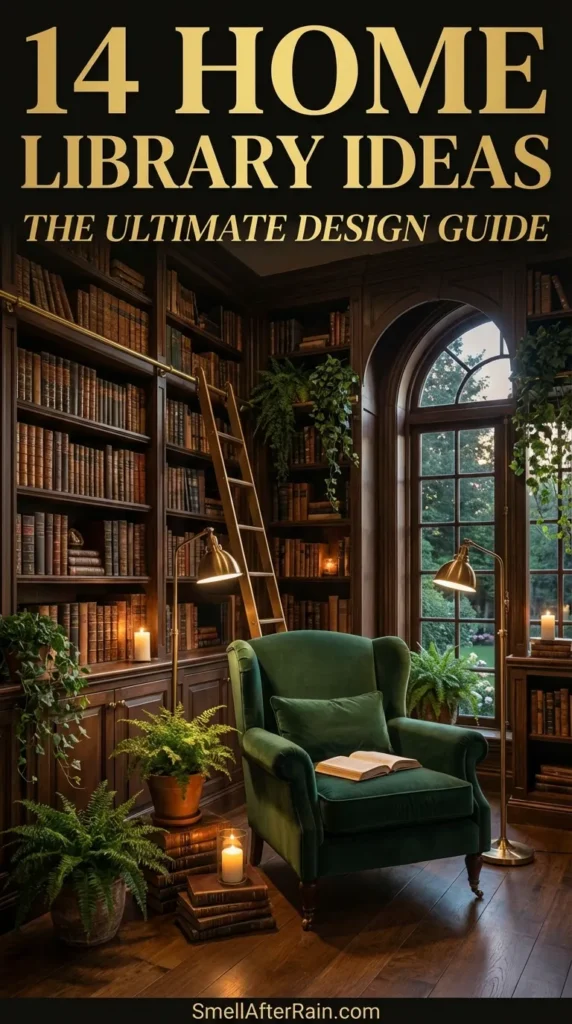
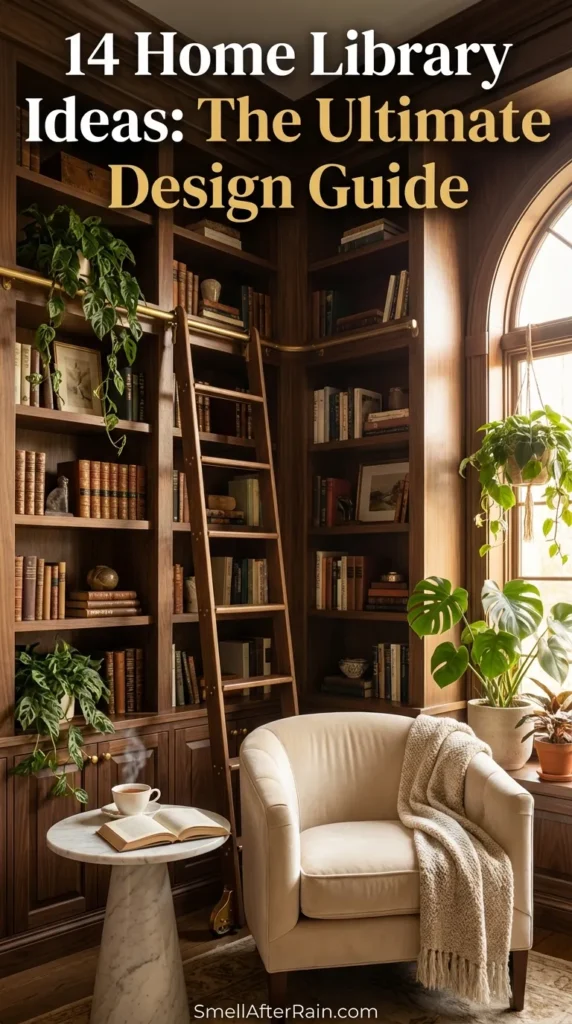
6. Verticality and Hardware: The Rolling Ladder Statement
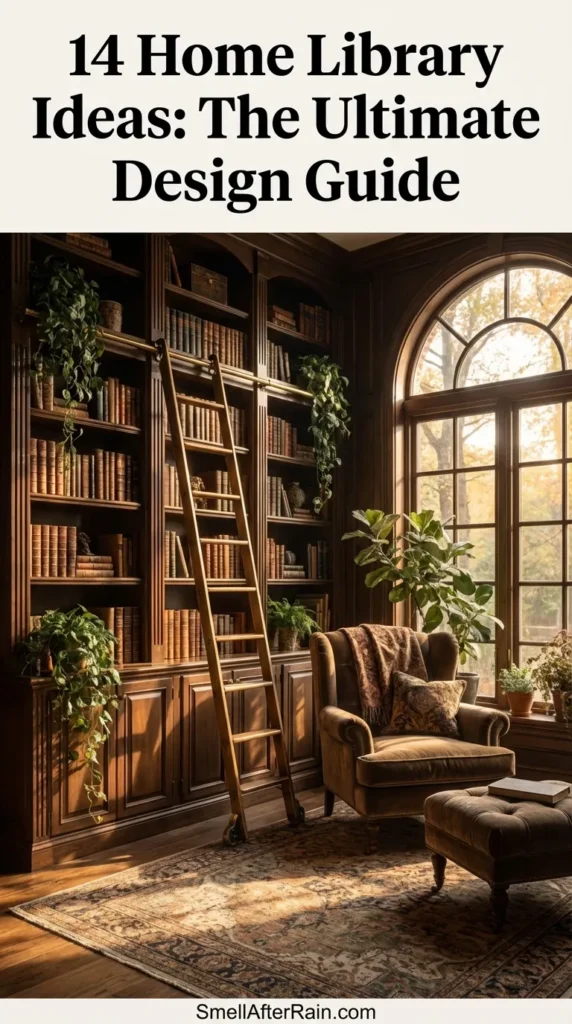
If your ceilings exceed nine feet, a rolling library ladder is the ultimate functional accessory. Aside from allowing access to high storage, it adds an undeniable kinetic energy to the design. Hardware finishes should coordinate with other metals in the room—unlacquered brass for a traditional feel, or matte black for a modern industrial vibe.
Installing a ladder requires a solid structural header to mount the rail. It transforms a static wall of books into an interactive apparatus, turning the act of selecting a book into an event.
7. Small Space Solutions: The Bedroom Library Layout
Small home libraries often reside within other rooms. The bedroom is a natural partner for a book collection, promoting a quiet routine before sleep. Using vertical piers on either side of the bed creates a “book nook” effect that frames the sleeping area.
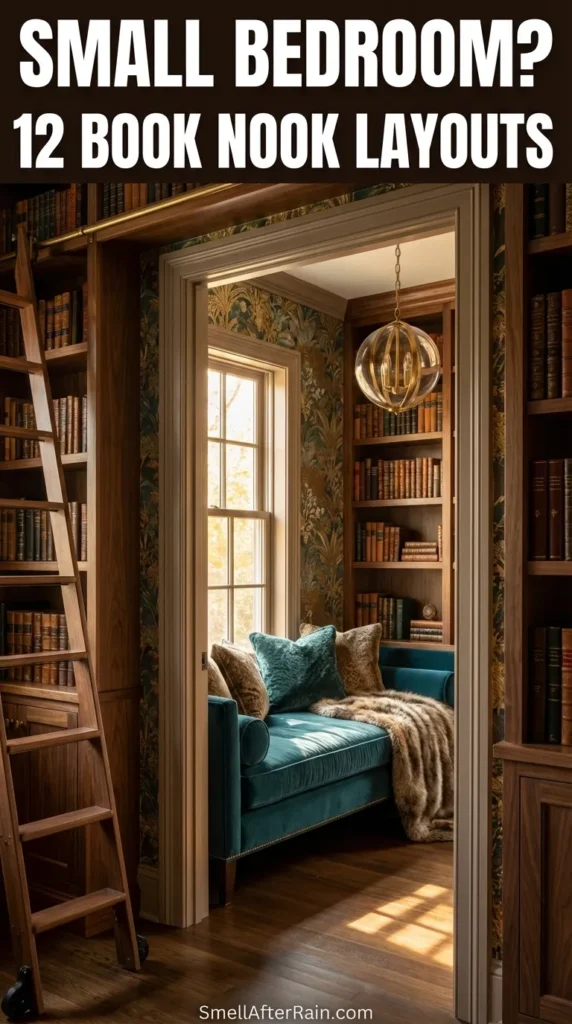
Another tactic is the window seat library—surrounding a window with shelving and placing a cushioned bench in the center. This maximizes natural light and storage simultaneously. For detailed floor plans on integrating books into sleeping quarters, examine 12 book nook layouts for small bedrooms.
8. Aesthetic Themes: Old Money vs. Modern Minimalist
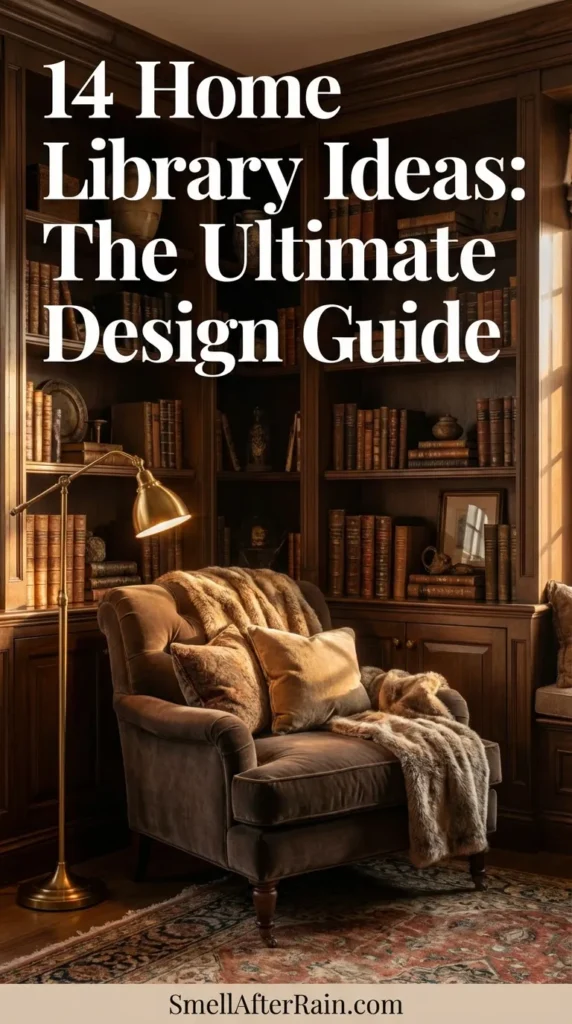
Defining your style early prevents a chaotic result. The “Old Money” aesthetic relies on heritage materials: mahogany, brass, tartan, and oriental rugs. It is cluttered in a curated way, suggesting a collection amassed over generations. If this level of sophistication appeals to you, these 9 luxe small book nook ideas for old money style are essential reading.
Conversely, a Modern Minimalist library focuses on negative space. Books might be arranged by color (controversial but visually striking) or turned spine-in for a neutral palette. Shelving is often open, metal, or floating, and the furniture lines are sleek and low-profile.
9. Acoustic Engineering: Rugs and Textiles
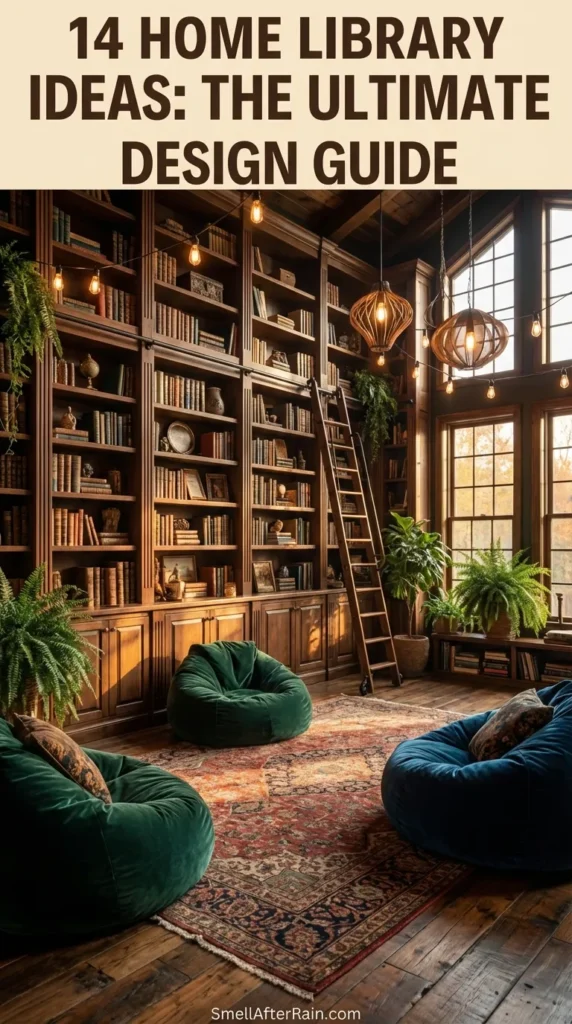
Hard surfaces bounce sound, creating echoes that are distracting when trying to concentrate. A true library should feel hushed. This is achieved through soft furnishings. A thick wool or silk area rug is mandatory to anchor the room and dampen footfall.
Heavy drapes—velvet or heavy linen—also assist in sound absorption while protecting book spines from UV damage. Upholstered walls or acoustic panels hidden behind art can further soundproof the room if it borders a noisy household area.
10. Organization Systems: Styling Your Spines
How you organize your books dictates the visual texture of the library.
- The Dewey Decimal/Genre Method: Practical for large collections but can look visually chaotic due to varying spine colors and heights.
- The Rainbow Method: Sorting by color creates a stunning visual gradient but makes finding specific titles difficult.
- The Minimalist Method: Wrapping books in uniform paper or vellum for a monochromatic look.
Regardless of the system, leave 10-15% of shelf space empty. This “breathing room” prevents the library wall from looking overstuffed and allows for future acquisitions.
11. Biophilic Elements: Merging Plants with Pages
Integrating plants into home library decor brings life to the static nature of paper and wood. Pothos and philodendrons trailing from high shelves soften the rigid grid of bookcases. The humidity from plants must be monitored, but generally, the air quality benefits outweigh the risks.
Biophilic design reduces stress and increases cognitive function—ideal for a reading environment. Ensure planters are water-tight to avoid damaging wooden shelves or books.
12. The Art of the Gallery Wall in Library Design
A library is not just for books; it is a museum of the self. Interrupting rows of books with hung art creates visual rest stops. You can mount art directly onto the bookshelves (on the vertical dividers) or style framed pieces leaning on the shelves themselves.
Maps, botanical prints, and literary portraits suit the theme well. Mixing sculpture, pottery, and personal mementos amongst the books adds depth and prevents the space from looking like a bookstore.
13. Preservation Science: Protecting Rare Editions
If your collection includes first editions or antique manuscripts, environmental control is critical. Direct sunlight is the enemy; UV rays bleach covers and embrittle paper. Install UV-blocking window film or keep valuable books in glass-fronted cabinets.
Humidity control is also vital. Ideally, a library should maintain a relative humidity of 40-50%. Too dry, and bindings crack; too damp, and mold (foxing) sets in. Avoid placing bookshelves on external walls in older homes where dampness might transfer, or ensure there is an air gap behind the unit.
14. Whimsical Details: Adding Personality and Magic
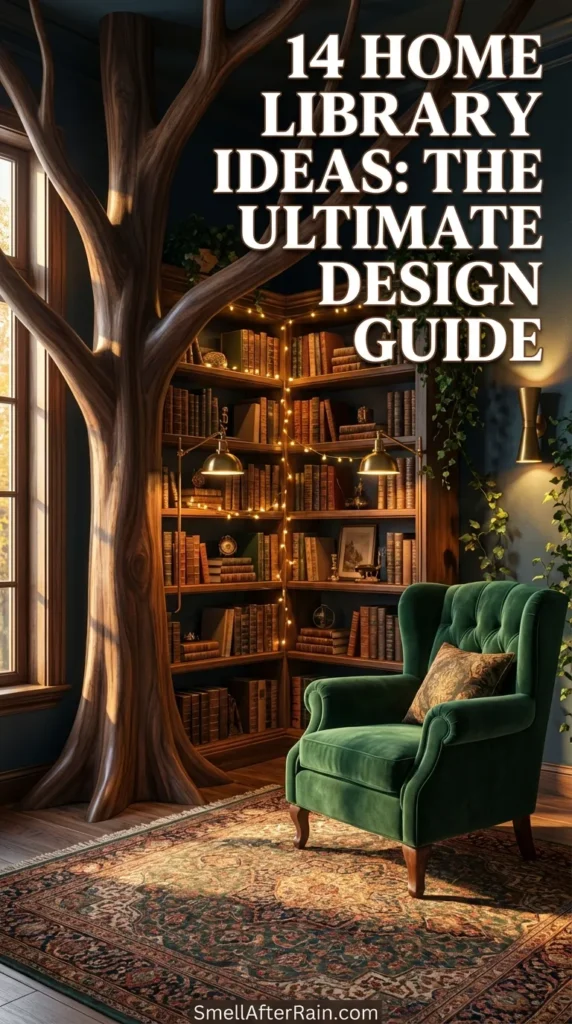
Finally, a home library should inspire wonder. This is the place to incorporate elements that might feel out of place in a formal living room. A hidden door disguised as a bookcase, a tiny diorama tucked between novels, or a vintage globe bar.
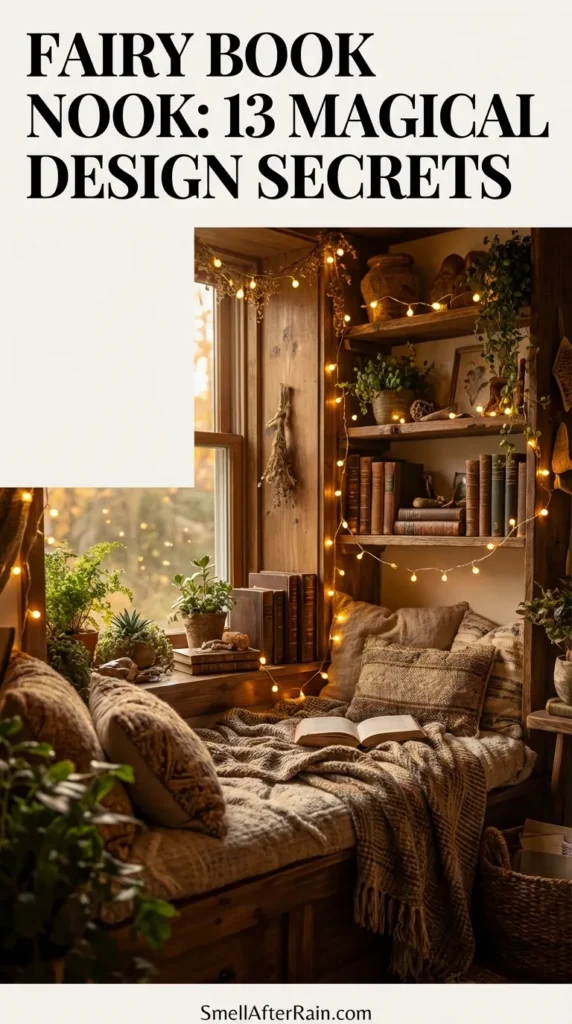
For those who love fantasy, creating a space that feels removed from reality is the ultimate goal. You can find inspiration for these ethereal touches in these 13 magical design secrets for a fairy book nook. These details transform a room from a storage space into a portal.
Frequently Asked Questions
1. How deep should shelves be for a home library?
Standard book depth requires shelves to be at least 10 to 12 inches deep. However, for art books, coffee table books, or to allow for decorative layering (placing items in front of books), a depth of 14 to 15 inches is recommended. Always measure your largest books before committing to a build.
2. What is the best lighting for reading without eye strain?
The ideal color temperature for reading is warm white, between 2700K and 3000K. This range mimics the warmth of incandescent bulbs and is relaxing for the eyes. Avoid cool white or daylight bulbs (4000K-5000K) in the evening, as the blue light content can disrupt sleep cycles.
3. Can I build a home library in a small apartment?
Absolutely. Small home libraries thrive on verticality. Utilize floor-to-ceiling shelving to draw the eye up. Corridors, corners, and even the space above door frames are excellent locations for shelves. Floating shelves can also create a library feel without the footprint of heavy bookcases.
4. How do I style bookshelves so they don’t look messy?
The rule of thirds is helpful: one-third books, one-third decor (vases, sculpture), and one-third empty space. Vary the orientation of books—stack some horizontally and line others vertically. This variation creates visual rhythm and prevents the “wall of text” effect.
5. What is the best wood for library shelving?
Hardwoods are superior for longevity and weight-bearing capacity. Oak, walnut, and maple are top choices due to their resistance to sagging. Pine is a softer, more affordable option but may bow under the weight of heavy books over time unless the shelves are thick or short in span.
For more inspiration on creating your perfect literary escape, explore the resources at Smell After Rain and browse their extensive gallery of book nook ideas.