- 1. The Architectural Alcove: Custom Millwork Mastery
- 2. The Closet-to-Library Conversion: A Jewel Box Approach
- 3. The Bedroom Bay Window: Upholstery & Tufting Secrets
- 4. The Integrated Bookshelf Nook: Negative Space Design
- 5. Lighting as Jewelry: Brass Sconces & Color Temperature
- 6. Old Money Textures: Layering Velvet, Leather & Mohair
- 7. The Vertical Library: Library Ladders in Small Footprints
- 8. The Hidden Sanctuary: Secret Doors & Joinery
- 9. Curated Shelf Styling: The Art of Anti-Clutter
- Frequently Asked Questions
- Conclusion
In the world of high-end interior design, true luxury is often defined not by the grandeur of a ballroom, but by the intimacy of a private sanctuary. The concept of the reading corner has evolved. We are moving away from makeshift beanbags and towards the “Old Money” aesthetic—spaces that feel established, inherited, and deeply intentional. A well-designed home library, no matter how small, adds a layer of sophistication and significant property value to a residence.
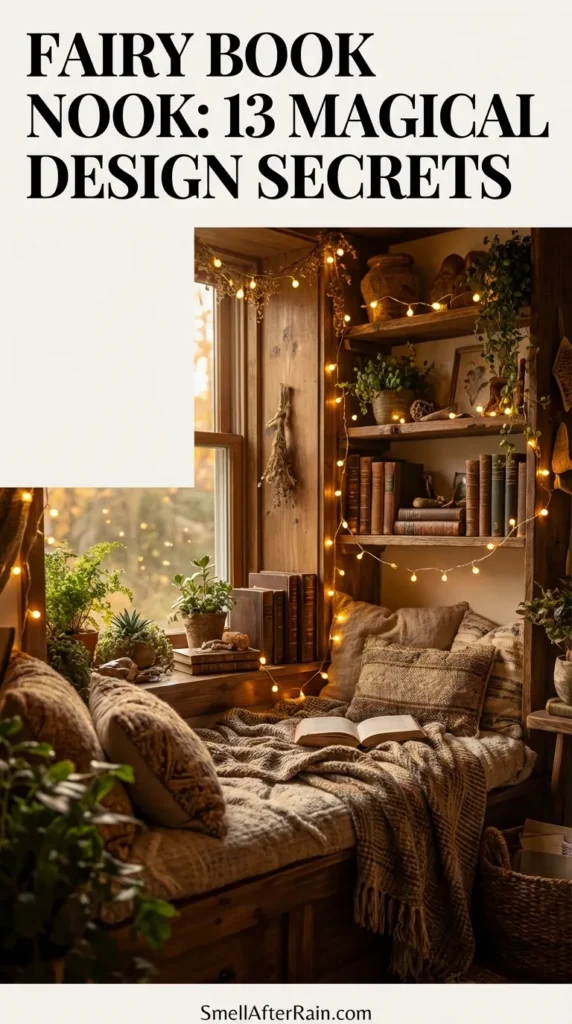
Whether you are working with a Tiny Reading Nook under a staircase or reimagining a spare wardrobe, the principles of classical architecture and material integrity remain paramount. This guide will walk you through nine transformative concepts to elevate your Book Nook Aesthetic from simple to sublime, ensuring your space rivals the most prestigious private clubs.

1. The Architectural Alcove: Custom Millwork Mastery
The difference between a generic reading spot and a high-value architectural feature lies entirely in the joinery. For a truly high-end look, standard drywall alcoves are insufficient. You must embrace custom millwork. The goal is to make the nook look as though it was part of the original blueprints of the house, dating back a century.
Focus on wainscoting and crown molding. If you have an awkward recess in your living room, do not simply place a chair there. Encase the walls in rich walnut or oak paneling. This technique, often found in Book Nooks Cozy Home Libraries of the Gilded Age, instantly grounds the space. For a more contemporary yet classic twist, consider painting the millwork in a deep, moody hue—Hunter Green, Navy Blue, or Charcoal—in a high-gloss lacquer finish. This reflects light and adds depth, making a small footprint feel like a precious jewel box.
When considering Book Nook Ideas Diy, elevate the project by sourcing pre-fabricated architectural trim that mimics bespoke carpentry. The application of baseboards and distinct architraves around the opening frames the reader, turning the act of reading into a performance of leisure.

2. The Closet-to-Library Conversion: A Jewel Box Approach
Perhaps the most underutilized real estate in modern homes is the spare closet. Transforming a Book Nook Closet is a favorite trick of interior architects to maximize square footage without expanding the home’s footprint. However, the execution must be flawless to avoid it looking like, well, a closet with a chair in it.
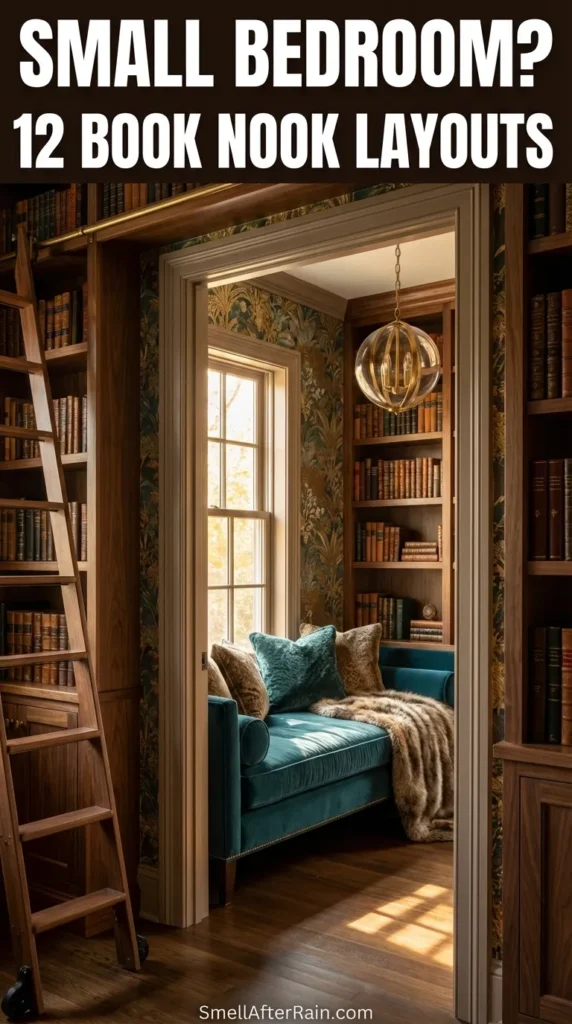
Remove the door completely and finish the doorframe with substantial molding. Inside, the strategy is “envelopment.” Wallpaper the ceiling and all three walls in a textured grasscloth or a William Morris print. This creates an immersive experience the moment you step across the threshold. For the seating, a built-in bench with a lift-top (for storage) is practical, but ensure the cushion is at least 4 inches thick and wrapped in performance velvet.
This Closet Book Nook transformation relies heavily on verticality. Install shelves all the way to the ceiling to draw the eye upward. This is also an excellent place to integrate dreamy book nook ideas, such as brass gallery rails on the shelves to prevent books from tipping while adding a metallic accent that screams luxury.

3. The Bedroom Bay Window: Upholstery & Tufting Secrets
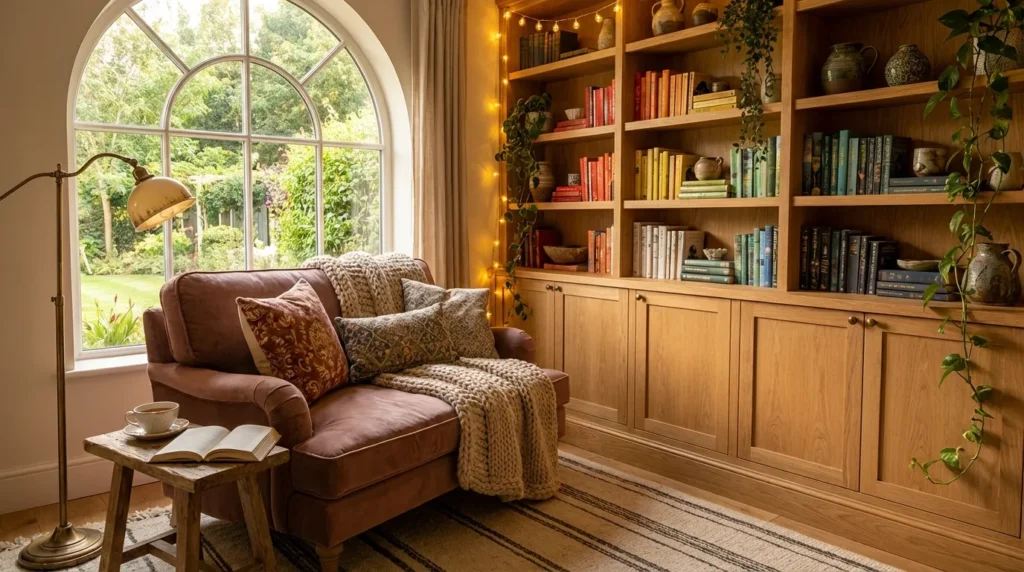
A Book Nook Bedroom setup is quintessential for the “Old Money” vibe. It suggests a lifestyle where one has the time to lounge in a robe and read before starting the day. If you are blessed with a bay window, you have the natural structure for a Tiny Reading Nook.
The key here is upholstery. A thin foam pad is the enemy of luxury. You want a seat cushion that mimics a high-end sofa—wrapped in down feathers for that “sink-in” feeling. Deep button tufting is a hallmark of Chesterfield elegance and should be utilized here. Choose fabrics that age well: linen for coastal properties, or cognac leather for a city apartment.
To further the layout design, flank the window seat with built-in bookcases that bridge the gap between the window and the rest of the room. This makes the nook feel integrated rather than tacked on. Ensure you have heavy, lined drapes that can close off the world, creating a cocoon of silence perfect for literature.

4. The Integrated Bookshelf Nook: Negative Space Design
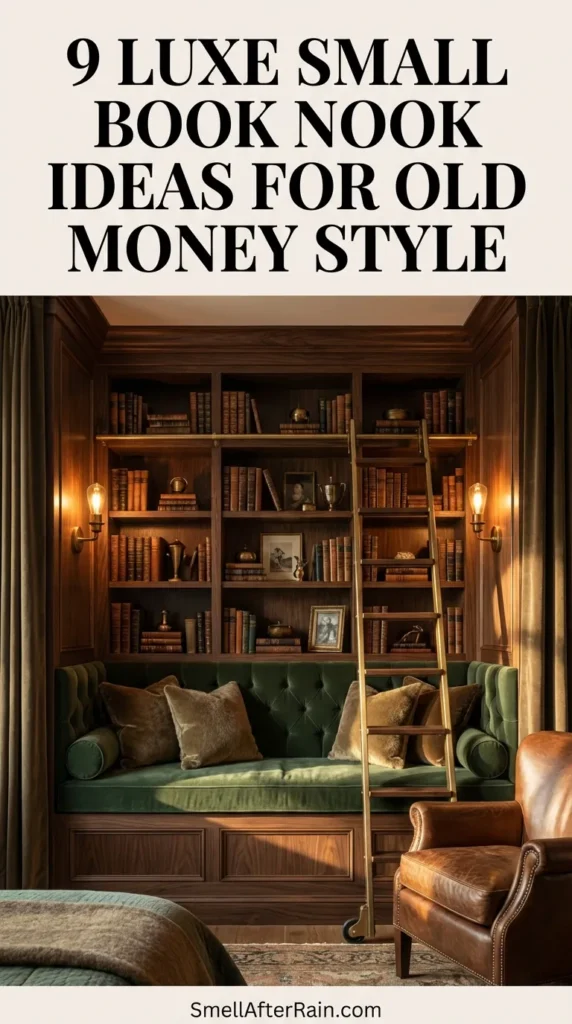
A Bookshelf Reading Nook is where the seating is carved out of a wall of books. This is a dramatic architectural statement. Imagine a floor-to-ceiling library wall where a circle or rectangle is omitted in the center to house a daybed.
This design requires robust structural planning. The shelves above the seating area must be properly supported. To elevate this look, line the inside of the seating niche with a contrasting material, such as shiplap (for a nautical look) or padded upholstered panels (for sound dampening and luxury). This serves as a headboard, allowing you to lean back comfortably.
Integrating high-end design tips, such as recessed lighting within the shelves themselves, transforms the books into a texture. This is not just storage; it is a display of intellectual curiosity.
5. Lighting as Jewelry: Brass Sconces & Color Temperature
Lighting is the jewelry of the home. In a small space, you cannot rely on overhead “boob lights” or harsh LEDs. For a sophisticated Book Nook Aesthetic, you need layers of light.
First, the hardware: Unlacquered brass is the gold standard for the “Old Money” look. It develops a patina over time that feels organic and historical. Articulating sconces (swing-arm lamps) are essential for a reading nook as they allow you to direct light exactly where it is needed without taking up table space.
Second, the color temperature: You must strictly use bulbs between 2700K and 3000K. This warm, yellow-hued light mimics candlelight and sunset, promoting relaxation. Anything cooler (4000K+) will make your library feel like a hospital or a pharmacy. See our guide on rules for serenity to master the mood of your nook.

6. Old Money Textures: Layering Velvet, Leather & Mohair
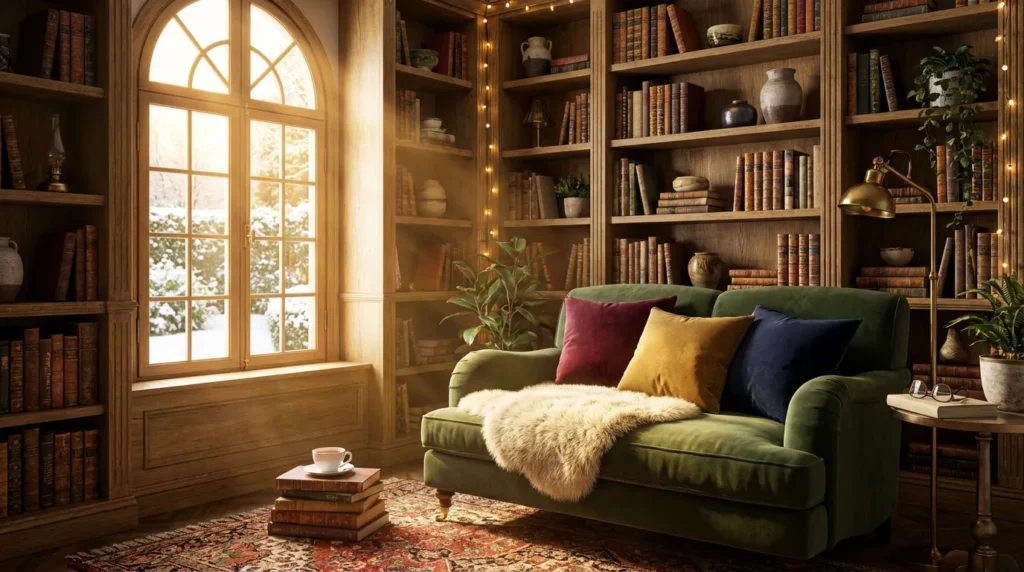
Texture communicates quality more than color does. A monochromatic beige room can look cheap or expensive depending entirely on the materials used. For your Diy Reading Nook styling, invest in “heirloom fabrics.”
- Mohair: Extremely durable and has a beautiful sheen that catches the light. A mohair throw is a staple of English country house style.
- Aged Leather: Avoid pristine, shiny leather. Look for hides that have some distress or grain. This adds character.
- Boucle or Wool: Adds softness and warmth, essential for those cold winter reading sessions.
Do not be afraid to mix patterns. A tartan plaid pillow on a velvet seat is a classic combination. The goal is to create a space that feels collected over generations, not purchased from a catalog in a single day.

7. The Vertical Library: Library Ladders in Small Footprints
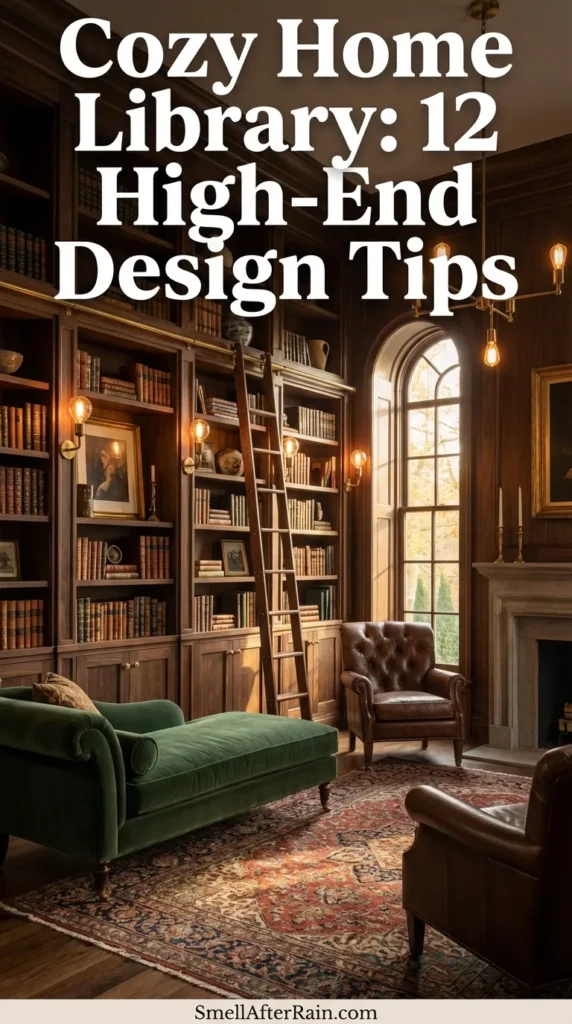
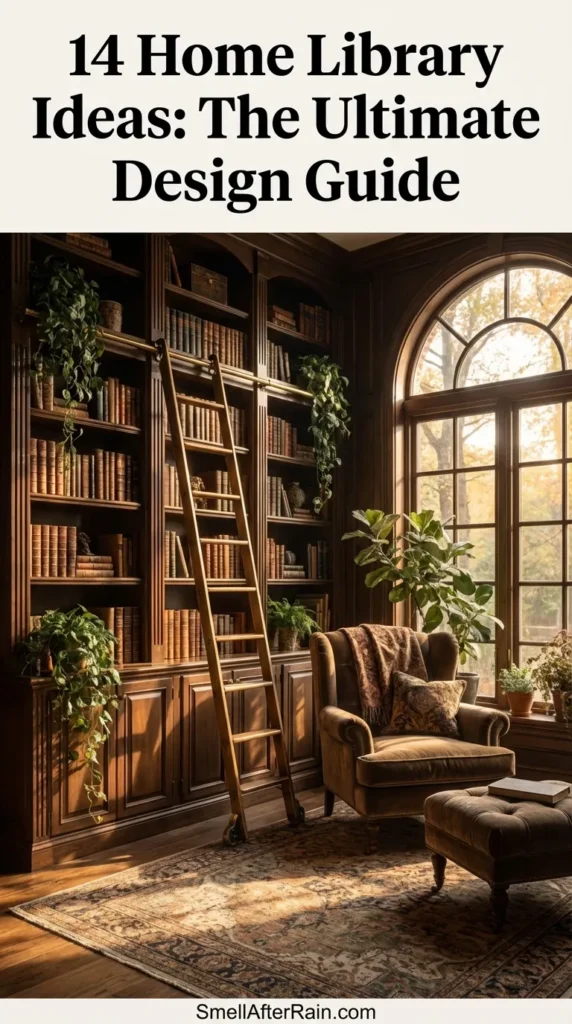
Even a small wall can have grandeur if you utilize its full height. If your ceilings are 9 feet or higher, extending your shelving to the very top is a non-negotiable design rule. However, accessing those top shelves requires a solution that screams luxury: the library ladder.
A rolling ladder with brass hardware is the ultimate symbol of a serious home library. It suggests that your collection is vast and valuable. Even if the horizontal footprint of your nook is only 4 feet wide, a ladder draws the eye upward, making the room feel significantly larger.
For Diy Booknooks, there are kits available, but ensure the rail is solid metal and the wood matches your shelving perfectly. A mismatch here ruins the illusion of custom joinery.

8. The Hidden Sanctuary: Secret Doors & Joinery
Nothing captivates the imagination quite like a hidden room. In high-end design, “jib doors” or bookcase doors are used to conceal private retreats. If you have a walk-in closet or a small study off a main room, consider disguising the entrance with a bookshelf door.
This adds an element of exclusivity and privacy. The mechanism must be heavy-duty to support the weight of books. When closed, the joinery should align perfectly so the door disappears. Inside this hidden Tiny Reading Nook, you can be bolder with design—perhaps a dark, cocooning paint color on the ceiling and walls to separate it from the rest of the house.
This concept borrows from the whimsy of magical design secrets but executes them with adult sophistication and architectural rigor.

9. Curated Shelf Styling: The Art of Anti-Clutter
Finally, the way you dress your shelves dictates the vibe. A cluttered shelf looks messy; a curated shelf looks expensive. The “Old Money” aesthetic values negative space and meaningful objects.
Do not pack every inch with paperbacks. Alternate stacks of books (some vertical, some horizontal) with sculptural objects—bronze busts, antique clocks, or framed sketches. Use bookends that are heavy and substantial, such as marble or petrified wood.
Consider the color palette of the spines. While color-coordinating books can sometimes look controversial, removing the dust jackets to reveal the cloth binding often provides a more muted, textural, and cohesive look suitable for Book Nook Ideas Diy styling. For more inspiration on organizing your collection, explore our comprehensive book nook archives.

Frequently Asked Questions
1. How can I make a DIY reading nook look expensive?
The secret is in the trim and the lighting. Add chunky baseboards and crown molding to standard bookshelves to make them look built-in. Swap out battery-operated puck lights for hardwired brass sconces or high-quality plug-in fixtures with cord covers. Use paint in a matte or high-gloss finish (avoid eggshell) to mimic professional lacquer.
2. What is the minimum size for a comfortable book nook?
At a minimum, you need a space that is about 30 inches deep and 40 inches wide to accommodate a comfortable chair and a small side table for tea or coffee. If you are building a window seat, a depth of at least 24 inches is recommended for lounging.
3. How do I choose the right chair for a small corner?
Focus on scale. A massive recliner will swallow a small corner. Look for “slipper chairs” or “club chairs” with a smaller footprint but deep seats. Ensure the back is high enough to support your head, or add a lumbar pillow for comfort.
4. Can I build a book nook in a rental apartment?
Absolutely. Focus on freestanding modular shelving that mimics built-ins. Use tension-rod curtains to create softness and separation. Invest in high-quality furniture (the chair, the lamp) that you can take with you when you move, rather than investing in permanent wall structures.
5. What are the best colors for a cozy reading nook?
For a cozy, enveloping feel, dark colors are superior. Navy blue, forest green, charcoal, and burgundy contract the space visually, making it feel like a warm hug. If you prefer light colors, stick to warm creams and taupes rather than stark white, which can feel clinical.
Conclusion
Creating a Small Book Nook that exudes luxury is less about the size of the space and more about the thoughtfulness of the design. By employing architectural details, investing in genuine materials like brass and velvet, and prioritizing warm, layered lighting, you can transform an unused corner into the most valuable seat in the house. It is about creating a pause in your day—a dedicated space for the mind to wander, surrounded by the comfort of Old Money elegance.