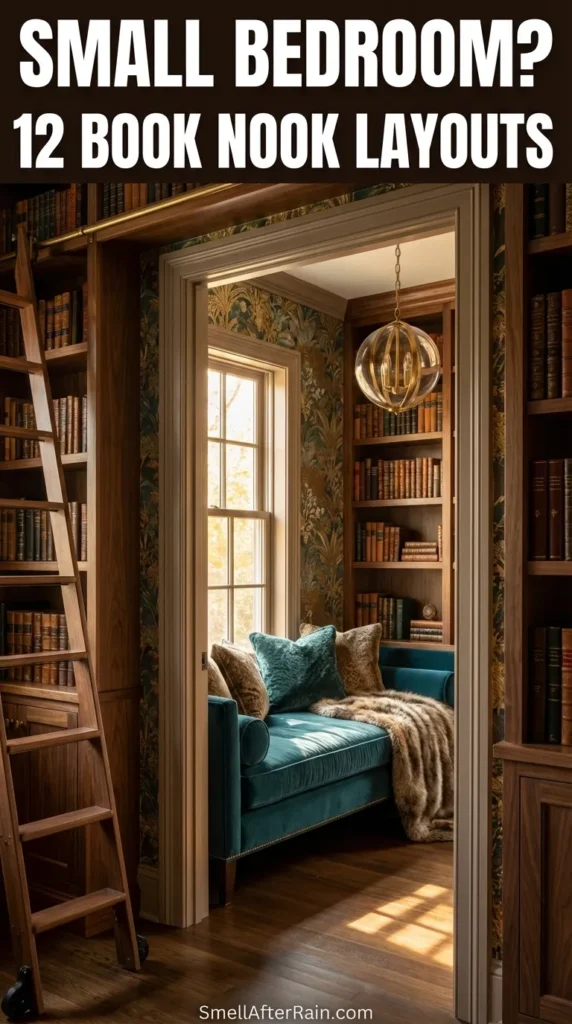
- 1. The Architectural Closet Conversion
- 2. Vertical Expansion with Floor-to-Ceiling Joinery
- 3. The Window Seat: Bridging Indoors and Out
- 4. The Floating Corner: Maximizing Negative Space
- 5. The Headboard Library: Dual-Function Zoning
- 6. Lofted Reading Platforms: Creating Vertical Rooms
- 7. Alcove Architecture and Structural Framing
- 8. Lighting Layering: The Lumen Architecture
- 9. Textural Zoning: Defining Space Without Walls
- 10. The Transitional Passageway Nook
- 11. Visual Weight Management with Acrylics
- 12. Acoustic Isolation for Deep Focus
- Frequently Asked Questions
- Conclusion
The modern bedroom is no longer just a place for sleep; it is a sanctuary for restoration. For the bibliophile, restoration is inextricably linked to the written word. However, integrating a robust library into a sleeping quarter—especially one with limited square footage—requires more than just shoving a Billy bookcase into a corner. It requires a spatial architect’s eye.
To create a truly cohesive Book Nook Bedroom, we must look beyond decoration and focus on flow, verticality, and multi-functional utility. We aren’t just decorating; we are engineering space. Whether you are craving a tiny reading nook tucked away from the world or a cozy book room vibe within your master suite, the layout is paramount.
Below, we dissect 12 architectural strategies to seamlessly blend literary storage with rest, ensuring your bedroom remains a calm oasis while housing your beloved collection. By applying principles of visual expansion and ergonomic design, we can transform even the tightest quarters into high-end literary retreats.
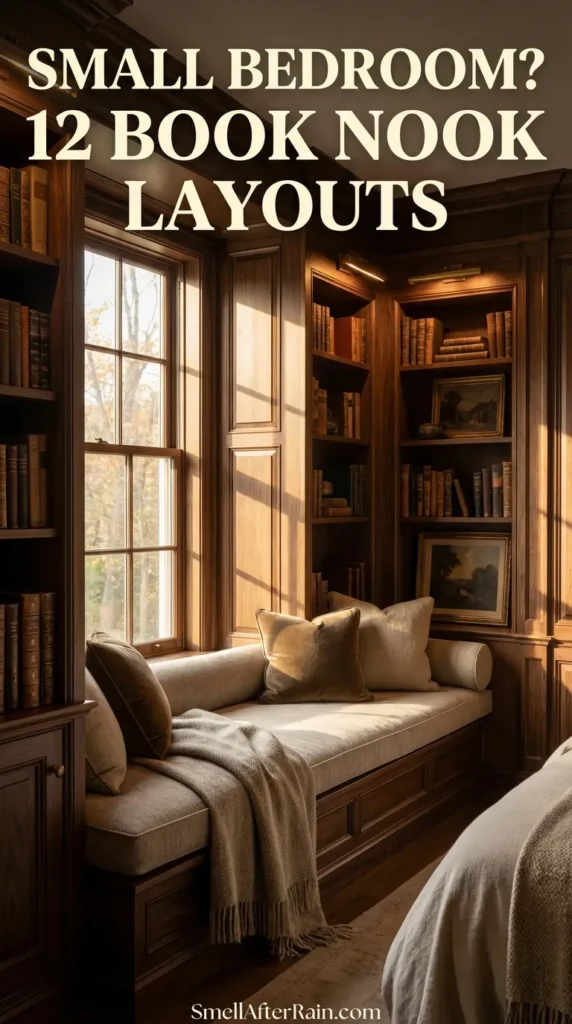
1. The Architectural Closet Conversion
One of the most underutilized assets in a small bedroom is the standard reach-in closet. Often, these spaces are inefficiently designed for clothing, becoming clutter catch-alls. By removing the doors and treating the closet as an intentional architectural alcove, you can create a dedicated Closet Book Nook.
Structural Modifications
Start by removing the header if possible to raise the visual height, or simply remove the bi-fold doors. Install a built-in bench at 18 inches high—the standard ergonomic height for seating. The space beneath the bench becomes deep storage for seasonal bedding, while the vertical space above is fitted with shelving.
Lighting the Cave
Closets are notoriously dark. Hardwire a recessed can light or install high-CRI LED strip lighting along the shelf edges. This turns the nook into a focal point rather than a dark hole. For more on structuring these spaces, read about designing the ultimate cozy book nook home library.
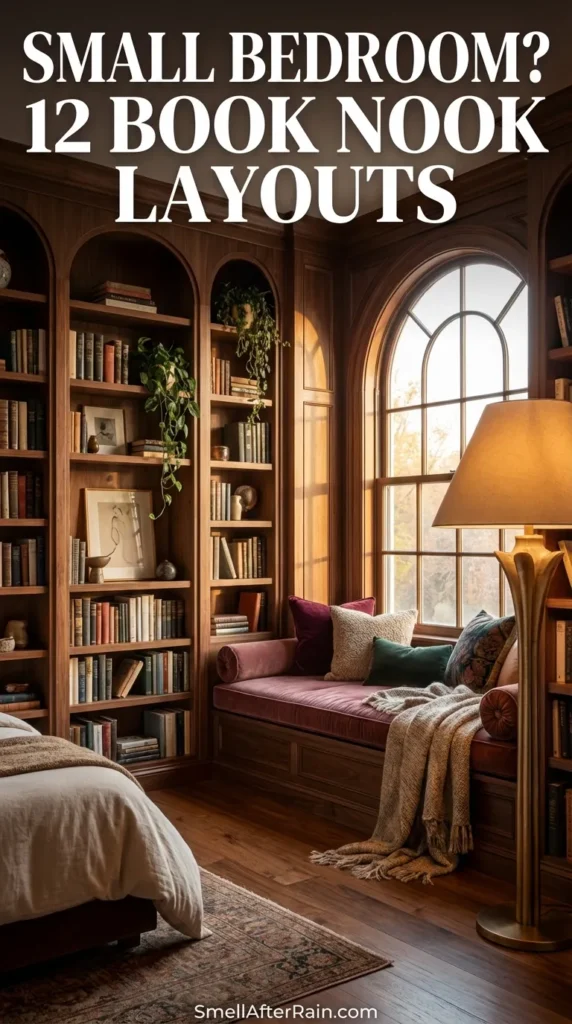
2. Vertical Expansion with Floor-to-Ceiling Joinery
In spatial architecture, when you cannot build out, you must build up. Small Book Nook Ideas often fail because they use low furniture that chops the room in half visually. Floor-to-ceiling shelving draws the eye upward, tricking the brain into perceiving the ceiling as higher than it is.
The Ladder Effect
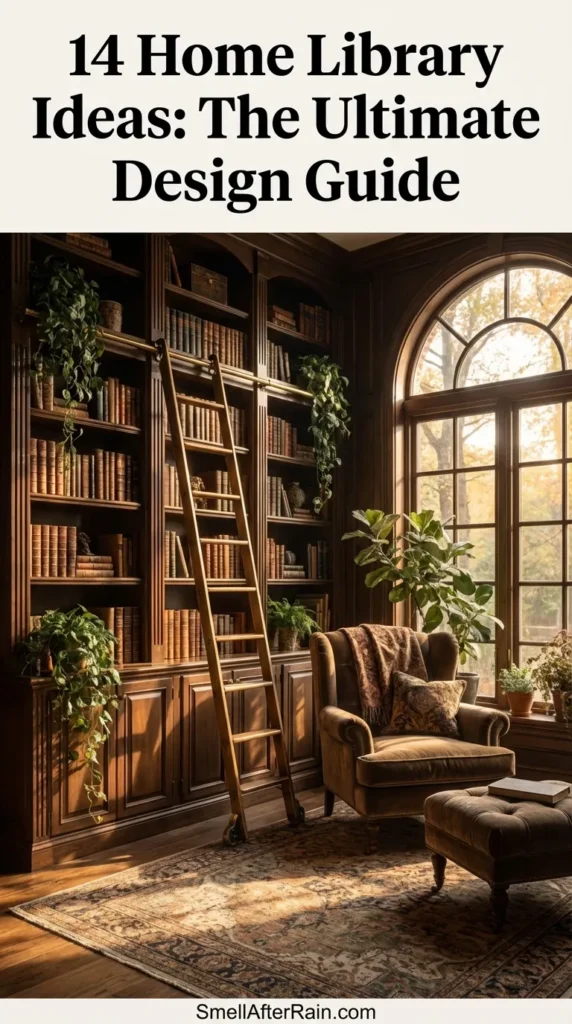
Incorporating a rolling library ladder adds vertical lines that emphasize height. Ensure your joinery (shelving) matches the wall color to reduce visual noise. This technique, known as “drenching,” makes the massive storage units disappear into the architecture, maintaining the serenity required for a bedroom.
3. The Window Seat: Bridging Indoors and Out
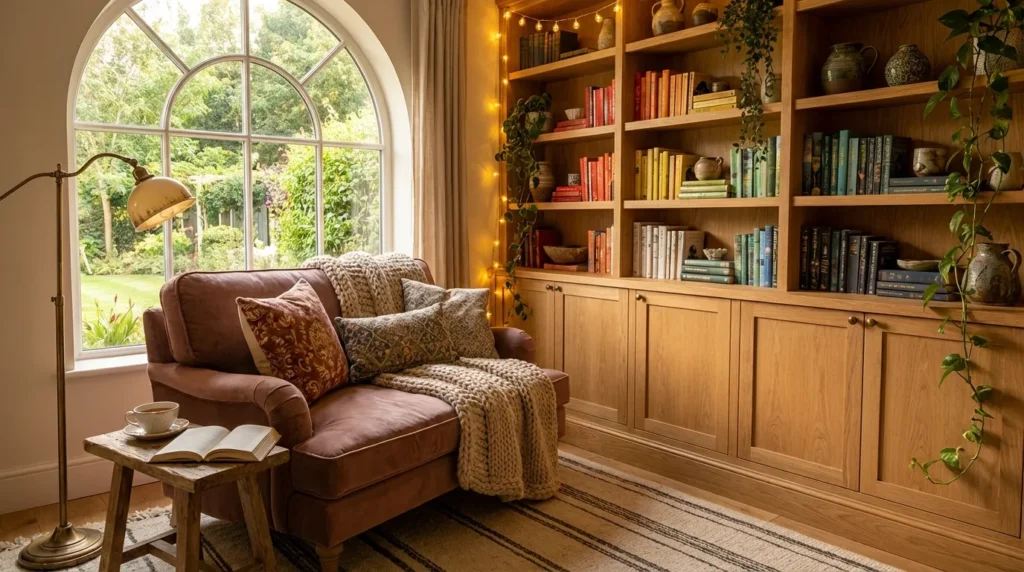
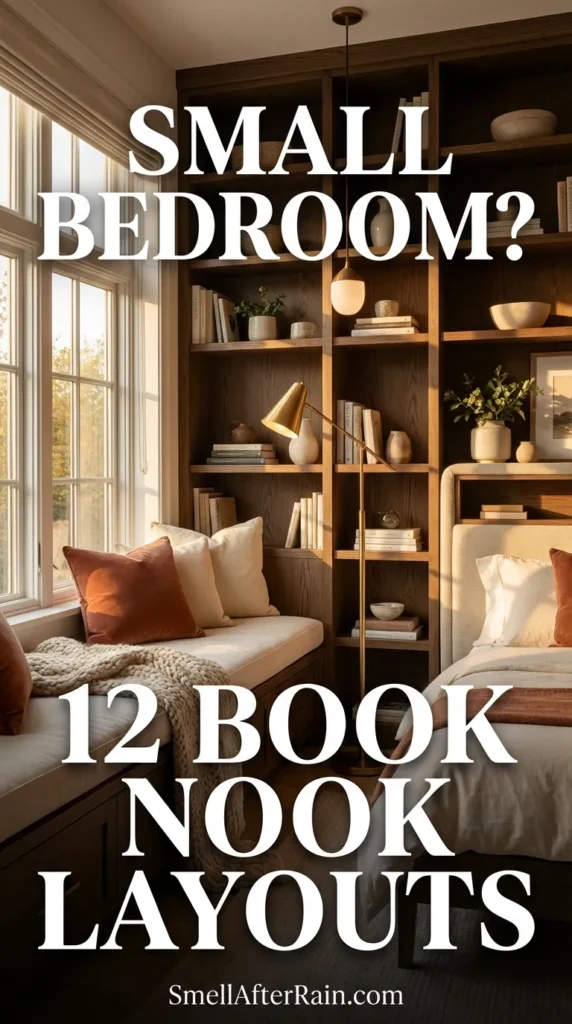
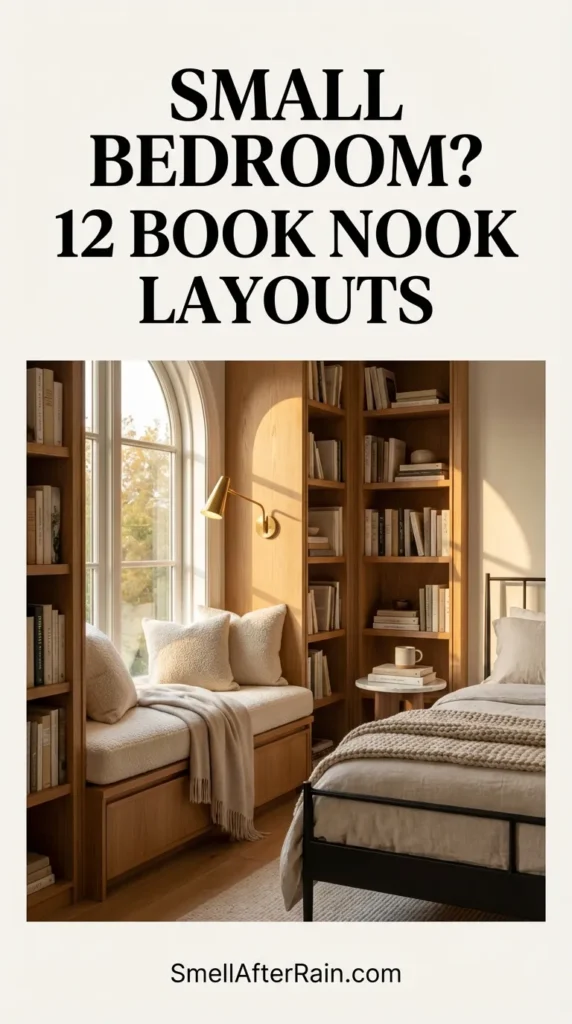
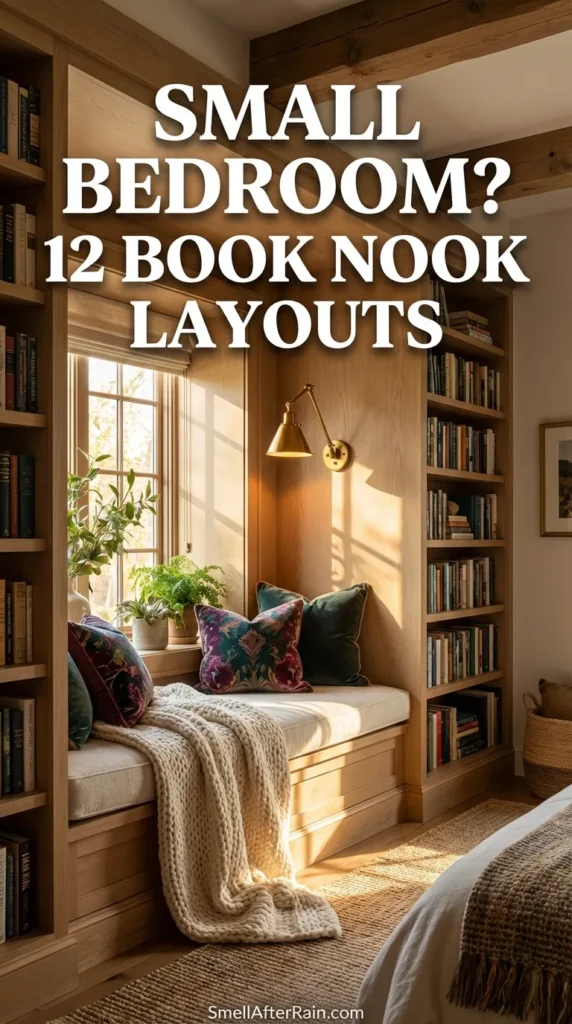
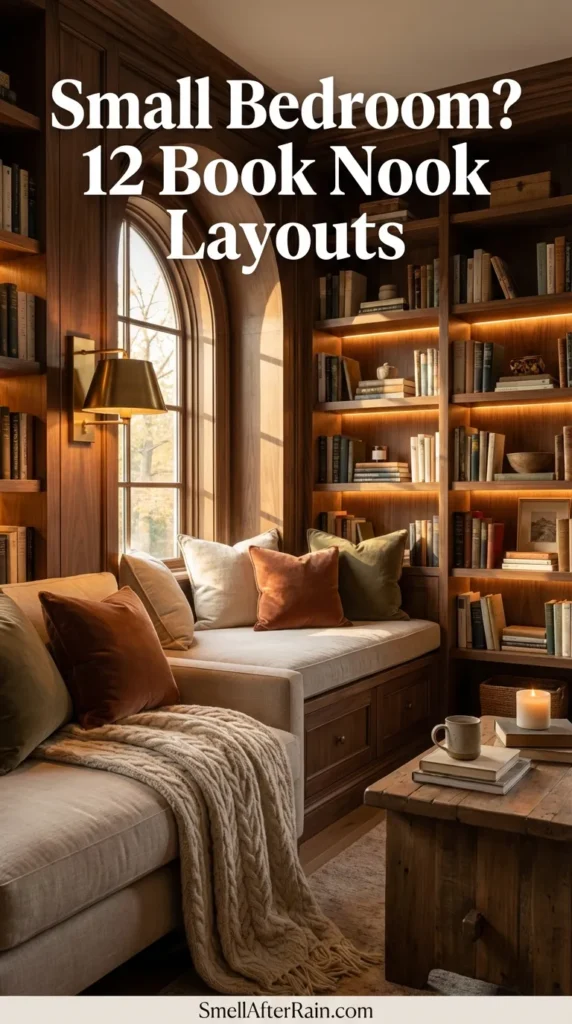
A window is a natural focal point. Framing a window with bookcases creates a “deep sill” effect that mimics the thick walls of historic masonry buildings. This is the quintessence of the Reading Nook Aesthetic.
Thermal Considerations
Architecturally, ensure the window is well-insulated. If you are building a bench against a single-pane window, you will experience a draft. Use heavy velvet curtains or cellular shades within the nook frame to control temperature and light. The bench cushion should be high-density foam (minimum 3 inches) to support long reading sessions.
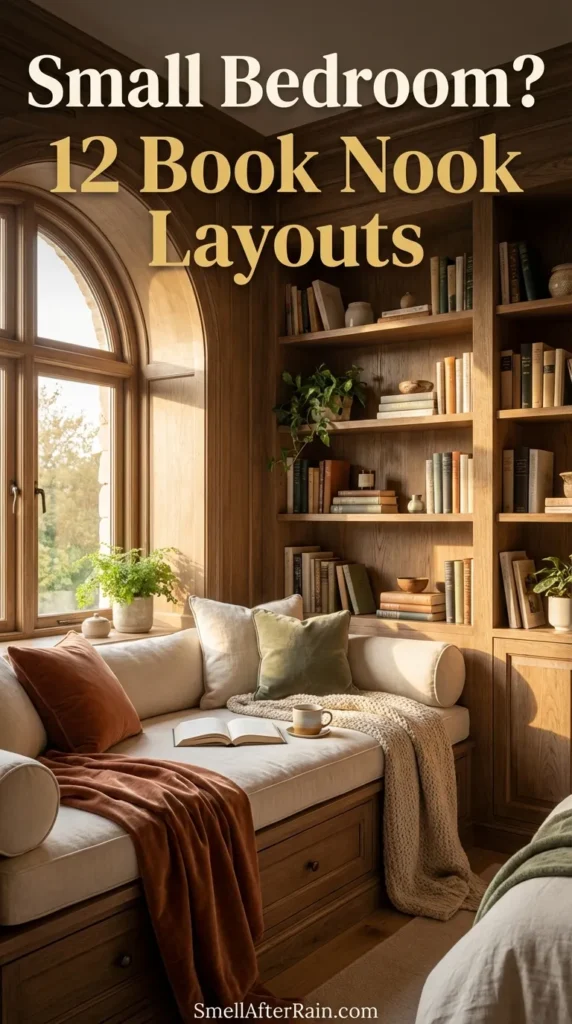
4. The Floating Corner: Maximizing Negative Space
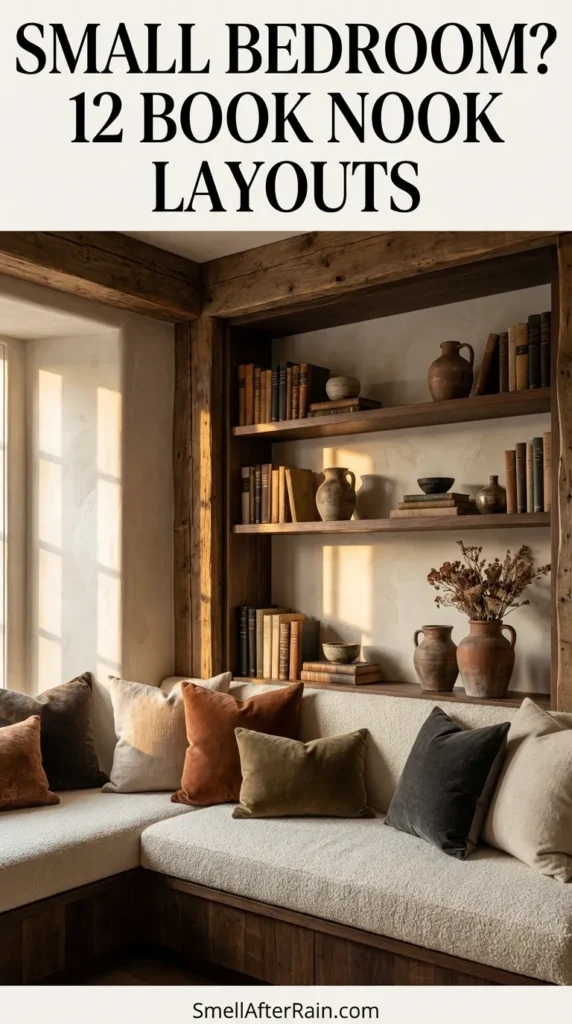
Corners are often “dead zones” in bedroom layouts. A Cozy Book Corner does not require a heavy armchair that eats up floor space. Instead, consider wall-mounted, floating elements.
Suspension Mechanics
Use heavy-duty floating shelf brackets anchored into studs to create a corner L-shape seat and accompanying shelves. By keeping the floor visible underneath the seat, you maintain the room’s “floor plate,” which makes the room feel larger. Add a wall-mounted sconce to eliminate the need for a floor lamp.
For whimsical touches in these tight corners, explore dreamy book nook ideas regarding shelf dioramas.
5. The Headboard Library: Dual-Function Zoning
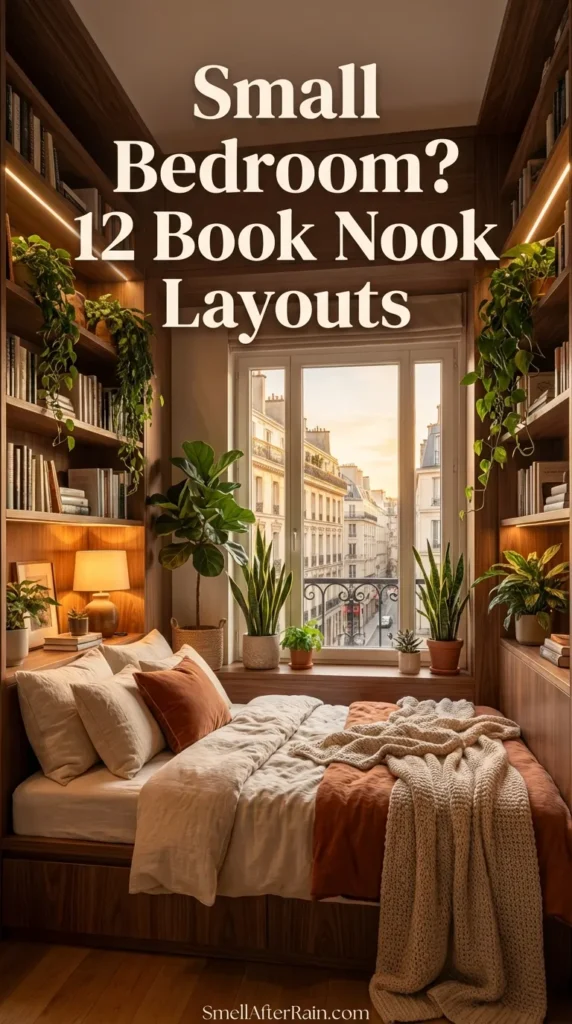
If you lack wall space, move the library to the center. Pull your bed 12 inches away from the wall and install a bookshelf behind the headboard, or build a custom headboard that is a bookshelf. This serves as a rule for serenity by keeping technology out of the bed and replacing it with books.
The Bridge Unit
For a more immersive experience, install two tall towers on either side of the bed and bridge them with a shelf running above the pillows. This creates a cozy, enclosed sleeping niche surrounded by literature, effectively turning your bed into a Cozy Book Room hybrid.
6. Lofted Reading Platforms: Creating Vertical Rooms
For those with high ceilings (9 feet or above), a loft bed isn’t just for children—it is a valid architectural solution for adults in studio apartments or small bedrooms. By elevating the sleeping zone, you reclaim the entire footprint underneath for a Tiny Reading Nook.
Structural Integrity
Ensure the loft structure is anchored to the wall studs on two sides to prevent sway. The space underneath can house a full loveseat, floor-to-ceiling wrap-around shelves, and dedicated task lighting. This creates a “room within a room,” offering psychological separation between the energy of reading and the passivity of sleeping.
7. Alcove Architecture and Structural Framing
If your room lacks natural quirks, build them. Using 2×4 framing and drywall, you can build out a false wall to create a recessed alcove. This creates the custom, high-end look of a Cute Reading Nook found in historic homes.
The Archway
Adding an arch to the top of your DIY alcove softens the harsh lines of a modern boxy bedroom. Inside the alcove, use a contrasting wallpaper or paint color to signal that this zone has a different purpose than the rest of the room. This ties into broader bedroom ideas regarding zoning and flow.
8. Lighting Layering: The Lumen Architecture
A Book Nook Aesthetic is nothing without proper lighting. In a bedroom, this is critical because you need to transition from high-focus reading light to low-level relaxation light.
Three Layers of Light
- Ambient: The general room light (ceiling fixture).
- Task: A directional reading lamp. For nooks, articulating sconces are superior as they save surface space.
- Accent: Warm LED strips behind shelves to highlight the books themselves.
Aim for a color temperature of 2700K to 3000K. Anything cooler (4000K+) contains too much blue light, which can disrupt circadian rhythms when reading before bed.
9. Textural Zoning: Defining Space Without Walls
Physical barriers shrink a room; textural changes define it without reducing volume. Use a high-pile rug specifically placed under your reading chair or nook area. This tactile shift signals to the feet (and the brain) that you have entered a different zone.
Material Contrast
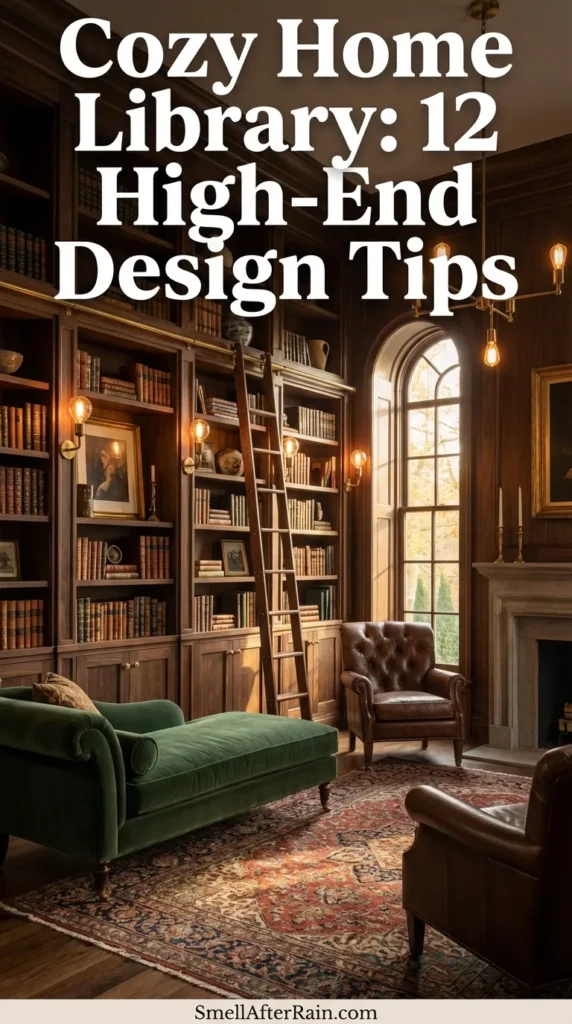
If your bedding is crisp linen, upholster your reading nook bench in bouclé or velvet. This contrast enriches the sensory experience. For more on high-end finishes, consult our guide on 12 high-end design tips for cozy libraries.
10. The Transitional Passageway Nook
Does your bedroom have a small entryway or a short hallway leading to the bathroom? This is prime real estate. By lining these transitional spaces with shallow shelves (6-8 inches deep is sufficient for paperbacks), you create a “book tunnel.”
Flow Dynamics
This utilizes the “corridor effect.” It doesn’t encroach on the main bedroom floor plan but activates walls that are usually left blank. It turns a walk to the bathroom into a walk through a library.
11. Visual Weight Management with Acrylics
In extremely small bedrooms, even a small wooden bookshelf can feel heavy. To achieve a Book Nook Ideas Diy look that feels airy, utilize acrylic or glass materials.
The Invisible Library
Ghost chairs (clear acrylic) and invisible floating bookshelves allow light to pass through them. This reduces the “visual weight” of the furniture to near zero. Your eye registers the books floating in space, not the furniture holding them, which preserves the open feel of the room.
12. Acoustic Isolation for Deep Focus
A bedroom book nook must be quiet. Hard surfaces bounce sound, creating echoes that distract from deep reading. As a spatial architect, you must dampen the room.
Absorption Materials
Books themselves are excellent sound absorbers. However, maximize this by adding upholstered wall panels behind your reading nook or heavy drapery. This acoustic treatment creates the “hushed” atmosphere of a traditional library. Check out rooms and nooks for more inspiration on acoustic comfort.
Frequently Asked Questions
1. How deep should a book nook bench be?
For a comfortable reading bench, aim for a depth of at least 20 to 24 inches. Standard chair depth is around 18 inches, but a reading nook often involves curling up or sitting cross-legged, which requires extra depth. If you plan to use throw pillows against the back wall, add another 4-6 inches to accommodate them without sacrificing legroom.
2. Can I put a book nook in a feng shui bedroom?
Yes, but placement is key. In Feng Shui, books represent active energy and knowledge. Avoid placing heavy bookshelves directly above the bed or looming over the sleeper’s head, as this can create a sense of pressure. A Cozy Book Corner positioned diagonally from the door is often considered the “power position” and is ideal for reading.
3. What are the best inexpensive book nook ideas DIY?
The most cost-effective DIY is the “Crate Wall.” Stack robust wooden crates on their sides and secure them to each other and the wall studs. Sand and stain them for a rustic look. Another option is using plumbing pipes and pine boards for an industrial-chic open shelving unit that costs a fraction of custom joinery.
4. How do I style a small book nook without it looking cluttered?
Follow the “two-thirds” rule: fill shelves only two-thirds full. Leave negative space for the eye to rest. Alternate between vertical stacking and horizontal piling of books to add rhythm. Use baskets on lower shelves to hide unsightly items like cords or damaged paperbacks.
5. What is the best lighting for a bedroom reading nook?
Ideally, you want a light source with a CRI (Color Rendering Index) of 90+ to see the pages clearly without eye strain. A dimmable wall sconce is perfect because it saves floor space. Position the light so it falls over your shoulder, not directly in front of you, to minimize glare.
Conclusion
Designing a Book Nook Bedroom is about more than just storage; it is about carving out space for imagination within the intimacy of your sleeping quarters. Whether you opt for a Closet Book Nook conversion or sophisticated vertical joinery, the goal is to create a seamless flow between the world of dreams and the world of stories. By following these 12 layouts, you can maximize every square inch of your room, proving that even the smallest spaces can hold the vastest worlds.
For more inspiration on integrating function and style across your home, visit Smell After Rain or explore our specific guides on kitchen ideas to see how zoning principles apply everywhere.