- 1. The Psychology of Refuge: Defining the Enclosure
- 2. Circadian Lighting: Mastering the Glow
- 3. Color Theory: The Palette of Decompression
- 4. The Tactile Feedback Loop: Texture and Comfort
- 5. Biophilic Design: Creating a Forest Book Nook
- 6. The Shelf Diorama: Fairy Book Nook Magic
- 7. Ergonomics of the Curl: Seating Dynamics
- 8. Small Book Nook Ideas: The Art of the Alcove
- 9. Acoustic Dampening: The Sound of Silence
- 10. DIY Booknooks: Infusing Personal Identity
- 11. Scentscaping: The Olfactory Dimension
- Frequently Asked Questions
- Conclusion
In the high-velocity rhythm of modern life, the concept of the Reading Nook Aesthetic has evolved from a mere interior design trend into a psychological necessity. It is no longer just about placing a chair in a corner; it is about architectural therapy. As an interior psychologist, I approach the design of a book nook not merely as visual decoration, but as the creation of a vessel for emotional regulation. This space must serve as a physical barrier against stress and a gateway to the imaginative realms found between the pages of your favorite novels.
To cultivate a truly restorative space, one must understand the intersection of spatial awareness, sensory input, and cognitive load. Whether you are designing a dedicated library or carving out a sliver of space for a Book Nook Bedroom setup, the principles remain rooted in how the human brain processes safety and relaxation. In this comprehensive guide, we will explore 11 scientifically-backed design rules to curate a book nook that heals as much as it houses literature.
1. The Psychology of Refuge: Defining the Enclosure
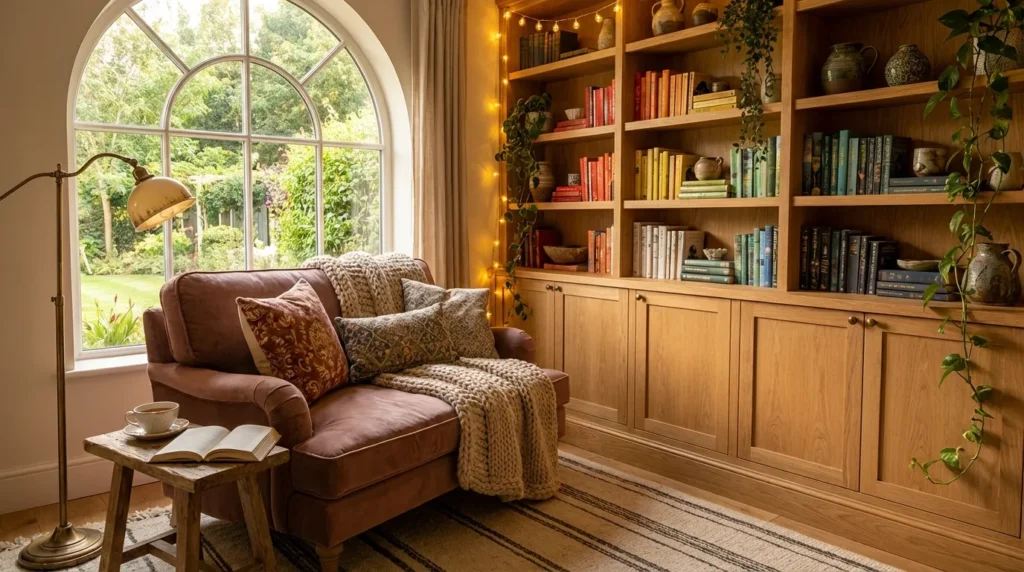
The fundamental appeal of a cozy reading spot lies in the evolutionary theory of “Prospect and Refuge.” Humans are hardwired to seek spaces where they feel protected from behind (refuge) while maintaining a view of their surroundings (prospect). A successful Book Nook Aesthetic leans heavily into the ‘refuge’ aspect, creating a sense of being held or embraced by the architecture.
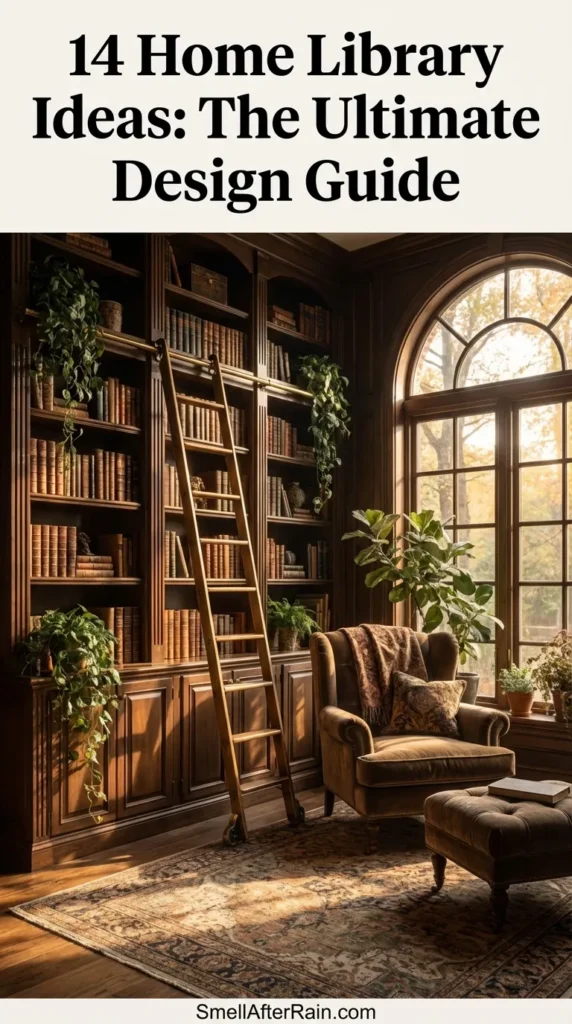
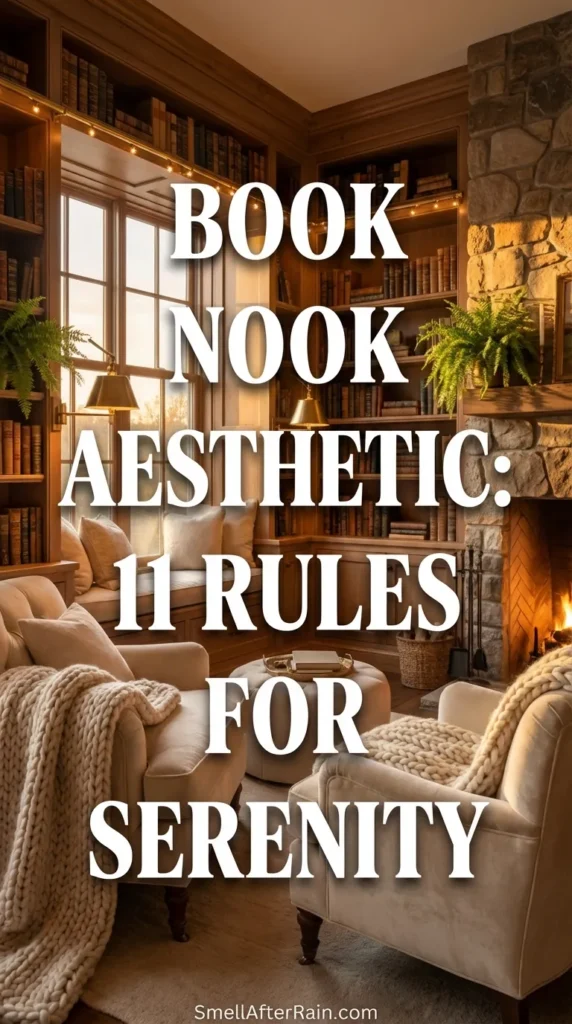
To achieve this, avoid placing your primary reading chair in the center of a room where energy flows chaotically around you. Instead, anchor the furniture against a wall or, better yet, in a corner. If structural alcoves are missing, create them artificially. Tall bookshelves flanking a seating area create a ‘canyon’ effect, signaling to the amygdala (the brain’s fear center) that the flanks are secure, allowing the parasympathetic nervous system to initiate a relaxation response. For deeper insights on structural layout, consider exploring our guide on designing the ultimate cozy book nook home library, which delves into the architecture of comfort.
2. Circadian Lighting: Mastering the Glow
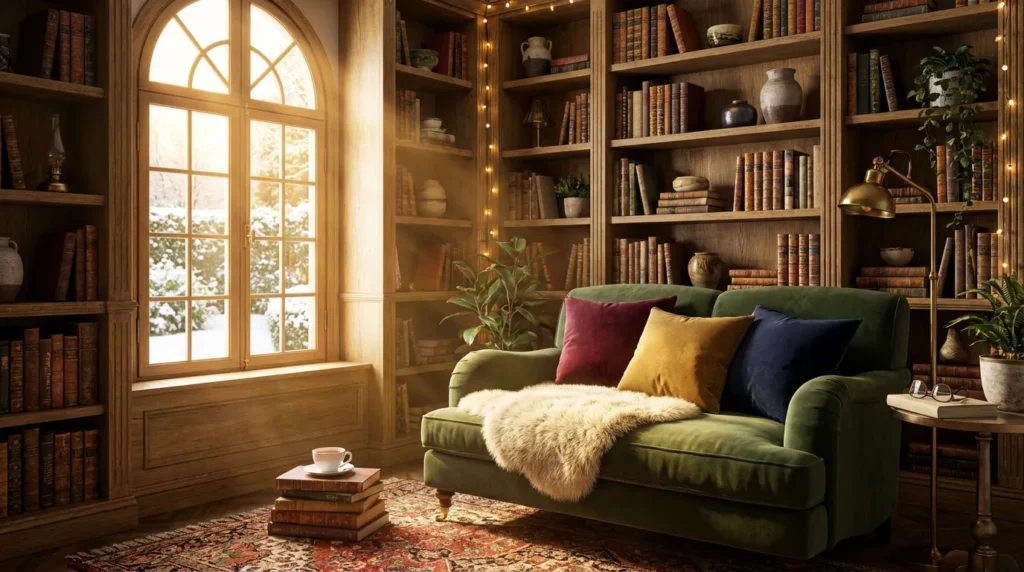
Lighting is the conductor of your body’s circadian rhythm. Harsh, blue-spectrum lighting (often found in standard LED overheads) suppresses melatonin and keeps the brain in a state of high alert—antithetical to the goal of a Cozy Book Room. The psychological objective here is to mimic the soft, warming glow of a campfire, which signals the end of the day and the time for storytelling.
Aim for a color temperature between 2400K and 2700K. This warm, amber light softens the contrast on the page, reducing eye strain during marathon reading sessions. Layering is crucial. Relying on a single source creates harsh shadows. Instead, employ a triad of light: ambient (a dimmable floor lamp), task (a directed reading light), and accent (LED strips behind shelves). This allows you to modulate the environment based on your mental state. If you are reading high-focus non-fiction, you might increase the brightness; for immersive fantasy, a lower, moodier light enhances visualization.
3. Color Theory: The Palette of Decompression
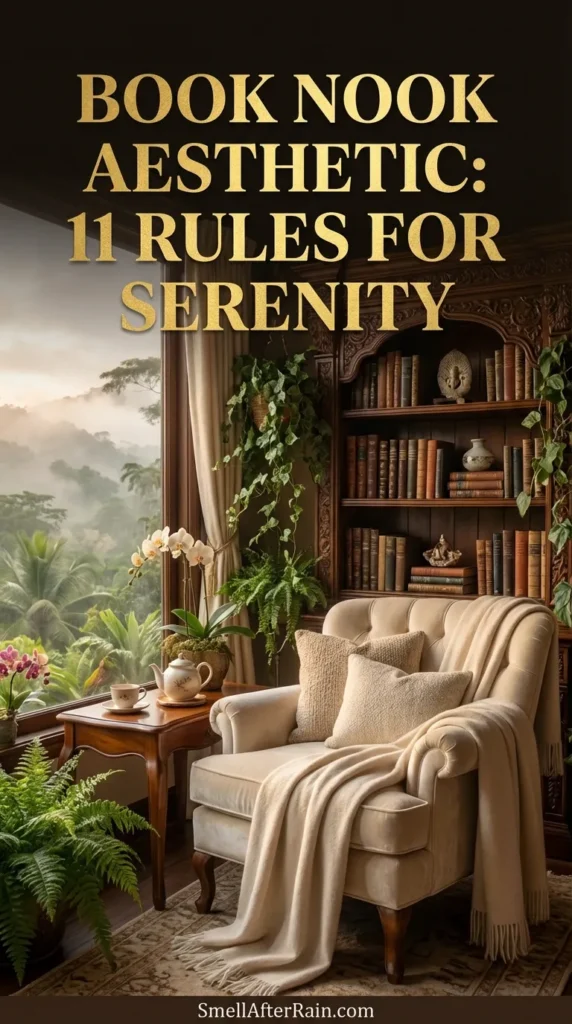
The colors you choose for your nook act as a direct line to your emotional state. While high-energy colors like red or bright orange can stimulate creativity, they are often too aggressive for a relaxation zone. Psychological studies suggest that cool, low-saturation tones reduce blood pressure and heart rate.
Consider the ‘Sage and Sand’ palette—muted greens and warm beiges that replicate the tranquility of nature. Alternatively, for a more studious, ‘Dark Academia’ vibe, deep navy or charcoal can create a womb-like, introspective atmosphere. It is essential to harmonize these choices with the rest of your home. If your home features a specific era, such as mid-century modern, ensure your color choices bridge the gap between relaxation and style. You can find more inspiration on harmonizing palettes in our Mid-Century Modern Guide or by reviewing living room color psychology to see how adjacent rooms affect your nook’s vibe.
4. The Tactile Feedback Loop: Texture and Comfort
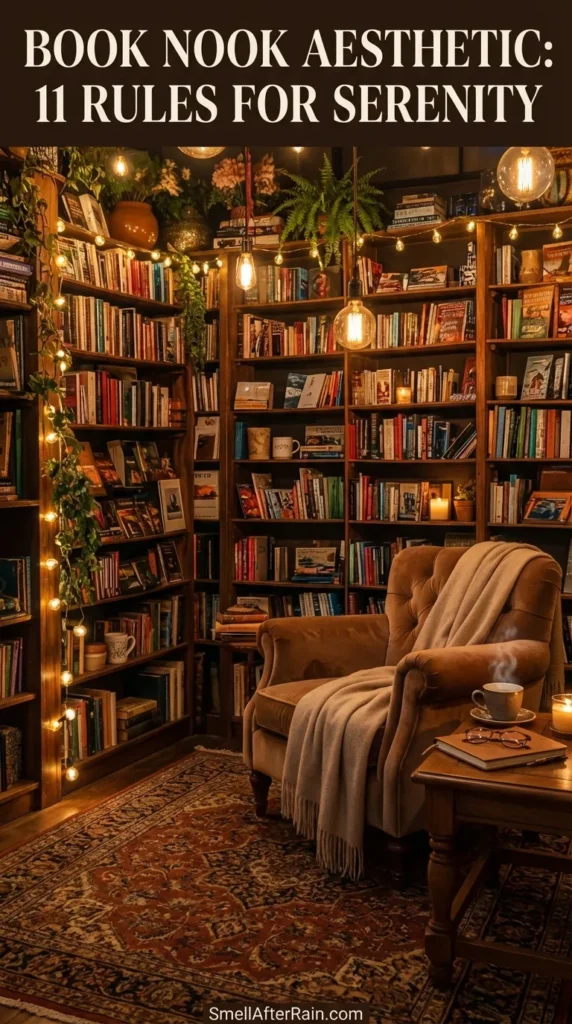
We often design with our eyes, but we experience comfort with our skin. This is the concept of haptic perception. A visually stunning chair that is stiff or scratchy creates cognitive dissonance, preventing deep immersion in your book. The Book Nook Aesthetic requires ‘tactile grounding’—textures that invite touch and signal safety.
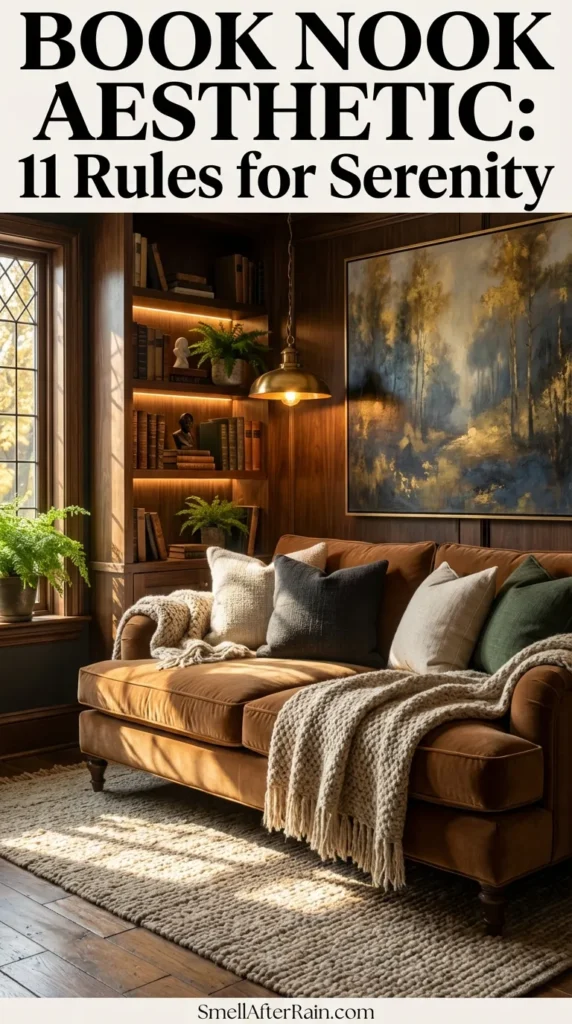
Layering is the key strategy here. Start with a foundation, such as a velvet armchair or a linen chaise. Add a chunky knit throw blanket (weight is associated with security, similar to weighted blankets for anxiety). Incorporate a high-pile rug underfoot. When your feet touch a soft surface, it grounds you physically, separating the ‘nook’ space from the ‘work’ space of hard floors. This sensory richness engages the brain’s pleasure centers, making the act of reading a full-body experience.
5. Biophilic Design: Creating a Forest Book Nook
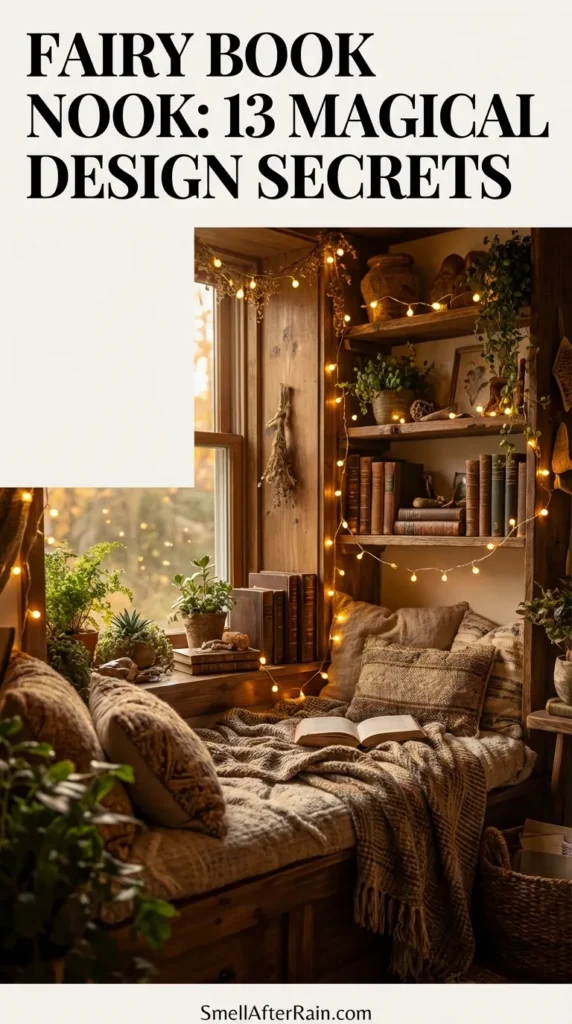
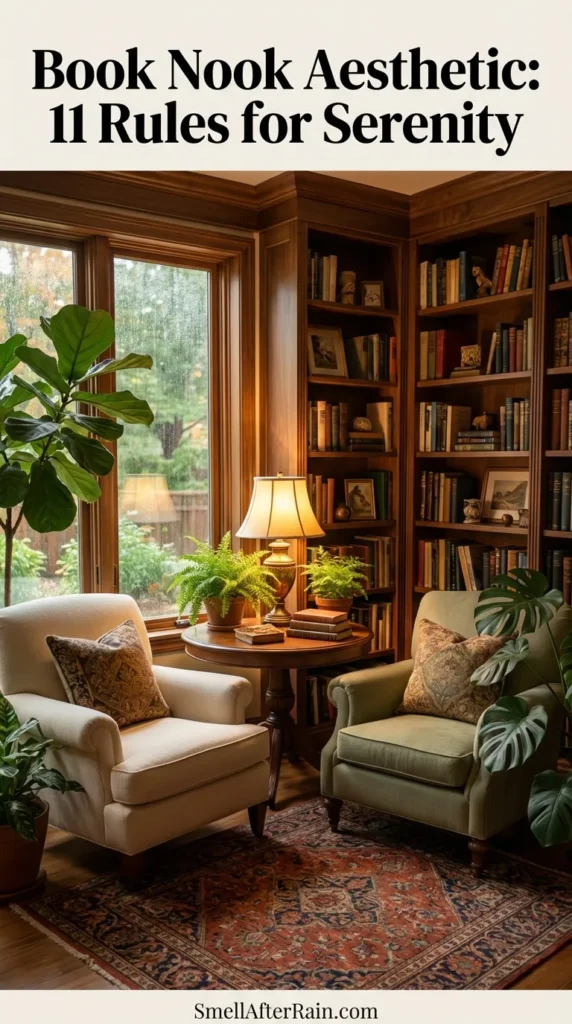
Biophilia is the innate human tendency to seek connections with nature. Integrating this into your reading space creates a Forest Book Nook vibe that significantly lowers cortisol levels. This doesn’t just mean adding a potted plant; it means creating a micro-ecosystem that cleans the air and refreshes the mind.
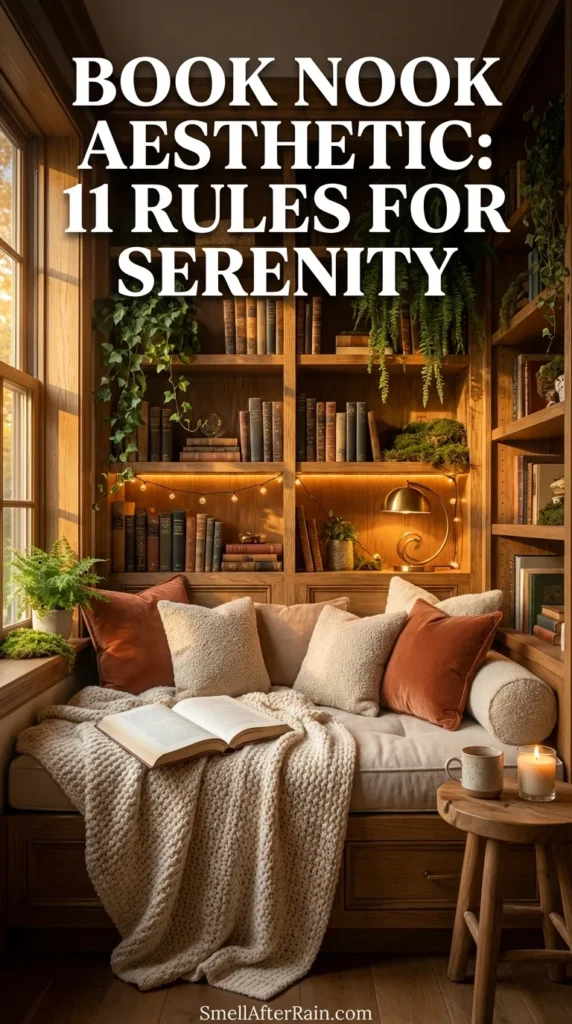
Verticality is a powerful tool here. Trailing plants like Pothos or String of Pearls placed on high shelves draw the eye upward, creating a sense of height and airiness even in small spaces. Large-leaf plants like Monsteras can act as organic partitions, screening off the nook from the rest of the room. The irregularity of organic shapes contrasts with the rigid rectangular geometry of books and shelves, providing ‘soft fascination’—a type of attention that restores mental energy without requiring effort.
6. The Shelf Diorama: Fairy Book Nook Magic
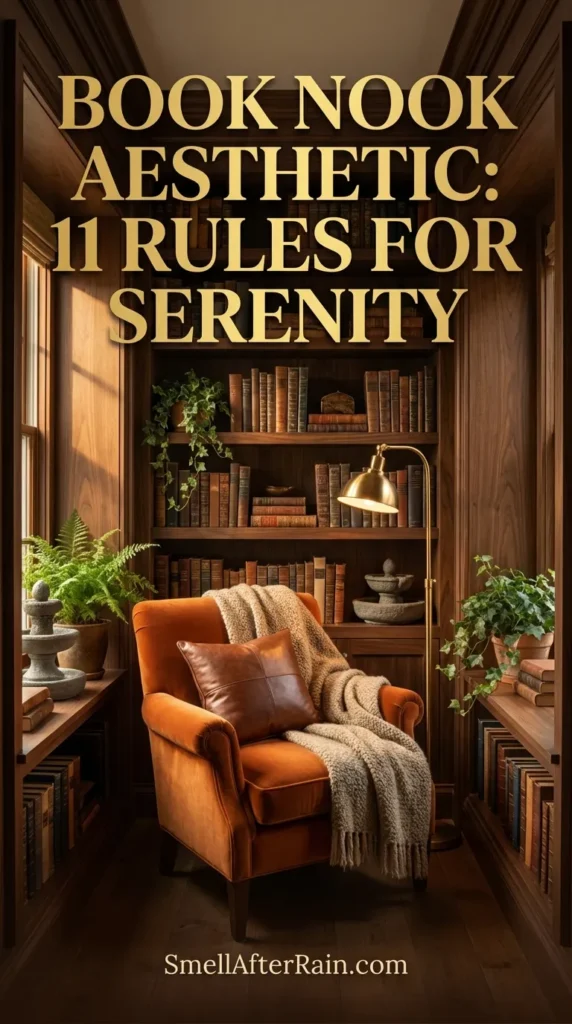
One of the most enchanting trends in recent years is the rise of the shelf insert or diorama, often called a Fairy Book Nook. Psychologically, these miniatures serve as portals. They are physical manifestations of the imagination, bridging the gap between our reality and the fictional worlds we enter.
These inserts—often depicting tiny alleyways, magical forests, or miniature libraries—act as focal points for mindfulness. Gazing into a detailed miniature forces the brain to shift focus from macro anxieties (bills, work) to micro details. It is a form of visual meditation. When curating your shelves, intersperse these dioramas with your books to break up the visual density of spines. For specific inspiration on these magical inserts, review our gallery of dreamy book nook ideas and magical shelf dioramas.
7. Ergonomics of the Curl: Seating Dynamics
The ‘curl’ is the quintessential reading posture—knees up, spine curved, head resting. However, standard office ergonomics do not apply here. We are looking for ‘dynamic support.’ A chair that is too rigid prevents the curl; a bean bag that is too soft causes back strain over time.
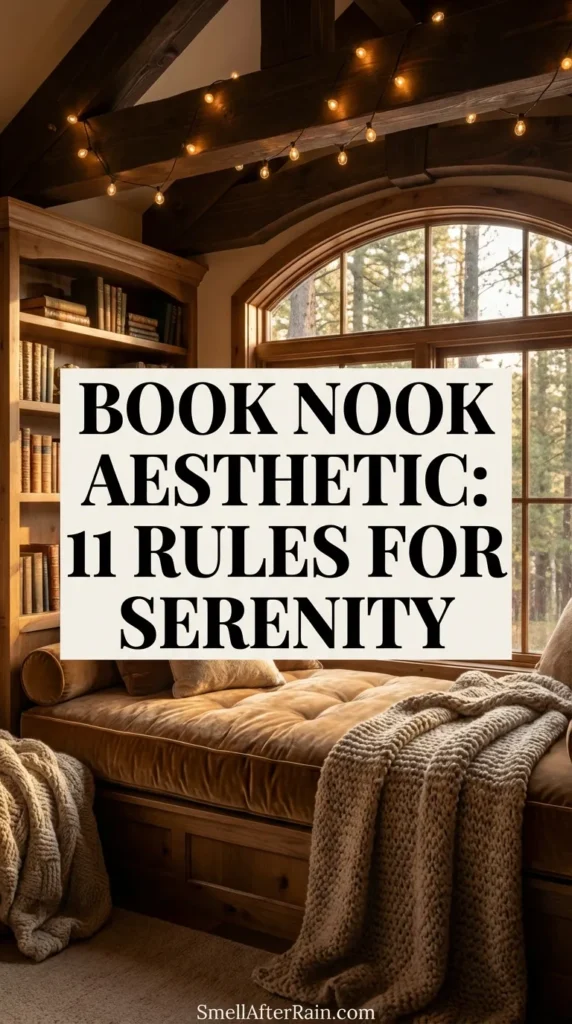
The ideal reading chair is one-and-a-half times the width of a standard seat, allowing for leg tucking. It should have a high back for neck support and rolled arms to support the weight of a heavy hardcover without tiring the shoulders. If space allows, a window seat with custom upholstery is the gold standard for Book Nook Ideas Diy projects. The proximity to the window offers natural light, while the bench structure provides hidden storage—a clutter-free space equals a clutter-free mind.
8. Small Book Nook Ideas: The Art of the Alcove
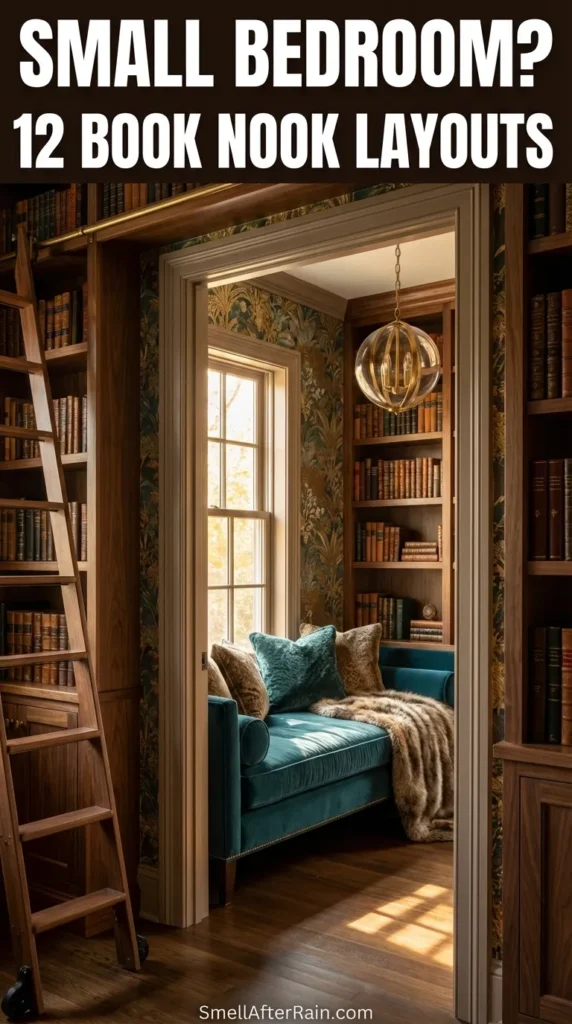
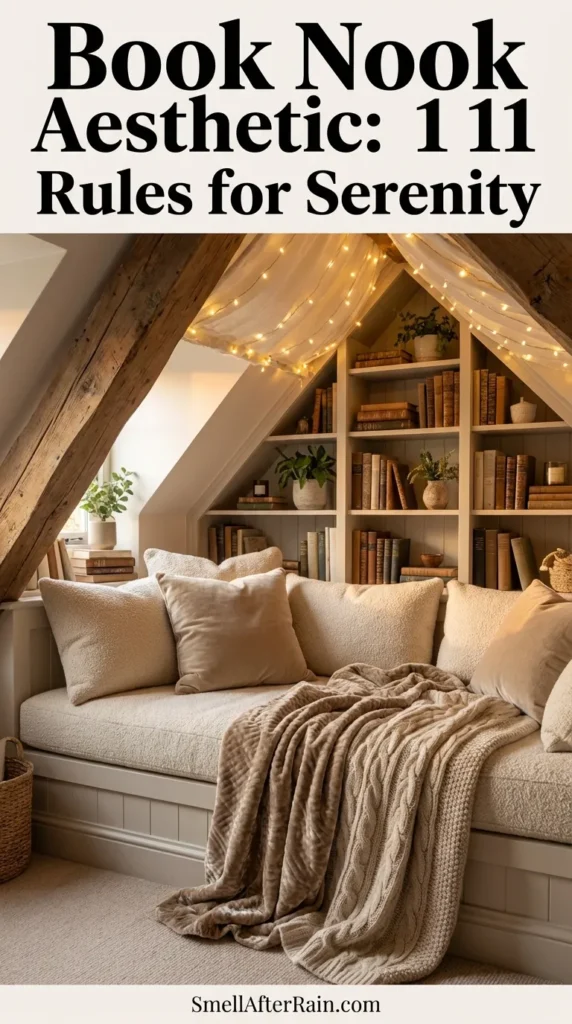
Not everyone has a spare room for a library. In fact, constraints often breed the most creative Small Book Nook Ideas. Psychologically, small spaces can be incredibly comforting if designed correctly—think of the safety of a childhood fort. The key is to utilize ‘dead space’ such as the area under a staircase, a wide hallway landing, or the interior of a closet (cloffice).
In these tight quarters, vertical storage is mandatory. Floating shelves draw the eye up, making the footprint feel larger. Use mirrors strategically to reflect light and prevent the nook from feeling claustrophobic. Even a Book Nook Bedroom corner can be transformed by simply angling a chair and defining the zone with a small, circular rug. The mental separation is more important than the physical square footage.
9. Acoustic Dampening: The Sound of Silence
Visual aesthetics are wasted if the sonic environment is chaotic. The cognitive load of filtering out background noise (traffic, appliances, conversation) drains the energy needed for reading. A true sanctuary must address acoustics.
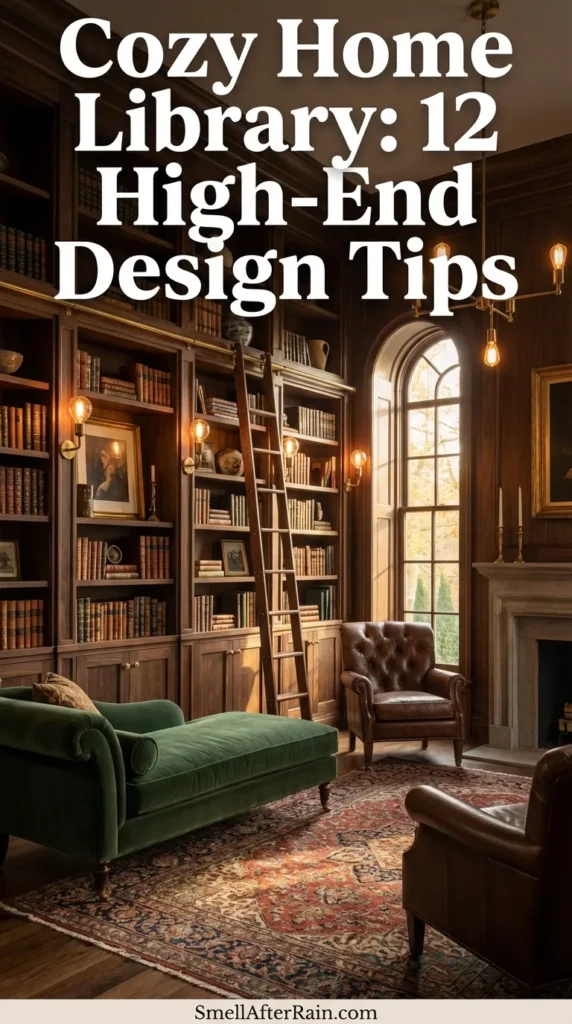
Soft materials are your allies here. Heavy velvet curtains not only control light but absorb sound waves. Book-filled shelves themselves are excellent sound diffusers, breaking up sound waves so they don’t bounce off hard walls. For a high-end touch, consider acoustic wood slat panels, which add texture and significantly deaden noise. This auditory isolation is critical for achieving the ‘flow state’ required for deep reading. For more luxury implementation of these elements, see our tips on 12 high-end design tips for cozy home libraries.
10. DIY Booknooks: Infusing Personal Identity
A space feels most like home when it reflects the inhabitant’s identity. Diy Booknooks and personalized decor prevent the space from feeling like a sterile catalogue page. This is about ‘place attachment’—the emotional bond between person and place.
Display items that have narrative significance to you: a framed ticket stub from a favorite author’s reading, a vintage typewriter, or a collection of stones from a memorable trip. When creating Booknook Ideas, consider building your own floating shelves or refurbishing a vintage chair. The effort invested in the creation creates a psychological endowment effect, where you value the space more because you helped create it.
11. Scentscaping: The Olfactory Dimension
The final rule connects to the most memory-linked sense: smell. ‘Old book smell’ is actually the breakdown of lignin in paper, releasing a vanilla-like scent that bibliophiles find intoxicatingly comforting. You can artificially enhance this environment through scentscaping.
Avoid sharp, citrusy scents which are alerting. Instead, opt for candles or diffusers with notes of sandalwood, leather, vanilla, or cedar. These scents are grounding. By consistently using a specific scent while reading, you create a Pavlovian response: the moment you smell that specific candle, your brain knows it is time to wind down and enter the story. It is the invisible architecture of the Cozy Home Library.

Frequently Asked Questions
What is the minimum space needed for a book nook?
Psychologically, you only need enough space to encompass your body and the book. Physically, a floor area of about 3 feet by 3 feet is sufficient for a comfortable armchair and a small side table. Even a window sill with a depth of 18 inches can serve as a functional nook if cushioned correctly.
How do I make a book nook in a rented apartment?
Focus on non-permanent changes. Use tension rods for curtains to create separation, freestanding bookshelves instead of wall-mounted ones, and command strips for art. Lighting plays a huge role; plug-in wall sconces can mimic hardwired lighting without the electrical work, instantly elevating the Reading Nook Aesthetic.
What are the best plants for a low-light reading corner?
If your nook is tucked away from windows, opt for Snake Plants (Sansevieria), ZZ Plants, or Pothos. These are incredibly resilient, tolerate low light, and still provide the biophilic benefits necessary for a relaxing atmosphere.
Can a book nook work in a bedroom?
Absolutely. A Book Nook Bedroom setup creates a wonderful transition zone between the activity of the day and sleep. However, try to visually separate it from the bed (using a rug or chair orientation) so your brain distinguishes between ‘reading mode’ and ‘sleeping mode.’
What is a “Book Nook” shelf insert?
A shelf insert, often called a book nook, is a diorama that sits between books on a shelf. They are usually lit with battery-operated LEDs and depict miniature scenes. They add depth to the bookshelf and serve as whimsical focal points that enhance the magic of a home library.
How do I keep my book nook from looking cluttered?
Adhere to the 60/30/10 rule or simply leave 20% of shelf space empty. Crowded shelves can induce visual anxiety. Use baskets for unsightly items (chargers, bookmarks) and group books by height or color to create visual coherence.
Conclusion
Designing the perfect Book Nook Aesthetic is an exercise in self-care. It requires looking beyond the trends of Booknook Ideas and understanding the psychological triggers of comfort, safety, and imagination. By manipulating light, texture, color, and space according to these 11 rules, you build more than a reading corner; you build a sanctuary for the mind. Whether it is a sprawling library or a humble Small Book Nook under the stairs, the goal remains the same: a pause button for the world, accessible anytime you open a book.