- 1. The Acoustics Trap: Why Your Home Sounds Like a Cafeteria
- 2. The Flooring Fissure: Visual Disconnects That Shrink Space
- 3. Ignoring the 'Dirty Dish' Sightline
- 4. Ventilation Negligence: The Linger Effect
- 5. The Lighting Temperature War
- 6. The Floating Island Syndrome
- 7. Appliance Decibel Disasters
- 8. The Loss of Vertical Storage Real Estate
- 9. Inconsistent Design Languages
- 10. Traffic Flow Collisions
- 11. The 'Too Small' Island Mistake
- 12. Zoning Failures: The Warehouse Effect
- 13. Neglecting Power and Utility Placement
- Frequently Asked Questions
- Conclusion
The open concept revolution has arguably done more to change residential architecture than any other trend in the last fifty years. We crave the open space living room and kitchen dynamic; it promises social connection, better light, and the illusion of square footage. But let’s be brutally honest: most open kitchens are designed poorly. They are often chaotic, noisy, and smell like last night’s fish tacos.
While the aesthetic appeal of a simple kitchen design flowing seamlessly into a lounge is undeniable, the practical execution requires an architect’s eye for detail, not just a sledgehammer to a load-bearing wall. If you are planning a renovation, particularly focusing on modern kitchen ideas or kitchen ideas open concept, you are walking a minefield of potential design disasters.
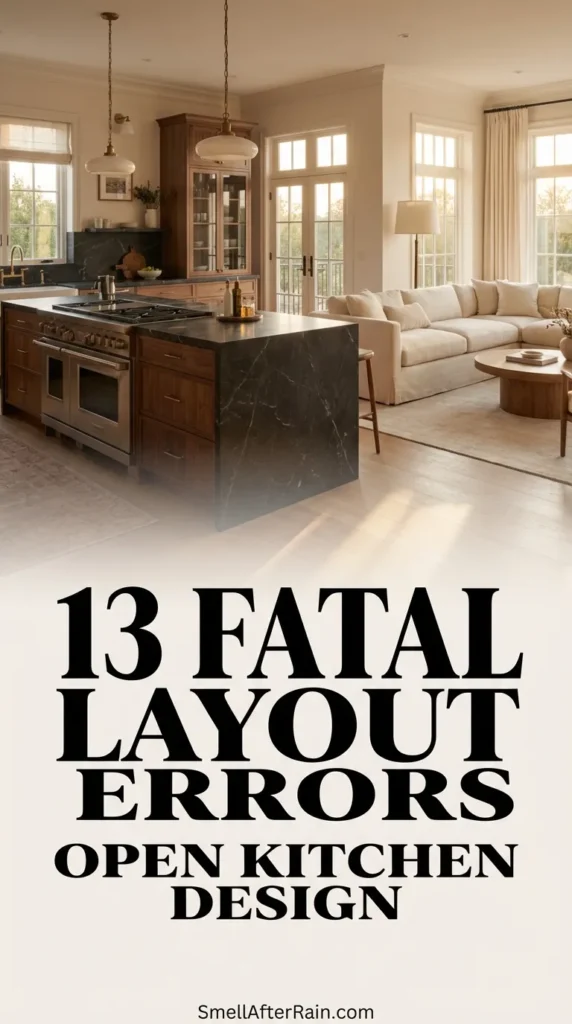
We are going to dissect the critical failures that turn dream renovations into functional nightmares. From very small kitchen ideas that fail to scale, to luxury builds that forget basic acoustics, here are the 13 fatal layout errors you must avoid to achieve true design harmony.
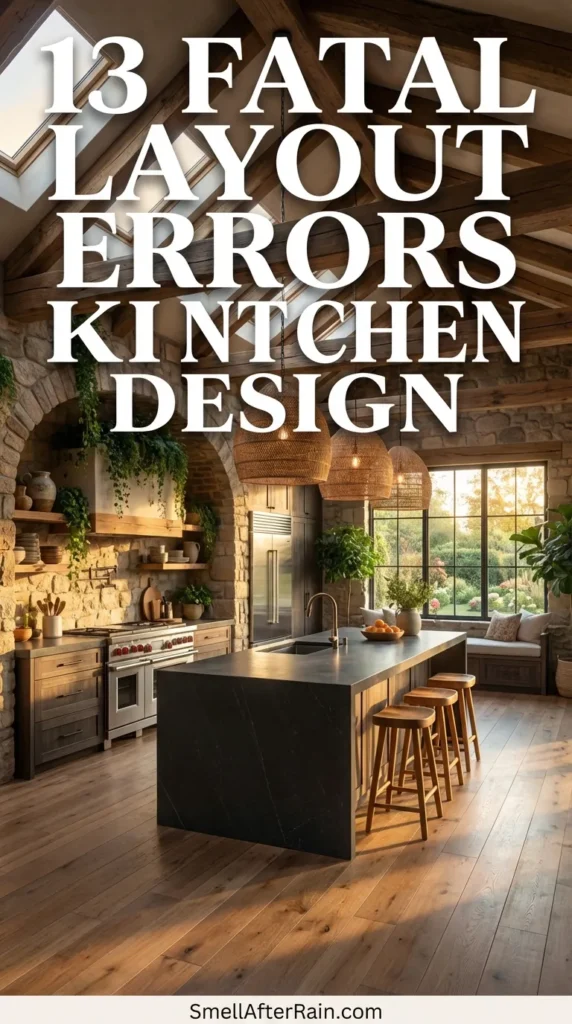
1. The Acoustics Trap: Why Your Home Sounds Like a Cafeteria
The number one complaint homeowners have six months after tearing down their walls is noise. When you remove partitions, you remove sound baffles. In a traditional kitchen room design, the clattering of pots and the whir of the blender are contained. in an open plan, they amplify.
The Mistake: Combining hard kitchen surfaces (stone, tile, steel) with hard living room surfaces (hardwood, glass, minimalist furniture). This creates an echo chamber where conversation becomes difficult and relaxation becomes impossible.
The Fix: You must introduce sound-absorbing materials. If you are leaning towards high-end design secrets, look into acoustic plaster ceilings or fabric-paneled walls. For a standard renovation, heavy drapes, plush rugs in the living area, and upholstered dining chairs are non-negotiable. You cannot rely on drywall alone to dampen the sound of an espresso machine.
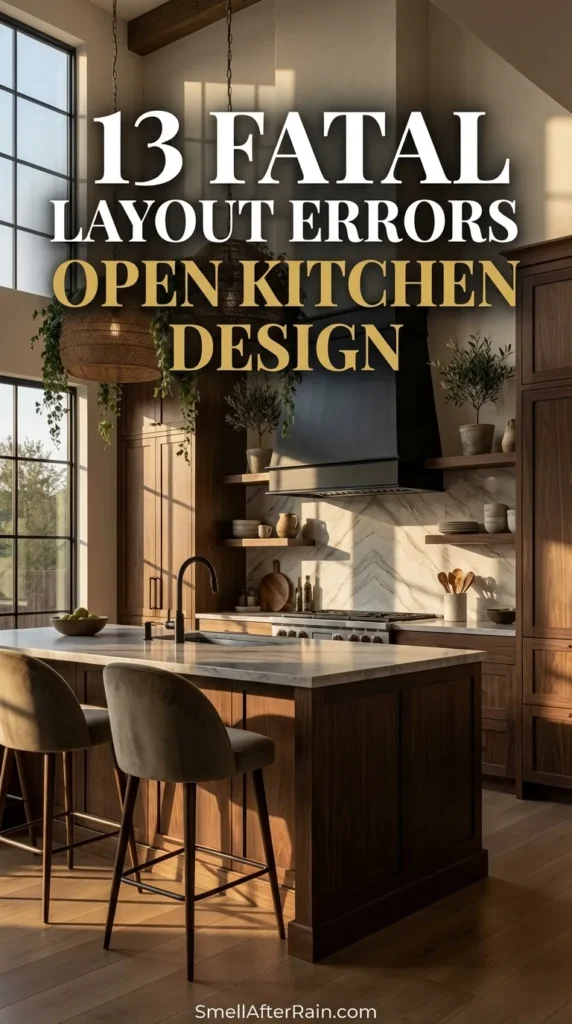
2. The Flooring Fissure: Visual Disconnects That Shrink Space
Nothing screams “bad renovation” louder than a harsh transition line between the kitchen tile and the living room wood. It visually chops the space in half, defeating the entire purpose of an open kitchen layout.
The Mistake: Treating the kitchen as a “wet zone” that requires cold tile while the living room gets warm wood. This bifurcation makes both rooms look smaller, particularly in small kitchen design scenarios.
The Fix: Continuous flooring is the holy grail of open concepts. Engineered hardwood or high-quality luxury vinyl plank (LVP) can withstand kitchen spills while providing the warmth needed for a living area. If you must change materials, ensure the color values match closely to maintain the visual flow.

3. Ignoring the ‘Dirty Dish’ Sightline
The reality of an open kitchen interior is that your mess is on display. If your sink is located directly on the island facing the sofa, your guests are staring at your dirty plates while they sip their wine.
The Mistake: Placing the main cleanup zone (sink and dishwasher) front and center on a flat island without any visual buffer.
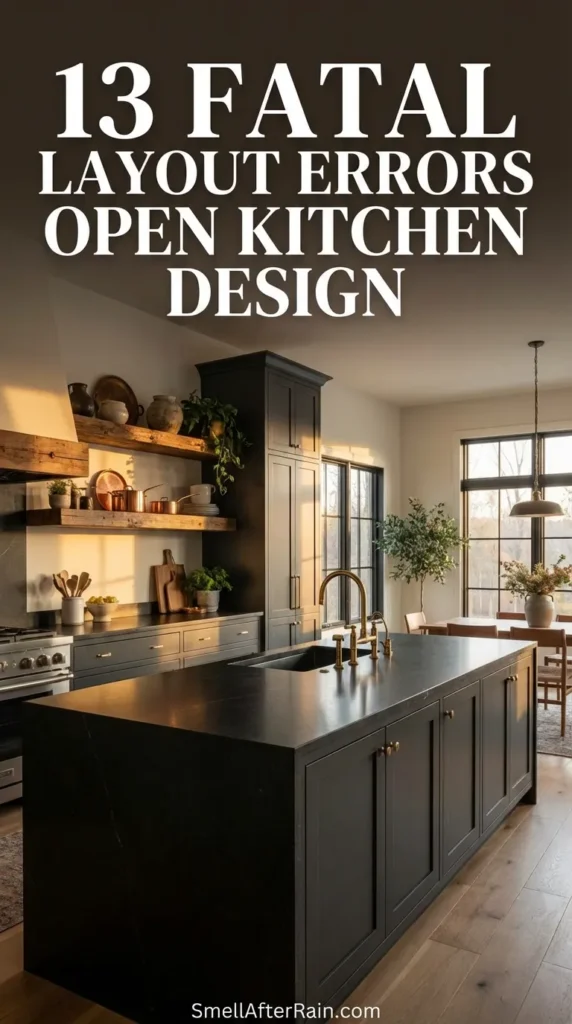
The Fix: Design a two-tier island or raised bar. This 6-inch vertical rise is enough to hide the mess from eye level in the living room while keeping the space open. Alternatively, relocate the main sink to a perimeter wall and keep the island for prep work and socializing only.
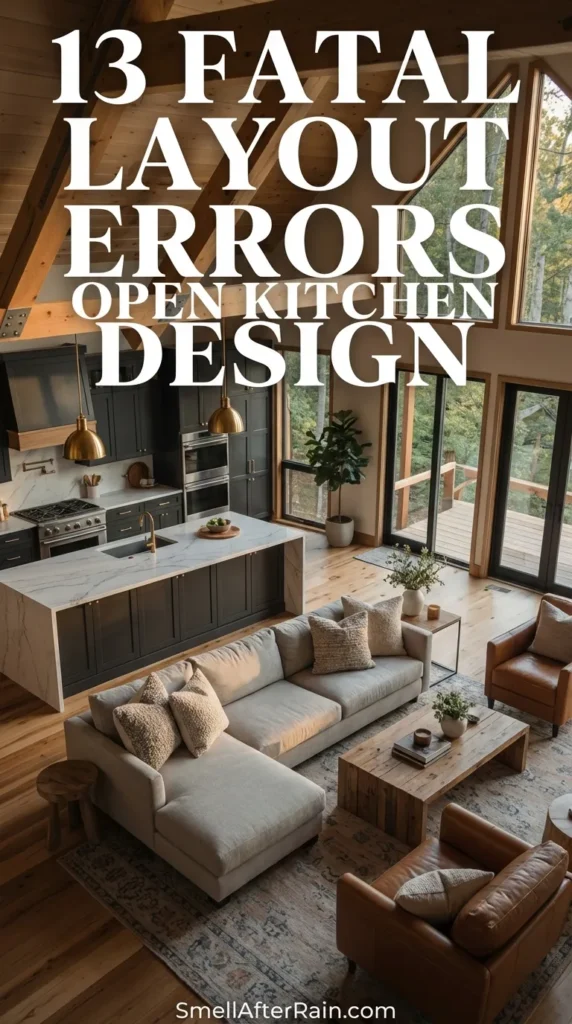
4. Ventilation Negligence: The Linger Effect
In a closed kitchen, a mediocre range hood is annoying. In an open kitchen, it is a catastrophe. If you sear a steak, your sofa cushions should not smell like beef fat for three days.
The Mistake: Buying a recirculating hood (which just filters air and blows it back out) or an under-powered extraction fan because it looked “sleek.”
The Fix: Invest in a high-CFM (Cubic Feet per Minute) hood that vents externally. This is critical. For those interested in future kitchen trends, downdraft ventilation systems are improving, but a powerful overhead hood remains the gold standard for open plans.
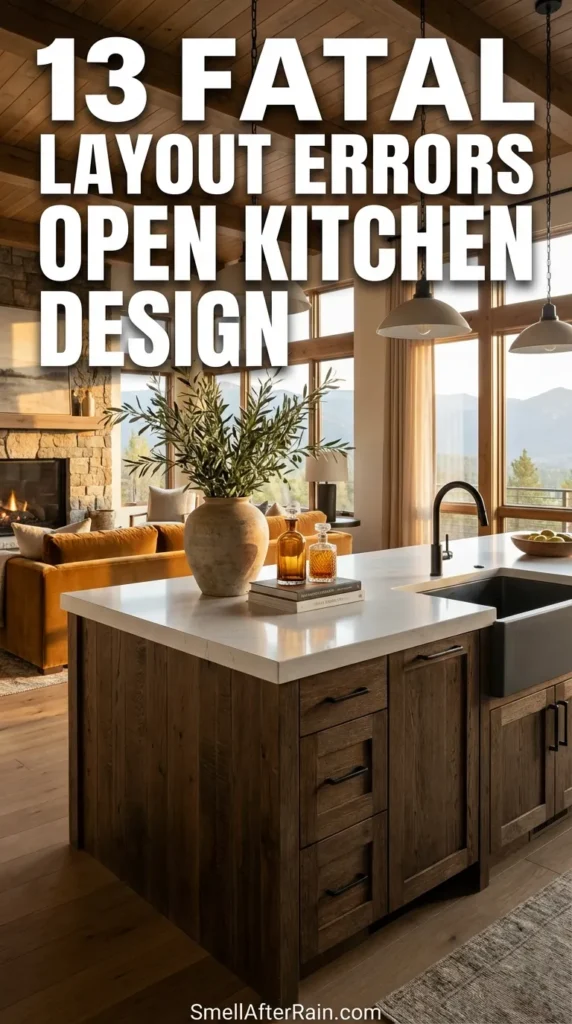
5. The Lighting Temperature War
Lighting serves different purposes in different zones. Kitchens require cool, bright task lighting (3000K-4000K). Living rooms require warm, ambient lighting (2700K). When these mix poorly, the room feels disjointed.
The Mistake: Putting everything on one circuit or using mismatched color temperatures that clash where the rooms meet.
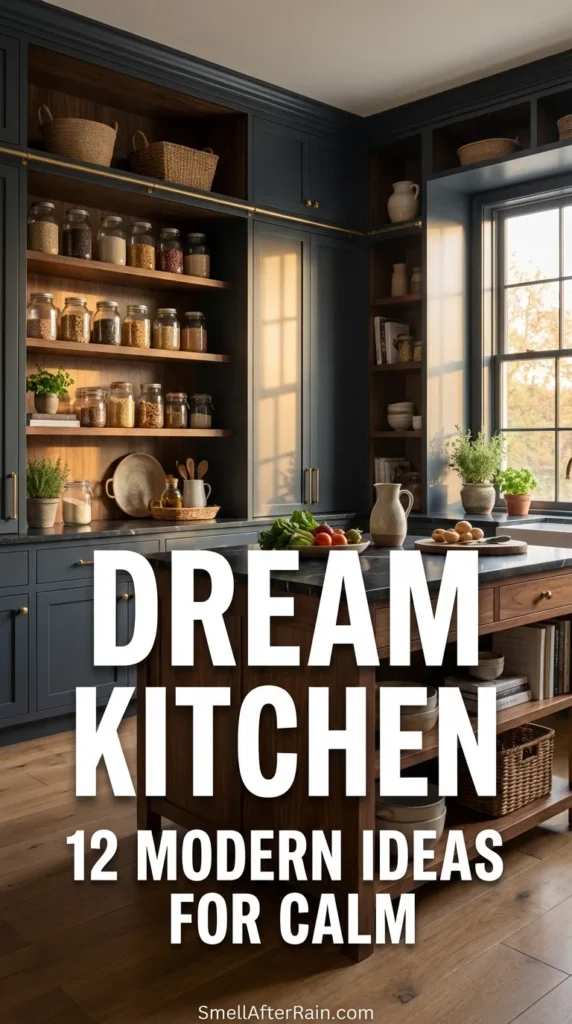
The Fix: Layer your lighting. Use recessed cans for the kitchen workspace, but ensure they are on dimmers. Use pendants over the open kitchen with island that are warmer and softer. Crucially, ensure that when the “work” is done, the kitchen can be dimmed to a glow that matches the mood of the living room, perhaps drawing inspiration from modern ideas for calm.
6. The Floating Island Syndrome
An island must be anchored to the space. Often, in an attempt to force an island into a layout, designers leave too much or too little space around it.
The Mistake: Placing an island in the middle of a vast room without relation to the perimeter counters, or squeezing it so close that two people cannot pass each other.
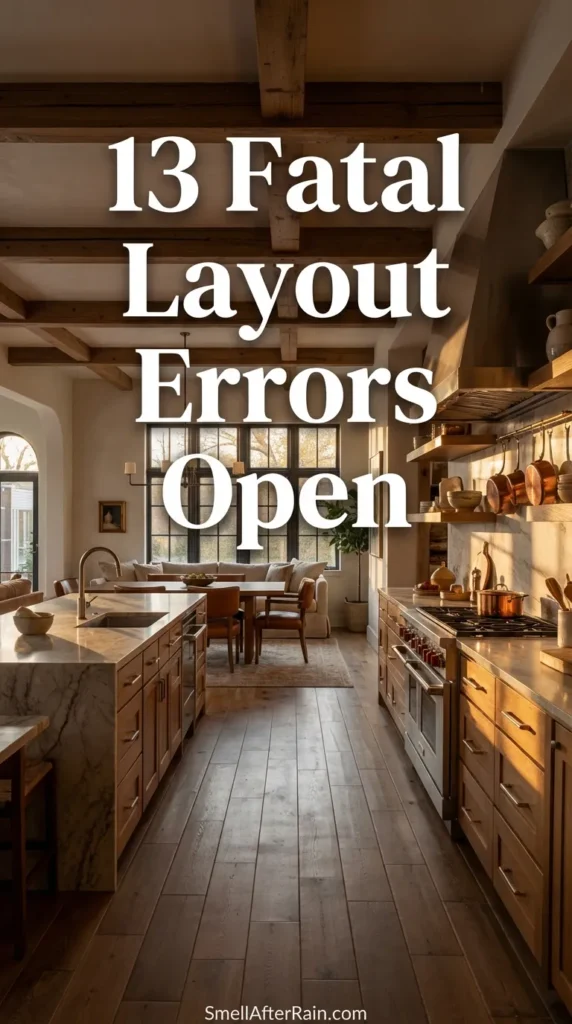
The Fix: Follow the 42-48 inch rule. You need 42 inches of clearance for a one-cook kitchen and 48 inches for two. Anything more than 60 inches and the island feels like a separate continent; anything less than 36 inches is a fire hazard. Review architect secrets for flow to master these dimensions.
7. Appliance Decibel Disasters
You are watching the climax of a movie in the living room. Suddenly, the dishwasher enters the drain cycle and sounds like a jet engine taking off. This is the hidden enemy of open plan living.
The Mistake: Selecting appliances based solely on looks or price, ignoring the dBA (decibel) rating.
The Fix: In an open plan, silence is a luxury commodity you must pay for. Look for dishwashers rated at 44 dBA or lower. Avoid refrigerators with noisy compressors. The goal is for your kitchen to be seen, not heard.
8. The Loss of Vertical Storage Real Estate
When you knock down a wall to open up the kitchen, you are deleting an entire wall of potential upper cabinets. This often leads to a severe storage shortage, resulting in cluttered countertops that ruin the minimalist aesthetic.
The Mistake: Prioritizing openness over functionality to the point where there is nowhere to put the blender.
The Fix: You must compensate. This might mean a floor-to-ceiling pantry wall on the remaining side, or a larger island with deep drawer storage. Check out genius budget hacks for storage solutions that don’t require building an addition.
9. Inconsistent Design Languages
Your kitchen is modern industrial. Your living room is farmhouse chic. In separate rooms, this is eclectic. In an open room, it is a mess.
The Mistake: Failing to carry a cohesive design thread through the entire open space.
The Fix: You don’t need everything to match perfectly, but there must be a conversation between the zones. Repeat materials. If you have brass handles in the kitchen, use a brass floor lamp in the living room. If you are using earthy decor secrets in the cabinetry, ensure the living room textiles reflect those organic tones. Even a distinct style like Mid-Century Modern needs to flow from the bar stools to the sofa.
10. Traffic Flow Collisions
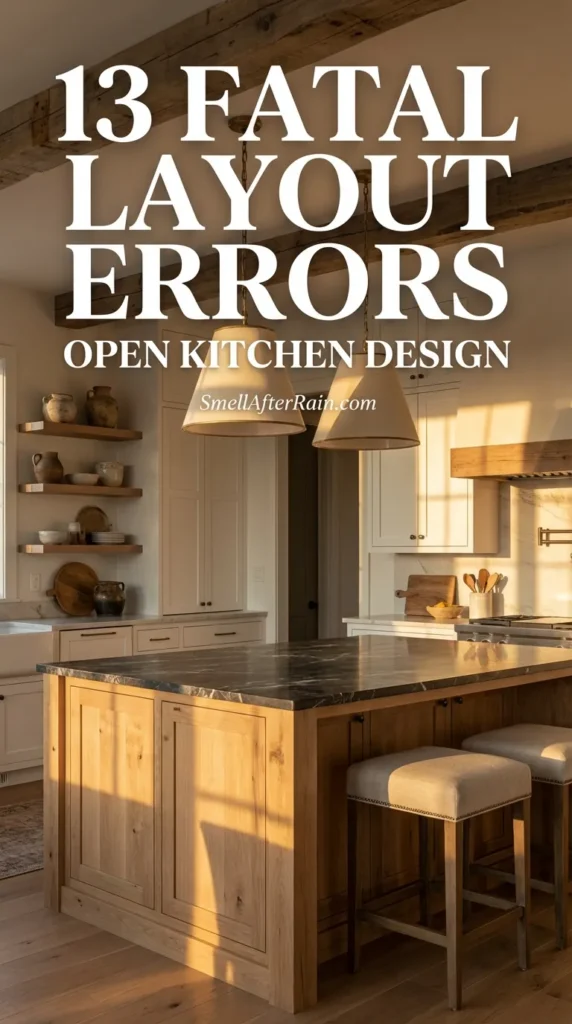
The “Work Triangle” (sink, fridge, stove) is Kitchen Design 101. But in an open kitchen, you have a new variable: through-traffic. Guests, kids, and pets will walk through your work zone to get to the fridge or the backyard.
The Mistake: Placing the refrigerator at the deepest point of the kitchen, forcing snack-seekers to cross the cook’s path.
The Fix: Place the refrigerator and pantry on the periphery of the kitchen zone, accessible to the living area without crossing the “hot zone” (stove/oven). This keeps the cook safe and the guests happy.
11. The ‘Too Small’ Island Mistake
In very small kitchen ideas, there is often a desperate desire to include an island, resulting in a tiny, wobbly cart that looks ridiculous in the space.
The Mistake: Forcing an island where a peninsula would function better.
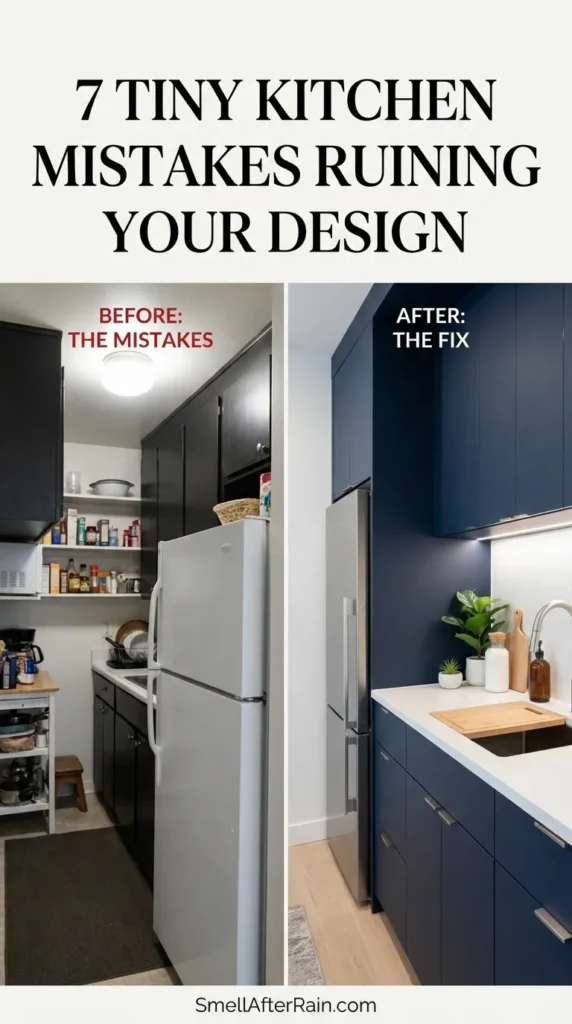
The Fix: If you don’t have the width for a proper island, a peninsula (attached to one wall) offers the same open feel and seating potential but consumes less floor space. It defines the zone without blocking the flow. Avoid the errors detailed in tiny kitchen mistakes by embracing layouts that actually fit your square footage.
12. Zoning Failures: The Warehouse Effect
Without walls, rooms can feel like a furniture showroom or a warehouse—cold and undefined.
The Mistake: Relying solely on the architecture to define the space. Furniture floating in a sea of flooring.
The Fix: Use area rugs to anchor the living space. Orient the sofa with its back to the kitchen to create a psychological “wall.” Use ceiling treatments, like a dropped bulkhead over the kitchen or exposed beams in the living area, to imply separation. Consult guides on living room colors to see how paint can subtly define zones without closing them off.
13. Neglecting Power and Utility Placement
A beautiful waterfall island is useless if you can’t plug in your laptop or your mixer.
The Mistake: Forgetting that an island in an open kitchen is often a workspace, a homework desk, and a buffet.
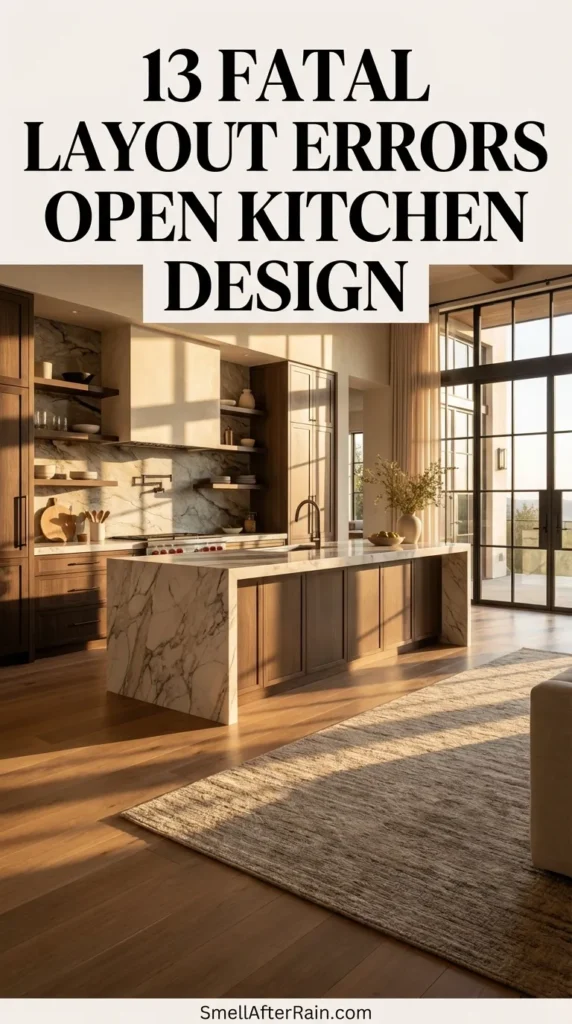
The Fix: Install pop-up outlets in the island countertop or hide them under the overhang. Ensure your pro build secrets include hardwiring for USB charging ports. Nothing ruins the sleek look of an open kitchen like an extension cord snake stretching across the floor.
Frequently Asked Questions
Is the open kitchen concept going out of style in 2025?
While the trend is shifting slightly towards “broken plan” living (using shelves or glass partitions to create semi-privacy), the fully open kitchen remains highly desirable for resale value and family connectivity. The shift is moving away from vast, echoing halls toward cozy, defined zones within an open layout.
How do I hide a messy kitchen in an open floor plan?
The most effective method is a raised breakfast bar (42 inches high) which physically blocks the view of the counter from the seated position in the living room. Alternatively, install a deep farmhouse sink where dishes can sit below the counter line, or design a “butler’s pantry” or “mess kitchen” tucked behind a hidden door for heavy prep work.
What is the best flooring for an open kitchen and living room?
Engineered hardwood or high-quality Luxury Vinyl Plank (LVP) are the top choices. They offer the warmth and aesthetic of wood suitable for living areas but possess the water resistance and durability required for kitchen environments. Avoid transitioning materials; continuous flooring makes the space feel 30% larger.
Can you have an open kitchen in a very small house?
Absolutely. In fact, removing walls is often the best way to maximize a small footprint. However, you must be ruthless with scale. Use a peninsula instead of an island to save space, and utilize floor-to-ceiling cabinetry to compensate for the loss of wall storage. Check cozy kitchen guides for inspiration on small-scale warmth.
How do I reduce noise in an open concept kitchen?
Soft furnishings are key. Use thick curtains, plush area rugs in the living zone, and upholstered dining chairs. Technically, look for appliances with low decibel ratings (under 45 dBA) and consider installing acoustic panels disguised as art or integrated into the ceiling plaster.
Conclusion
Creating a successful open kitchen layout is about more than just demolition. It requires a thoughtful reconstruction of space, sound, and light. By avoiding these 13 common pitfalls—from the acoustics trap to the lighting war—you can ensure your home feels as good as it looks. A truly modern kitchen is one that serves your life, not one that forces you to live around its flaws. For more deep dives into perfecting your home, explore our full collection of kitchen ideas and design strategies.