- The Shift from Sterile to Soulful: 2026 Kitchen Forecast
- What Is OUT: The Decline of the 'Clinical' Kitchen
- What Is IN: The Rise of the Cozy Kitchen Aesthetic
- Material Science: Why Earthy Textures Are Replacing High Gloss
- Small Kitchen Design: Maximizing Aesthetic in Micro Spaces
- Color Theory 2026: From Greige to Moody Saturation
- The Evolution of Layouts: Open Kitchen Design vs. The Scullery Return
- Sustainable & Vintage Integration: The "Granny Chic" Renaissance
- Lighting as Art: The Jewelry of the Kitchen
- Frequently Asked Questions
The kitchen has long been considered the heart of the home, but for the better part of the last decade, that heart beat with a cold, sterile rhythm. We saw an era dominated by high-gloss white cabinets, subway tiles, and an obsession with minimalism that often felt more like a surgical theater than a place to bake cookies. However, as we look toward 2026, a seismic shift is occurring in the world of interior design. The trend forecast is clear: personality is back, and perfection is boring.
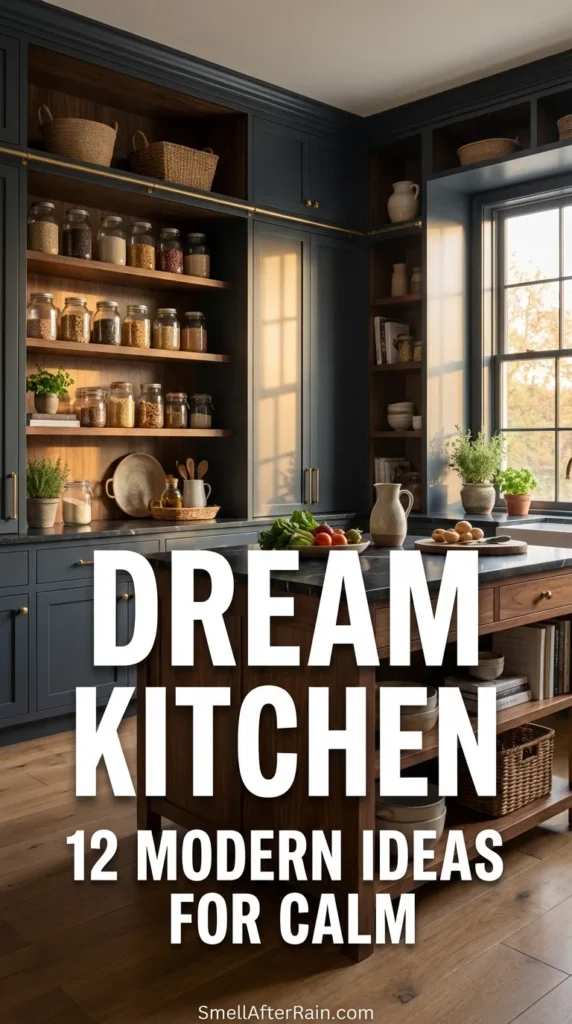
In this deep-dive analysis, we are moving beyond surface-level Pinterest scrolling to understand the “why” and “how” behind the new kitchen aesthetic. We are trading sterility for soul, and uniform layouts for dream kitchen scenarios that prioritize emotional connection over resale safety.
Whether you are renovating a sprawling estate or hunting for very small kitchen ideas, understanding these macro-trends is crucial. Before you pick up a sledgehammer or browse Smell After Rain for inspiration, let’s explore what is definitively out, and the lush, tactile trends that are definitively in.
The Shift from Sterile to Soulful: 2026 Kitchen Forecast
The post-pandemic world has fundamentally altered how we view our living spaces. We no longer want homes that look good only in photos; we want homes that feel good to inhabit. This psychological shift is the driving force behind the current kitchen inspo revolution. The “showroom” look is being dismantled in favor of “lived-in luxury.”
This does not mean clutter; it means curation. It is about layering textures, embracing history, and allowing the utility of the kitchen to be beautiful rather than hidden. We are seeing a move toward what designers are calling “ancestral modernism”—a blend of old-world materials with modern conveniences.
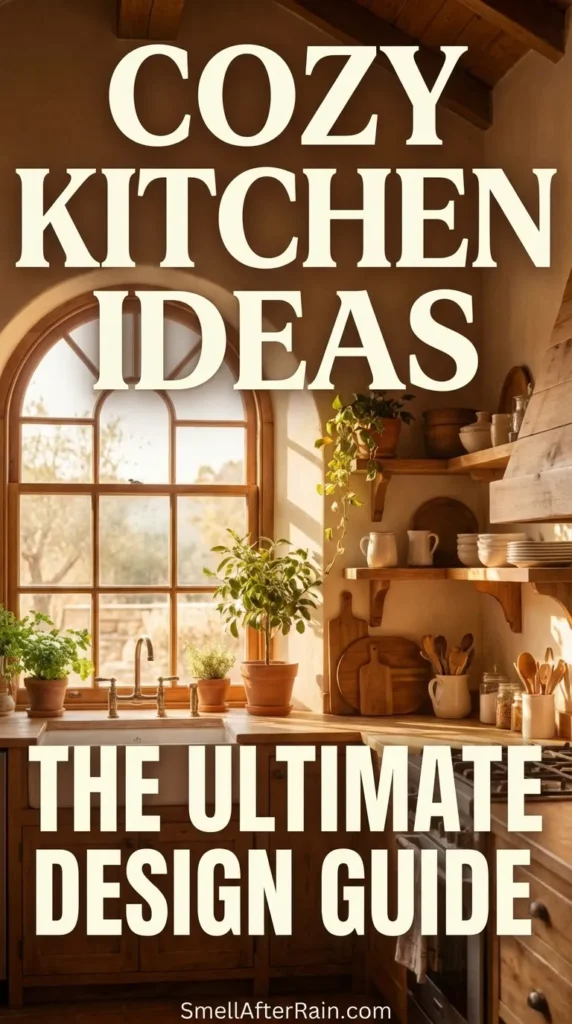
For a broad look at how these concepts come together, explore our gallery of curated kitchen ideas, which showcases the transition from stark modernism to warm traditionalism.
What Is OUT: The Decline of the ‘Clinical’ Kitchen
To understand where we are going, we must acknowledge what we are leaving behind. If you are planning a renovation in 2026, tread carefully with these fading trends.
1. All-White Everything
The all-white kitchen was the default setting for fifteen years. It was safe, clean, and “open.” However, it also lacked depth. In 2026, an all-white kitchen risks looking dated and developer-grade. The lack of contrast creates visual fatigue. While white will always be classic, the clinical application of it—white floors, white counters, white cabinets—is officially out.
2. Open Floating Shelves (Used Incorrectly)
While open shelving isn’t dead, the trend of replacing all upper cabinets with floating wood planks is waning. Homeowners have realized the maintenance nightmare of grease and dust on their dishware. The new aesthetic favors glass-front cabinetry or a mix of closed storage with very intentional, small display ledges.
3. Faux-Industrial Grey Flooring
Grey laminate wood-look flooring was ubiquitous in 2018. Today, it reads as artificial. The trend is moving sharply back to natural wood tones—honey oak, walnut, and even darker stains.
What Is IN: The Rise of the Cozy Kitchen Aesthetic
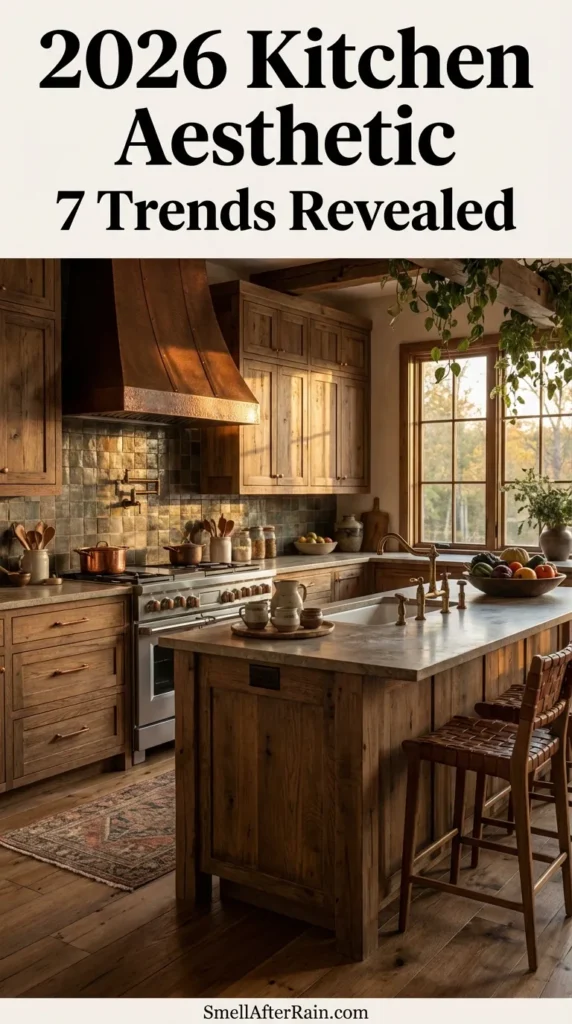
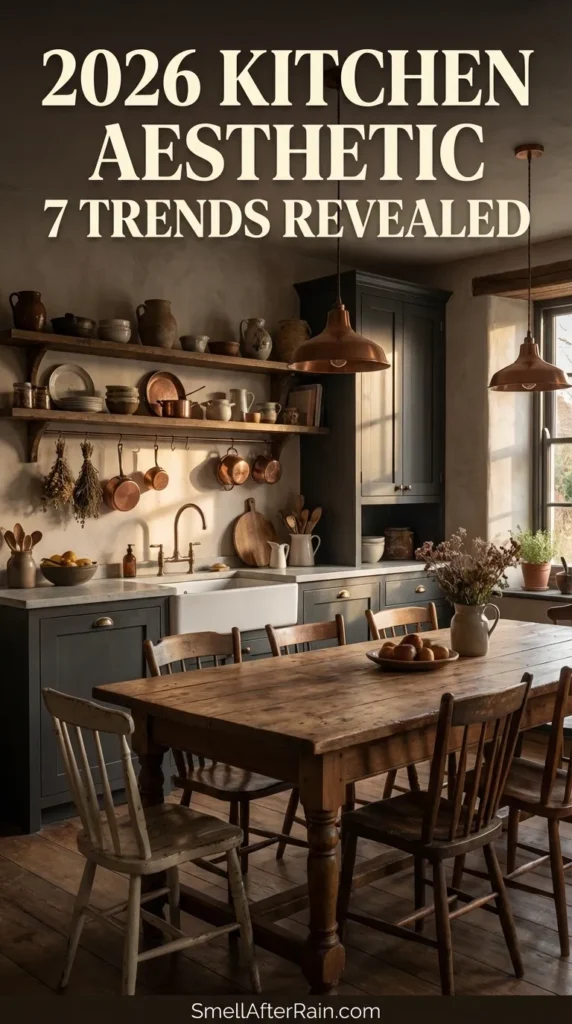
The antidote to the white box is the cozy kitchen. This aesthetic is grounded in warmth, intimacy, and tactile engagement. It turns the kitchen into a room you want to read a book in, not just chop vegetables.
Layered Lighting and Ambiance
A cozy kitchen relies heavily on lighting that is not just functional. We are seeing the introduction of table lamps on countertops, fabric lampshades on sconces, and dimmable mood lighting. It’s about softening the edges of the room.
The “Furniture” Look
Cabinetry is evolving to look less like kitchen boxes and more like freestanding furniture. This includes legs on islands, non-standard depths, and mixed hardware. This approach is particularly effective in creating a cozy kitchen atmosphere that bridges the gap between culinary space and living room.
Material Science: Why Earthy Textures Are Replacing High Gloss
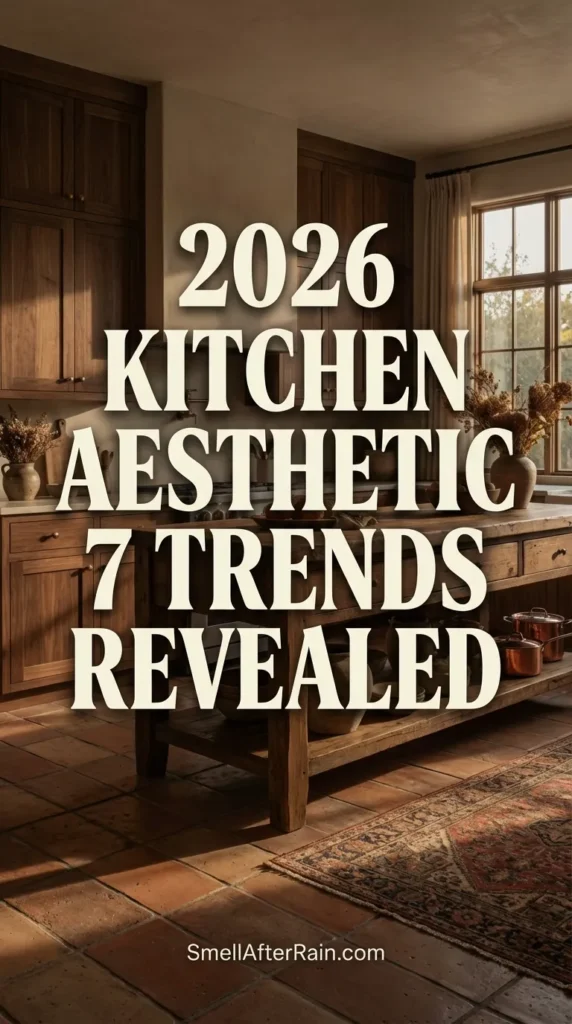
If the color of the last decade was white, the texture was “smooth.” The earthy kitchen trend of 2026 flips this on its head. We are craving friction—surfaces that feel like they came from the earth.
Unlacquered Brass and Copper
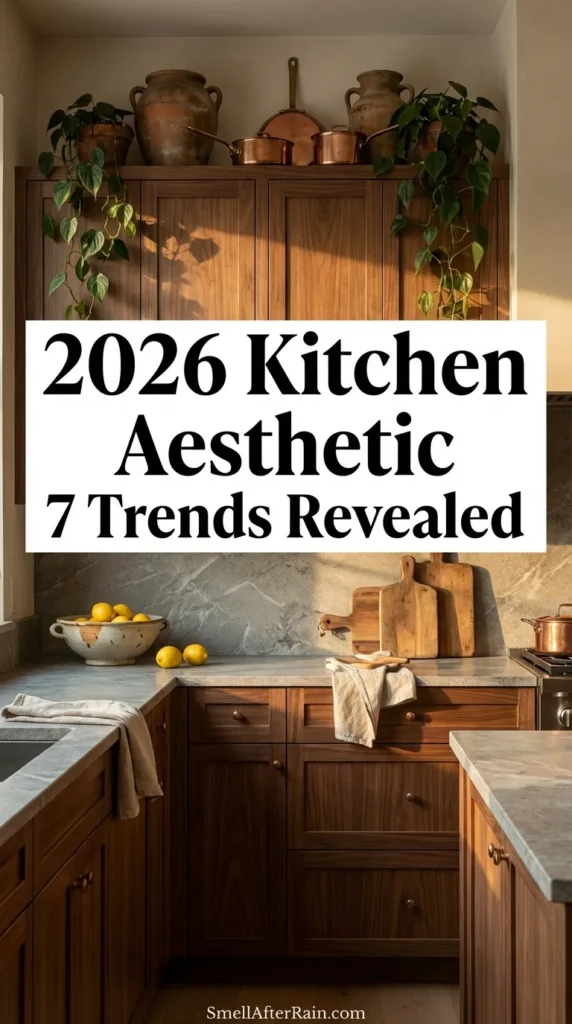
Chrome and matte black are taking a backseat to living finishes. Unlacquered brass, which develops a patina over time, is a hallmark of the new aesthetic. It implies age and permanence. It tells a story of use, darkening in spots where it is touched most often.
Natural Stone with Veining
Quartz has been the king of durability, but natural marble, quartzite, and soapstone are returning for their unparalleled beauty. Homeowners are accepting the maintenance of natural stone in exchange for its organic, unrepeatable patterns. Viola marble (with deep purple veining) and green soapstone are trending heavily.
Zellige and Hand-Formed Tiles
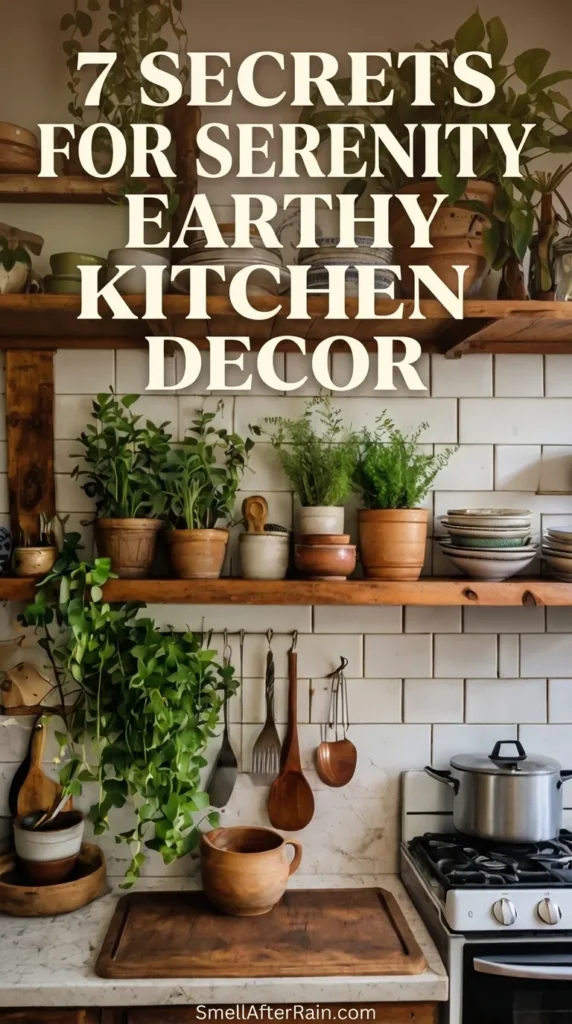
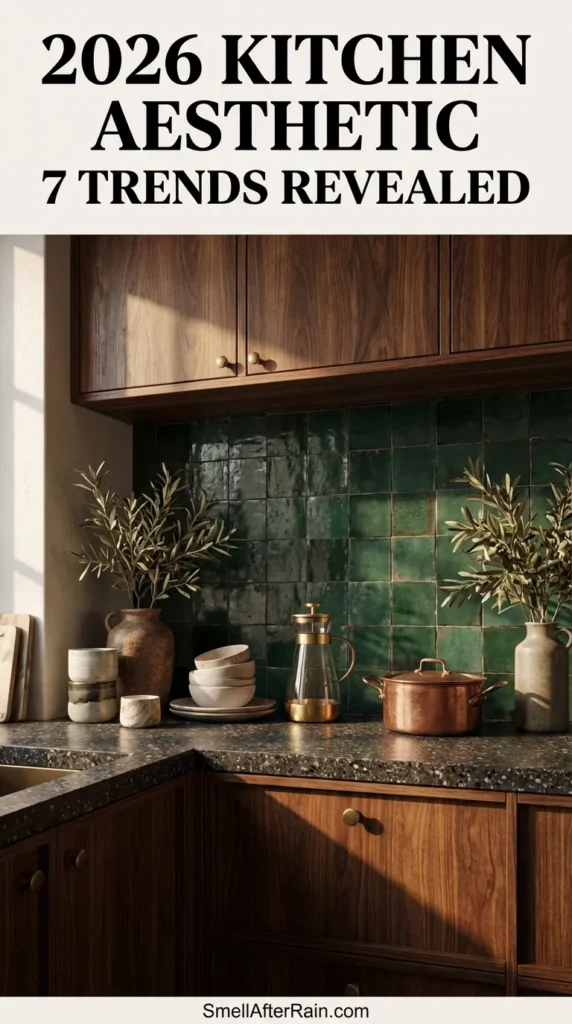
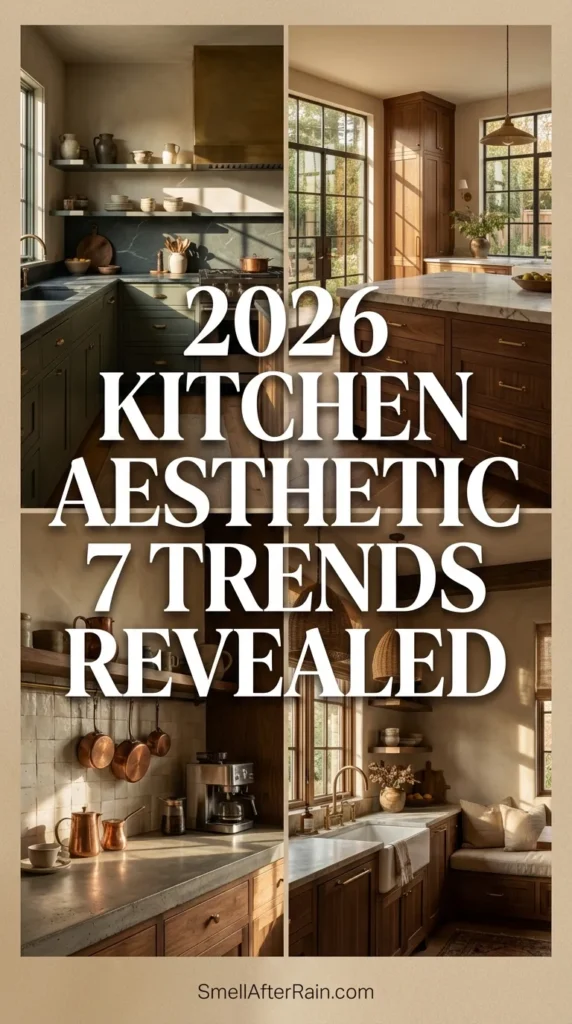
Perfectly laser-cut subway tiles are being replaced by Moroccan Zellige tiles. These tiles have irregular surfaces and edges, reflecting light in shimmering, watery patterns that add immense depth to a backsplash. For more on integrating these natural elements, read our guide on 7 secrets for earthy kitchen serenity.
Small Kitchen Design: Maximizing Aesthetic in Micro Spaces
One of the biggest misconceptions is that you need a massive footprint to achieve a high-design look. In fact, constraints often breed creativity. Small kitchen design in 2026 is about treating the space like a jewel box.
The “Jewel Box” Theory
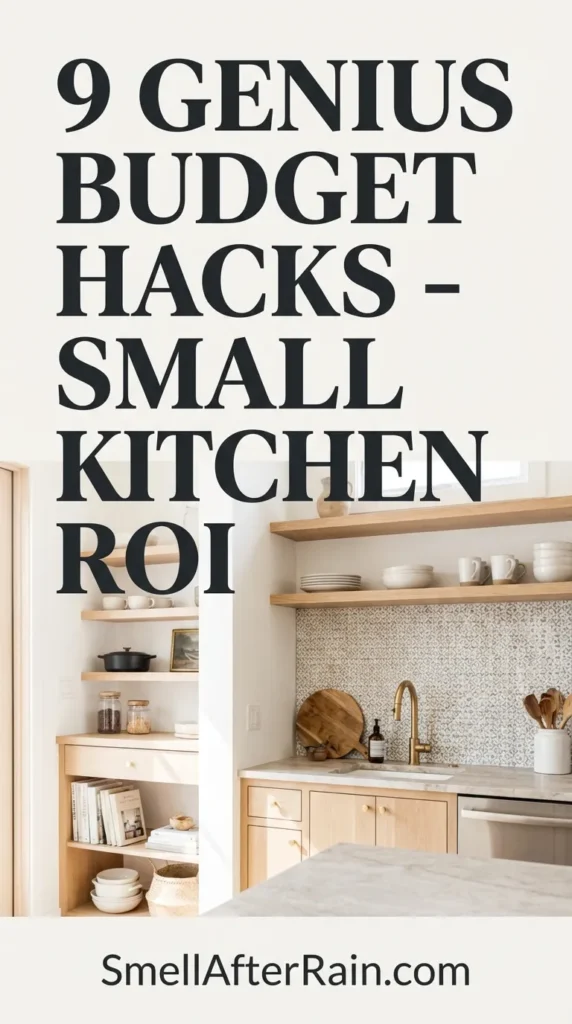
In a small space, you can afford to use higher-end materials because you need less of them. You might not be able to afford a slab of Calacatta Gold for a massive island, but for a 6-foot galley counter? It becomes accessible. This is the core principle of high-ROI small kitchen hacks.
Verticality and Flow
When floor space is limited, the aesthetic must travel upwards. Floor-to-ceiling cabinetry draws the eye up, making the room feel taller. However, avoid the mistake of bulky upper cabinets that close in the room. Utilizing glass fronts or lighter colors on uppers can maintain an airy feel.
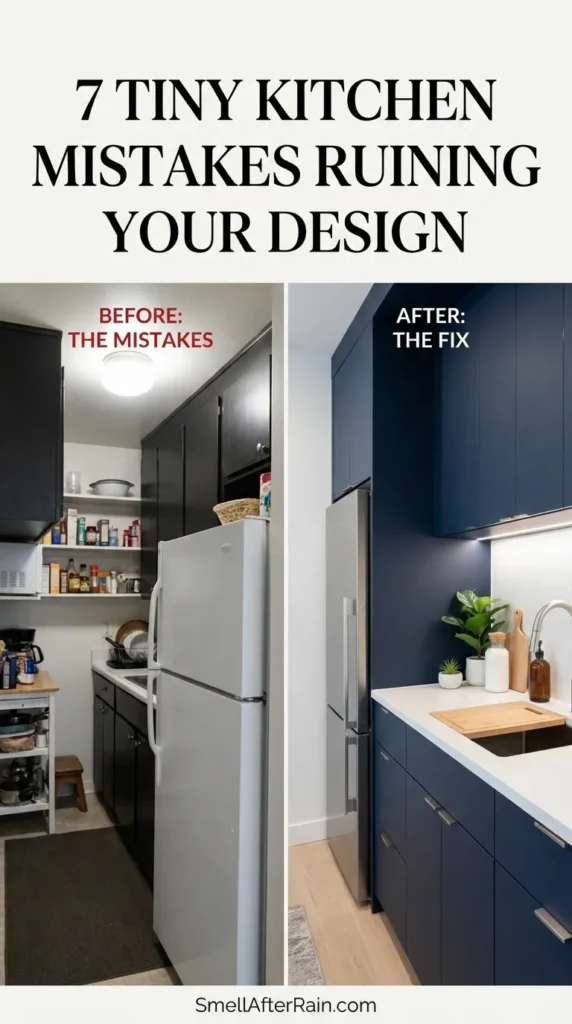
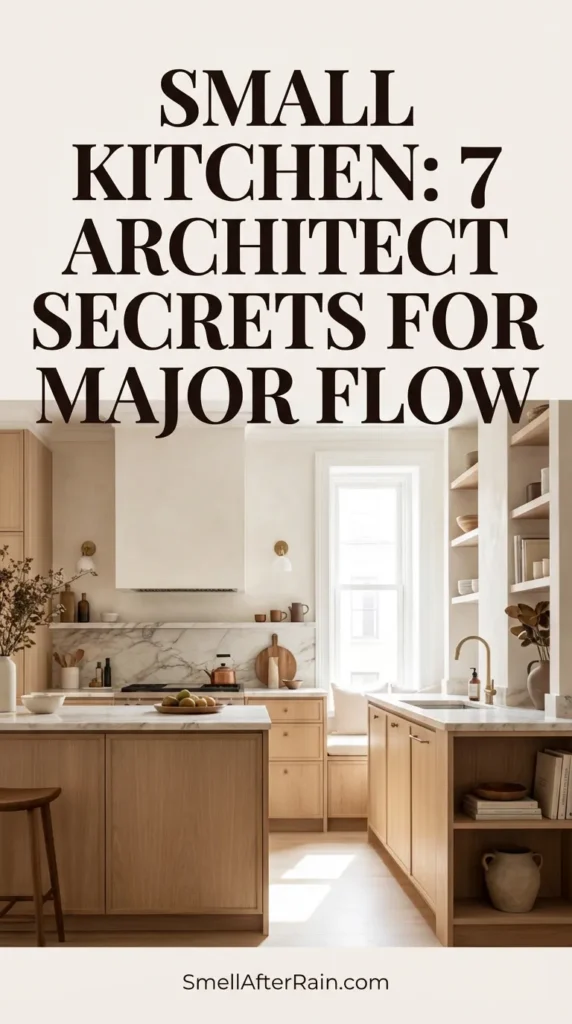
Furthermore, flow is critical. A common error in tight spaces is obstructing the “work triangle” with aesthetic choices that hamper movement. Before finalizing your layout, review these 7 tiny kitchen mistakes ruining your design to ensure your aesthetic doesn’t kill your functionality.
Hidden Functionality
The aesthetic of a small kitchen is easily ruined by clutter. Appliance garages—cabinets specifically designed to hide toasters and coffee makers—are essential. Architects are finding genius ways to integrate these into small kitchen layouts for major flow, ensuring the visual lines remain unbroken.
Color Theory 2026: From Greige to Moody Saturation
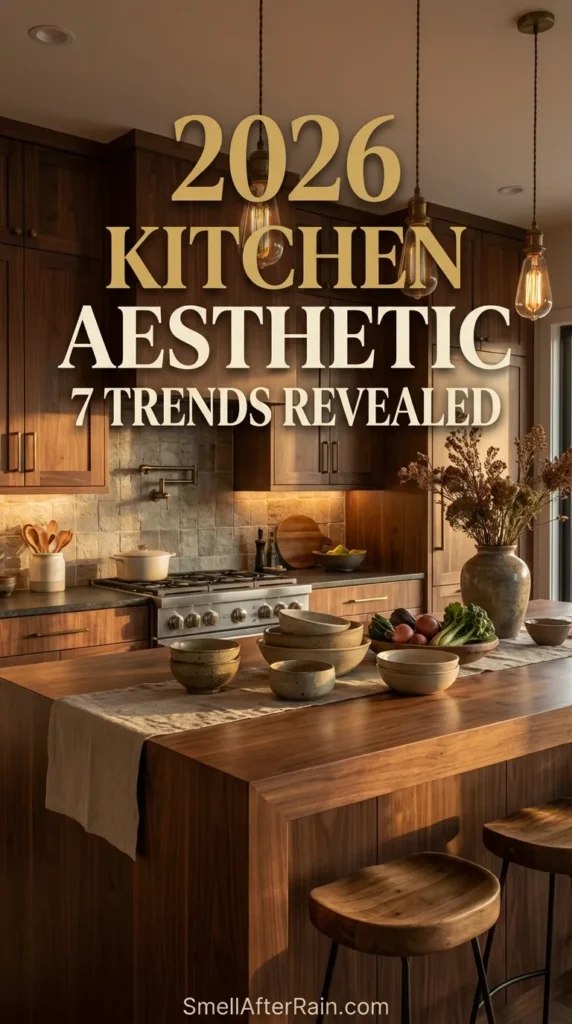
We are witnessing a departure from “Greige” (Grey-Beige) toward colors that have historical weight. The aesthetic kitchen ideas dominating social media feature deep, moody hues or warm, buttery neutrals.
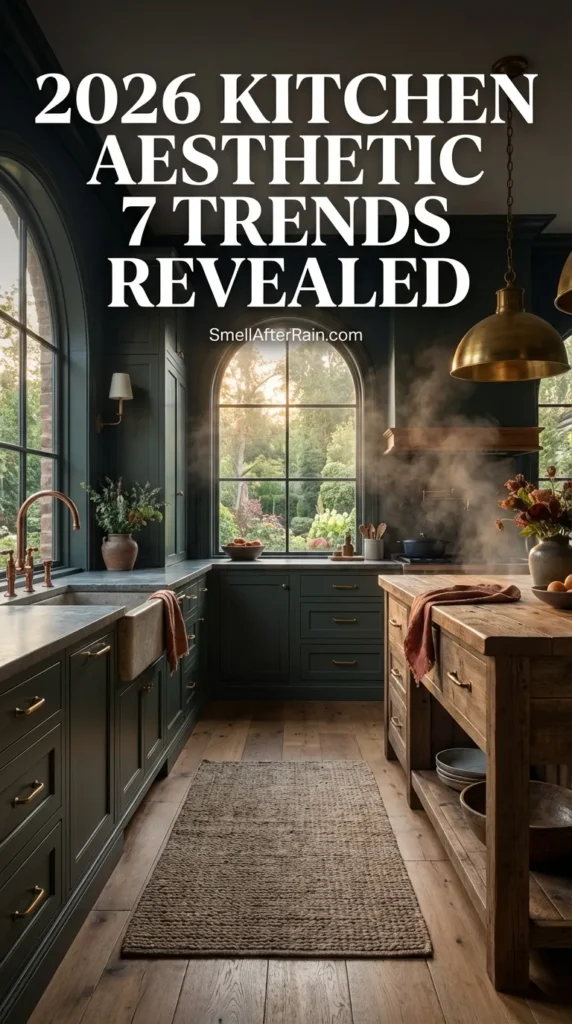
- Dark Greens and Olives: Green acts as a neutral in nature, and it does the same in the kitchen. It pairs beautifully with wood and brass.
- Burgundy and Aubergine: For the bold, deep reds and purples are entering the chat, often used on islands or lower cabinets to ground the space.
- Warm Whites and Creams: When white is used, it is creamy, yellow-based, and soft. It evokes plaster and parchment rather than printer paper.
This return to color is partly a reaction against the “flip house” aesthetic. It signals that a home is customized for the owner, not genericized for a hypothetical buyer.
The Evolution of Layouts: Open Kitchen Design vs. The Scullery Return
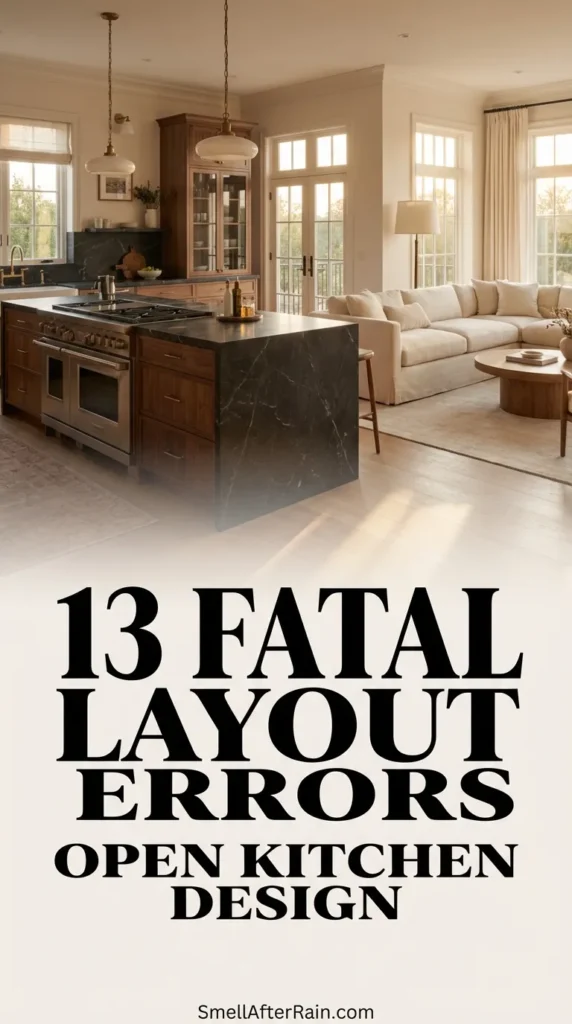
For years, open kitchen design was the holy grail. We knocked down walls to connect the kitchen to the living room. While this promotes togetherness, it also puts your dirty dishes on display for the entire dinner party.
The Rise of the “Messy Kitchen”
A fascinating trend for 2026 is the return of the scullery or the “messy kitchen.” This is a small, secondary room behind the main kitchen where the actual prep and cleaning happen. It allows the main kitchen—the “show kitchen”—to remain pristine for entertaining.
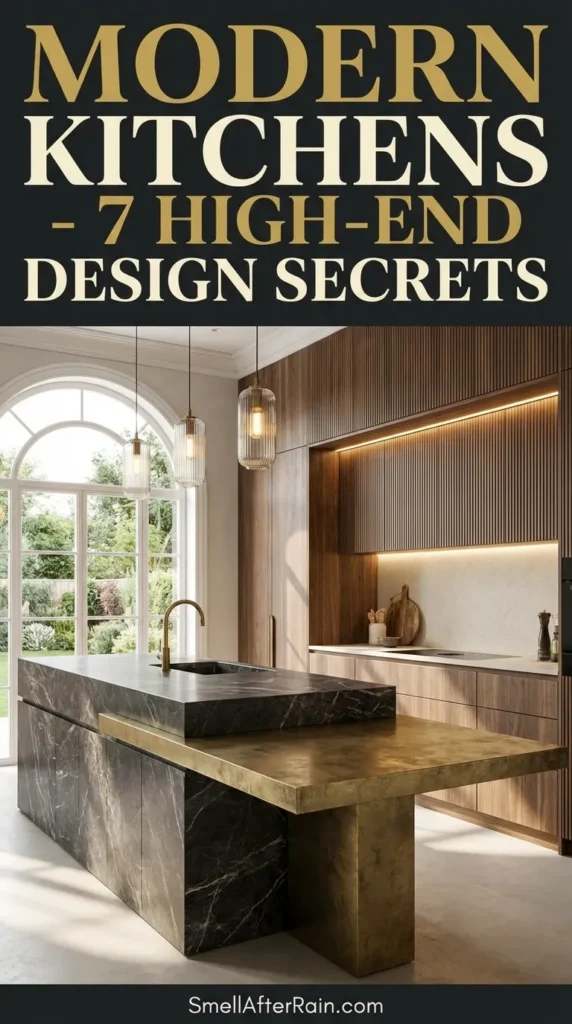
For those without the square footage for a second room, this trend manifests as “hidden stations” or large pantry cupboards that house the chaos. This aligns with high-end design secrets that prioritize visual calmness.
Sustainable & Vintage Integration: The “Granny Chic” Renaissance
Sustainability is no longer a buzzword; it is a design imperative. However, the aesthetic expression of sustainability has shifted. It is not just about bamboo floors; it is about reusing the old.
Vintage Rugs and Art: Placing a Persian runner in the kitchen or hanging oil paintings near the stove adds immediate soul. It contradicts the “wet room” vibe of the past.
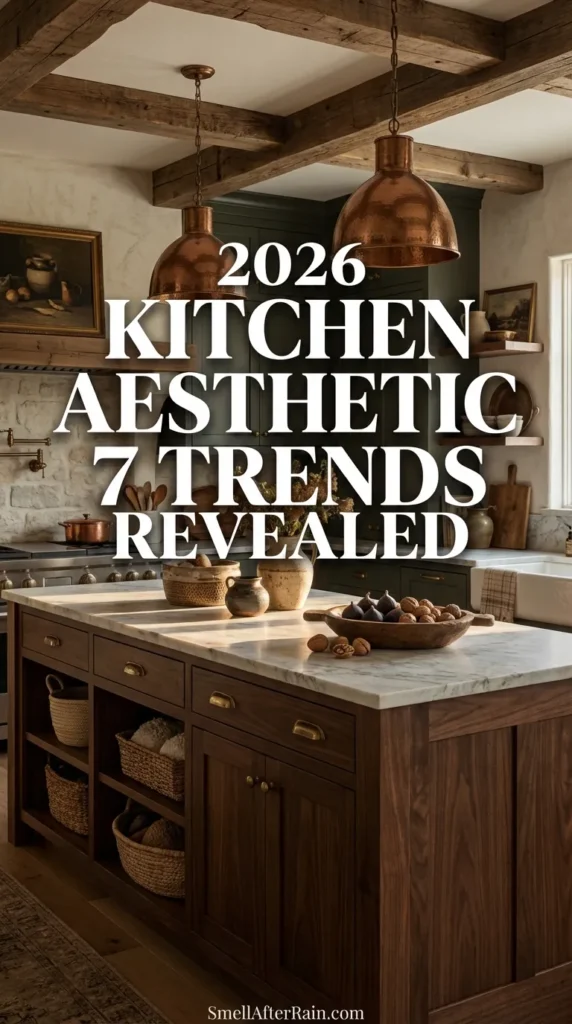
Reclaimed Wood: Using reclaimed beams for ceilings or island countertops brings history into the space. It adds a tactile roughness that contrasts beautifully with smooth stone.
Lighting as Art: The Jewelry of the Kitchen
Finally, the most impactful change in kitchen ideas aesthetic is lighting. Lighting is the jewelry of the room. The trend is moving away from recessed can lights (which can create harsh shadows) toward decorative fixtures.
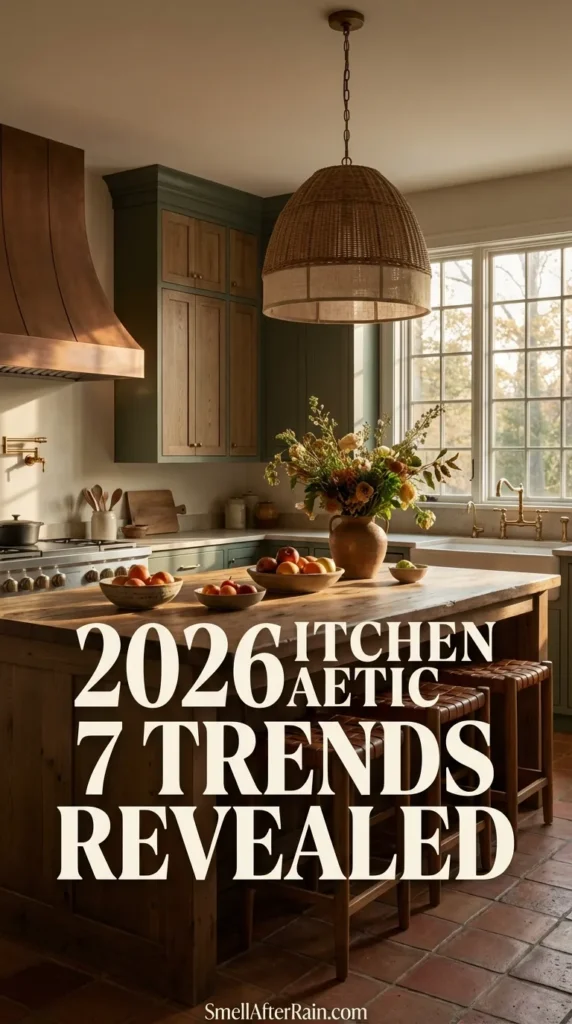
Oversized pendants made of woven materials, ceramic, or blown glass are serving as focal points. Sconces mounted above shelving add a library-like feel. The goal is to layer light so that the kitchen can transition from a bright workspace in the morning to a moody, intimate lounge in the evening.
Frequently Asked Questions
1. What is the most popular kitchen aesthetic for 2026?
The most popular aesthetic for 2026 is “Organic Modern” or “Lived-in Luxury.” This style combines clean modern lines with warm, earthy materials like unlacquered brass, natural wood, and stone. It moves away from sterile white spaces to embrace texture, warmth, and personality.
2. How can I make my very small kitchen look aesthetic?
To make a very small kitchen aesthetic, focus on verticality and decluttering. Use floor-to-ceiling cabinetry to draw the eye up, invest in beautiful hardware (knobs and pulls) as they act like jewelry, and stick to a cohesive color palette (monochromatic or analogous) to reduce visual noise. Integrating hidden appliance storage is also key.
3. Are white kitchens officially out of style?
Clinical, all-white kitchens with high-gloss finishes are falling out of favor. However, warm white kitchens (using creamy, off-white, or plaster tones) mixed with wood textures remain timeless. The trend is simply shifting from “stark white” to “warm neutral.”
4. What is the “Cozy Kitchen” aesthetic?
The Cozy Kitchen aesthetic prioritizes comfort and ambiance. It treats the kitchen as a living space, incorporating elements like table lamps, soft rugs, warm wood tones, open display shelves for personal items, and comfortable seating. It contrasts sharply with the industrial, utilitarian kitchen styles of the past.
5. How do I add earthy vibes to a modern kitchen?
You can add earthy vibes by swapping out chrome hardware for unlacquered brass or bronze, introducing wooden elements (like cutting boards, stools, or open shelves), and using ceramics or stone with natural imperfections. Adding plants and using warm, nature-inspired paint colors like olive green or terracotta also helps.
6. What are the best colors for a kitchen in 2026?
The trending colors for 2026 include moody greens (forest, olive, sage), warm terracottas, deep burgundies, and chocolate browns. For neutrals, designers are favoring mushroom, taupe, and creamy alabaster over cool greys.
7. Is open kitchen design still popular?
While open concepts are still popular for social reasons, there is a growing trend toward “broken plan” living or including a separate scullery/prep kitchen. Homeowners are increasingly valuing the ability to hide the mess of cooking from the main living and entertaining areas.
8. How can I update my kitchen aesthetic on a budget?
Budget-friendly updates include painting cabinets a trending color, swapping out cabinet hardware, changing the faucet, adding a vintage runner rug, or installing new pendant lighting. These changes have a high visual impact without the cost of a full renovation.