- Phase 1: Structural Layout & The Open Kitchen Concept
- Phase 2: The Foundation – Flooring and Subfloor Prep
- Phase 3: Cabinetry Architecture – The Modern Country Backbone
- Phase 4: Countertops & Backsplash – Balancing Rustic and Refined
- Phase 5: The Apron Front Sink – Installation & Plumbing
- Phase 6: Lighting Plan – Layering for a Cozy Atmosphere
- Phase 7: Hardware & Fixtures – The Jewelry of the Room
- Phase 8: Final Styling – Achieving the Warm Neutral Look
- Frequently Asked Questions
- Conclusion
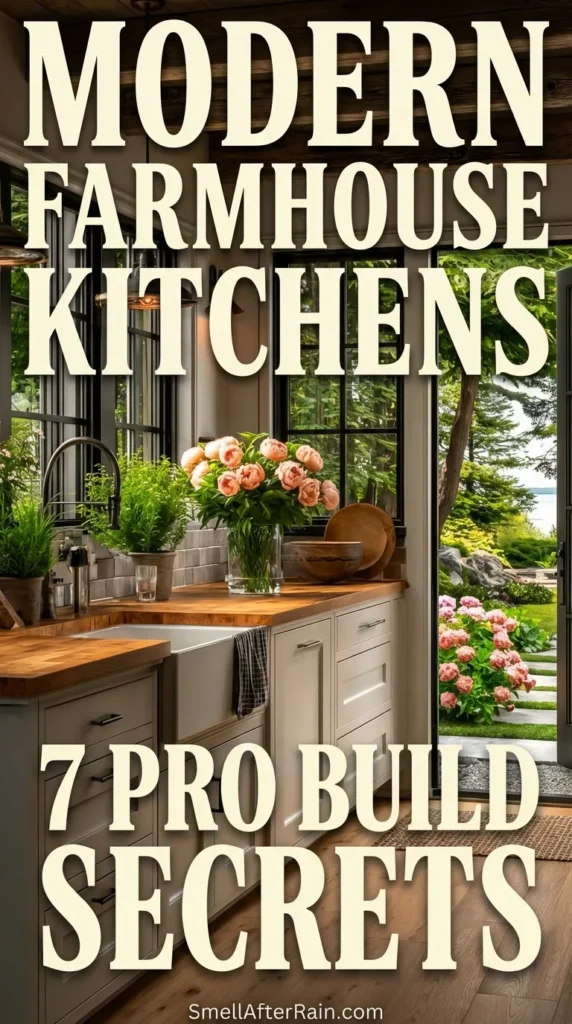
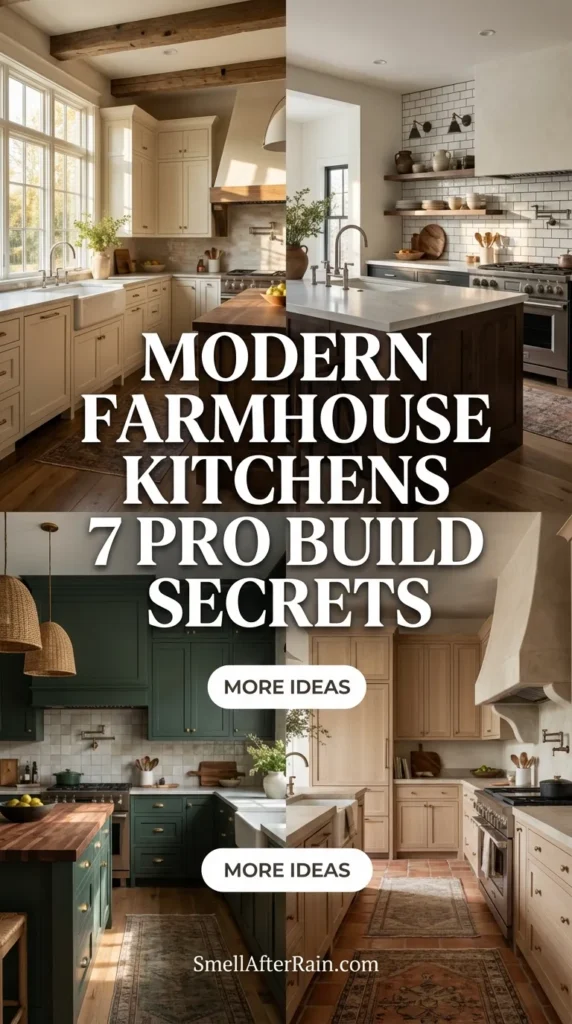
In my twenty years as a master contractor, I have seen trends come and go, but the modern farmhouse kitchen remains the gold standard for homeowners seeking a balance of comfort and sophistication. It is not just about shiplap and mason jars anymore. The 2025 approach to this aesthetic—often referred to as a contemporary farmhouse kitchen—relies on high-end architectural details, structural integrity, and a warm neutral kitchen palette that stands the test of time.
Achieving this look requires more than just decor; it requires a systematic build strategy. Whether you are gutting a 1980s colonial or building from scratch, the execution details matter. From ensuring your open kitchen design flows correctly to selecting materials that age gracefully, this guide will walk you through the renovation process with the precision of a site supervisor.
If you are looking for broad inspiration, check out our general kitchen ideas, but if you are ready to break ground, let’s put on the hard hats and dive into the mechanics of building a timeless kitchen.
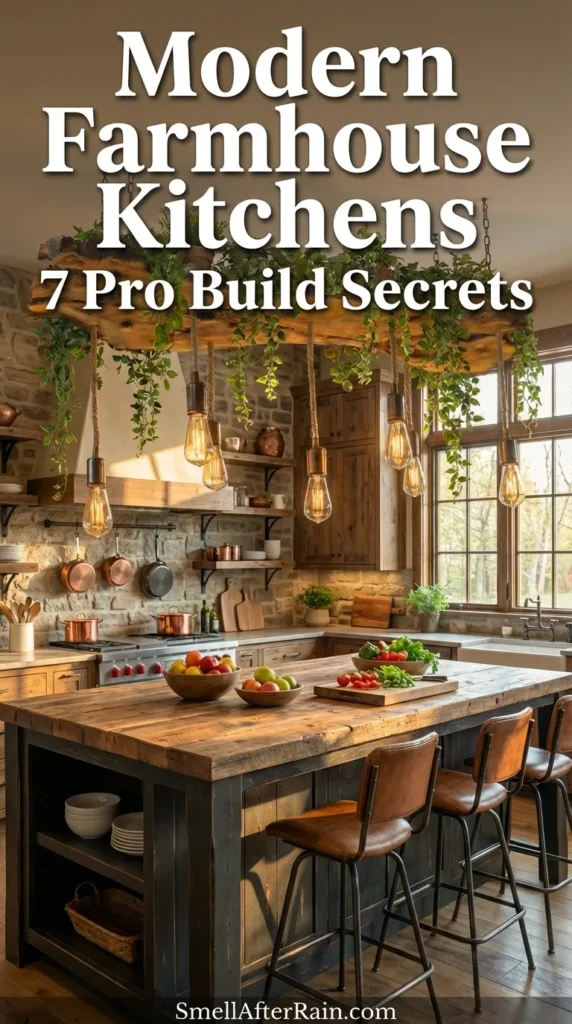
Phase 1: Structural Layout & The Open Kitchen Concept
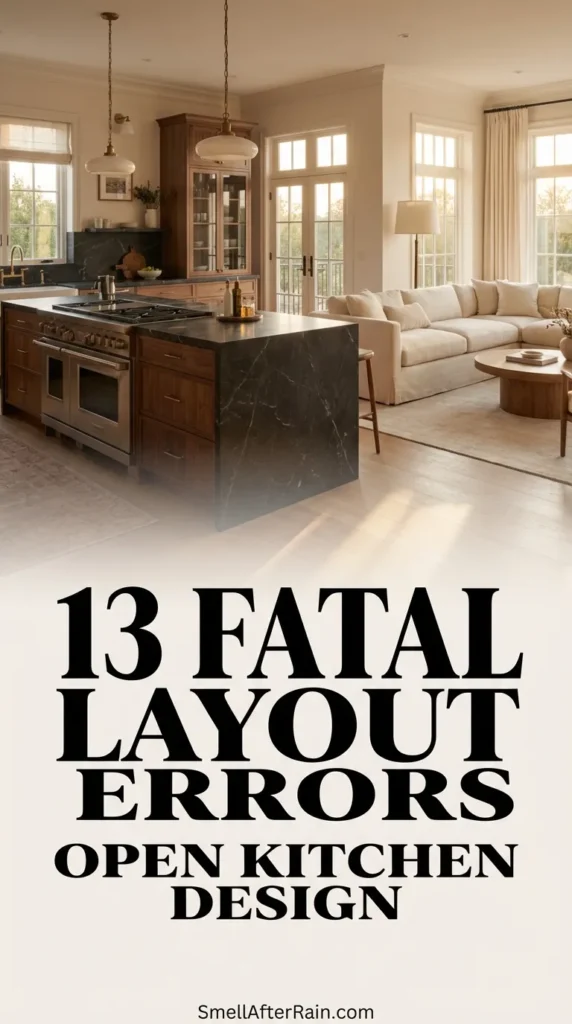
The hallmark of a modern farm kitchen is the gathering space. Historically, farmhouses were the hub of activity, and today, that translates into an open kitchen layout. As a contractor, my first task is often identifying load-bearing walls to determine feasibility.
Demolition and Beam Installation
To achieve that airy, breathable space, we often remove the partition between the kitchen and the living area. This usually involves installing an LVL (Laminated Veneer Lumber) beam or a steel I-beam. For a rustic modern kitchen aesthetic, many clients choose to wrap these beams in reclaimed barn wood or rough-sawn cedar. This hides the structural steel while adding immediate character.
The Work Triangle vs. Zones
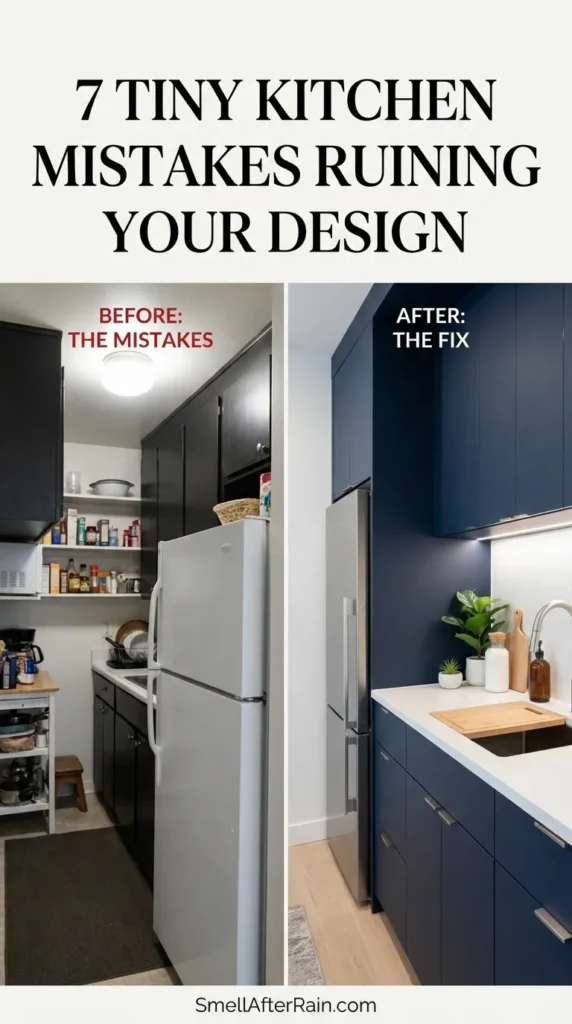
While the classic work triangle (sink, stove, fridge) is standard, modern footprints often require “zone planning.” In a large farm style kitchen, you might have a prep zone on the island and a cleaning zone on the perimeter. Failing to plan this flow is one of the tiny kitchen mistakes ruining your design. We always tape out the layout on the subfloor before ordering cabinets to ensure clearances are at least 42 to 48 inches for major walkways.
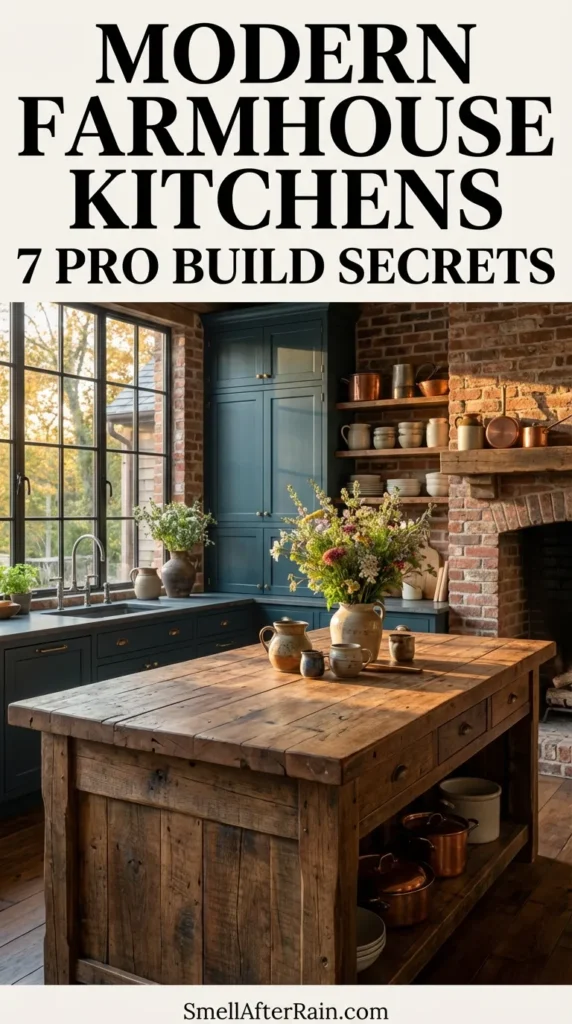
Phase 2: The Foundation – Flooring and Subfloor Prep
Your flooring choice dictates the warmth of the room. In a modern country kitchen, we almost exclusively recommend wide-plank engineered hardwood or high-end LVP (Luxury Vinyl Plank) if moisture is a major concern. The key here is the tone.
Selecting the Right Wood Tone
Avoid the orange-hued oaks of the 90s or the dark espresso of the 2000s. We aim for “European White Oak” or distinctively matte finishes. These lighter, desaturated woods hide dust better and anchor the warm neutral kitchen palette. Before installation, ensure your subfloor is perfectly leveled. Self-leveling concrete may be required, as large format planks will creak or crack if the substrate has dips greater than 3/16 inch over a 10-foot span.
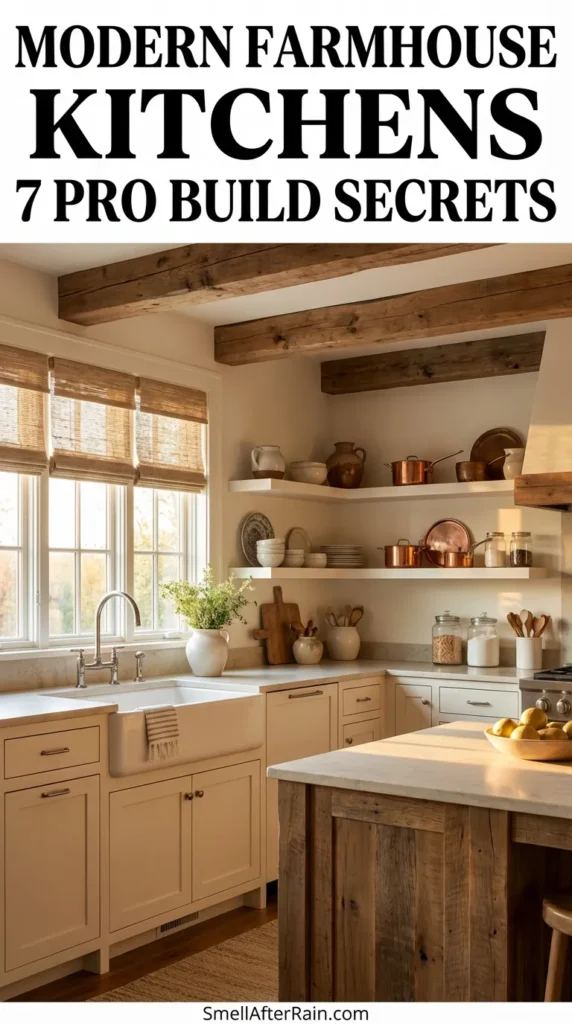
Phase 3: Cabinetry Architecture – The Modern Country Backbone
Cabinetry eats up the largest portion of your budget, so getting this right is critical for ROI. You can read more about budgeting in our guide on budget hacks for kitchen ROI.
Shaker vs. Slab Styles
For a true farm style kitchen, Shaker cabinets are traditional. However, to modernize it, I recommend a “slim shaker” (also called a micro-shaker). The rails and stiles are thinner, providing a sleeker, more contemporary profile. If you want to push the envelope toward rustic modern kitchen design, consider mixing finishes: painted creamy white perimeters with a stained walnut or rift-sawn oak island.
The Inset Cabinet Debate
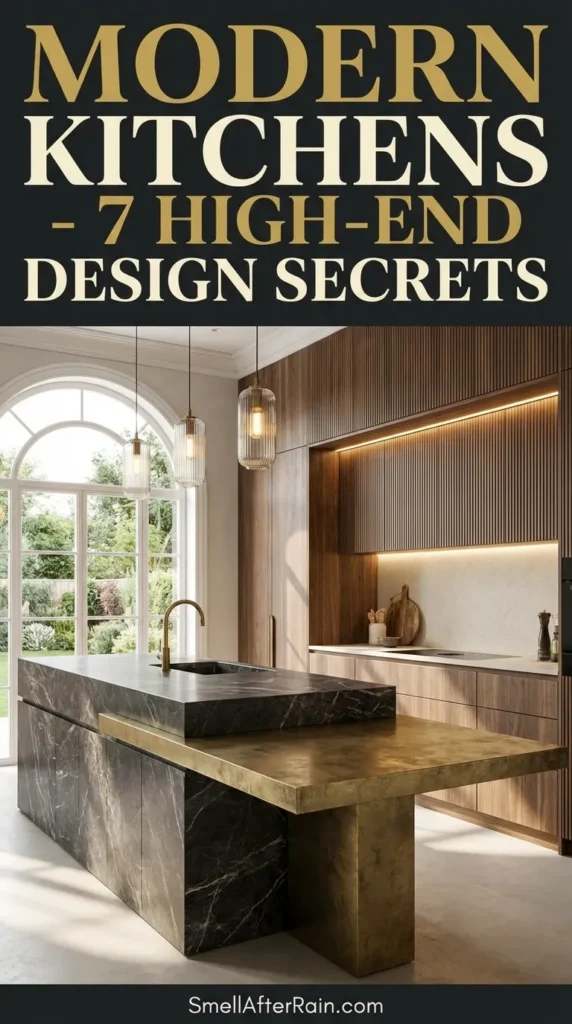
If your budget allows, inset cabinetry (where the door sits flush inside the frame) offers that bespoke, furniture-like quality essential for a high-end farmhouse look. Full overlay is cheaper, but inset screams craftsmanship. For more on high-end selections, review our modern kitchen design secrets.
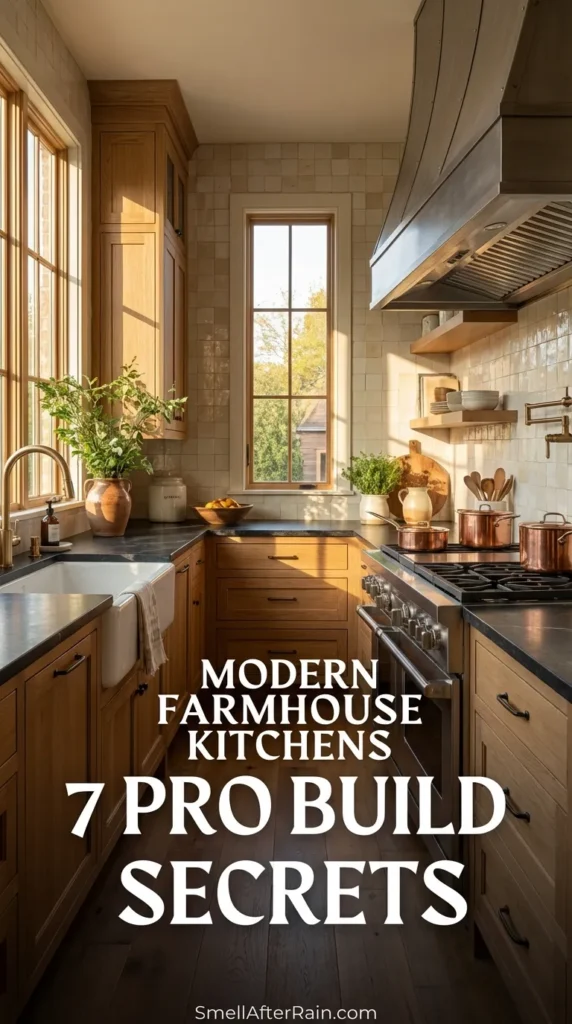
Phase 4: Countertops & Backsplash – Balancing Rustic and Refined
This phase is where the “Modern” meets the “Farmhouse.” We need durable surfaces that look organic.
Stone Selection: Soapstone, Quartz, or Marble?
Soapstone is the contractor’s choice for authenticity. It is non-porous, handles heat incredibly well, and develops a patina that looks better with age—perfect for a cozy kitchen. However, it is soft and can scratch. For clients who want the look without the maintenance, honed black granite or a matte concrete-look quartz are excellent alternatives.
For the perimeter, a marble-look quartz (like Calacatta Gold) pairs beautifully with warm wood elements. It provides the brightness needed in a timeless kitchen without the etching risks of real Carrara marble.
The Backsplash Strategy
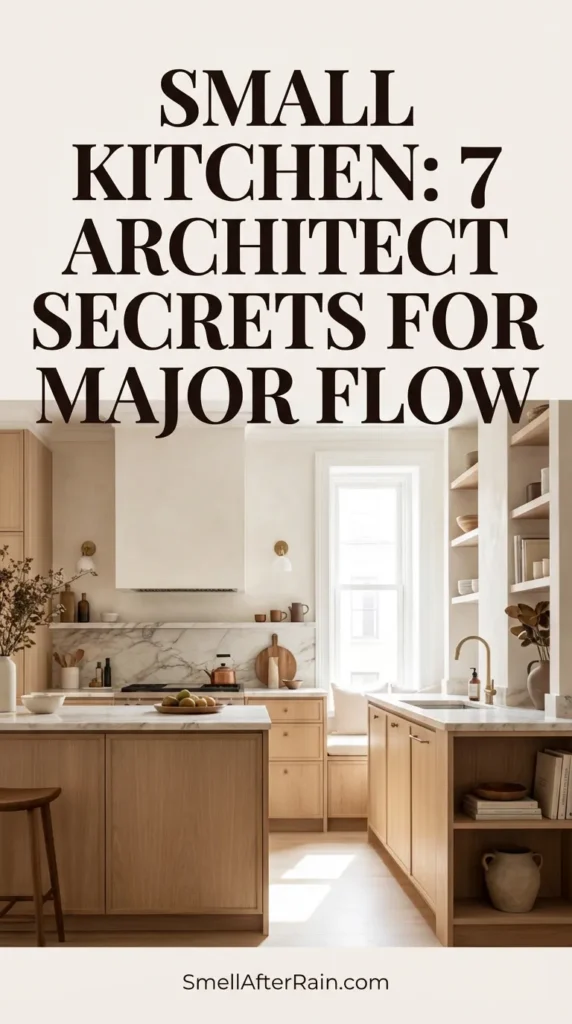
Subway tile is the safe bet, but to elevate the design, we are moving toward Zellige tiles. These handmade Moroccan tiles have irregular surfaces that catch the light, adding texture that flat ceramic cannot match. If you are struggling to make a small space feel grand, check out architect secrets for major flow.
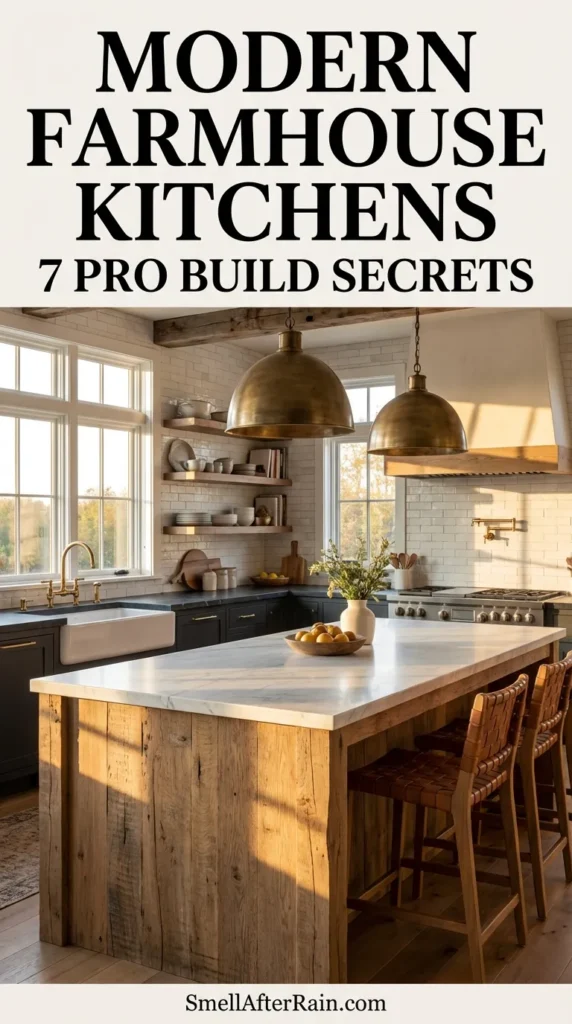
Phase 5: The Apron Front Sink – Installation & Plumbing
No modern farm kitchen is complete without an apron front (farmhouse) sink. As a contractor, I must warn you: this is not a simple drop-in installation.
Structural Support
A cast iron or fireclay farmhouse sink can weigh over 100 pounds empty. Once filled with water and dishes, the weight is immense. We build a dedicated cradle inside the sink base cabinet using 2×4 framing to support the load. Do not rely solely on the cabinet sides.
Material Choices
White fireclay is classic, but it can chip. Stainless steel offers a more industrial, contemporary farmhouse kitchen vibe. Recently, we have seen a surge in composite granite sinks in charcoal or matte white, which offer incredible durability.
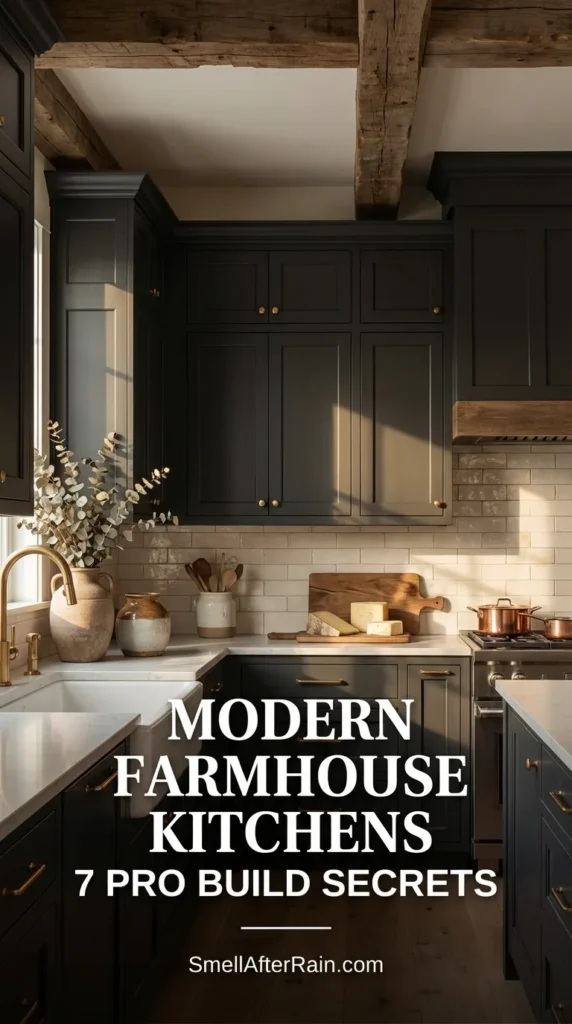
Phase 6: Lighting Plan – Layering for a Cozy Atmosphere
Lighting is the difference between a sterile operating room and a cozy kitchen. We layer lighting in three stages:
- Recessed Cans (General): Placed on dimmer switches. We use 3000K LED bulbs for a clean but warm light.
- Pendants (Task/Accent): Large, oversized pendants over the island are a staple. Look for mixed metals—aged brass with matte black—to bridge the rustic and modern gap.
- Under-Cabinet (Task): Essential for prep work.
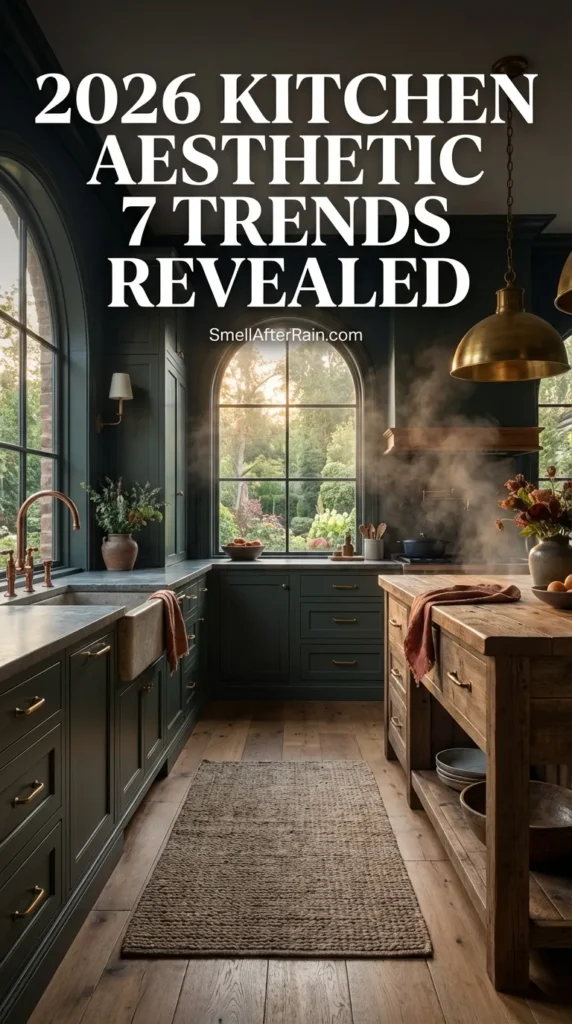
For those looking ahead, smart lighting integration is becoming standard. See what’s coming next in our 2026 kitchen trend reveal.
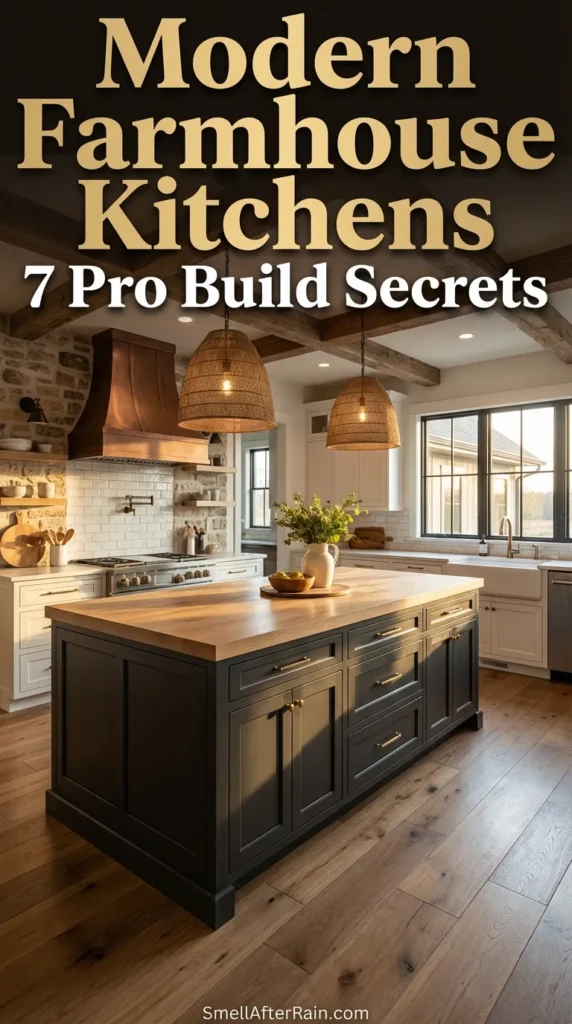
Phase 7: Hardware & Fixtures – The Jewelry of the Room
In a warm neutral kitchen, hardware provides the contrast. Unlacquered brass is currently the top choice for high-end builds. It is a “living finish,” meaning it will tarnish and darken over time, adding to that lived-in, authentic farmhouse feel.
Pro Tip: Do not use tiny knobs on large drawers. Use appliance pulls for pantries and integrated fridges. The scale of the hardware must match the scale of the cabinetry. Mixing metals is encouraged; for example, a matte black faucet pairs beautifully with brass cabinet pulls.
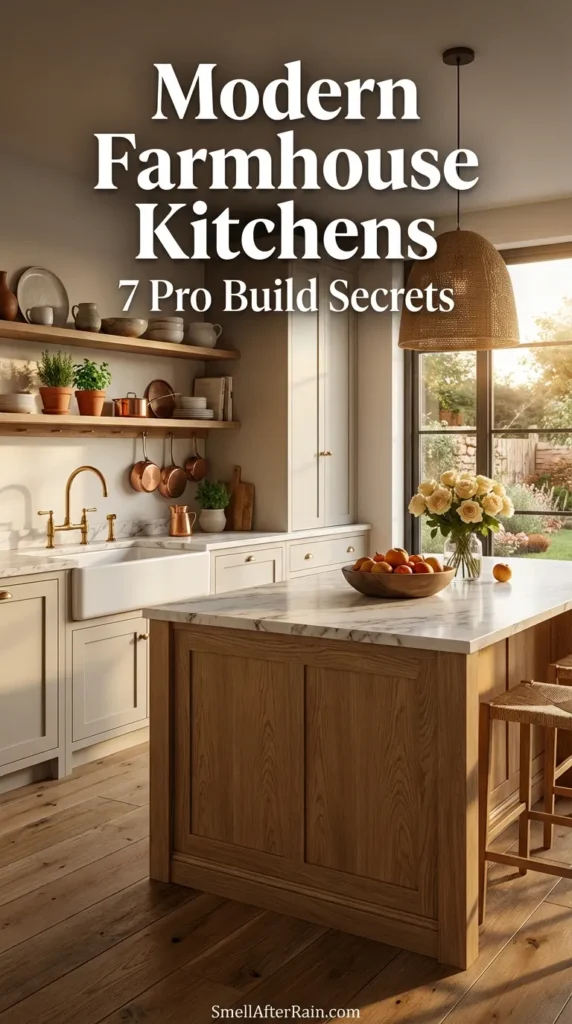
Phase 8: Final Styling – Achieving the Warm Neutral Look
Once the dust has settled and the tools are packed away, styling brings the modern country kitchen to life. This is where we soften the hard edges of stone and steel.
Textural Elements
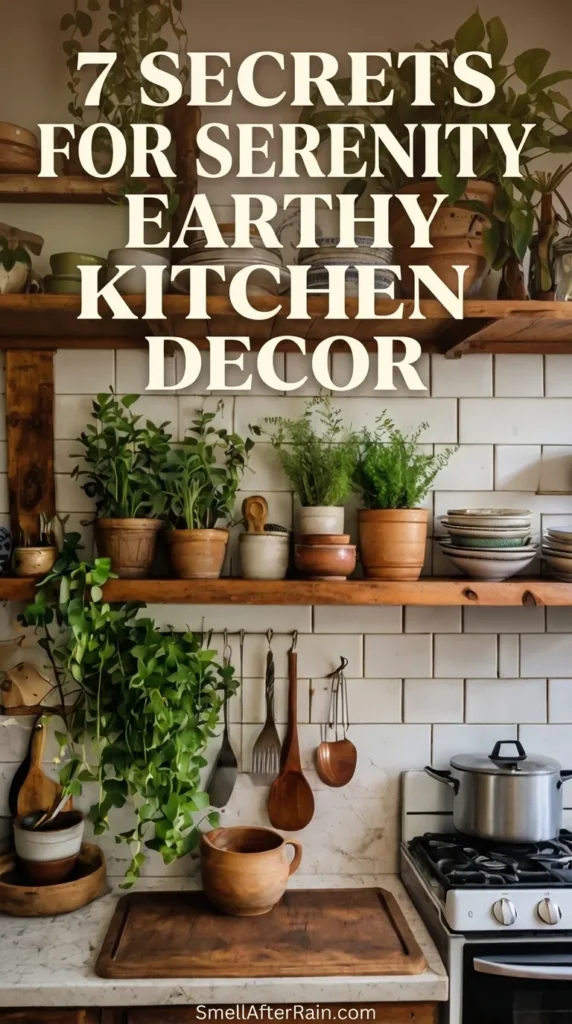
Bring in natural materials. A vintage runner rug adds color and softness underfoot. Display wooden cutting boards, ceramic crocks, and linen towels. For a deep dive into styling natural elements, read our guide on earthy kitchen decor secrets.
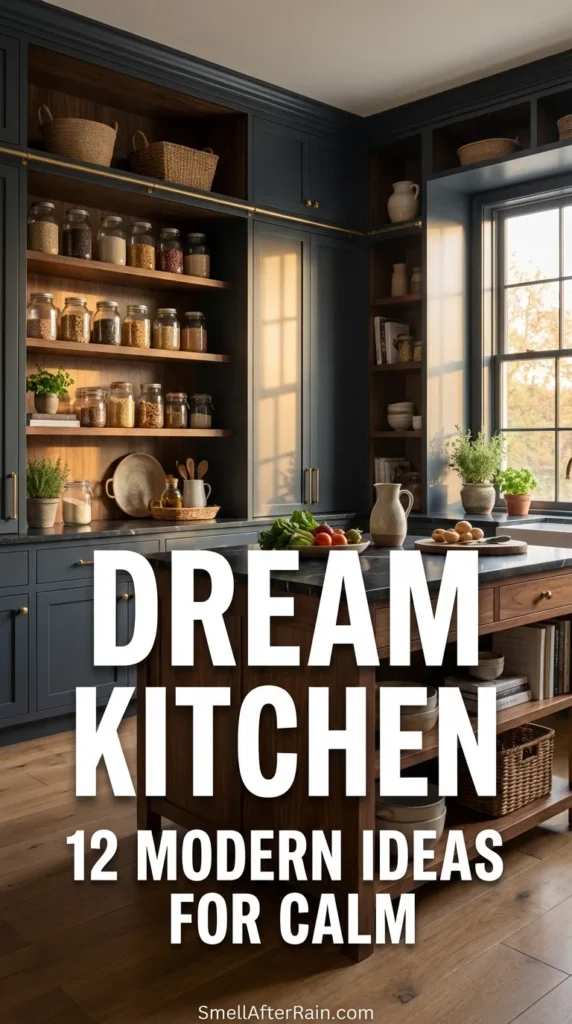
Remember, the goal is a cozy kitchen that feels curated, not cluttered. Open shelving should hold items you actually use—white dishes, glass tumblers, and serving bowls—rather than purely decorative knick-knacks. For comprehensive styling advice, visit our ultimate design guide for cozy kitchens.
If you are exploring more general home decor concepts, our main home decor hub has resources for every room in the house.
Frequently Asked Questions
What makes a kitchen “Modern Farmhouse” style?
A modern farmhouse kitchen blends the rustic warmth of traditional country design with the clean lines and functionality of contemporary architecture. Key features include shaker cabinetry, apron-front sinks, natural wood accents (like beams or islands), and a neutral color palette. The “modern” aspect comes from streamlined hardware, industrial lighting, and the absence of excessive clutter or kitschy decor.
Is the farmhouse kitchen trend going out of style in 2025?
The kitschy “Live Laugh Love” signs and excessive distressed white paint are out, but the core architectural elements of a farmhouse kitchen—quality wood, stone, practical layouts, and sturdy fixtures—are timeless. The style is evolving into a more refined, “Modern Country” or “Organic Modern” aesthetic, focusing on authenticity and material quality rather than superficial decor.
What are the best colors for a warm neutral kitchen?
Instead of stark clinical white, look for creamy whites (like Sherwin Williams Alabaster or Benjamin Moore White Dove), warm greiges (like Revere Pewter), and earthy tones like taupe, terracotta, or sage green. These colors reflect light softly and pair exceptionally well with natural wood tones like white oak and walnut.
How much does it cost to remodel a modern farmhouse kitchen?
Costs vary wildly based on square footage and finishes, but a full contractor-led renovation for a medium-sized kitchen typically ranges from $35,000 to $75,000+. High-end appliances, custom inset cabinetry, and luxury stone countertops can easily push the budget over $100,000. DIY elements can reduce labor costs, but plumbing and electrical work should always be handled by pros.
Can I have a farmhouse kitchen in a small space?
Absolutely. The principles of farmhouse design—practicality and warmth—work beautifully in small spaces. Use a single-bowl farmhouse sink to save counter space, install open shelving to make the room feel airier, and stick to a light, monochromatic color palette to visually expand the room. Good lighting is crucial in smaller footprints.
Conclusion
Building a Modern Farmhouse Kitchen is a journey of balancing dualities: old and new, rustic and polished, form and function. By focusing on structural flow, authentic materials, and professional installation techniques, you create a space that is not just a trend, but a lasting investment in your home’s value and your family’s comfort.
Whether you are in the planning phase or swinging the sledgehammer, remember that the best kitchens are built to be lived in. Take your time with the layout, invest in the touchpoints (faucets and hardware), and never underestimate the power of good lighting. Happy building.