- The Psychology of Grounding: Why We Need Earthy Kitchens
- Color Theory: The Emotional Impact of Earth Tones
- Tactile Therapy: Material Selection for Natural Kitchen Design
- Biophilic Intervention: Bringing the Outdoors In
- Illuminating Serenity: Lighting for a Cozy Kitchen
- The Modern Earthy Balance: Blending Sleek with Rustic
- Sensory Architecture: Scent, Sound, and Atmosphere
- Small Space Solutions: Earthy Decor for Tiny Kitchens
- Frequently Asked Questions
- Conclusion
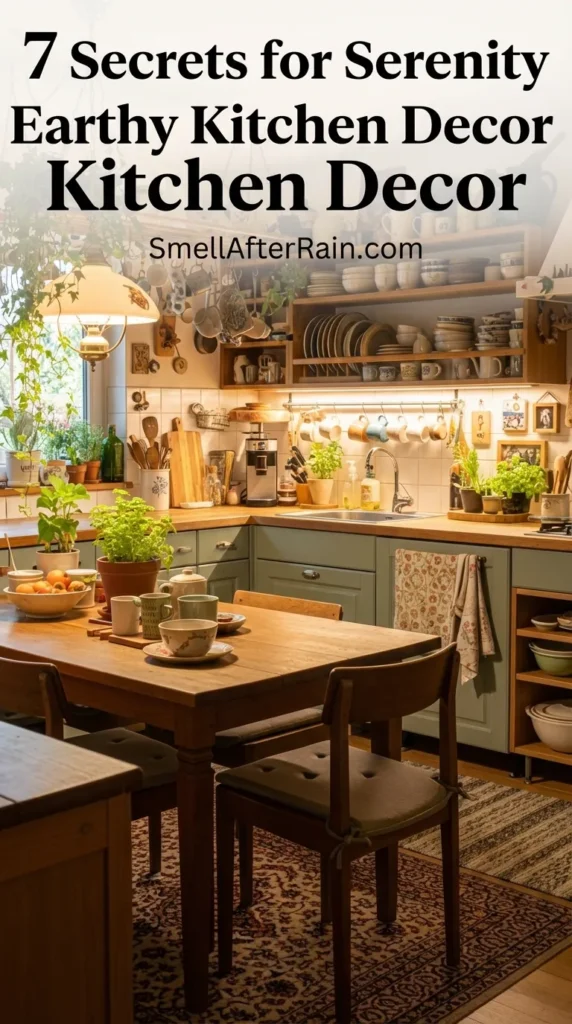
In the high-velocity world of modern living, our homes—and specifically our kitchens—have ceased to be mere culinary workshops. From the perspective of interior psychology, the kitchen is the emotional anchor of the home. It is where we nourish our bodies, but more importantly, where we seek to nourish our souls. This is why the surge in interest surrounding earthy kitchen decor is not just a fleeting trend; it is a collective response to digital fatigue. We are craving a return to the tactile, the organic, and the grounded.
Creating a natural earthy kitchen goes beyond slapping a coat of beige paint on the walls. It requires a deep understanding of how texture, light, and organic forms interact to lower cortisol levels and induce a state of calm. Whether you are renovating a sprawling farmhouse or looking for innovative kitchen ideas for a city apartment, the goal is the same: to create a sanctuary that feels as good as it looks.

The Psychology of Grounding: Why We Need Earthy Kitchens
Why do we feel an immediate sense of relief when we walk into a room filled with wood, stone, and plants? Evolutionary psychology suggests that our brains are hardwired to find safety in nature. This is often referred to as the ‘savanna hypothesis’—we prefer environments that offer resources (represented by greenery) and shelter (represented by warm, cave-like tones).
In the context of earthy homes, this translates to ‘grounding.’ A kitchen filled with stainless steel and high-gloss white surfaces can feel sterile and stimulating, often triggering a subtle ‘alert’ mode in our nervous system. Conversely, a natural kitchen design absorbs light and sound, creating a soft cocoon that signals safety to our primal brain. This is where Smell After Rain excels—understanding that home design is an emotional ecosystem.
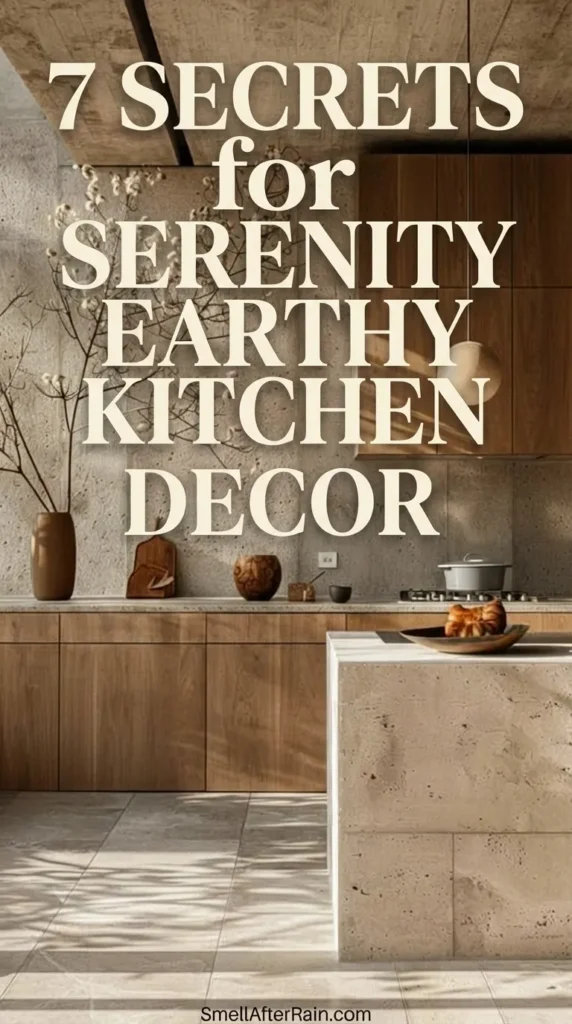
Color Theory: The Emotional Impact of Earth Tones
When we discuss an earthy tone kitchen, we are referencing a specific palette derived from the natural world. However, the psychological impact of these colors varies significantly.
The Warmth of Terracotta and Clay
Red-based earth tones, such as terracotta, clay, and burnt orange, are stimulants of appetite and conversation. They evoke the warmth of a hearth fire. Unlike bright reds which can cause anxiety, these muted earth tones provide a ‘weighted blanket’ effect for the eyes—warm, enveloping, and cozy.
The Restoration of Sage and Olive
Greens are the most restful colors for the human eye because they require the least amount of adjustment to perceive. Incorporating sage or olive cabinetry aligns your space with the regenerative power of plant life. It suggests abundance and freshness, which is psychologically congruent with food preparation.
The Stability of Stone and Sand
Greiges, warm whites, and sandy beiges act as the neutralizer. They prevent the room from feeling too heavy. A natural earthy kitchen relies on these neutrals to reflect natural light softly, avoiding the harsh glare of pure white.
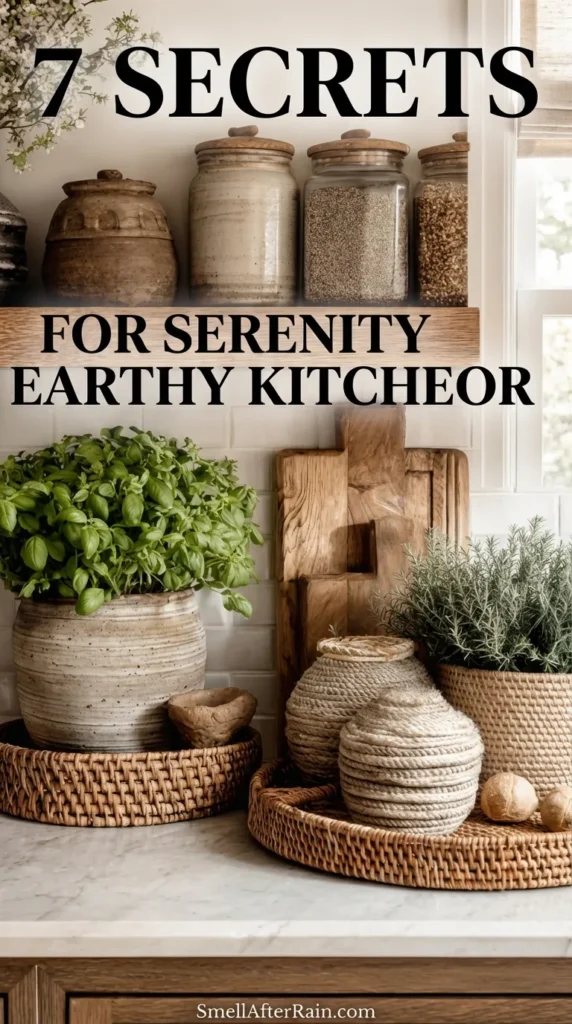
Tactile Therapy: Material Selection for Natural Kitchen Design
As an interior psychologist, I often emphasize ‘haptic aesthetics’—the science of touch. We experience our kitchens with our hands: the cool countertop, the grain of the wooden table, the weight of a ceramic mug. Earthy kitchen design privileges materials that offer rich tactile feedback.
- Unlacquered Brass: Unlike chrome, living metals patina over time. This aging process connects us to the passage of time, reminding us that imperfection is natural and beautiful.
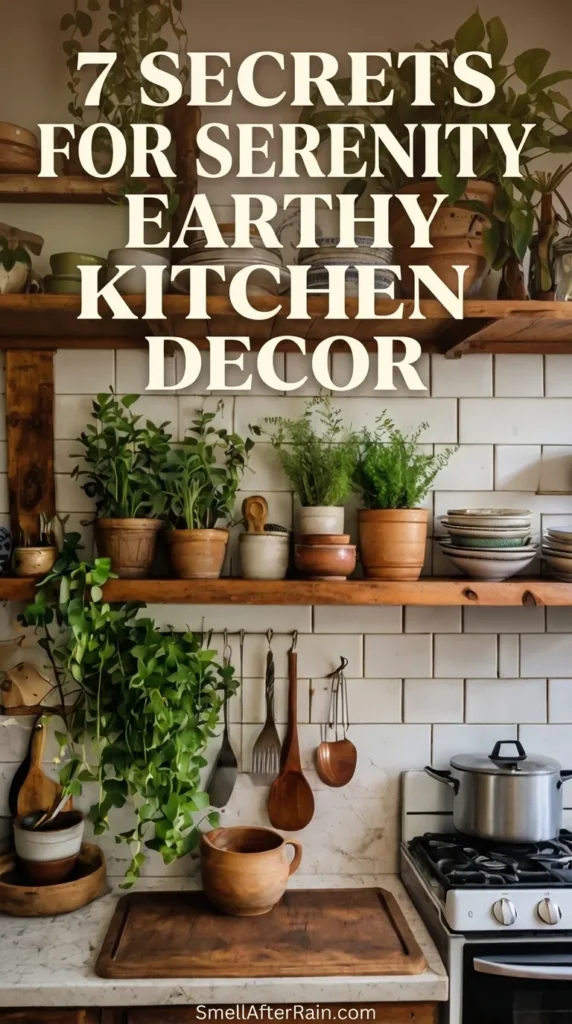
- Raw Wood: Whether it’s reclaimed beams or butcher block countertops, wood introduces ‘fractal’ patterns—complex, never-ending patterns found in nature that our brains find inherently soothing.
- Zellige Tiles: The uneven surface of handmade clay tiles catches light in irregular ways, mimicking the dappled sunlight found under a forest canopy.
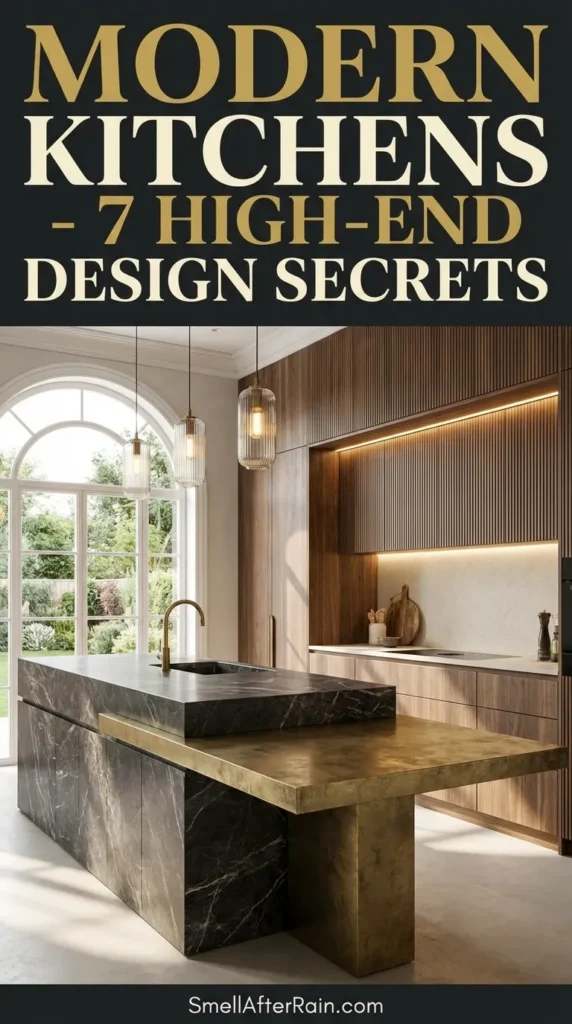
If you are looking to invest in these high-quality materials, it is crucial to understand where to spend your budget. For insights on maximizing value, read our guide on high-end design secrets for modern kitchens.
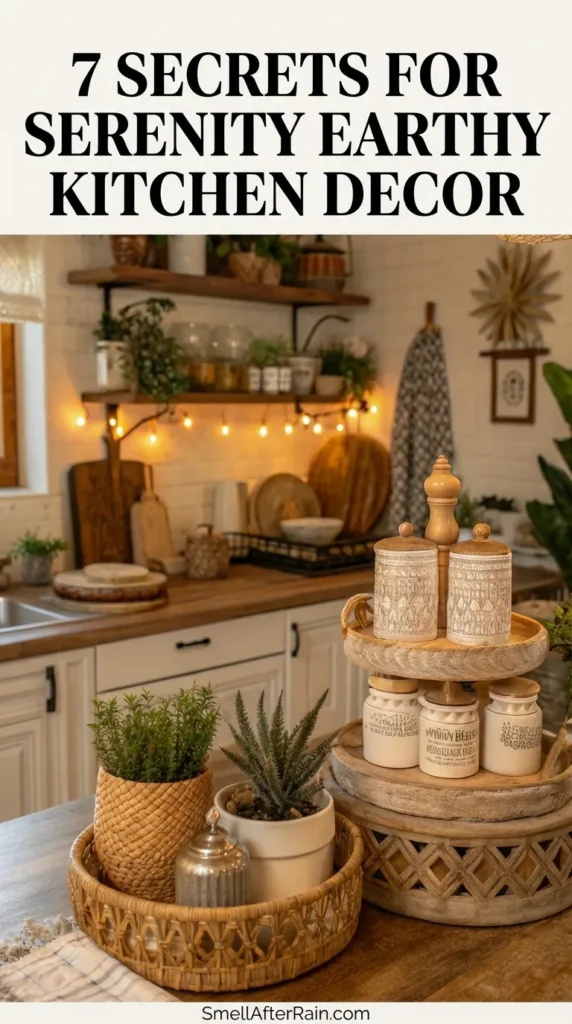
Biophilic Intervention: Bringing the Outdoors In
Biophilia is the innate human tendency to seek connections with nature. In earthy kitchen ideas, this is non-negotiable. It isn’t just about placing a potted plant on the sill; it is about creating a visual and architectural connection to the outside.
Start with a herb garden. The act of caring for living things in the kitchen reinforces the room’s purpose as a center for nourishment. Visually, the chaotic, organic shapes of fern fronds or trailing ivy break up the rigid, rectangular geometry of cabinets and appliances. This juxtaposition softens the room and reduces visual stress.
Furthermore, consider your view. If you can, orient your prep areas to face a window. If a view isn’t possible, use artwork depicting landscapes or botanical prints to simulate that connection.
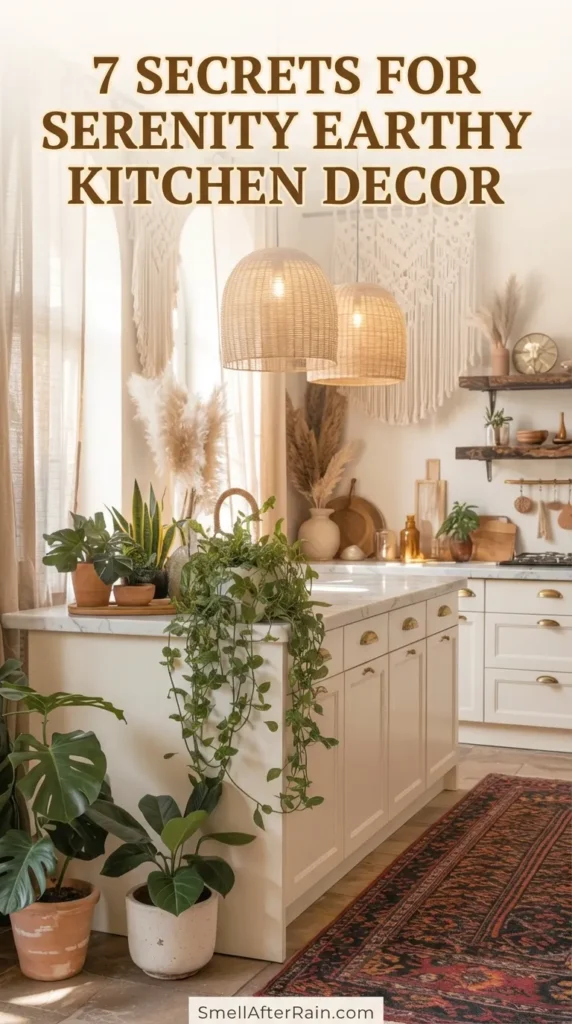
Illuminating Serenity: Lighting for a Cozy Kitchen
Lighting is the conductor of the room’s emotional orchestra. You cannot achieve cozy kitchens with cool, blue-tinted LEDs (4000K-5000K), which suppress melatonin and keep you in a state of high alert.
For an earthy vibe, you must stay within the 2700K to 3000K range. This mimics the warm glow of sunrise or sunset. Layer your lighting to create pools of intimacy:
- Ambient: Dimmable recessed lights for general tasks.
- Task: Under-cabinet lighting (warm white) to illuminate the work surface.
- Accent: Pendants made of woven rattan, ceramic, or smoked glass. These materials filter the light, casting soft, organic shadows rather than harsh beams.
For a comprehensive dive into creating that perfect atmosphere, explore our ultimate guide on cozy kitchen ideas.
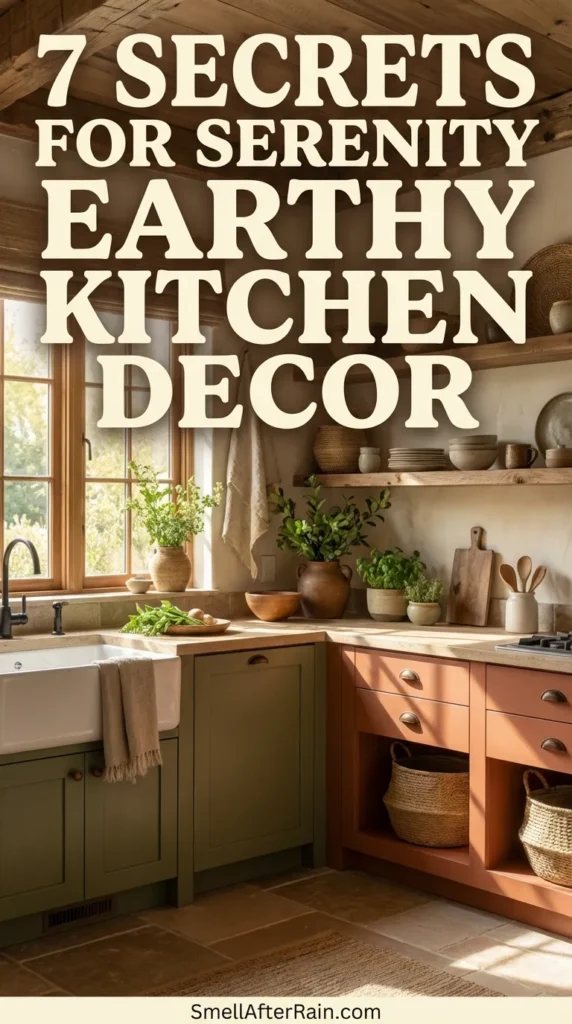
The Modern Earthy Balance: Blending Sleek with Rustic
One common fear is that an earthy kitchen will look dated or too “country.” The solution lies in the concept of the earthy modern kitchen. This style hybridizes the warmth of rustic materials with the clean lines of modern architecture.
The secret is contrast. Pair rough-hewn wooden shelves with sleek, matte-black faucets. Combine a farmhouse sink with minimalist, handle-less cabinetry. This tension between the old and the new creates a dynamic energy that feels curated and sophisticated, rather than cluttered.
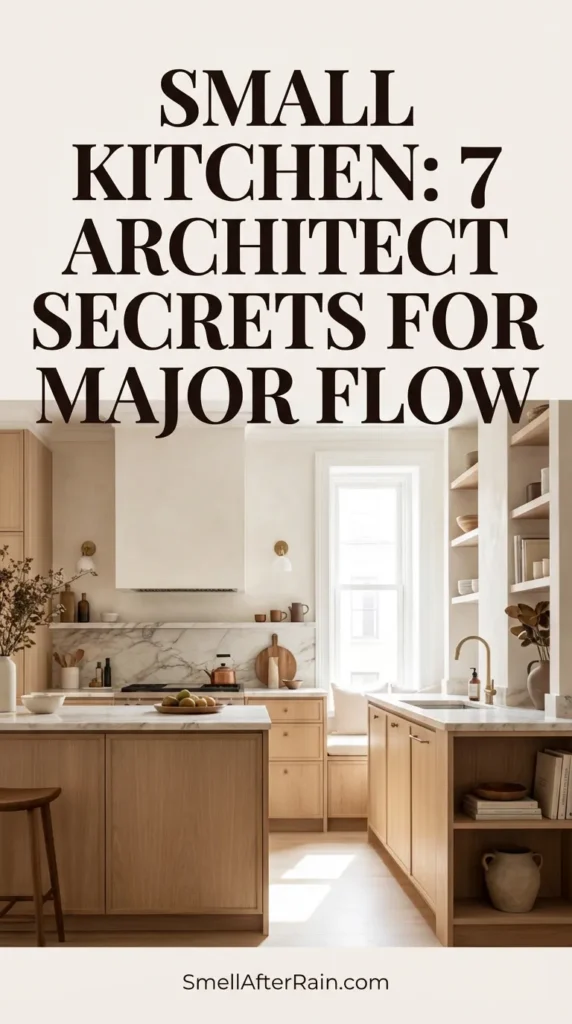
Flow is also essential here. A cluttered, poorly laid-out kitchen causes anxiety regardless of the color palette. Ensure your ‘work triangle’ is unobstructed. For structural advice, check out 7 architect secrets for major flow.

Sensory Architecture: Scent, Sound, and Atmosphere
We often design for the eyes, but we feel with our other senses. An authentic earthy kitchen engages the nose and ears.
Scent: The smell of a kitchen should be natural. Avoid synthetic air fresheners. Instead, simmer cinnamon and orange peels, or use beeswax candles. The scent of dried herbs hanging from a rack adds a subtle, savory perfume that stimulates the appetite.
Sound: Hard surfaces create echoes, which subconsciously increase stress. An earthy kitchen utilizes soft materials—area rugs (washable), curtains, and upholstered bar stools—to dampen sound. This acoustic softening makes the space feel more intimate and encourages conversation.
Small Space Solutions: Earthy Decor for Tiny Kitchens
You do not need a massive footprint to achieve this look. In fact, small spaces often lend themselves better to the “cocooning” effect of earthy decor. However, you must be careful not to overcrowd the visual field.
In a small kitchen, use lighter earth tones (sand, pale sage) on the walls to keep the space airy, and ground the room with darker floors or lower cabinets. Use vertical space for natural elements, like a hanging pot rack intermixed with drying herbs.
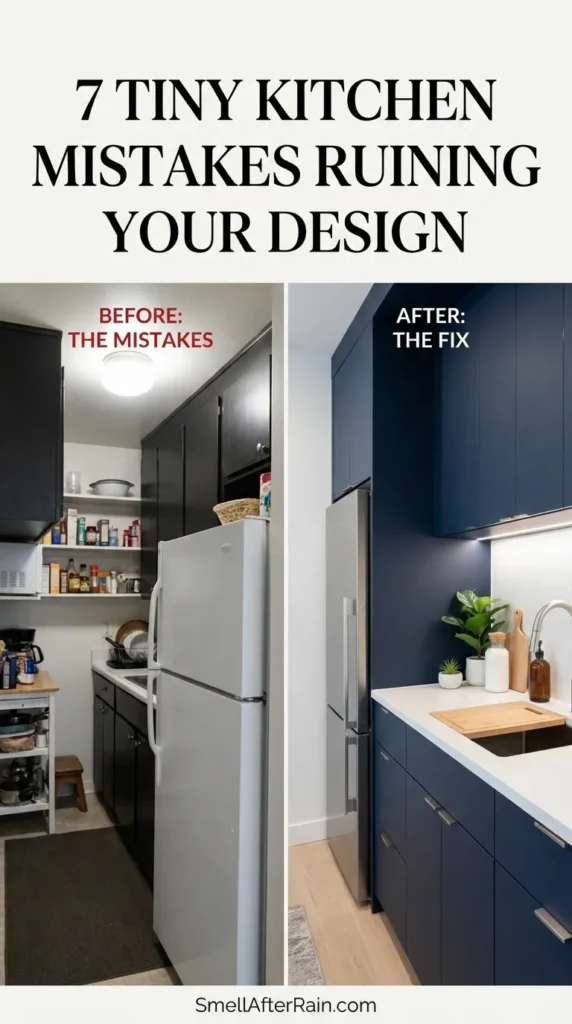
Be wary of common pitfalls. Clutter is the enemy of calm. To ensure your compact space remains a sanctuary, avoid these 7 tiny kitchen mistakes. Additionally, if you are renovating on a budget, review our tips on genius budget hacks for small kitchen ROI.
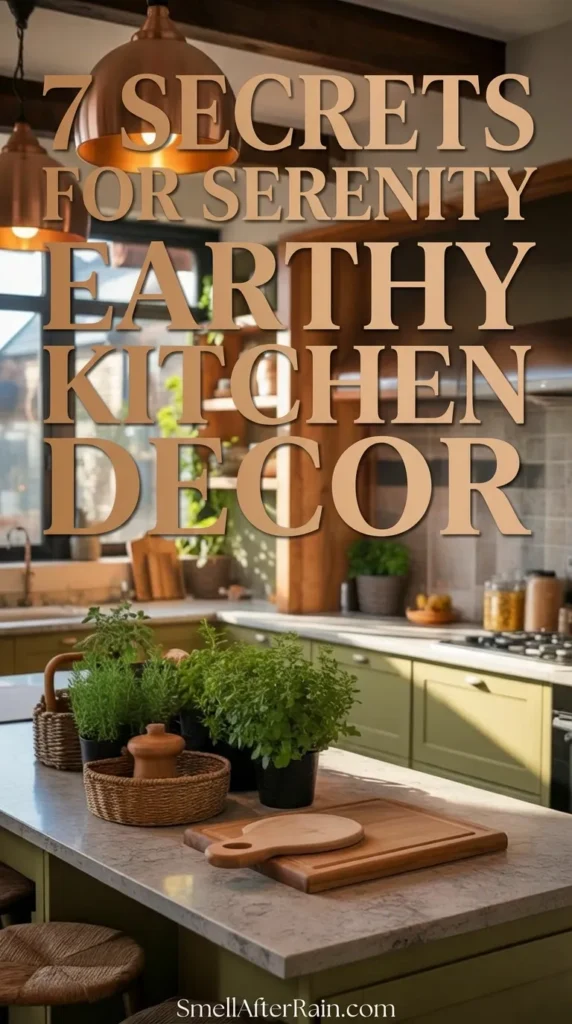
Frequently Asked Questions
1. How can I make my white kitchen look more earthy without painting?
You can warm up a sterile white kitchen by introducing organic textures. Add a thick wooden cutting board island, swap out chrome hardware for unlacquered brass or wood knobs, place a vintage runner rug with warm tones on the floor, and display ceramic stoneware on the counters. Introducing wicker baskets for storage and hanging plants can also instantly shift the vibe from clinical to cozy.
2. What are the best plants for a kitchen environment?
Kitchens often have fluctuating temperatures and humidity. The best plants are resilient ones like Pothos (which tolerates low light and looks great trailing from shelves), Aloe Vera (useful for burns and loves a sunny window), and culinary herbs like Basil, Rosemary, and Thyme. Snake plants are also excellent for air purification and require very little maintenance.
3. Is earthy decor suitable for a small, dark kitchen?
Yes, but you must be strategic. Instead of dark terracotta walls which might close the space in, opt for warm, creamy whites or pale oat colors. Use medium-tone wood for warmth without heaviness. Mirrors can also be used effectively; a mirror with a rustic wooden frame can reflect light and make the space feel larger while adding an earthy element.
4. What type of flooring works best for an earthy kitchen?
Natural stone like slate or travertine provides incredible texture and durability. However, engineered hardwood or luxury vinyl plank in warm oak tones are practical alternatives that offer the visual warmth of wood with better water resistance. Terracotta tiles are the gold standard for a rustic, earthy feel but require maintenance.
5. How do I mix metals in an earthy kitchen?
The key to mixing metals in an earthy design is to choose finishes with warm undertones. Unlacquered brass, oil-rubbed bronze, and copper work beautifully together. Avoid mixing these heavily with cool chrome or polished nickel. Stick to a dominant metal (e.g., bronze for cabinet hardware) and a secondary metal (e.g., copper for pots or light fixtures) to maintain visual harmony.
Conclusion
Embracing earthy kitchen decor is more than a styling choice; it is a commitment to your well-being. By prioritizing organic textures, warm lighting, and biophilic elements, you transform your kitchen from a utility room into a restorative sanctuary. Whether you are seeking natural kitchen ideas for a full remodel or simple updates to create cozy kitchens, remember that the ultimate goal is to create a space that feels grounded, safe, and authentically yours.