You can make a cozy reading nook in any home, even the smallest one. I’ll show you simple choices for a comfy seat, soft layers, and the right light so you can build a warm corner that invites lingering moments.
You’ll learn how to pick a spot, add seat and surface options, and set lighting and personal touches that make the space feel yours.
I write from experience creating quiet corners that actually get used. Expect practical tips you can apply today.
Small-space ideas can turn odd corners, window ledges, or even a closet alcove into a peaceful retreat.
Key Takeaways
- Pick a tucked spot that suits your daily routine.
- Choose seating and surfaces that balance comfort and space.
- Use layered lighting and personal items to create a calm atmosphere.
Finding Your Perfect Reading Nook Spot
I look for light, quiet, and a sense of enclosure when I choose a spot. I aim for a place that feels private but still comfortable to move in and out of, whether it’s a tiny corner or a small closet turned retreat.
Transforming Small Spaces into Private Havens
Small spaces can become rich retreats with careful choices. I measure the area first, then pick furniture that fits the footprint—like a slim armchair, a floor cushion, or a narrow bench with storage.
I favor soft, layered lighting: a clip-on lamp for focused reading plus a warm LED strip or small table lamp for ambiance. I use vertical space to reduce clutter.
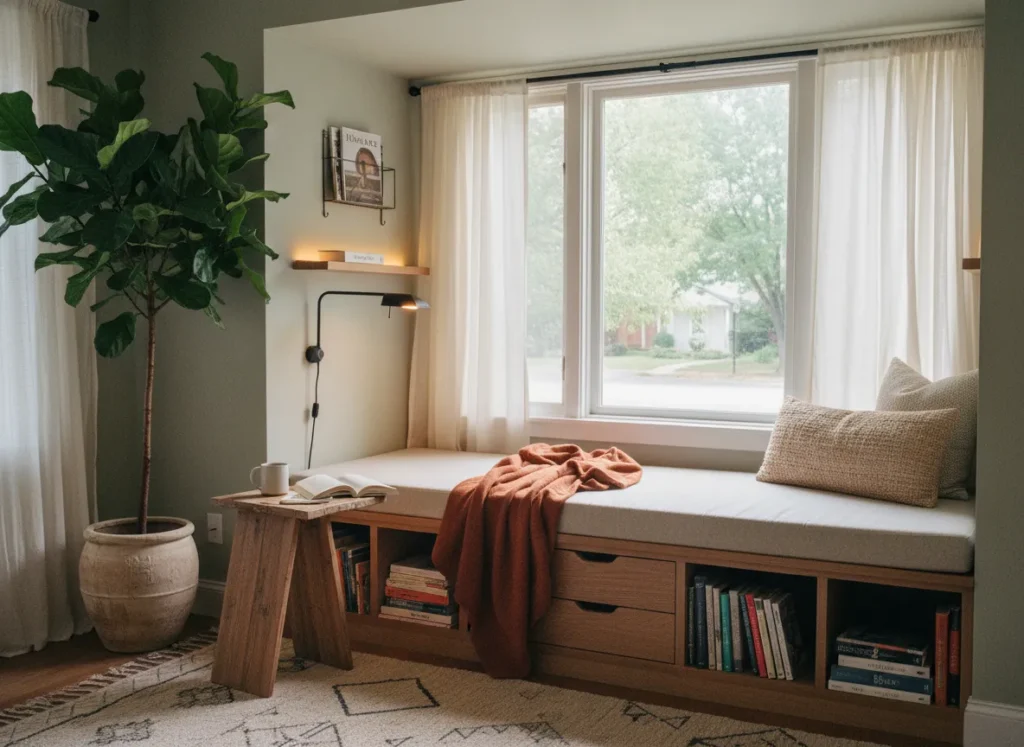
A slim wall shelf or a mounted magazine rack keeps books at hand without crowding the floor. Textiles make the spot feel embraced; a throw, a lumbar pillow, and a low-profile rug define the area and add warmth.
Noise control matters. I add a fabric panel or tall plants to absorb sound.
If the nook is in a shared room, a lightweight folding screen can carve out privacy without a renovation.
Choosing Corners, Windows, and Alcoves
Corners and window nooks often give the best mix of light and enclosure. I pick a south- or east-facing window when possible for steady natural light.
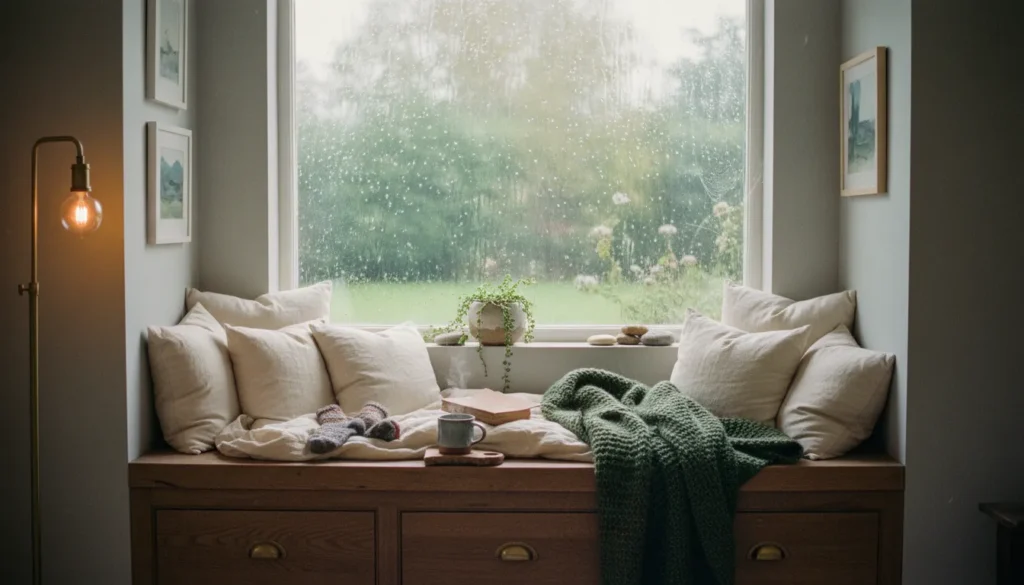
For a window seat, I build or buy a bench with storage beneath and top it with a cushioned pad that fits the sill height. Alcoves work well because their walls frame the space.
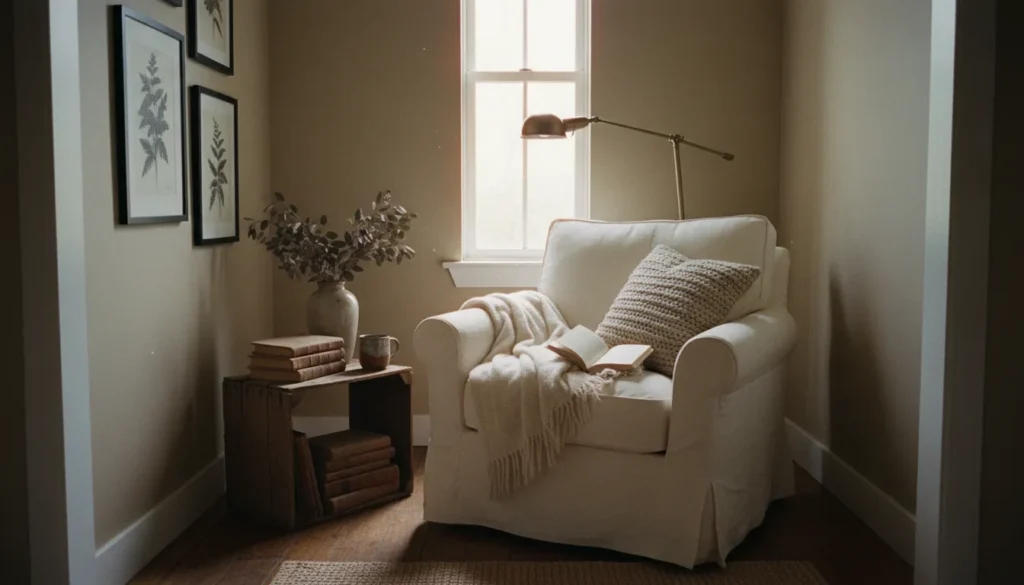
I orient seating toward the light and keep a narrow side table within reach for a cup and a book. For corners, I angle a cozy chair and place a lamp behind it to avoid casting shadows on the page.
I pay attention to sightlines. If the view will distract me, I add sheer curtains that soften the outside while keeping daylight.
A small shelf at eye level holds current reads and a reading light.
Closet Conversions and Under-Stair Escapes
Converting a closet or under-stair area gives me a built-in feeling of privacy. I remove the door or replace it with a curtain, then insulate and paint the interior a calming color.
I add a bench or fitted cushions that match the depth of the space. Storage is key in tight conversions.
I install cubbies or recessed shelves for books and a slim drawer for chargers and reading glasses. A low-profile LED strip along the trim provides even light without heat or glare.
I also focus on ventilation and comfort. A small fan or a vent keeps air moving.
Soft fabrics and a cozy throw make the closet conversion feel like a true reading retreat rather than a cramped storage spot.
Curating Comfort: Seating and Surfaces
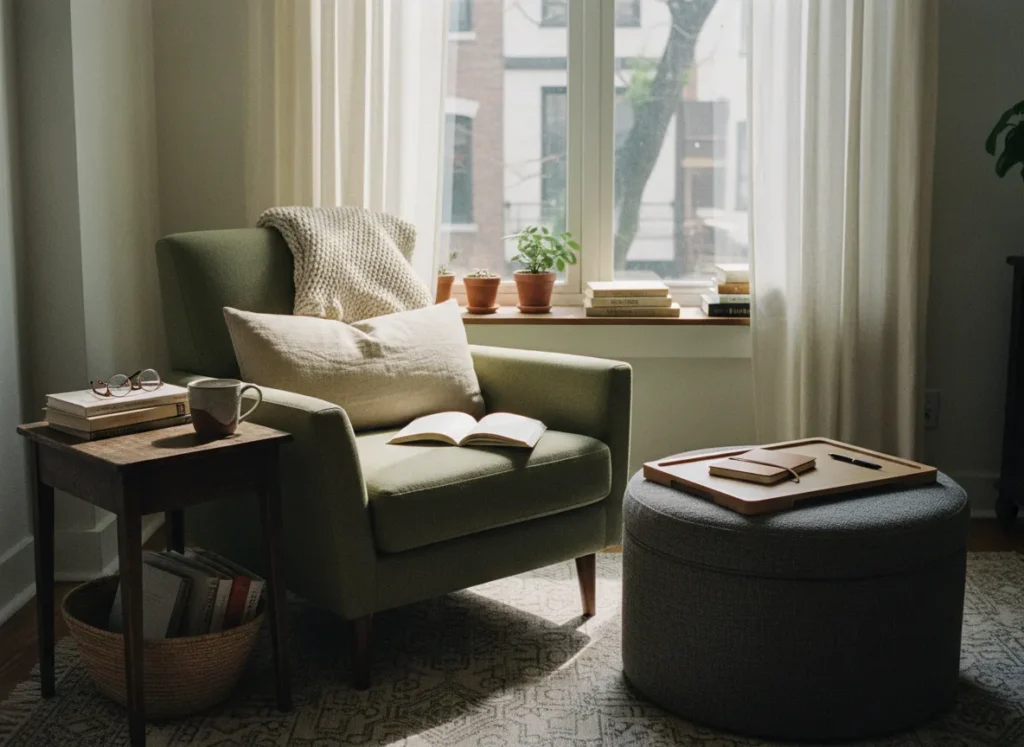
I focus on making a small space feel inviting and useful by choosing seating that supports reading posture and surfaces that hold my essentials. Comfort, scale, and reachable surfaces matter most: a chair that fits my frame, a side table at elbow height, and a lap desk for rainy-day note-taking.
Selecting a Comfortable Armchair or Chair Alternative
I choose an armchair that has firm lumbar support and a seat depth that lets my feet touch the floor. For tight corners, a compact armchair—about 28–32 inches wide—gives me the same support without crowding the room.
Look for medium-firm cushions and a slightly reclined back to avoid slouching during long reads. If an armchair won’t fit, I pick alternatives: a deep accent chair, a small loveseat, or a chaise lounge placed lengthwise against the wall.
These provide extra surface area to stretch out. Test seat height (16–19 inches is common) and cushion resilience before buying.
Removable covers help with cleaning, and a washable throw protects the fabric.
Adding Side Tables and Lap Desks for Convenience
I keep a side table within arm’s reach for a cup, glasses, and the current book. Ideal table height matches the armrest—usually 22–26 inches—so I don’t have to bend or stand.
Narrow console tables or slim round tables work well in tight spaces. A lap desk adds flexibility.
I use a lightweight lap desk with a non-slip base for reading or writing on the couch or chair. Choose one with a flat surface for a book and a small groove for a phone or pen.
If I want storage, I pick a small table with a drawer or a lower shelf for extra books and a throw.
Embracing Ottomans, Footstools, and Floor Cushions
An ottoman or footstool turns a chair into a full recline without extra furniture. I pick an ottoman the same height as my seat or slightly lower to support my legs comfortably.
Storage ottomans hide blankets and spare books, keeping the nook tidy. Floor cushions give me flexible seating for guests or kids.
I store a few flat cushions in a basket and pull them out when needed. For long reading sessions, choose high-density foam cushions with removable covers.
Footstools made of hard wood or rattan offer firm support and double as a small side table with a tray on top.
Bench and Daybed Inspirations
A built-in bench under a window makes the most of narrow spaces and adds built-in storage with drawers or lift-up seats. I add a high-density foam mattress topper and layered cushions for comfort.
A narrow daybed against a wall gives me a place to lie down and read without taking the footprint of a sofa. Daybeds work well in multipurpose rooms; choose a twin-size frame or a trundle if you need an extra sleeping option.
For either bench or daybed, include firm back cushions and a lumbar pillow for support. Use washable slipcovers and tuck a slim side table or lap desk beside the frame to keep essentials close.
Illuminating Ambiance: Lighting and Atmosphere
I focus on light that feels like a welcome hand: bright enough for pages, soft enough for rest. I balance natural light, direct task lamps, warm ambient sources, and a few scented touches to make the nook both useful and calm.
Harnessing Natural Light
I place my reading chair near a window to use daylight first. South- or west-facing windows give stronger afternoon light, while north-facing windows offer steady, soft light all day.
I keep heavy curtains to block glare when the sun is too strong, and use sheer panels to diffuse bright rays. I arrange the chair so light falls from behind my shoulder or slightly to the side.
That reduces shadows on the page and lowers eye strain. If a window seat is small, I add a slim roll-up blind to control brightness without losing the view.
Task Lighting and Reading Lamps
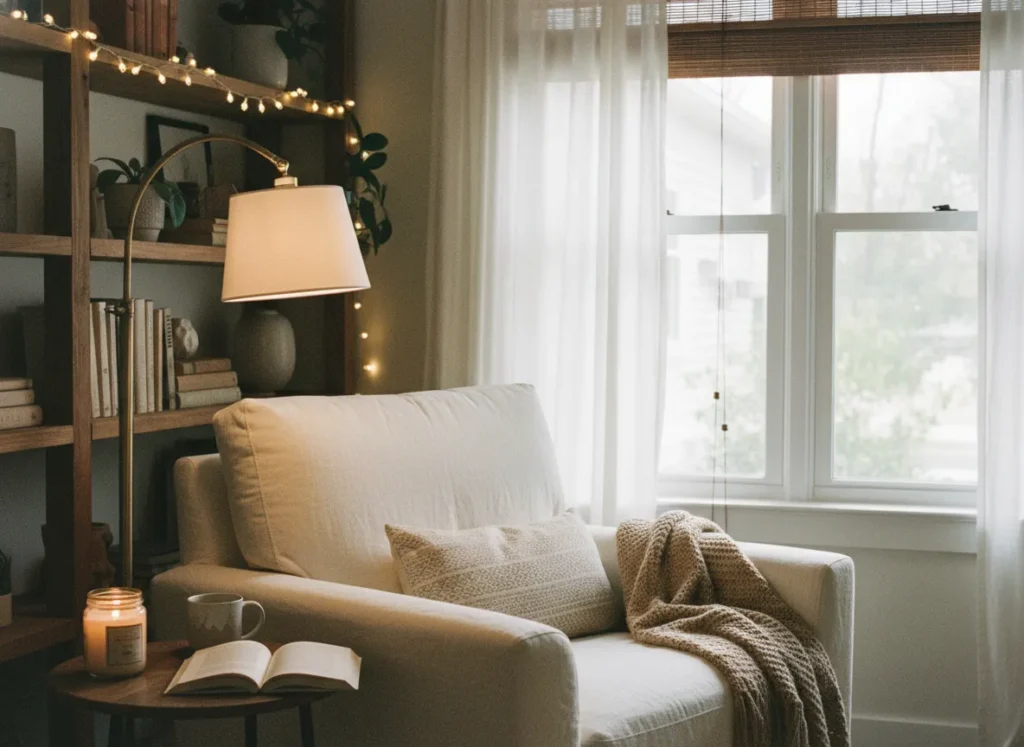
I pick a dedicated reading lamp for focused task lighting. An adjustable floor lamp with a swing arm or a clip-on lamp works well for tight corners.
I aim the beam onto the page at about a 30-degree angle to avoid glare and reflections. For bulb choice, I use LED bulbs rated 2700–3000K for warm light and 4000K when I need sharper focus.
A dimmable lamp helps me change brightness for daytime study or evening relaxation. Wall sconces with adjustable arms give a neat, space-saving option when floor or table space is limited.
Ambient and String Lights for Mood
I layer ambient lighting to keep the nook cozy after sunset. A low-wattage floor lamp or a shaded table lamp gives a soft, even glow across the space.
I prefer lamps with fabric shades that diffuse light and limit harsh contrast. String lights add a gentle, decorative wash along shelves or over a headboard.
I choose warm white LEDs (around 2700K) and clip them so they don’t tangle. Using a smart plug or dimmer switch lets me set a low, steady brightness for evening reading without bright overhead light.
Scented Candles and Cozy Accents
I use scented candles sparingly for short reading sessions to avoid smoke or scent fatigue. Small soy candles in mason jars offer safe, even burn times.
I pick mild, grounding scents like vanilla, cedar, or bergamot to complement focus rather than overpower it. I combine candles with soft textiles—throw blankets and a lumbar pillow—to add tactile warmth.
If open flame isn’t an option, I use flameless LED candles that mimic flicker and pair well with ambient lights and a nearby reading lamp.
Personal Touches and Inspiring Storage
I focus on making the nook both beautiful and useful. I choose storage that holds my books and items so the space feels calm, warm, and truly mine.
Bookcases, Floating Shelves, and Built-In Bookshelves
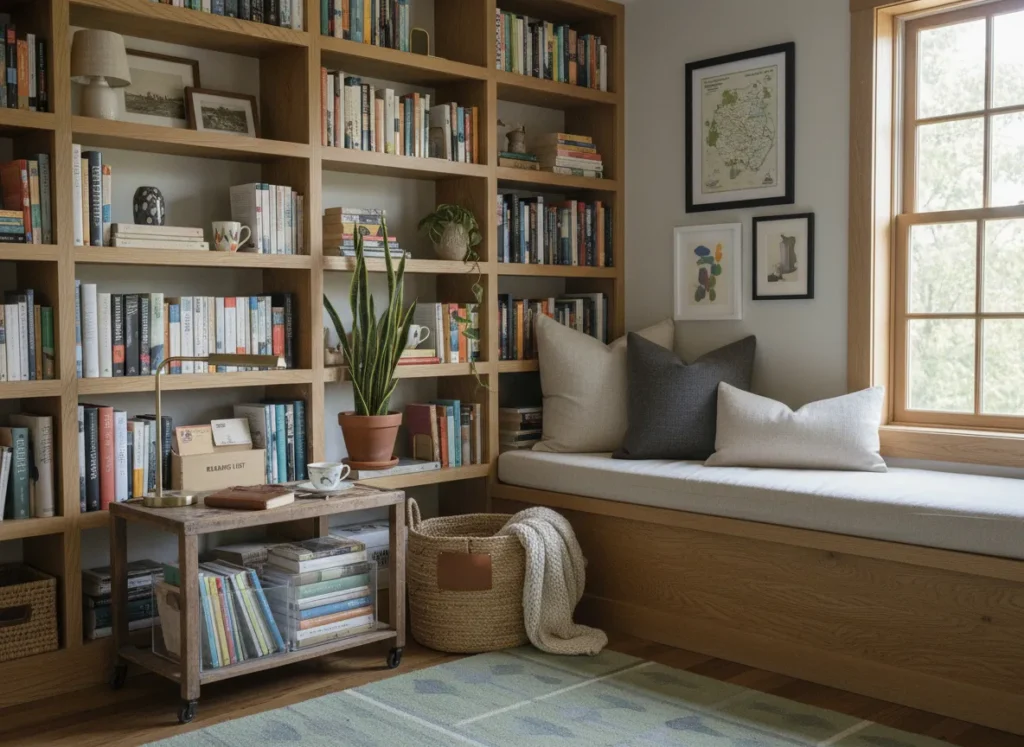
I pick the book storage based on size and style. A tall bookcase works well when I have many hardcover novels; I organize by height and leave one shelf for a small lamp or framed photo.
Floating shelves suit a narrow wall and keep the floor clear. I stagger them to create visual interest and store current reads within arm’s reach.
When I want a seamless look, I choose a built-in bookshelf. It fits odd corners and can include a bench for seating.
For flexibility, I use a book cart or rolling cart to move books from room to room. Labels, baskets, and a small bookend keep the shelves tidy.
Smart Storage for Small Spaces
I turn small areas into smart storage with vertical solutions. Tall, narrow shelving uses wall height above a chair or window.
I mount floating shelves above a radiator or behind seating to avoid wasting inches. Slim, wall-mounted cubbies hold magazines and a reading journal.
Multi-use items help me save space. I use a storage ottoman for blankets and a bench with hidden compartments for spare pillows.
A rolling cart doubles as a side table and holds tea, a reading lamp, and stacked paperbacks. Clear acrylic boxes and labeled baskets make it easy to find a specific book quickly.
Adding Plush Rugs, Throw Pillows, and Blankets
I layer texture for warmth and comfort. A plush rug anchors the nook and softens hard floors.
I pick a low-pile rug underfoot if I read with a cup of tea, so it’s easy to clean. Rugs in calming colors keep the area cozy without feeling busy.
I keep several throw pillows of different sizes for back support. A lumbar pillow helps when I sit for long stretches.
I stack a thick throw blanket and a lighter cotton throw within arm’s reach. I roll blankets in a basket or tuck them into the bench storage for quick access.
Plants, Art, and Decor That Reflects You
I add life and personality with a small collection of decor. A snake plant or pothos lives well in low light and adds greenery without fuss.
I place plants on shelves or a windowsill where they won’t crowd my reading spot. For art, I choose a single framed print or a small gallery wall that echoes the books I love.
Personal items—an old ticket stub, a postcard, or a favorite mug—sit on a shelf or atop a book stack. These choices make the nook feel curated and calm, a place I return to again and again.
Frequently Asked Questions
I focus on practical, small-scale choices that turn tight corners into calm reading spaces. You’ll find specific steps for seating, lighting, storage, and personal touches that fit small homes.
How can I make a small corner feel like a sanctuary for reading?
I pick a quiet corner with a bit of natural light and clear a small footprint first. A narrow armchair or window seat fits better than a full sofa, and a slim side table keeps a cup and book within reach.
I add a soft throw, one or two pillows, and a low-profile rug to define the spot. These items add warmth without crowding the floor.
What elements are essential for crafting an intimate reading atmosphere?
I prioritize comfortable seating, layered lighting, and a small surface for drinks and notes. Each element needs to be sized to the space so nothing feels overwhelming.
I include a few tactile items—a knitted throw, book stack, or scented candle (flameless if needed)—to make the corner feel lived-in and calm.
In what ways can lighting enhance the serenity of a reading nook?
I like a focused task light for reading and a softer glow to set the mood. A directional floor lamp or an adjustable wall sconce usually fits well in tight corners.
Warm bulbs (around 2700–3000K) help cut down on eye strain and make everything feel cozier. I rely on dimmer switches or lamps with different settings so I can go from bright and alert to mellow, depending on my mood.
Which types of seating options blend comfort and style for prolonged reading sessions?
For me, it’s all about chairs with solid back support and a seat deep enough to sit upright or curl up. A compact armchair, a chaise lounge, or a cushioned window bench tends to work best in small nooks.
An ottoman or little footstool gives my legs a break during long reading sessions. I lean toward upholstery in easy-care fabrics—keeps things looking good without too much fuss.
How can I incorporate storage solutions into my reading nook without sacrificing elegance?
Narrow shelving, floating shelves, or a slim bookcase that matches the room’s vibe save space. Built-in cubbies under a window bench stash blankets and extra books out of sight.
Sometimes I toss a decorative basket or a small tray on the side table for my current reads and glasses. Vertical storage really preserves floor space and keeps clutter under control.
What tips can you offer for personalizing my reading space to reflect my literary journey?
I like to display a few favorite books face-out. I’ll swap them out for whatever I’m reading at the moment.
Little mementos—maybe a postcard, a framed quote, or something I picked up while traveling—help connect my books to my own life.
I usually stick to one or two colors or textures. You’ll see them show up in pillows, throws, or even wall art, which gives the space a calm, pulled-together vibe.