You can make a strong first impression the moment someone walks through your door by focusing on a few intentional, welcoming choices. Start with a clear focal point—maybe a mirror, a bold light, or a striking piece of furniture—then add some useful touches, like a spot for keys or a seat for putting on shoes.
A well-designed entryway blends style and function so guests feel at home, and you actually look forward to coming back.
I’ll help you pick anchor pieces, layer in some texture and color, and keep clutter at bay so the look stays fresh. Expect practical tips for both small and large spaces, quick swaps with big impact, and easy ways to add personality without crowding things.
Key Takeaways
- Create a clear focal point that sets the tone right away.
- Combine useful storage with styled accents for balance.
- Use texture, color, and lighting to add personality without clutter.
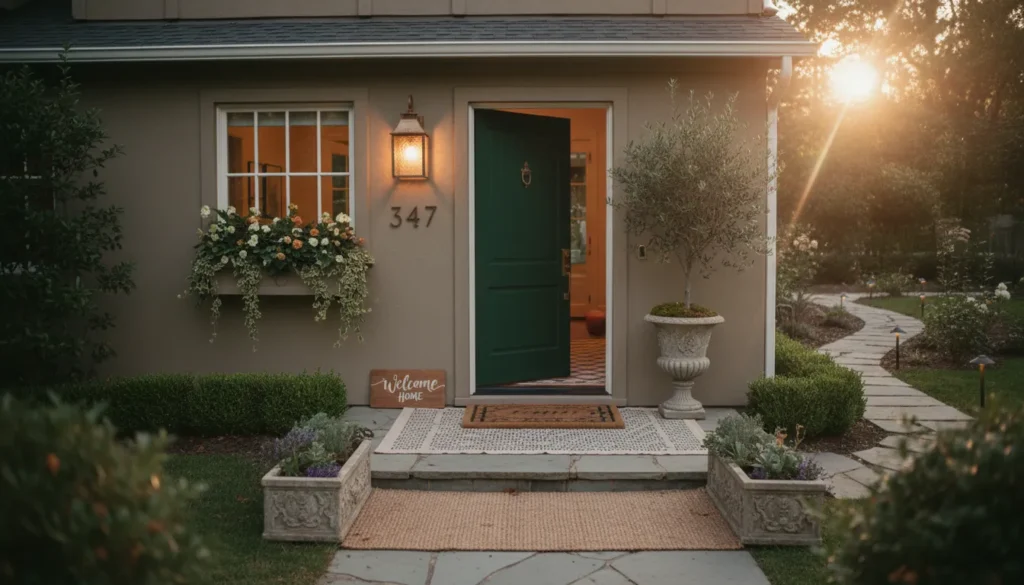
Crafting a Welcoming Entrance
I zero in on small choices that shape a visitor’s first seconds: the view from the street, where they wipe their shoes, and the light that greets them at dusk.
Enhance Curb Appeal
I always start from the street and work inward. Trimmed shrubs, clean gutters, and a fresh door color make a surprisingly strong first impression.
I pick one bold element—maybe a painted door, new hardware, or window boxes with seasonal plants—to anchor the look.
Pathways should feel clear and safe. I fix cracked concrete, add some simple edging, and put a few low, weatherproof plants along the walk.
House numbers really need to be readable from the curb. I swap faded numbers for high-contrast metal or backlit styles.
A welcome sign or a small planted urn by the door adds a little personality without clutter. These focused changes boost curb appeal quickly and don’t have to cost much.
Set the Stage with a Welcome Mat
I pick a doormat that fits both style and function. Heavy-duty coir or rubber-backed mats work for high traffic, and a decorative mat layered on top brings style.
Size matters—the mat should almost span the door width so guests can wipe both feet. I always put the mat on a flat, solid surface to prevent tripping.
If my porch gets wet, I add a second washable rug inside to catch moisture. A tasteful welcome sign nearby helps set the tone—maybe hand-lettered wood for cozy homes, simple metal for modern ones.
Together, mat and sign make arrival feel intentional.
Inviting Entry Lighting Options
I use layered lighting to make evenings safer and warmer. A pendant light by the door works well for covered porches.
For open entries, I pick a sturdy wall-mounted fixture that keeps rain out and light focused.
I install motion-sensor lights along pathways and side doors for security and convenience. Warm LED bulbs (2700–3000K) make skin tones and finishes look welcoming.
If my porch has high ceilings, I go for a rated pendant or chandelier that fits the space. For low ceilings, I prefer semi-flush fixtures.
Placing lights over the step and near the latch keeps shadows away and makes unlocking easier.
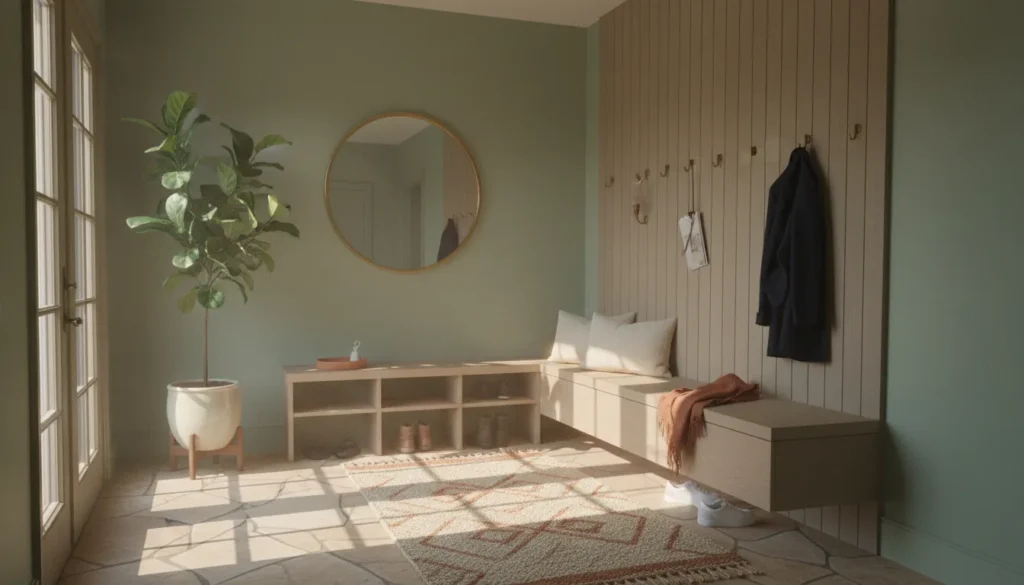
Foundations of Entryway Design
I focus on how people use the space, how they move through it, what textures will live there, and which colors will set the mood. Clear function, good flow, natural materials, and a cohesive color plan make the entryway both inviting and practical.
Defining the Purpose and Flow
I start by listing what the entryway needs to do: store shoes and coats, offer a seat, and catch keys and mail.
Measuring the width and sightlines from the door tells me if a slim console, a bench with storage, or built-in cubbies will fit.
I put the largest item opposite or beside the door to keep the path clear. I leave at least 30–36 inches of clear walkway in front of seating or cabinets.
Hooks go about 60–68 inches high for adults; lower hooks at 40–48 inches help kids.
I also map out daily routines. If kids drop backpacks, I add open cubbies. If guests come often, I add a mirror and a small surface for quick touch-ups or bags.
Each choice connects to how people move and use the space.
Optimizing Small or Challenging Spaces
When space is tight, I go vertical and pick narrow furniture. A 10–12 inch deep console or wall-mounted shelf keeps the floor clear but holds essentials.
Floating shelves, slim hooks, and vertical cubbies use space without crowding traffic.
Mirrors help open up a narrow entry. I hang a full-length or multi-pane mirror across from the door to reflect light and create depth.
I pick rugs that leave a 6–12 inch reveal of floor at the edges so the area feels intentional, not cluttered.
For odd layouts—staircases, slanted walls, or sidelights—I get creative. A slim bench under stairs, a corner plant to soften angles, or a custom seat with storage can turn awkward into useful.
I always keep the main path clear and test the flow before finalizing pieces.
Layering Natural Materials and Textures
I use wood, stone, woven fibers, and metal to create warmth and interest. A wooden bench or shiplap wall brings an organic feel.
Stone or tile at the door handles wet shoes and looks durable. Layering textures keeps the entry from feeling flat.
I mix finishes—maybe matte wood with a glossy ceramic planter, or a brass hook on picture frame molding.
Rugs in natural fibers like jute or wool add cushion and texture. I like a single large plant or a cluster of smaller pots to bring in some life and clean air.
I keep materials consistent across nearby rooms. If the hallway has shiplap or wainscoting, I echo that in the entry with matching trim or a small accent panel.
The result feels deliberate and tied together.
Choosing the Perfect Color Palette
I stick to three tones: a dominant neutral, a mid-tone, and one accent. Neutrals like warm white, greige, or soft taupe set a calm backdrop for natural materials.
A mid-tone wood or muted green adds depth, and a single accent—navy, terracotta, or brass—gives personality.
I test paint on several walls and check it at different times of day. Light at the door can shift colors warmer or cooler.
I use darker paint sparingly—maybe on a door, a bench, or picture frame molding—to add drama without making the space feel smaller.
I also use color to guide the eye. A painted wainscoting or colored console frames the entry’s function.
Small accents like a colorful rug, a painted tray, or a bold planter add interest without overwhelming the natural textures.
Signature Decor Elements for Impact
I focus on a few key pieces that set the tone and function: a landing spot for daily items, reflective surfaces to widen space, and art to tell a story.
Each choice should balance scale, texture, and purpose to welcome guests and make your routines easier.
Console Tables: The Art of the Landing Spot
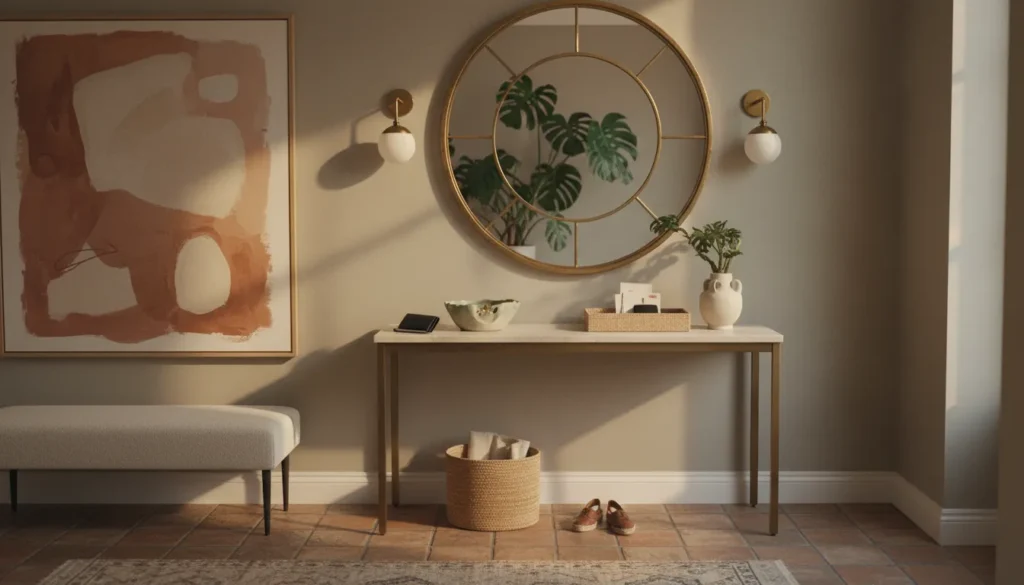
I choose a slim console table or floating shelf as the primary landing spot near the door. A console table (12–18 inches deep) fits narrow halls and still holds a lamp, a dish for keys, and a bit of mail.
For very tight spaces, I mount floating shelves at waist height—two staggered shelves give storage without blocking traffic.
I keep the top clear: one statement bowl, one small plant, and a tray for daily essentials. Add a lower shelf or basket for shoes or tote bags.
If I want seating, I pick a bench-sized console or put a narrow bench beneath the table.
Matching materials—wood top and metal legs, or marble with brass—ties the entry to the rest of the home.
Mirrors and Statement Pieces
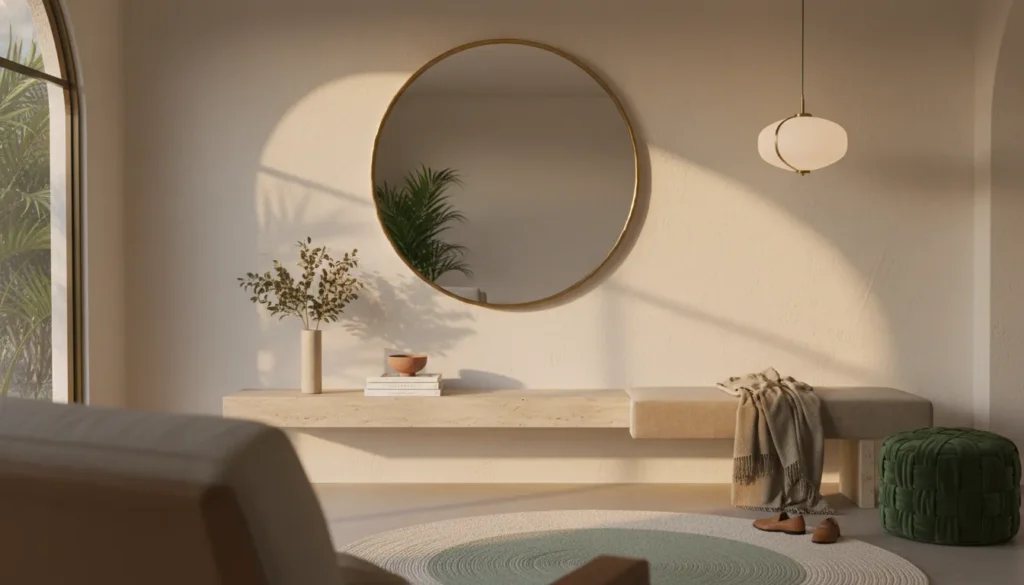
I hang a large mirror or round mirror to amplify light and make the entry feel bigger. A floor mirror leans casually for a relaxed vibe, while a statement mirror hung across from the door adds brightness and gives you a final spot to check before leaving.
I pick a mirror with an interesting frame or a segmented, multi-paned design for some architectural interest.
I pair the mirror with a single statement piece: maybe an oversized art canvas, a sculptural vase, or a tall plant.
Wall sconces on either side of the mirror add light and highlight textures. For small entries, a narrow statement mirror plus a slim console gives impact without crowding.
I avoid clutter so each piece stands out.
Creating Gallery Walls and Focal Artwork
I build gallery walls to add personality with rhythm and balance. Start with one oversized art or mirror as the anchor.
Arrange picture frame molding or mixed frames around it in a loose grid or salon style. Keep mat sizes and frame colors consistent for cohesion, or vary frames but repeat one color to tie it all together.
Mix artwork with a few 3D items—small shelves, a sculptural wall hook, or a sconce—for depth.
Wall sconces above or between frames highlight key pieces and create a warm evening glow.
For tight hallways, I keep the gallery to one side so the focal artwork draws the eye without overwhelming movement.
Balancing Functionality with Style
I pick practical pieces that also feel intentional. Each choice should solve a daily problem—like shoes, coats, or small mail—while adding to the overall look.
Smart Storage and Built-Ins
I go for built-in storage when space and budget allow because it uses vertical space and keeps things tidy.
Tall cabinets, shallow cubbies, or a floor-to-ceiling shelf can store umbrellas, hats, and seasonal gear without blocking flow.
Hooks at two heights—one for adults, one for kids—make hanging up stuff easy.
Woven baskets work inside open cubbies. I label baskets for “gloves,” “masks,” or “dog gear” so small items stay out of sight but are easy to find.
A narrow console with drawers fits keys and mail. For small entryways, I install a slim wall-mounted shelf above a row of vertical hooks to hold sunglasses and a valet tray.
Seating Solutions: Benches and Ottomans
I like seating that does double duty as storage. A storage bench gives you a spot to sit and hides shoes or winter accessories underneath.
Pick a bench height around 18–20 inches for comfy sitting and easy shoe tying.
Storage ottomans work in tight nooks. They move around easily and offer soft seating for guests.
If I want a more structured piece, I pick an entryway bench with open cubbies underneath for baskets or pair it with a hall tree that combines hooks, a bench, and a mirror.
Upholstery fabric should be durable and easy to wipe, especially in busy homes.
Warmth with Area Rugs and Runners
I always add a runner or area rug to define the zone and protect floors. For narrow hallways, a runner with non-slip padding keeps things safe and reduces wear.
Pick a rug that extends at least two-thirds down the hallway so doors don’t catch the edges.
Statement rugs look great in small foyers—bold pattern or color draws the eye. For busy households, I stick with washable or low-pile fibers for easy cleaning.
Layering a small doormat outside and a runner inside catches dirt and keeps the entry tidy.
Adding Greenery and Seasonal Touches
I use fresh greenery and flowers to make the entry feel alive. A single large plant in a corner or a vase of cut stems on a console sets a welcoming tone without clutter.
Low-light plants like snake plants work well in halls without windows.
Seasonal touches keep the space feeling current. In fall, I swap a woven basket for a chunkier one and add some branches.
In spring, I put fresh flowers in a simple vase and switch to lighter textiles. I avoid too many little decorations; one or two accents—like a ceramic bowl for keys or a small planter—keep things calm and purposeful.
Frequently Asked Questions
I focus on clear, useful steps you can use right away: practical storage, lighting plans, and a few art choices that set the tone. Expect concrete options for colors, furniture sizes, and upkeep so your entryway looks and works the way you want.
What elements are essential for creating a welcoming entrance to a home?
I start with functional storage for coats, shoes, and keys so clutter doesn’t greet guests first. A seat or bench around 18–20 inches high helps with putting on shoes and signals hospitality.
I add a focal point like a mirror, large plant, or statement light to give the eye somewhere to land. A durable rug by the door protects floors and defines the space.
How does one choose the perfect color palette for an inviting foyer?
I pick one main neutral for walls—soft white, warm gray, or pale beige—to keep things bright and flexible. Then I add one accent color in a bold piece, like a coral console or jewel-toned bench, for a clear visual anchor.
I balance finishes—wood, metals, and textiles—in the same tonal family so materials feel like they belong together.
In what ways can lighting enhance the mood of an entryway atmosphere?
I layer light: a central fixture for brightness, sconces or table lamps for warmth, and a small spotlight for artwork.
Warm bulbs (2700–3000K) make the space feel inviting and flattering. I place lighting to highlight textures and the focal point—mirror reflections or a plant—so the entry feels lively even at night.
What furniture pieces are both functional and chic for a stylish vestibule?
Go for a slim console table—nothing deeper than 10–12 inches if your hallway’s tight. I always like a bench with storage underneath or just open space for shoes, honestly.
A narrow bookshelf or even a floating shelf works well as a drop zone and won’t block the walkway.
I usually pick pieces with clean lines and a mix of materials. Wood and metal, or marble paired with brass, just look good and do the job.
How do art and decorative accents contribute to the narrative of a home’s entrance?
I like to hang one bold piece of art or maybe a small, curated group to set the tone right away. It tells visitors what to expect from the rest of the place.
Mirrors? They pull double duty. They’re decorative, but they also bounce light around and make the entry feel bigger.
Adding a few textured things—like a ceramic vase, a woven basket, or a sculptural lamp—creates layers that feel intentional. It makes the space look lived-in, not just decorated.
What are the key considerations for maintaining a harmonious yet practical entryway space?
Honestly, I focus on surfaces that are easy to clean right by the door. Washable rugs? Absolutely. Wipeable consoles and tough seat fabrics make life simpler, too.
I like to keep the storage situation under control with labeled bins or trays. That way, keys, mail, and even masks always have a spot.
Every few months, I take a look at the layout and move out anything that’s just collecting dust. Clear sightlines matter if you want the space to actually work for you.